
 = Partner Site
Macbeth Reading Level: A Complete Guide
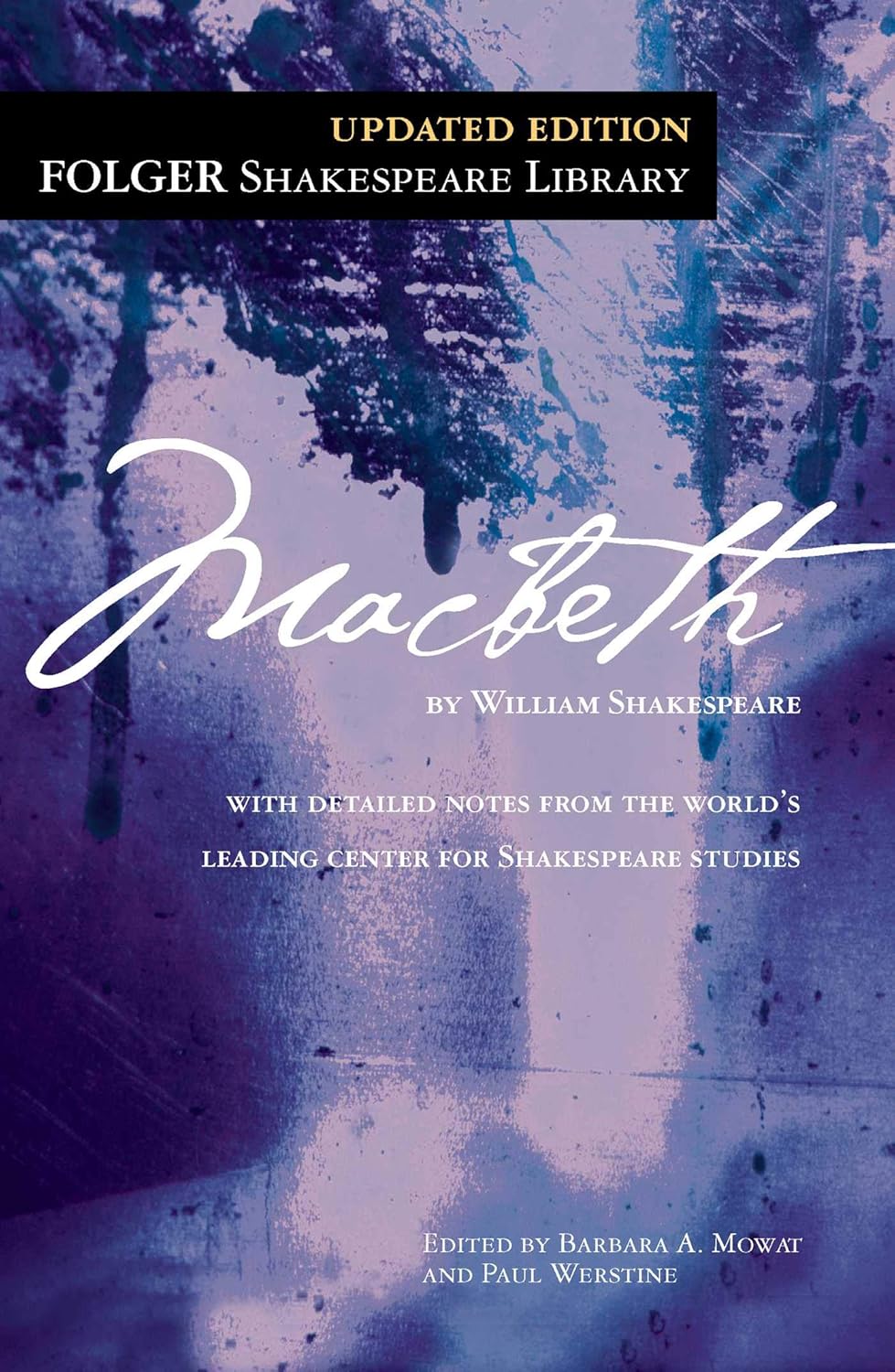
Macbeth by William Shakespeare is a tragedy about a Scottish general who murders his king to take the throne and is destroyed by the consequences of that act — the guilt, the paranoia, the further murders required to protect the first, and the prophecies of three witches that promised him everything and gave him nothing he wanted. Written around 1606, probably for performance before King James I, it is the shortest of Shakespeare’s four great tragedies and the most compressed: where Hamlet sprawls across months of delay and indirection, Macbeth moves with the speed of a nightmare from the battlefield to the throne room to the grave, every scene tightening the trap Macbeth has built around himself. This complete guide covers Macbeth‘s reading level, recommended age, content considerations, characters, themes, and plays and books similar to Macbeth, designed for parents, teachers, and students.
For Parents
Shakespeare’s darkest and most concentrated tragedy — witchcraft, regicide, the murder of women and children, and a descent into paranoid tyranny compressed into about 17,000 words. The violence is theatrical but explicit and purposeful. Appropriate for ages 13 and up; most commonly assigned in grades 9–11.
For Teachers
A Common Core ELA Text Exemplar for grades 9–10 and the most teachable of the major tragedies for the crucial concept of dramatic irony. The play’s brevity and relentless pace make it the most accessible of Shakespeare’s tragedies in terms of holding a class’s engagement. The witches, the “To be or not to be” equivalent in Lady Macbeth’s sleepwalking scene, and the dagger hallucination are all rich close-reading anchors.
Macbeth at a Glance
Find on Amazon →| Author | William Shakespeare |
| First Performed | c. 1606 |
| First Published | 1623 (First Folio) |
| Grade Level | 9–11 (our assessment; Common Core Exemplar: 9–10) |
| Recommended Age | 13+ |
| Lexile | Varies significantly by edition (see reading level note) |
| Word Count | ~17,121 |
| Structure | 5 acts, 28 scenes |
| Genre | Tragedy / political drama |
| Setting | Scotland and England; 11th century |
For official Lexile and AR levels, visit Lexile.com or AR BookFinder. ReadingVine provides independent editorial assessments.
What Reading Level Is Macbeth?
As with all Shakespeare plays, Lexile scores for Macbeth vary significantly by edition and are not reliable guides to actual reading demand — the Lexile algorithm was designed for prose and produces inconsistent results for verse, particularly Early Modern verse where line length, metrical structure, and archaic vocabulary interact in ways the formula cannot measure cleanly. ATOS data is not available for the original text. The same caveat from the Romeo and Juliet and Hamlet guides applies here: use the grade-level assessment, not the formula scores, as your guide.
What makes Macbeth distinctive among Shakespeare’s major tragedies as a reading experience is its compression. At approximately 17,121 words, it is the shortest of the four great tragedies — roughly two-thirds the length of Romeo and Juliet and less than sixty percent the length of Hamlet. This brevity is not simplicity. The language is dense, the imagery is relentlessly dark (blood, darkness, equivocation, unnatural nature), and the psychological portrait of Macbeth’s deteriorating mind is as demanding as anything in Shakespeare. But the plot moves without the expansive subplots of Hamlet or the long social world of Romeo and Juliet, and students who struggle with Shakespeare’s more discursive plays often find Macbeth‘s forward momentum easier to follow.
Common Core places it as a grades 9–10 exemplar text — a step below Hamlet‘s grades 11–12 designation, and appropriately so. Most American schools assign it in grades 9–11, often as a second Shakespeare after Romeo and Juliet. A classroom typically takes two to three weeks. For official Lexile and AR scores, visit Lexile.com or AR BookFinder. ReadingVine’s assessments are independent editorial judgments.
What Age Is Macbeth Appropriate For?
We recommend Macbeth for readers ages 13 and up. The play contains three witches whose prophecies drive the action, the murder of a sleeping king, the murder of Macbeth’s friend Banquo, the slaughter of Lady Macduff and her young son on stage, and Lady Macbeth’s mental collapse and off-stage suicide. The violence is the most explicit of any Shakespeare play in the standard curriculum — while the murders of Duncan and Banquo occur off stage, the killing of Lady Macduff’s son happens in full view of the audience.
The play’s violence is both more concentrated and more morally disturbing than Romeo and Juliet‘s: Macbeth murders a sleeping king who is his guest and kinsman, then has his best friend killed, then orders the killing of a woman and her children to eliminate a potential political threat. Lady Macduff’s murder scene — in which she and her young son are killed by hired assassins on stage — is the play’s most difficult moment for many readers. The witchcraft and occult elements (the three Witches, the apparitions, Hecate) have been a primary reason for school challenges. Lady Macbeth’s sleepwalking scene, in which she tries to wash invisible blood from her hands, is the play’s most psychologically disturbing sequence. Shakespeare depicts guilt as genuinely destroying rather than dramatically punishing, and the play’s final impression is of two people undone from the inside out.
What Is Macbeth About?
Macbeth is a Scottish general of exceptional valor returning from a battle in which he has distinguished himself in defense of King Duncan. On a heath, he and his fellow general Banquo encounter three witches — the Weird Sisters — who deliver prophecies: that Macbeth will be Thane of Cawdor and then King of Scotland, and that Banquo’s descendants will be kings, though Banquo himself will not. The first part of the prophecy arrives almost immediately: a messenger tells Macbeth he has been made Thane of Cawdor. The prophecy seems reliable. Macbeth begins to think about the second part.
Lady Macbeth, reading her husband’s letter about the witches, concludes that he has “the milk of human kindness” — that he wants the crown but lacks the ruthlessness to take it. She invokes spirits to unsex her and fill her with cruelty. When Duncan arrives at their castle as a guest that night, she plans his murder; Macbeth carries it out, killing the sleeping king with daggers in his own bedroom. He is immediately undone by what he has done — he cannot say “Amen” after the murder, he hears voices telling him he has murdered sleep. Lady Macbeth holds them together. She returns the daggers, smears the guards with blood, maintains the appearance of shock and grief in the morning when Duncan’s body is discovered.
Macbeth becomes king, but the witches’ second prophecy — that Banquo’s descendants will be kings — makes Banquo a threat. Macbeth hires murderers to kill Banquo and his son Fleance. Banquo is killed; Fleance escapes. At a banquet that night, Macbeth sees Banquo’s ghost in his chair and breaks down publicly. Lady Macbeth covers for him, but the court is suspicious. Macbeth returns to the witches for further assurance; they show him apparitions that seem to confirm his safety: beware Macduff, but no man born of woman can harm him, and he will be safe until Birnam Wood moves to Dunsinane. He interprets these as promises of invincibility. He is wrong about all of them.
Macbeth orders the slaughter of Macduff’s family. Malcolm and Macduff raise an army in England. Lady Macbeth, destroyed by guilt, sleepwalks — trying to wash blood from her hands that isn’t there — and dies off stage, probably by suicide. The English army approaches, cutting branches from Birnam Wood to conceal their numbers. Macduff, who was not born of woman in the ordinary sense — he was “from his mother’s womb / Untimely ripped” — kills Macbeth. Malcolm is proclaimed King of Scotland. The prophecies, which seemed to promise everything, were worded precisely to give Macbeth just enough certainty to guarantee his destruction.
Macbeth Characters
Is Macbeth Banned?
Macbeth has been challenged in American schools primarily for its witchcraft and occult content — the three Witches, Hecate, the apparition scene — and for its violence. It is the Shakespeare play most frequently cited in challenges related to the occult, and was included in the broader Shakespeare challenges that arose in various school districts in the 2010s and early 2020s. The witchcraft challenges follow the same logic that has produced challenges to Harry Potter: concern that depictions of magic normalize or encourage occult practice. Shakespeare scholars and educators have generally responded that the Witches function as theatrical instruments of fate and psychological projection rather than as models for behavior.
The play also has a long tradition of theatrical superstition — actors famously will not say the play’s title inside a theater, referring to it instead as “the Scottish play.” This tradition has its own history separate from formal censorship, and it has occasionally been cited in school challenge contexts. The “Scottish play” tradition is a theatrical custom of ambiguous origin, not evidence of the play’s actual danger.
Lady Macbeth’s line “Out, damned spot!” — one of Shakespeare’s most famous — was altered to “Out, crimson spot!” in 19th-century bowdlerized editions concerned about the curse word. This example is one of the clearest illustrations of how censorship of canonical texts usually makes them less rather than more meaningful.
Macbeth Themes and Lessons
The play’s central argument about ambition is more nuanced than its reputation suggests. Macbeth does not fail because he is ambitious — ambition is not the play’s villain. He fails because he pursues his ambition through a means — murder — that destroys the very thing the ambition was meant to secure. Macbeth wants to be king; he kills Duncan to become king; the killing makes it impossible to be the kind of king he wanted to be, because that kind of king requires the sleep, the ease of mind, and the fellowship that the murder has permanently destroyed. “To be thus is nothing, but to be safely thus” is his clearest statement of the problem: having the crown is worthless if having it requires constant fear of losing it.
The witches’ equivocation is the play’s structural engine, and “equivocation” — speaking technically true words that mislead — was a live political topic in 1606 England, associated with the Jesuit doctrine that Catholics could swear false oaths to Protestant authorities without sin if the lie was only outward. Shakespeare was writing the play in the immediate aftermath of the Gunpowder Plot of 1605, and the Porter’s speech — in which he imagines himself the porter of hell gate, admitting an “equivocator” — is almost certainly a contemporary political reference. The witches’ equivocations work the same way: they say what is technically true, they mean to mislead, and Macbeth chooses to hear what he wants to hear. The play is in part about the danger of hearing what you want to hear.
Lady Macbeth’s arc is the play’s sharpest argument about the cost of suppressing conscience. She begins the play by actively trying to purge herself of moral feeling — to become something that can act without guilt. She succeeds in the short term; she maintains the murder’s aftermath with impressive composure. But the guilt she suppresses returns catastrophically in sleep, when conscious control is unavailable. The sleepwalking scene is the play’s answer to her invocation in Act 1: you cannot simply remove your humanity, and what you suppress will return in a form you cannot manage.
Discussion questions for classrooms and families: Do the Witches cause Macbeth to murder Duncan — or do they only reveal what he already wanted? What does Lady Macbeth mean when she asks spirits to “unsex” her — and does the play give her what she asks for? Is Macbeth a sympathetic character — does Shakespeare want us to feel for him even as he orders the murder of women and children? How does equivocation work in the witches’ prophecies — find each prophecy and identify exactly what it said vs. what Macbeth understood it to mean? What does Macduff’s response to his family’s murder tell us about what the play values?
How Long Is Macbeth?
Macbeth is a play in five acts and twenty-eight scenes. At approximately 17,121 words, it is the shortest of Shakespeare’s four great tragedies — considerably shorter than Hamlet (~30,271 words) and shorter even than Romeo and Juliet (~25,599 words). Standard annotated paperback editions typically run 100–140 pages depending on the edition and its apparatus. In performance, the play runs approximately two to two and a half hours — shorter than most Shakespeare productions. A classroom typically takes two to three weeks, making it among the more manageable Shakespeare assignments in the secondary curriculum.
The brevity is inseparable from the play’s effect. Macbeth has almost no comic relief and almost no subplots — the Porter scene in Act 2 is the sole significant digression, and even it reinforces the play’s thematic concern with equivocation. Every scene tightens the pressure on Macbeth. Students who find the more expansive tragedies difficult to sustain often find Macbeth‘s concentrated momentum easier to follow and more viscerally engaging.
Plays and Books Similar to Macbeth
About William Shakespeare
William Shakespeare wrote Macbeth around 1606, almost certainly for performance before King James I — who had become patron of Shakespeare’s company, the King’s Men, in 1603 and who had a documented interest in witchcraft (he wrote a treatise on the subject, Daemonologie, in 1597). The play flatters James on multiple levels: it is set in Scotland (his homeland), its protagonist is eventually defeated by Malcolm, the ancestor of the Stuart line, and its treatment of the witches engages seriously with the demonological framework James himself had promoted.
The play draws from Raphael Holinshed’s Chronicles of England, Scotland and Ireland (1587), which recounted the historical Macbeth’s reign — in reality a reign of seventeen years considerably less catastrophic than Shakespeare’s dramatization. Shakespeare compressed the timeline, invented Lady Macbeth’s psychological complexity from almost nothing, and transformed the historical Duncan (a young and relatively ineffectual king) into the saintly figure the play requires. The witches and their prophecies are present in Holinshed but considerably less developed. The Gunpowder Plot of November 1605 — in which Catholic conspirators attempted to blow up Parliament and King James — was still fresh when the play was written, and scholars have identified multiple resonances between the plot and the play’s concerns with equivocation, treason, and the disruption of legitimate order. Shakespeare was forty-two years old when he wrote it.
Macbeth: Frequently Asked Questions
What reading level is Macbeth?
Lexile scores for Macbeth vary by edition and are unreliable for verse — the same measurement problem applies to all Shakespeare plays. ATOS data is not available for the original text. Our editorial assessment places it at grades 9–11, ages 13 and up; it is a Common Core ELA Text Exemplar for grades 9–10. Most schools assign it in grades 9–11, typically as a second Shakespeare after Romeo and Juliet. For official Lexile and AR scores, visit Lexile.com or AR BookFinder.
What grade is Macbeth appropriate for?
We recommend grades 9–11, ages 13 and up. The play contains witchcraft, the murder of a sleeping king, the on-stage murder of a woman and her son, and Lady Macbeth’s mental collapse and off-stage suicide. It is a Common Core Text Exemplar for grades 9–10 and the standard second Shakespeare text in many American secondary curricula.
How long is Macbeth?
Five acts and twenty-eight scenes; approximately 17,121 words — the shortest of Shakespeare’s four great tragedies. Standard annotated paperback editions run 100–140 pages. In performance, approximately two to two and a half hours. A classroom typically takes two to three weeks.
What is Macbeth about?
A Scottish general named Macbeth receives prophecies from three witches telling him he will be king. He and his wife murder the sleeping King Duncan to make the prophecy come true. The murder sets off a cascade of further killings — of his friend Banquo, of Lady Macduff and her children — and a psychological deterioration that destroys both Macbeths. He is killed in battle by Macduff; the rightful heir Malcolm takes the throne.
What is the “Scottish play” superstition?
Theater actors traditionally refuse to say the title of Macbeth inside a theater, calling it “the Scottish play” instead. The superstition — which holds that saying the title brings bad luck — has a murky origin; various explanations have been proposed, including that the play’s witchcraft scenes use real spells, that the play has historically been staged during financially troubled productions, and simply that the tradition has perpetuated itself through repetition. It is a theatrical custom with no documented historical basis for the belief in its power, and not evidence of anything dangerous about the play itself.
Did the witches make Macbeth do it?
No — and this is one of the play’s most important interpretive points. The witches prophesy; they do not command. Macbeth chooses to murder Duncan. Before the murder he gives a full soliloquy (“I have no spur / To prick the sides of my intent, but only / Vaulting ambition”) in which he acknowledges that he has no good reason to do it except wanting what the prophecy promises. The witches create an occasion; Macbeth makes the choice. Shakespeare is careful to give him the freedom — and the responsibility — of that choice.
What does “Out, damned spot!” mean?
The line is from Lady Macbeth’s sleepwalking scene in Act 5. She is reliving the night of Duncan’s murder, imagining that her hands still carry the smell and stain of blood — blood that isn’t actually there. The spot she is trying to remove is her guilt, which she successfully suppressed in the waking hours of the early play but which returns catastrophically in sleep, when conscious control is unavailable. The scene is the payoff of her Act 1 invocation to the spirits to remove her moral feeling: she finds that the feeling was suppressed, not removed, and it destroys her.
How is Macbeth relevant today?
The play’s argument about ambition, political legitimacy, and the psychological cost of violence in service of power has maintained its relevance because those things remain constant features of political life. The specific structure of the witches’ equivocations — technically true statements engineered to mislead — maps directly onto contemporary political rhetoric. Lady Macbeth’s project of suppressing moral feeling in order to act ruthlessly is the subject of contemporary psychology as well as Shakespearean tragedy. The play is not a historical curiosity; it is a precise description of something that happens when ambitious people decide that the ends justify the means.