
 = Partner Site
Missing May Reading Level: A Complete Guide
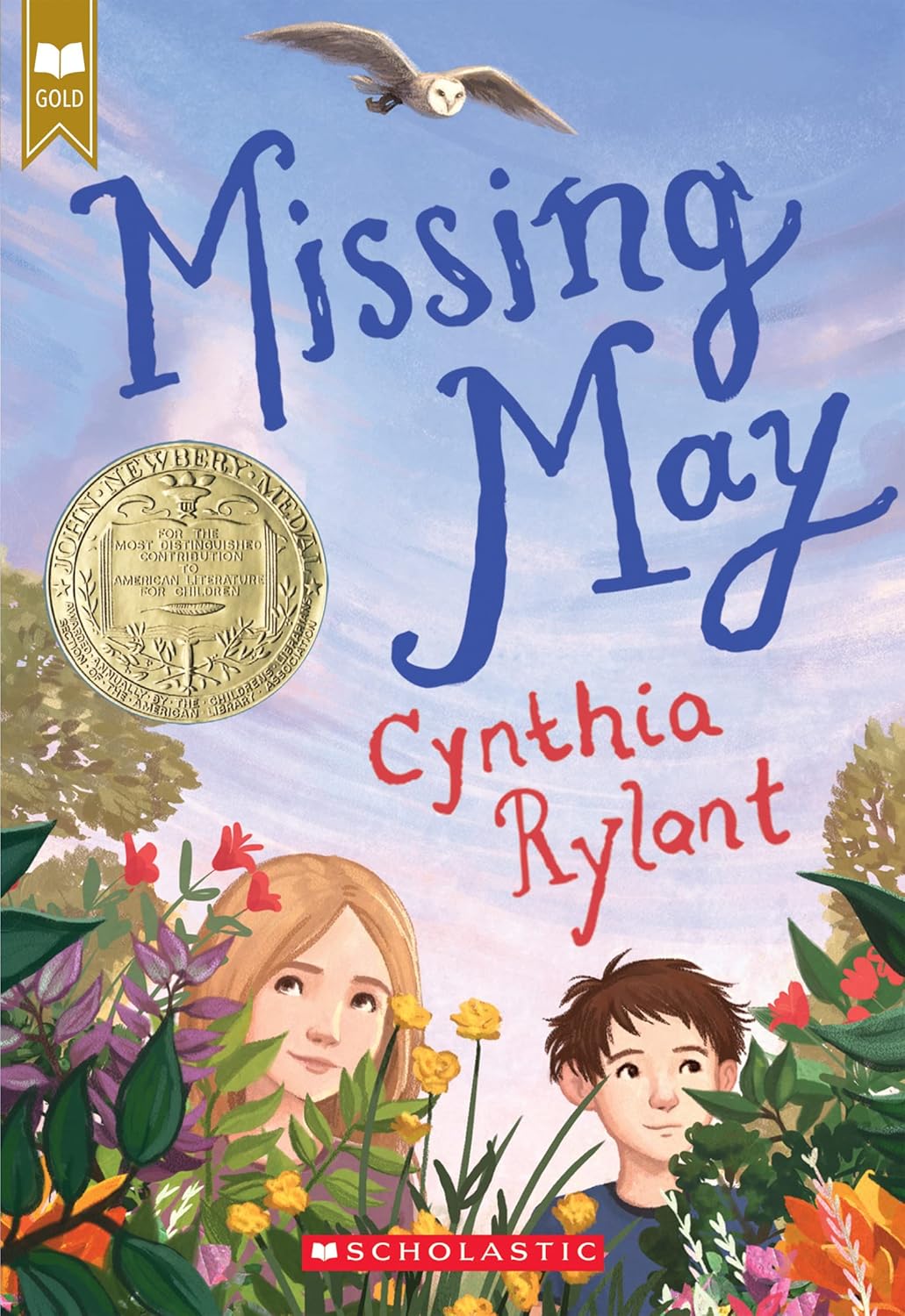
Missing May by Cynthia Rylant is a Newbery Medal–winning novel about a twelve-year-old girl named Summer and her Uncle Ob, who are struggling to find their footing after the death of May — the woman who held their small West Virginia family together. This complete guide covers the reading level, age appropriateness, themes, characters, and everything parents and teachers need to know about this brief but deeply moving book.
For Parents
Missing May is a gentle, literary novel about grief and love told through the eyes of a child. It deals directly with the death of a beloved family member, but does so with warmth and hope rather than despair. Best suited for readers ages 10–13, it’s a short book that leaves a lasting impression — and a meaningful one to share and discuss with a child who has experienced loss.
For Teachers
A Newbery Medal winner frequently used in grades 5–7, Missing May is excellent for teaching voice, tone, and how authors convey emotion through precise, economical language. At under 100 pages, it works well as a quick whole-class read or as part of a themed unit on grief, family, or Appalachian literature. Pairs naturally with Bridge to Terabithia or Dicey’s Song for a thematic unit on loss and resilience.
Missing May at a Glance
Find on Amazon →| Author | Cynthia Rylant |
| Published | 1992 |
| Grade Level | 5–7 (our assessment) |
| Recommended Age | 10–13 |
| Flesch-Kincaid Grade | 4.8 |
| Word Count | ~18,000 |
| Pages | 89 (standard paperback) |
| Chapters | 9 |
| Genre | Realistic fiction / literary fiction |
| Setting | Deep Water, West Virginia, early 1990s |
| Awards | Newbery Medal (1993) |
For official Lexile and AR levels, visit Lexile.com or AR BookFinder. ReadingVine provides independent editorial assessments.
What Reading Level Is Missing May?
Missing May reads at approximately a 5th–7th grade level by our editorial assessment, with a Flesch-Kincaid grade level of around 4.8. The vocabulary and sentence structure are accessible to strong 4th-grade readers, but the emotional depth and lyrical quality of Rylant’s prose place it most naturally in the upper-elementary to middle school range.
What makes this book more sophisticated than its word-level score suggests is the voice. Rylant writes Summer’s narration with a specificity and tenderness that rewards close reading. Much of what the book is “about” is felt rather than stated — grief, love, and the need to keep going are communicated through detail and atmosphere as much as through plot. Younger or more reluctant readers can follow the story easily, but readers in grades 5–7 will get the most out of its subtleties.
It’s also worth noting that at under 100 pages, Missing May is unusually short for a Newbery Medal winner. It reads quickly, but it’s a book that deserves slow attention. For official Lexile and Accelerated Reader scores, visit Lexile.com or AR BookFinder.
What Age Is Missing May Appropriate For?
We recommend Missing May for readers ages 10–13. The book’s central subject — the death of a beloved family member and the grief that follows — is handled with honesty and gentleness, but it is real and present throughout. There is no violence, no sexual content, and no strong language. The difficulty is entirely emotional.
The entire novel centers on the death of May, who died before the story begins. Her death and the grief of the characters left behind are the primary focus of the book. Uncle Ob becomes deeply depressed following May’s death, and there is a brief period where Summer worries about his wellbeing. These themes are handled with care and without graphic content, but sensitive younger readers may find them heavy. There is no violence, no language, and no sexual content.
For children who have experienced the loss of a loved one, Missing May can be a particularly meaningful and validating read. Its portrayal of grief — messy, ongoing, not neatly resolved — is unusually honest for a children’s novel, and many readers find it comforting rather than upsetting.
What Is Missing May About?
Summer is a twelve-year-old girl who has lived with her Aunt May and Uncle Ob in a small trailer in the hills of West Virginia since she was six years old. Before coming to them, she had been shuffled between relatives who tolerated her but never truly wanted her — until May. May’s love for Summer was uncomplicated and whole, and the six years Summer spent with her and Ob were the first time she truly felt at home. Then May dies, and everything comes undone.
The novel takes place in the months after May’s death. Ob is adrift — consumed by grief, barely eating, talking to May’s spirit whirligigs in the yard. Summer, watching him, is afraid of losing the only other person who loves her. When Ob becomes convinced that a local eccentric named Cletus might help him make contact with May’s spirit, the three of them set out on a road trip to find a woman known as a spiritual medium — a journey that becomes less about reaching a destination and more about what the three of them are searching for.
Cynthia Rylant grew up in the Appalachian region of West Virginia and has spoken about drawing on that landscape and its people in her fiction. The setting of Missing May — its poverty, its quietness, the dignity of its characters — reflects that background. The book is as much a portrait of a place and a way of life as it is a story about grief.
Missing May Characters
Is Missing May Banned?
Missing May has not been banned or widely challenged and does not appear on the American Library Association’s lists of frequently challenged books. It is considered a distinguished work of children’s literature and has remained a recommended and assigned text since winning the Newbery Medal in 1993. Its themes — grief, spirituality, and depression — are handled with sensitivity and without graphic or controversial content. The book is currently in wide circulation in schools and libraries across the United States.
Missing May Themes and Lessons
The central theme of Missing May is grief — specifically, what it looks like to love someone so completely that their absence threatens to unmoor you entirely. Rylant portrays grief not as a tidy process with stages but as something disorienting and ongoing. Ob’s grief is the most visible: he stops functioning, talks to May’s spirit, and needs Summer to hold on for both of them. Summer’s grief is quieter but equally deep — she lost not just a person but the first home she ever truly had.
Running alongside grief is the theme of belonging and what it means to be chosen. Summer’s backstory — passed between relatives who didn’t really want her — makes May’s love for her feel extraordinary rather than ordinary, and the novel asks readers to sit with the weight of that. A secondary theme is the dignity of small, quiet lives. Rylant writes Ob and Summer’s poverty without either romanticizing or pitying it, and in doing so treats her characters — and by extension her readers — with respect.
Discussion starters for families: How do Summer and Ob grieve differently? What does May’s presence feel like even though she’s not in the story? Why do you think Cletus matters so much to this story? What do you think the whirligigs represent? What does the ending suggest about how Summer and Ob will be okay?
How Many Pages and Chapters Are in Missing May?
The standard paperback edition of Missing May is 89 pages, divided into 9 chapters. The word count is approximately 18,000 words, making it one of the shortest Newbery Medal winners ever — closer in length to a novella than a full novel.
For readers in the target age range of 10–13, expect a reading time of roughly 1.5–3 hours, or 2–3 days of reading at around 30 minutes per session. Its brevity makes it an excellent classroom text — a whole-class reading can be completed in one to two weeks with time for substantial discussion. As a read-aloud, plan for approximately 3–4 hours total.
Books Similar to Missing May
About Cynthia Rylant
Cynthia Rylant (born 1954) is one of the most celebrated authors in American children’s literature, with a body of work spanning picture books, early readers, poetry, and novels. She grew up in the Appalachian mountains of West Virginia — an upbringing she has described as isolated and sometimes difficult — and that landscape, and the resilience of the people who live there, runs through much of her work. Missing May won the Newbery Medal in 1993; she also received a Newbery Honor for A Fine White Dust. Rylant is equally well known for her picture books, including the beloved When I Was Young in the Mountains, and her long-running Henry and Mudge and Mr. Putter and Tabby series. She has received the ALAN Award and numerous other honors for her contribution to children’s and young adult literature.
Missing May: Frequently Asked Questions
What is the reading level of Missing May?
Missing May has a Flesch-Kincaid grade level of approximately 4.8, meaning the text itself is accessible to strong 4th-grade readers. Our editorial assessment places it at grades 5–7 based on its emotional and thematic complexity. For official Lexile and Accelerated Reader scores, visit Lexile.com or AR BookFinder.
How long is Missing May?
Missing May is 89 pages and approximately 18,000 words — making it one of the shortest Newbery Medal winners ever. Most readers in the 10–13 age range will finish it in 1.5 to 3 hours. It’s a quick read in terms of page count, but a slow read in the best sense: the kind of book that rewards lingering.
What grade is Missing May typically assigned in?
Missing May is most commonly assigned in grades 5, 6, and 7. Its short length makes it practical as a whole-class read, and its Newbery Medal status and thematic richness make it a strong choice for literature units focused on character, voice, and grief. It is sometimes paired with Bridge to Terabithia or Dicey’s Song in themed units.
Is Missing May sad?
Yes — honestly and beautifully so. The book deals directly with grief and does not pretend the loss of someone you love is easy or quickly resolved. But it is not a hopeless book. The ending moves toward light, and the love between Summer, Ob, and May is so vividly rendered that many readers describe the book as more comforting than devastating. It’s the kind of sad that feels true rather than the kind that overwhelms.
Does Missing May deal with death?
Yes. May’s death before the story begins is the novel’s central fact, and grief is its central subject. The book also touches briefly on Ob’s emotional collapse following her death. There are no other deaths in the story, and nothing is handled graphically — but families should know that loss and mourning are what the entire novel is about.
Why did Missing May win the Newbery Medal?
Missing May won the Newbery Medal in 1993 for distinguished contribution to American literature for children. The award recognized Rylant’s extraordinary use of voice, her ability to render poverty and grief with dignity and without sentimentality, and the emotional precision of her prose. The book does more in 89 pages than most novels accomplish in three times the length — and that economy and clarity were central to the Medal committee’s recognition.
Is Missing May part of a series?
No. Missing May is a standalone novel. It is not connected to any of Cynthia Rylant’s other books or series.
Is Missing May appropriate for a child who has experienced loss?
Many parents and educators find Missing May to be a particularly meaningful book for children who have lost someone they love. Its portrayal of grief is honest and validating — it doesn’t rush the characters toward recovery or suggest that sadness is wrong. For children who have experienced loss, seeing those feelings reflected honestly in a story can be genuinely comforting. We’d recommend reading it together and leaving time to talk about it afterward.