
 = Partner Site
Native Son Reading Level: A Complete Guide
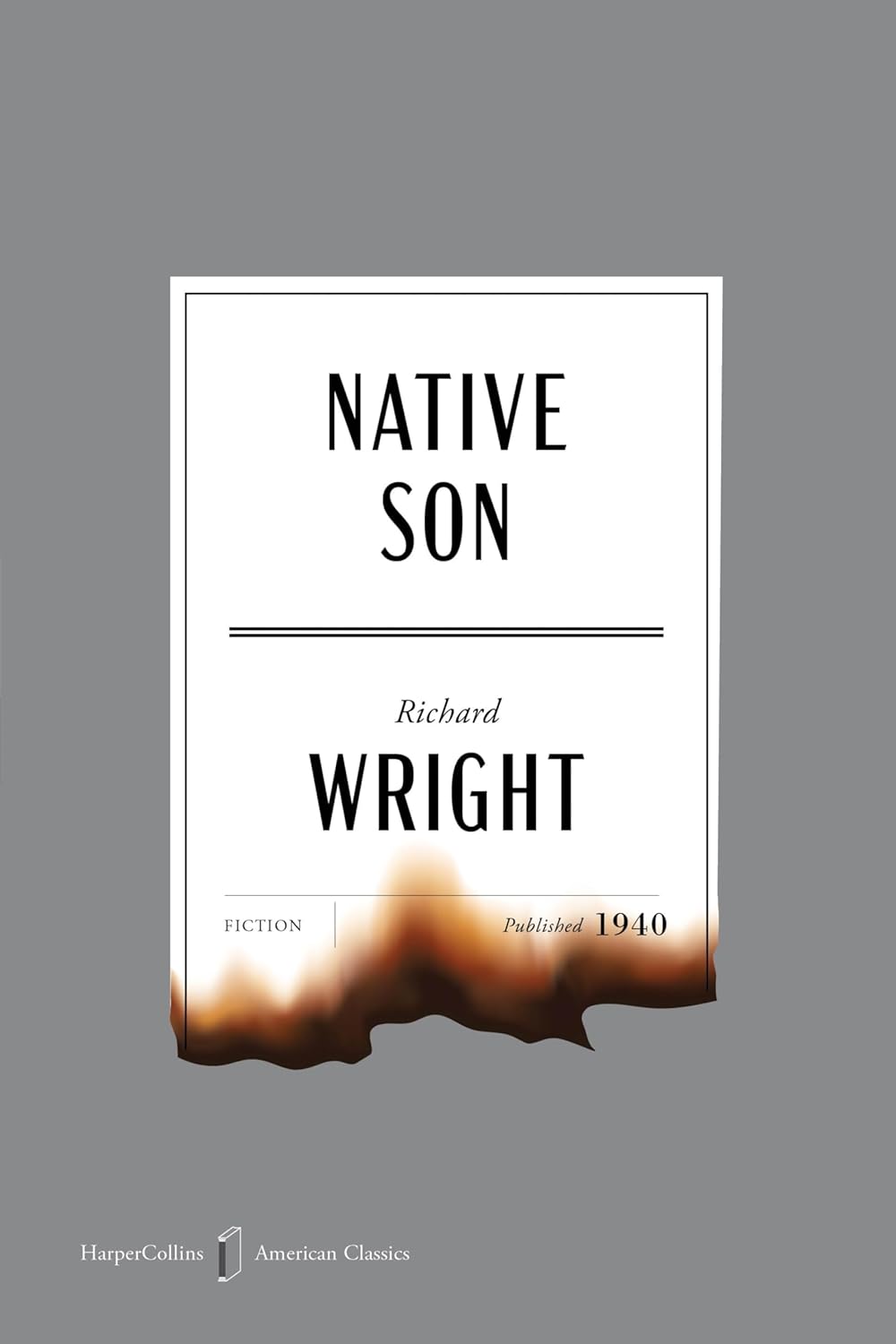
Native Son, written by Richard Wright and published by Harper & Brothers on March 1, 1940, is a novel about Bigger Thomas, a twenty-year-old Black man living in poverty on the South Side of Chicago in the 1930s. Bigger has been hired as a chauffeur by the Dalton family — wealthy white philanthropists who own the slum buildings where Bigger’s family lives. On his first night of work, Bigger accidentally kills Mary Dalton, the Daltons’ daughter, while trying to prevent her from being discovered in her room by her blind mother. The accidental killing sets in motion the three-part structure of the novel: Book One (Fear), Book Two (Flight), and Book Three (Fate). Native Son was the first novel by a Black author selected by the Book-of-the-Month Club. The Book-of-the-Month Club required several cuts to the original manuscript before publication; the restored text — first established by the Library of America and available in the Harper Perennial Deluxe edition — is the version considered authoritative. Wright also wrote an essay, “How Bigger Was Born,” included in most standard editions, that describes the composition of the novel. This guide covers reading level, age appropriateness, content, the two editions, structure, themes, the challenge history, and similar books.
For Parents
A novel about a young Black man in 1930s Chicago who accidentally kills a white woman and is subsequently tried and executed. Ages 16–18, grades 11–12. Content: the killing of Mary Dalton; Bigger’s deliberate killing of his girlfriend Bessie; graphic violence; racial slurs throughout; sexual content (the restored edition includes a scene removed from the 1940 Book-of-the-Month Club text). Standard 11th–12th grade and AP Literature assignment. The restored (Library of America / Harper Perennial Deluxe) edition and the original 1940 Book-of-the-Month Club edition differ significantly.
For Teachers
A grades 11–12 and AP Literature standard. Lexile 700L; ATOS not confirmed; word count approximately 126,000–148,500 (editions vary significantly). Published 1940. The edition question is significant for classroom use — the restored text (Library of America; Harper Perennial Deluxe) is longer and more graphic than the Book-of-the-Month Club version that was the standard for decades. Wright’s essay “How Bigger Was Born” is frequently assigned alongside the novel. Challenged repeatedly in school districts from the 1970s through the 1990s for violence, sexual content, and profanity.
Native Son at a Glance
Find on Amazon →| Author | Richard Wright (1908–1960) |
| Published | March 1, 1940 (Harper & Brothers) |
| Grade Level | 11–12 (our assessment); AP Literature |
| Recommended Age | 16–18 |
| Lexile | 700L |
| ATOS Level | Not confirmed |
| Word Count | ~126,000–148,500 (editions vary) |
| Pages | ~504–544 (editions vary) |
| Structure | 3 parts: Book One: Fear / Book Two: Flight / Book Three: Fate |
| Genre | Literary fiction / social protest novel / psychological fiction |
| Setting | South Side Chicago; 1930s |
For official Lexile and AR levels, visit Lexile.com or AR BookFinder. ReadingVine provides independent editorial assessments.
What Reading Level Is Native Son?
Lexile 700L; ATOS not confirmed. Word count varies by edition: approximately 126,000 words (1940 Book-of-the-Month Club text) to approximately 148,500 words (restored Library of America text). Interest level grades 9–adult. Our assessment: grades 11–12, ages 16–18, primarily for AP Literature and advanced senior English. The Lexile of 700L reflects Wright’s direct, propulsive prose style — accessible in sentence-level complexity — but the novel’s thematic demands, psychological depth, and content (graphic violence, racial slurs, sexual content in the restored edition) make it most appropriate for mature 11th–12th grade readers. For official scores, visit Lexile.com or AR BookFinder.
Two Editions — The Book-of-the-Month Club Text and the Restored Text
Before publication in 1940, the Book-of-the-Month Club — which had selected Native Son as its main selection, making Wright the first Black author to receive this distinction — required cuts to Wright’s original manuscript. The cuts included a scene in which Bigger masturbates in a movie theater, additional sexual content, some racial content, and passages that were deemed too inflammatory. The 1940 Book-of-the-Month Club text was the standard edition for decades.
The Library of America restored Wright’s original manuscript text, first published in their two-volume Richard Wright: Early Works (1991). The Harper Perennial Deluxe edition uses this restored text and also includes Wright’s essay “How Bigger Was Born” and notes on the text. The restored edition is longer, more graphic, and considered by scholars to be the authoritative version of the novel. Teachers and parents should be aware that the two versions differ, and should confirm which edition is being used when checking page counts or word counts.
What Age Is Native Son Appropriate For?
Ages 16–18, grades 11–12. Content worth noting for parents and teachers:
Native Son contains graphic violence: Bigger’s accidental killing of Mary Dalton, his deliberate killing of his girlfriend Bessie Mears (by striking her and throwing her down an air shaft), and the broader violence of a racially structured society. Racial slurs appear throughout in dialogue and narration, reflecting the language of 1930s Chicago. The restored Library of America / Harper Perennial Deluxe edition includes sexual content that was removed from the original 1940 Book-of-the-Month Club publication. These elements are central to the novel’s subject and not incidental. The novel is most appropriate for mature readers in grades 11–12 and AP Literature with classroom instruction and historical context.
What Is Native Son About?
Bigger Thomas is twenty years old and has lived his entire life on Chicago’s South Side, in the Black Belt — the overcrowded, impoverished neighborhood to which Black residents of Chicago were largely confined by formal and informal segregation in the 1930s. He lives with his mother Hannah, his brother Buddy, and his sister Vera in a single room. He has had previous encounters with the law. He has been offered work as a chauffeur for the Dalton family — wealthy white philanthropists who own much of the slum housing in the Black Belt, including the building where Bigger’s family lives.
Book One: Fear. On Bigger’s first night as the Daltons’ chauffeur, he drives Mary Dalton and her boyfriend Jan Erlone — a Communist organizer — around the city, eating and drinking with them. Both Jan and Mary insist on treating Bigger as an equal, which frightens and disorients Bigger in ways he cannot articulate. He carries the drunk Mary to her bedroom. When her blind mother enters the room, Bigger, in a panic, smothers Mary with a pillow to prevent her discovery. He burns Mary’s body in the Dalton furnace and begins constructing a cover story, eventually attempting to frame Jan for the murder.
Book Two: Flight. As the investigation into Mary’s disappearance closes in on Bigger, he flees into the South Side with his girlfriend Bessie Mears. He kills Bessie — fearing she will betray him — and flees alone. He is eventually captured on a rooftop by a large police force and mob.
Book Three: Fate. Bigger is tried for the murder of Mary Dalton; Bessie’s murder is used primarily as evidence of his character rather than charged separately. His attorney, Boris Max — a Communist lawyer — delivers a lengthy argument that frames Bigger’s crimes as the product of a racially structured society that denied him full humanity. Bigger is sentenced to death. In his final conversations with Max before his execution, Bigger reaches a partial self-understanding: that what he felt after Mary’s killing — fear transmuted into something like agency — was the only moment in his life when he felt that he had acted.
Native Son Characters
“How Bigger Was Born” — Wright’s Essay
Most standard editions of Native Son include Wright’s essay “How Bigger Was Born,” originally delivered as a lecture and published in 1940. In it, Wright describes the composite of real people and experiences that contributed to the character of Bigger Thomas — including five different Black men Wright had known, each representing a different form of violent resistance to the constraints of Jim Crow. He also describes the compositional history of the novel and his intentions for what Bigger would represent. The essay is frequently assigned alongside the novel and provides the most direct statement of Wright’s own understanding of the character. Teachers who want students to understand Wright’s intentions before engaging with the novel typically assign excerpts from “How Bigger Was Born” as an introduction.
Is Native Son Banned?
Native Son has been challenged and banned in multiple school districts across several decades, primarily for graphic violence, sexual content, and profanity. Documented challenges include: Goffstown, New Hampshire (1978); Elmwood Park, New Jersey (1978); North Adams, Massachusetts (1981); Berrian Springs, Michigan (1988); High Point, North Carolina (1996); Fort Wayne, Indiana (1998); and Irvington High School in Fremont, California (1998), where it was removed after parents called it unnecessarily violent and sexually explicit. The original 1940 Book-of-the-Month Club text — which removed several of the most explicit scenes — was in many cases the edition being challenged; the restored text is more graphic.
Native Son Themes and Lessons
The novel’s structural argument — that Bigger’s crimes are the product of the social conditions of racial segregation and poverty rather than individual pathology — is made explicitly through Boris Max’s courtroom speech, which is also the novel’s most disputed element. James Baldwin, in his 1949 essay “Everybody’s Protest Novel,” argued that Wright’s approach in Native Son dehumanized Bigger by reducing him to a sociological argument, making him a product of conditions rather than a full human being. This debate — between Wright’s protest novel approach and Baldwin’s critique of it — is a standard AP Literature discussion and one of the most productive contexts for reading the novel.
The novel’s treatment of Bessie Mears is frequently discussed in contemporary teaching contexts. Bigger kills Bessie deliberately; her death is more morally straightforward than Mary’s accidental killing; and yet the legal system and the novel’s dramatic energy both focus on Mary’s death rather than Bessie’s. This disparity reflects the racial hierarchy the novel is critiquing — the life of a Black woman is treated as less significant than the life of a white woman — and is itself a subject of analysis.
Discussion questions: What does Boris Max’s argument say about who is really on trial in Book Three — and does Wright endorse that argument? How does the novel treat Bessie’s death differently from Mary’s — and what does that reflect about the society Wright depicts? What does Bigger mean when he says, near the end, that what he has done is “murder” and yet it felt like something he needed to do? How does Wright’s essay “How Bigger Was Born” change how you read the novel?
Books Similar to Native Son
About Richard Wright
Richard Nathaniel Wright was born on September 4, 1908, at a plantation between Roxie and Natchez, Mississippi. His father, a sharecropper, abandoned the family when Wright was five; his mother suffered a series of strokes that left her incapacitated, and Wright spent much of his childhood moving between relatives and orphanages in Mississippi and Tennessee. He was largely self-educated, reading voraciously despite the limited access to books in the Jim Crow South. He moved to Memphis and then Chicago as part of the Great Migration, and joined the Communist Party in the 1930s — an affiliation that influenced the political framework of Native Son and that he later broke with. His short story collection Uncle Tom’s Children (1938) established his reputation. Native Son (1940) and his memoir Black Boy (1945) are his most widely taught works. In 1946 he moved to Paris, where he joined the circle of existentialist writers and thinkers and spent the rest of his life. He died in Paris on November 28, 1960. The relationship between Wright and Ralph Ellison — who was his protégé and then his literary critic — and between Wright and James Baldwin — who published influential critiques of Wright’s protest novel approach — are among the most discussed relationships in American literary history.
Native Son: Frequently Asked Questions
What reading level is Native Son?
Lexile 700L; ATOS not confirmed. Word count varies significantly by edition: approximately 126,000 words (1940 Book-of-the-Month Club text) to approximately 148,500 words (restored Library of America / Harper Perennial Deluxe text). Our assessment: grades 11–12, ages 16–18, primarily for AP Literature. For official scores, visit Lexile.com or AR BookFinder.
What is Native Son about?
Bigger Thomas, a twenty-year-old Black man on Chicago’s South Side in the 1930s, accidentally kills Mary Dalton — the daughter of the wealthy white family that has hired him as a chauffeur — and then deliberately kills his girlfriend Bessie during his flight from the investigation. He is caught, tried, and sentenced to death. The novel follows his psychology across three books — Fear, Flight, and Fate — asking what conditions produced a man like Bigger Thomas.
What are the two different editions of Native Son?
The original 1940 publication was cut by the Book-of-the-Month Club, which required removal of sexual content and other passages before selecting the novel. The restored text — established by the Library of America and available in the Harper Perennial Deluxe edition — uses Wright’s original manuscript and is longer and more graphic. The restored edition is now considered the authoritative text. Teachers and students should confirm which edition they are using, as page counts and content differ significantly.
Is Native Son banned?
It has been challenged and removed in multiple school districts from the 1970s through the 1990s, primarily for graphic violence, sexual content, and profanity. Documented challenges include districts in New Hampshire, New Jersey, Massachusetts, Michigan, North Carolina, Indiana, and California. It is not among the ALA’s most-challenged lists for recent decades but has a documented challenge history.
What is the significance of the debate between Wright and Baldwin?
James Baldwin’s 1949 essay “Everybody’s Protest Novel” argued that Wright’s approach in Native Son — framing Bigger as a product of social conditions — paradoxically dehumanized Bigger by reducing him to a sociological argument rather than presenting him as a full human being. This critique — of the protest novel form itself — became one of the central debates in African American literary criticism and is a standard AP Literature discussion topic when teaching either Wright or Baldwin.
What grade is Native Son typically assigned?
Most commonly in 11th or 12th grade AP Literature and Composition, and in advanced senior English courses focused on African American literature or 20th-century American fiction. Its content and length make it most appropriate for mature high school readers with classroom instruction.