
 = Partner Site
Adventures of Huckleberry Finn Reading Level: A Complete Guide
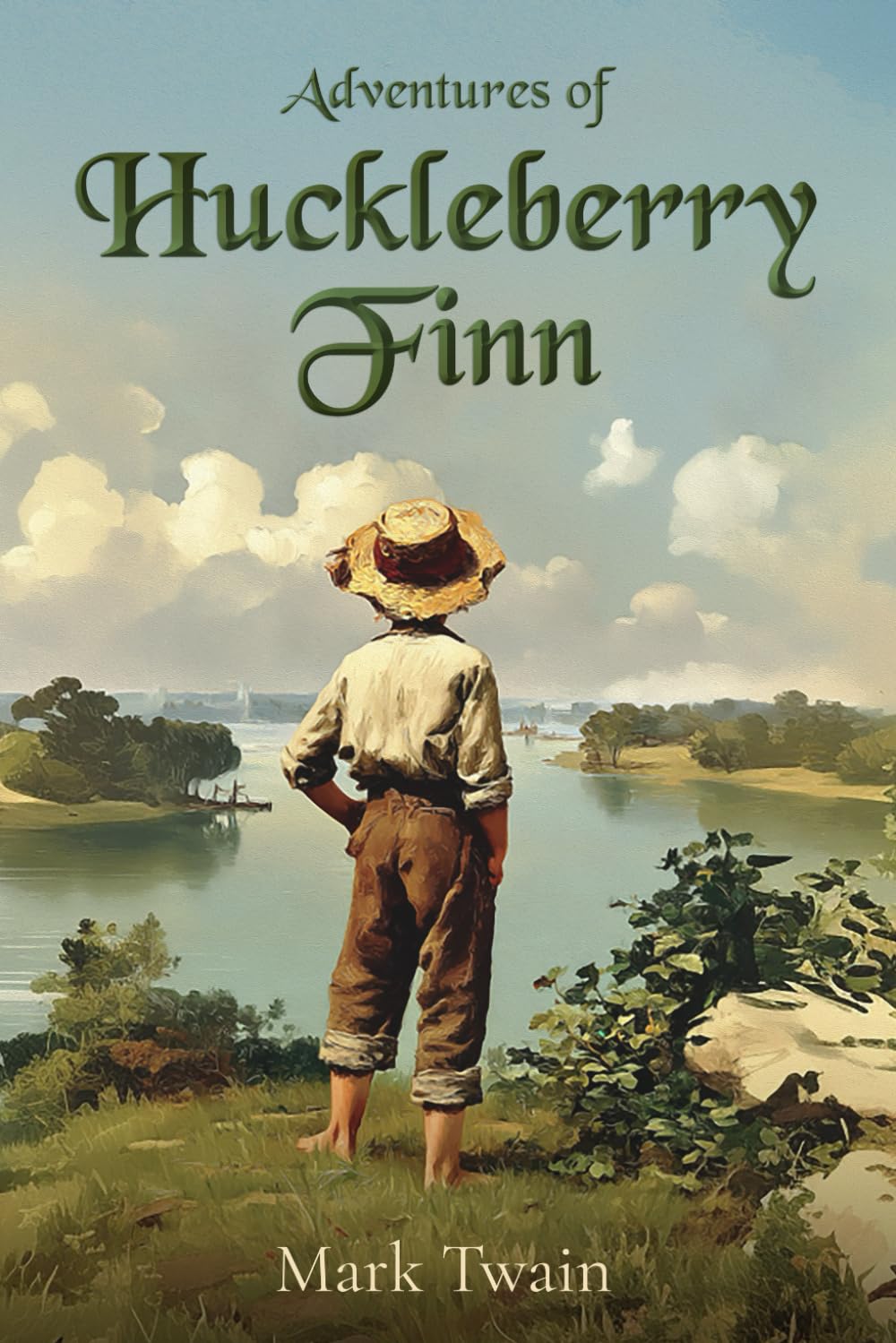
Adventures of Huckleberry Finn, written by Mark Twain (the pen name of Samuel Langhorne Clemens) and published in the United Kingdom in December 1884 and in the United States in February 1885, is a novel set in the antebellum American South. Narrated in the first person by thirteen-year-old Huckleberry Finn, it follows Huck’s escape from his abusive, alcoholic father and his journey down the Mississippi River on a raft with Jim, an enslaved man who has escaped from his owner. The novel is a direct sequel to The Adventures of Tom Sawyer (1876). It is written throughout in vernacular English, capturing the dialects and speech patterns of the Missouri and Mississippi River region in the decades before the Civil War. Among the most widely assigned novels in American high school curricula, it is also among the most challenged and banned, with a documented challenge history stretching from 1885 to the present — primarily for its use of racial slurs, though early challenges cited “coarse language” and dialect. This guide covers reading level, age appropriateness, content, the challenge history, themes, and similar books.
For Parents
A first-person narrated adventure novel about a boy and an enslaved man traveling down the Mississippi River in the antebellum South. Ages 13–18, grades 9–12. Content: a racial slur appears over 200 times in the text — this is the primary content concern and the primary reason for the novel’s long challenge history. Huck’s father is alcoholic and physically abusive. Violence occurs in several episodes. The vernacular narration includes dialect and non-standard spelling throughout. Standard 9th–11th grade assignment.
For Teachers
A grades 9–12 American literature standard, most commonly assigned in 9th–11th grade. Lexile varies significantly by scoring method: 650L (TeachingBooks) to 980L (MetaMetrics chapter-level average) — see reading level section below. ATOS 6.6; word count 105,590. One of the most challenged books in ALA records: ranked #5 in the 1990s, #14 in the 2000s, and #33 in the 2010s. Multiple school districts have removed it from mandatory reading lists while retaining it in libraries. Public domain; available free at Project Gutenberg.
Adventures of Huckleberry Finn at a Glance
Find on Amazon →| Author | Mark Twain (Samuel Langhorne Clemens, 1835–1910) |
| Published | December 1884 (UK); February 1885 (US) |
| Grade Level | 9–12 (our assessment; most commonly 9th–11th grade) |
| Recommended Age | 13–18 |
| Lexile | 650L (TeachingBooks) / 980L (MetaMetrics chapter avg.) |
| ATOS Level | 6.6 |
| Word Count | 105,590 |
| Pages | ~362 (standard editions) |
| Chapters | 43 |
| Genre | Adventure / picaresque / historical fiction |
| Setting | Missouri and the Mississippi River; antebellum period (pre-Civil War) |
| Status | Public domain; available free at Project Gutenberg |
For official Lexile and AR levels, visit Lexile.com or AR BookFinder. ReadingVine provides independent editorial assessments.
What Reading Level Is Adventures of Huckleberry Finn?
The Lexile score for this novel varies significantly depending on the scoring method. TeachingBooks lists it at 650L; MetaMetrics’ chapter-level analysis produces an average closer to 980L, with individual chapters ranging from 710L to 1110L. The ATOS level is 6.6. The wide variation reflects the vernacular narration: Huck’s dialect — with its non-standard spelling, grammar, and syntax — scores differently from standard prose depending on how the formula is applied. The actual reading experience for most high school students is more demanding than 650L suggests, both because of the dialect and because of the historical and social context the novel requires. Our assessment: grades 9–12, ages 13–18, most commonly assigned in 9th–11th grade. For official scores, visit Lexile.com or AR BookFinder.
What Is Adventures of Huckleberry Finn About?
Huckleberry Finn, thirteen years old, has been taken in by the Widow Douglas and her sister Miss Watson, who are attempting to educate him and “civilize” him in St. Petersburg, Missouri. His father Pap — a violent alcoholic — returns, kidnaps Huck, and holds him in a cabin across the river. Huck escapes by faking his own death and hiding on Jackson’s Island. There he encounters Jim, an enslaved man who belongs to Miss Watson and who has run away rather than be sold down the river to New Orleans. The two set off together on a raft down the Mississippi River, intending for Jim to reach the free states.
The journey takes them south rather than north — they miss the turn toward the Ohio River in a fog — and the episodes that follow include encounters with a wrecked steamboat, a feud between two families (the Grangerfords and the Shepherdsons), two con men who call themselves the Duke and the King, a scheme to defraud a dead man’s family, and various encounters with townspeople and communities along the river. Throughout, Huck wrestles with the question of whether to turn Jim in — the law and the social code of the time require it; his growing friendship with Jim pulls against that. Near the end of the novel, Huck learns that Jim has been sold and resolves to free him. Tom Sawyer reappears and takes charge of the rescue, which he elaborates into an unnecessarily complicated scheme. The resolution reveals that Miss Watson has already freed Jim in her will before she died.
Content Note — Racial Slurs and Language
The novel contains a racial slur directed at Black people over 200 times throughout the text. This is the primary reason the novel has been challenged and banned in school districts across the country since the 1950s. The slur is used as the standard term for Black people in the period and setting Twain depicts, appearing in narration and in dialogue by characters of all types.
In 2011 NewSouth Books published an edition in which the slur was replaced with the word “slave” — an edition proposed by an Auburn University professor who felt the pervasive use of the term made the book difficult to teach. This edition has itself been criticized on the grounds that altering the text misrepresents the historical and social reality Twain depicted. The original text is what is taught in the vast majority of classrooms where the novel is assigned.
Teachers and parents should also be aware that Huck’s father is depicted as alcoholic and physically abusive, and that several episodes include violence — a feud, murders, and the shooting of a man in the street.
Is Adventures of Huckleberry Finn Banned?
Adventures of Huckleberry Finn has one of the longest and most documented challenge histories of any American novel. It was first banned at the Concord, Massachusetts public library in 1885 — the year of its American publication — on grounds that the committee called “coarse” and “rough” language, including dialect and vernacular expressions. A reviewer at the time called it “the veriest trash.” In 1905 the Brooklyn Public Library removed it for using the word “sweat” instead of “perspiration.”
The nature of challenges shifted substantially in the 1950s. The NAACP lodged the first major objection based on the novel’s repeated use of a racial slur — which appears over 200 times in the text — and on the characterization of Jim. Since then, challenges based on racial content have been the most frequent and sustained. The novel ranked #5 on the ALA’s list of most challenged books in the 1990s, #14 in the 2000s, and #33 in the 2010s. It has been challenged in school districts in at least 23 states.
Recent actions include the Duluth, Minnesota school district removing it from its required curriculum in 2018, citing the need to protect the dignity of students. Multiple other districts have moved it from mandatory to optional reading while retaining it in school libraries. The novel remains in active use across most American high school curricula.
The Vernacular Language — A Note for Readers
Twain wrote the novel entirely in vernacular English — the spoken dialects of Missouri and the Mississippi River region in the antebellum period. Huck’s narration uses non-standard spelling, grammar, and syntax throughout: “sivilize,” “warn’t,” “knowed,” “reckon,” “I says.” Other characters speak in additional dialects. Twain included a prefatory note explaining that the novel uses seven distinct dialects, which he had carefully rendered from personal observation.
For first-time readers, the dialect can slow reading initially. Most students adjust to it within the first few chapters. It is a deliberate literary choice that conveys character and social position; the dialect speakers are not presented as less intelligent than characters who speak in standard English.
Adventures of Huckleberry Finn Themes and Lessons
The novel’s central moral conflict is Huck’s repeated struggle with whether to turn Jim in to the authorities. By the moral code of the society he was raised in, helping an enslaved man escape is a sin and a crime. Huck repeatedly concludes that he cannot bring himself to do it — but frames this as his own moral failure rather than as resistance to an unjust system. The moment in Chapter 31 when Huck decides he will “go to hell” rather than betray Jim is among the most discussed passages in American literature.
The novel is also a work of social satire. The communities Huck and Jim encounter along the river — the feuding families, the con men, the credulous townspeople, the violence and hypocrisy of respectable Southern society — are depicted critically throughout. Twain’s satire operates through Huck’s naive narration: Huck describes what he sees without fully understanding it, leaving the reader to draw conclusions about what it means.
Discussion questions: Why does Huck frame his decision to help Jim as a moral failure rather than a moral achievement? How does Twain use satire to critique the society Huck travels through? How is Jim portrayed — what does the text show about his character, and what are the debates about that portrayal? What does the ending — Tom Sawyer’s elaborate rescue scheme and the revelation that Jim was already freed — accomplish, and what are the criticisms of it?
Books Similar to Adventures of Huckleberry Finn
About Mark Twain
Mark Twain was the pen name of Samuel Langhorne Clemens, born on November 30, 1835, in Florida, Missouri. He grew up in Hannibal, Missouri — a Mississippi River town that served as the model for St. Petersburg in the Huck Finn and Tom Sawyer novels. He worked as a printer’s apprentice, a riverboat pilot on the Mississippi (from which he took his pen name: “mark twain” is a riverboat depth measurement indicating safe water), a journalist in Nevada and California, and a travel writer before achieving fame as a novelist and humorist. His major works include The Adventures of Tom Sawyer (1876), Adventures of Huckleberry Finn (1884), A Connecticut Yankee in King Arthur’s Court (1889), and Pudd’nhead Wilson (1894). He died on April 21, 1910, in Redding, Connecticut.
Adventures of Huckleberry Finn: Frequently Asked Questions
What reading level is Adventures of Huckleberry Finn?
Lexile scores vary by scoring method: 650L (TeachingBooks) to approximately 980L (MetaMetrics chapter-level average). ATOS 6.6; word count 105,590. Our assessment: grades 9–12, ages 13–18, most commonly assigned in 9th–11th grade. The wide Lexile range reflects how the vernacular dialect scores differently under different formulas. For official scores, visit Lexile.com or AR BookFinder.
What is Adventures of Huckleberry Finn about?
Thirteen-year-old Huck Finn escapes his abusive father and travels down the Mississippi River on a raft with Jim, an enslaved man who has run away to avoid being sold. The novel follows their journey through encounters with con men, feuding families, and various Mississippi River communities, while Huck repeatedly wrestles with whether to turn Jim in to the authorities.
Why is Adventures of Huckleberry Finn banned?
The novel has been challenged and banned for different reasons at different points in its history. The first ban, in Concord Massachusetts in 1885, cited coarse language and dialect. Since the 1950s, the primary reason for challenges has been the novel’s use of a racial slur — which appears over 200 times in the text — and concerns about the characterization of Jim. It ranked among the ALA’s top five most challenged books in the 1990s and has been challenged in school districts across at least 23 states.
What grade is Adventures of Huckleberry Finn typically assigned?
Most commonly in 9th, 10th, or 11th grade American literature courses. It appears in AP Literature and Composition curricula as well. Some districts have moved it from mandatory to optional reading; it remains widely assigned across American high schools.
Is there a version without the racial slurs?
In 2011, NewSouth Books published an edition in which the racial slur was replaced with the word “slave.” This edition was proposed by an Auburn University professor. It has been criticized by scholars and educators who argue that altering Twain’s language misrepresents the historical reality the novel depicts. The original text is the version taught in most classrooms where the novel is assigned.