
 = Partner Site
The Odyssey Reading Level: A Complete Guide
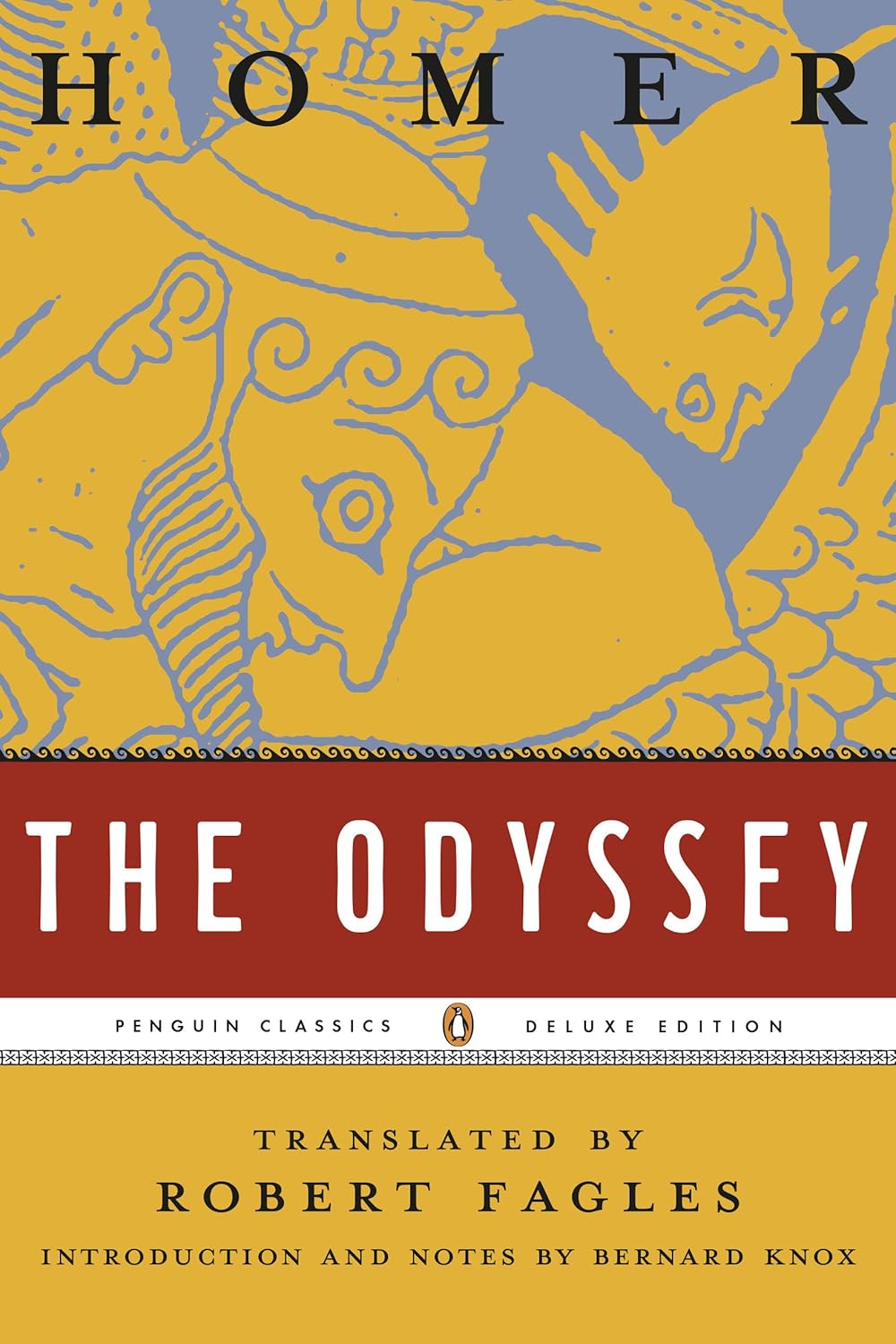
The Odyssey is an ancient Greek epic poem attributed to Homer, composed around the 8th century BC. It tells the story of Odysseus (Ulysses in Latin) and his ten-year journey home to the island of Ithaca following the fall of Troy — a journey complicated by the wrath of the god Poseidon, encounters with mythological creatures and supernatural beings, and the extended absence that has left his wife Penelope and son Telemachus vulnerable to a group of aggressive suitors competing for Penelope’s hand and the throne of Ithaca. The poem consists of 24 books totaling 12,109 lines in dactylic hexameter — the standard meter of ancient Greek epic poetry. It follows chronologically from the events of Homer’s Iliad, which covers the Trojan War itself. The Odyssey is one of the most widely assigned texts in American high school and college curricula, typically taught in 9th or 10th grade English or in Advanced Placement Literature and Composition courses. Because the poem exists only in translation for English-speaking readers, the choice of translation is a significant practical consideration — different translations vary substantially in reading level, tone, and accessibility. This guide covers reading level, the translation question, content, structure, themes, and similar books.
For Parents
An ancient Greek epic poem about Odysseus’s ten-year journey home after the Trojan War, including encounters with gods, monsters, and supernatural figures. Ages 13–18, grades 9–12. Content: violence in battle and against the suitors; brief descriptions of Odysseus’s relationships with Circe and Calypso; the Cyclops blinding; characters killed. The reading level varies significantly by translation — see the translation section below. Commonly assigned in 9th–10th grade and in AP curricula.
For Teachers
A grades 9–12 standard — most commonly assigned in 9th–10th grade and in AP Literature. Lexile varies by translation: the Fagles translation (the most widely used in schools over the past three decades) has a Lexile of approximately 1050L; the Wilson translation (2017, increasingly adopted) is more accessible. The 24-book structure allows selective assignment; most curricula assign key books rather than the full text. Public domain in original Greek; specific translations are under copyright.
The Odyssey at a Glance
Find on Amazon →| Author | Homer (attributed; composed c. 8th century BC) |
| Original language | Ancient Greek (Homeric Greek dialect) |
| Form | Epic poem; dactylic hexameter; 24 books; 12,109 lines |
| Grade Level | 9–12 (our assessment; commonly 9th–10th grade) |
| Recommended Age | 13–18 |
| Lexile | Varies by translation: ~1050L (Fagles); ~740L (some editions) |
| ATOS Level | ~10.3 (varies by translation) |
| Genre | Epic poetry / mythology |
| Setting | Ancient Mediterranean; c. 13th–12th century BC |
| Status | Public domain (original Greek); translations under copyright |
For official Lexile and AR levels by specific edition, visit Lexile.com or AR BookFinder and search by ISBN. ReadingVine provides independent editorial assessments.
What Reading Level Is The Odyssey?
The reading level of The Odyssey depends entirely on which translation is used, and the variation is significant. The Robert Fagles translation (1996, Penguin Classics) — the most widely used in American high school and university classrooms over the past three decades — has a Lexile of approximately 1050L and an ATOS of approximately 10.3. The Emily Wilson translation (2017, W.W. Norton) — the first complete English translation by a woman, now increasingly adopted in high school and college curricula — is more accessible in language and syntax, with a lower effective Lexile. Older translations (Fitzgerald 1961, Lattimore 1965) have different scoring profiles. When looking up official Lexile or AR scores, search by the specific translation’s ISBN rather than by title alone. Our assessment: grades 9–12, ages 13–18, for the major verse translations in common classroom use. For official scores, visit Lexile.com or AR BookFinder.
Which Translation? The Most Important Practical Question
Because The Odyssey was composed in ancient Greek, English-speaking readers encounter it exclusively through translation — and the choice of translation significantly shapes the reading experience, the difficulty level, and what aspects of the poem are emphasized. The four translations most commonly used in American classrooms:
Emily Wilson (2017, W.W. Norton) — The first complete English translation of The Odyssey by a woman. Uses clear, contemporary language with a consistent iambic pentameter line. Columbia University replaced Lattimore with Wilson as the standard text for its Literature Humanities core curriculum soon after publication. Widely considered the most accessible of the major verse translations for contemporary readers.
Robert Fagles (1996, Penguin Classics) — The most widely used translation in American high school and university courses for the past thirty years. Uses energetic, dramatic contemporary English; Bernard Knox’s introduction is frequently assigned alongside it. The standard reference for most current high school curricula.
Robert Fitzgerald (1961, Farrar, Straus and Giroux) — A verse translation that has been used in classrooms for decades. Known for its lyrical quality; considered more poetic in tone than Fagles but less immediately accessible than Wilson.
Richmond Lattimore (1965, Harper Perennial) — A translation that prioritizes fidelity to the Homeric Greek, including the formulaic repetitions (“wine-dark sea,” “rosy-fingered Dawn”) that appear throughout the original. More demanding to read than Wilson or Fagles; most valued by readers interested in staying close to Homer’s structure and diction.
For classroom use with grades 9–10, the Wilson translation is the most accessible starting point. For AP Literature and college courses, Fagles remains the most common choice, though Wilson is increasingly adopted. When searching databases for reading level scores, use the specific translation’s ISBN.
Structure — The 24 Books
The Odyssey is divided into 24 books (sometimes called cantos or chapters). Most high school and AP curricula do not assign all 24 books; teachers typically assign selected books covering the major narrative episodes. The poem’s structure falls into three broad sections:
The Telemachy (Books 1–4): The poem opens not with Odysseus but with his son Telemachus, now a young man, in Ithaca. Telemachus has grown up without his father; the suitors who have invaded his home are consuming his family’s resources and threatening his mother Penelope. With Athena’s guidance, Telemachus sets out to find news of his father.
Odysseus’s Journey (Books 5–12): The narrative shifts to Odysseus himself, stranded on the island of the nymph Calypso. His journey home takes him through the island of the Phaeacians, where he tells the story of his wanderings in a long flashback — including the encounters with the Cyclops Polyphemus, the witch-goddess Circe, the Sirens, Scylla and Charybdis, the Underworld, and the island of the sun god Helios.
The Return and Revenge (Books 13–24): Odysseus finally reaches Ithaca in disguise, reunites with his loyal swineherd Eumaeus and his son Telemachus, and plans the destruction of the suitors. The poem ends with the contest of the bow, the killing of the suitors, Odysseus’s reunion with Penelope, and a brief resolution of the conflict with the suitors’ families.
What Is The Odyssey About?
Ten years after the end of the Trojan War, all of the Greek heroes who survived have returned home except Odysseus, king of the island of Ithaca. He has been held on the island of Ogygia by the nymph Calypso for seven years. In his absence, a group of noble suitors has occupied his palace, consuming his resources and competing to marry his wife Penelope under the assumption that Odysseus is dead. Penelope has delayed them through various stratagems; their son Telemachus has grown from a child to a young man with no experience of his father.
The goddess Athena persuades the gods to allow Odysseus to return home. Calypso releases him; he builds a raft and sets out. Poseidon, who hates Odysseus for blinding his son the Cyclops Polyphemus, destroys the raft in a storm. Odysseus washes ashore on the island of the Phaeacians, where he is received by King Alcinous and his daughter Nausicaa. At a feast in his honor, Odysseus reveals his identity and tells the story of his wanderings since Troy — the encounters with the Cyclops, with Circe who turned his men into pigs, with the dead in the Underworld, with the Sirens, with the sea monsters Scylla and Charybdis, and with the island where his crew ate the forbidden cattle of the sun god and were destroyed. The Phaeacians carry Odysseus home to Ithaca.
Back in Ithaca, Odysseus arrives in disguise. He is recognized by his loyal swineherd Eumaeus, reveals himself to Telemachus, and plans the confrontation with the suitors. Penelope, not knowing her husband has returned, proposes a contest: whoever can string Odysseus’s great bow and shoot an arrow through twelve axe-heads will win her hand. The suitors fail. The disguised Odysseus strings the bow and shoots — then he and Telemachus, joined by two loyal servants, kill all the suitors. Odysseus reveals himself to Penelope. After more than twenty years apart, they are reunited.
The Odyssey Characters
The Odyssey Themes and Lessons
Xenia — the ancient Greek code of hospitality toward guests and strangers — operates throughout the poem as a moral framework. The suitors violate xenia by exploiting Odysseus’s household in his absence. Polyphemus violates it catastrophically by eating his guests. The Phaeacians practice it generously. Odysseus’s homecoming and vengeance are partly framed as the restoration of proper xenia to his household.
The poem establishes Odysseus as a different kind of hero from the Achilles of the Iliad. Where Achilles is defined by physical excellence and martial glory, Odysseus is defined by intelligence, adaptability, and endurance — “polytropos,” the man of many turns. The translation of this opening epithet is itself a point of scholarly discussion; Emily Wilson translates it as “complicated man,” which differs significantly from older renderings.
Discussion questions: How does Odysseus’s heroism differ from Achilles’s in the Iliad? What role does disguise and concealment play across the poem? How does the poem treat the gods — as genuinely moral beings or as forces with their own interests? What does xenia require, and what happens to characters who violate it? How do Penelope and Telemachus develop across the poem while Odysseus is absent?
About Homer
“Homer” is the name attributed to the ancient Greek poet — or poets — responsible for The Iliad and The Odyssey. The “Homeric Question” — whether a single individual composed these poems, and when and how they were composed — has been debated by scholars for centuries. The poems are believed to have reached something like their current form around the 8th century BC, though they draw on oral traditions and stories that predate that period significantly. Ancient Greek tradition held that Homer was a blind poet from Ionia; modern scholarship is more cautious about any biographical claims. What is not in dispute is that the two epics attributed to Homer are the oldest surviving works of Western literature and have been read continuously for approximately 2,700 years.
Books Similar to The Odyssey
The Odyssey: Frequently Asked Questions
What reading level is The Odyssey?
The reading level depends on the translation. The Robert Fagles translation (1996, the most widely used in schools) has a Lexile of approximately 1050L and ATOS of approximately 10.3. The Emily Wilson translation (2017) is more accessible. Our assessment: grades 9–12, ages 13–18. When looking up official scores, search by the specific translation’s ISBN at Lexile.com or AR BookFinder.
What is The Odyssey about?
The ten-year journey of Odysseus, king of Ithaca, from the fall of Troy back to his home — delayed by the wrath of the god Poseidon, encounters with mythological creatures including the Cyclops Polyphemus, the witch Circe, and the Sirens, and the seven years he spent detained by the nymph Calypso. In his absence, his wife Penelope and son Telemachus must manage a household invaded by suitors competing for Penelope’s hand. The poem ends with Odysseus’s return in disguise, the contest of the bow, and the killing of the suitors.
Which translation of The Odyssey should I use?
For classroom use in grades 9–10, the Emily Wilson translation (2017, W.W. Norton) is the most accessible in contemporary language. For AP Literature and college courses, the Robert Fagles translation (1996, Penguin Classics) has been the standard for the past thirty years, though Wilson is increasingly adopted. For the closest fidelity to the Homeric Greek, the Richmond Lattimore translation (1965) is preferred by scholars. Each translation creates a substantially different reading experience.
How many books are in The Odyssey?
24 books (sometimes called cantos), totaling 12,109 lines. Most high school curricula assign selected books rather than the full text. The most commonly assigned include Books 1, 9–12 (Odysseus’s account of his wanderings, including the Cyclops, Circe, and the Underworld), 16, 21, and 22–23.
What grade is The Odyssey typically assigned?
Most commonly in 9th or 10th grade English, and in AP Literature and Composition at 11th and 12th grade. It is one of the most widely assigned texts in American high school curricula across all grade levels.
Who wrote The Odyssey?
The poem is attributed to Homer, an ancient Greek poet believed to have lived around the 8th century BC. Whether a single historical individual named Homer composed the poem, and the exact circumstances of its composition, have been debated by scholars for centuries. The poems attributed to Homer — The Odyssey and The Iliad — are the oldest surviving works of Western literature.