
 = Partner Site
The Iliad Reading Level: A Complete Guide
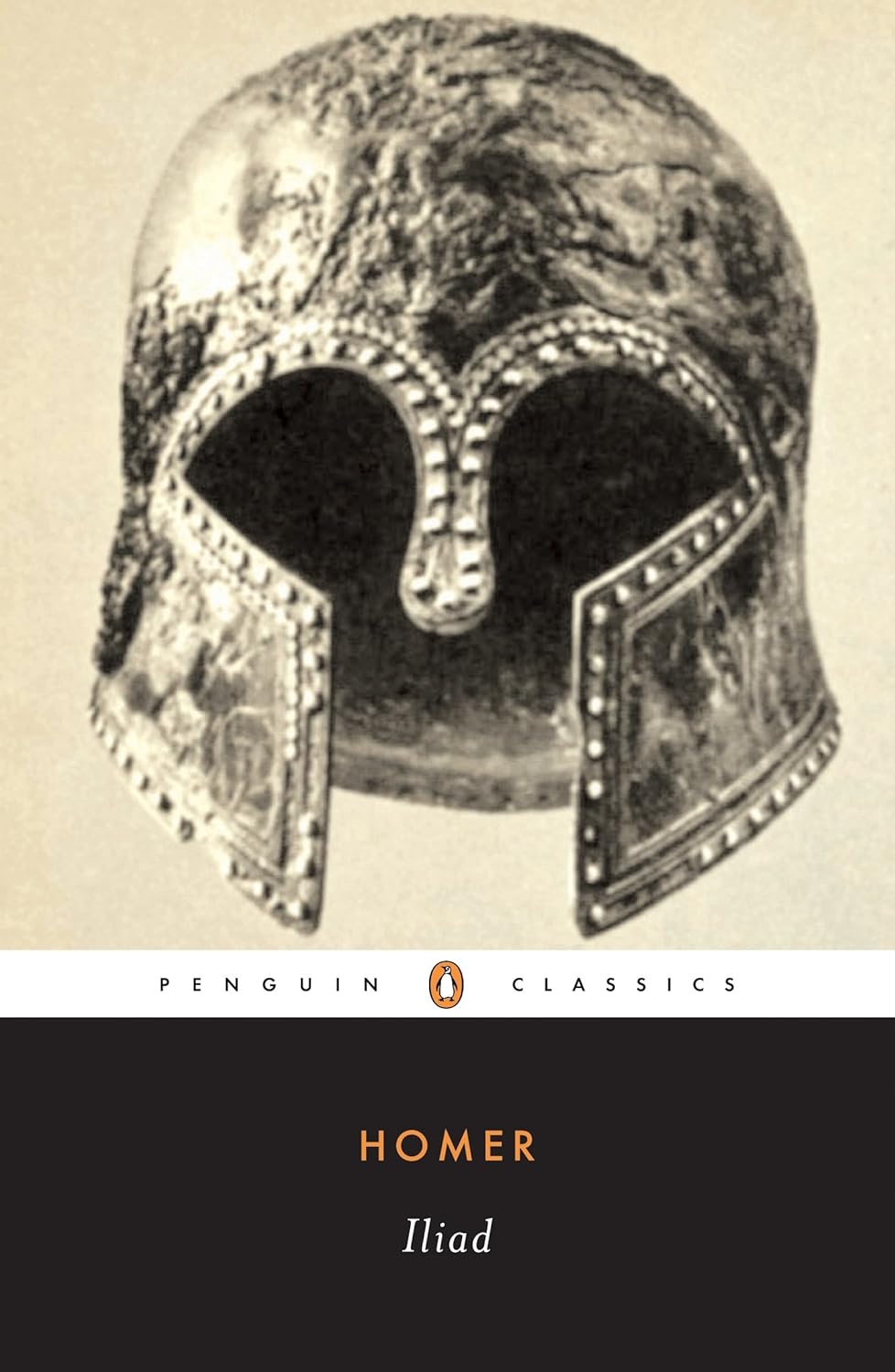
The Iliad is an ancient Greek epic poem attributed to Homer, composed around the 8th century BC. It is set during the tenth and final year of the Trojan War — the Greek siege of the city of Troy — and focuses not on the war as a whole but on a specific crisis within the Greek camp: the wrath of the warrior Achilles. Achilles, the greatest fighter on the Greek side, has been dishonored by the Greek commander Agamemnon, who took his war prize; Achilles withdraws from battle and refuses to fight. The consequences of his withdrawal — the Greek losses it causes, the death of his closest companion Patroclus, and his eventual return to battle driven by grief and rage — are the poem’s subject. The poem consists of 24 books totaling approximately 15,693 lines in dactylic hexameter, the standard meter of ancient Greek epic poetry. Because the poem exists for English readers only in translation from the ancient Greek, the choice of translation significantly shapes the reading experience. This guide covers reading level, age appropriateness, content, structure, the translation question, themes, and similar texts.
For Parents
An ancient Greek epic poem about the wrath of Achilles during the Trojan War and its consequences for both the Greek and Trojan sides. Ages 13–18, grades 9–12. Content: sustained and graphic battle violence, including detailed descriptions of wounds and deaths; the grief over Patroclus’s death and the desecration of Hector’s body; gods intervening directly in human affairs. No sexual content beyond what is discussed in a mythological context. Commonly assigned in 9th–12th grade and in AP courses.
For Teachers
A grades 9–12 classical literature standard, most commonly assigned in 9th–10th grade and in AP Literature. Lexile NP (Not Prose — verse epic; formulas do not apply in the standard way); ATOS not confirmed for the original verse. Approximately 15,693 lines across 24 books. Translations in classroom use include Fagles (Penguin, 1990), Lattimore (Chicago, 1951), and Caroline Alexander (Ecco, 2015 — the first complete English translation by a woman). Most curricula assign selected books rather than the full poem. The contrast between Achilles and Hector as heroic models is the primary AP discussion anchor.
The Iliad at a Glance
Find on Amazon →| Author | Homer (attributed; composed c. 8th century BC) |
| Original language | Ancient Greek (Homeric dialect); dactylic hexameter |
| Form | Epic poem; 24 books; ~15,693 lines |
| Grade Level | 9–12 (our assessment; commonly 9th–10th grade) |
| Recommended Age | 13–18 |
| Lexile | NP (Not Prose — verse epic; formulas do not apply) |
| ATOS Level | Varies by translation; not confirmed for verse originals |
| Notable translations | Robert Fagles (Penguin, 1990); Richmond Lattimore (Chicago, 1951); Caroline Alexander (Ecco, 2015) |
| Genre | Epic poetry / mythology |
| Setting | Troy (Ilium) and the Greek camp on the Trojan plain; c. 13th–12th century BC |
| Status | Public domain (original Greek); translations under copyright |
Standard reading level formulas do not apply to ancient Greek verse epic in the usual way. For edition-specific data, visit Lexile.com or AR BookFinder and search by translation ISBN.
What Reading Level Is The Iliad?
Reading level formulas do not apply to ancient Greek verse epic in the standard way; Lexile designates such texts as NP (Not Prose). The reading level in practice depends entirely on which translation is used. The Robert Fagles translation (Penguin, 1990) — a verse translation in contemporary English — has been used in many AP and college courses and is more accessible in diction than the Richmond Lattimore translation (Chicago, 1951), which aims for fidelity to the Greek’s formulaic repetitions and dactylic rhythm. Caroline Alexander’s translation (Ecco, 2015 — the first complete English translation by a woman) is also in classroom use. Our assessment: grades 9–12, ages 13–18, most commonly assigned in 9th–10th grade and in AP Literature. When looking up official scores, search by the specific translation’s ISBN at Lexile.com or AR BookFinder.
Which Translation? The Most Important Practical Question
Three translations are in common classroom use for The Iliad:
Robert Fagles (Penguin, 1990) — A verse translation in contemporary English with Bernard Knox’s introduction. Knox’s introduction is often assigned alongside the poem as context. Fagles renders the poem in free verse with attention to the dramatic energy of the original.
Richmond Lattimore (University of Chicago Press, 1951) — A translation that aims to preserve the formulaic repetitions of the Homeric Greek (“swift-footed Achilles,” “rosy-fingered Dawn”) and the long dactylic line of the original more closely than Fagles. More demanding to read than Fagles but valued by readers and instructors who want to stay close to Homer’s structure.
Caroline Alexander (Ecco, 2015) — The first complete English translation of The Iliad by a woman. Aims for a clear, direct rendering of the Greek with attention to the emotional weight of individual scenes. Includes notes and a glossary. A newer option increasingly used in AP and college courses.
When looking up Lexile or AR scores, search by the specific translation’s ISBN.
Structure — The 24 Books
The poem is divided into 24 books. Most high school and AP curricula do not assign all 24; teachers typically select books covering the poem’s major narrative events. The poem’s arc falls into several phases:
The opening crisis (Books 1–2): Book 1 establishes the poem’s subject — Agamemnon dishonors Achilles by taking his war prize; Achilles withdraws from battle and asks his divine mother Thetis to ask Zeus to punish the Greeks. Book 2 follows with Agamemnon’s ill-judged test of the army’s morale, the Catalogue of Ships (the long enumeration of Greek forces and their leaders), and the mustering of the Greek and Trojan armies.
Battle books (Books 3–17): The war continues without Achilles; the Greeks suffer significant losses. Extended battle sequences including individual combats between Greek and Trojan heroes; major episodes include Diomedes’s aristeia (his day of greatest fighting), Hector and Ajax’s duel, and the Greek wall’s construction and breach. Book 6 — Hector’s farewell to his wife Andromache and son Astyanax — is among the most taught passages in the poem.
The death of Patroclus (Books 16–18): Achilles’s closest companion Patroclus borrows Achilles’s armor and returns to battle; he is killed by Hector. Achilles learns of Patroclus’s death and is overwhelmed by grief. His mother Thetis commissions new divine armor from the god Hephaestus; Book 18 describes the making of the shield.
Achilles returns and kills Hector (Books 19–22): Achilles reconciles with Agamemnon and returns to battle, driven by grief and rage over Patroclus. He kills Hector in single combat outside the walls of Troy; he then desecrates Hector’s body by dragging it behind his chariot.
The funeral games and Priam’s ransom (Books 23–24): Funeral games are held in Patroclus’s honor. In Book 24 — the poem’s final book and one of its most discussed — Hector’s father Priam comes alone to Achilles’s tent at night to ransom his son’s body. Achilles returns the body. The poem ends with Hector’s funeral.
What Is The Iliad About?
The poem opens with its subject stated directly: “Sing, goddess, the anger of Achilles.” Achilles, the greatest Greek warrior at Troy, has been dishonored by Agamemnon, the Greek commander, who takes Achilles’s war prize — a captive woman named Briseis — after being forced to return his own captive to avoid a plague. Achilles withdraws from battle. The Greeks suffer significant losses in his absence. Achilles’s divine mother Thetis persuades Zeus to allow the Trojans to have success while Achilles stays out of the fighting, to punish the Greeks for the dishonor done to her son.
The poem follows the war’s progress without Achilles: the Trojans, led by Hector, press the Greeks back to their ships. Hector is the Trojans’ greatest warrior and the poem’s most fully developed character — a man fighting to protect his city and his family, aware that Troy will fall, performing his duty nonetheless. His farewell to his wife Andromache and their infant son Astyanax in Book 6 is one of the poem’s most important passages.
Patroclus, Achilles’s closest companion, persuades Achilles to let him borrow Achilles’s armor and return to battle to save the Greeks. Patroclus fights effectively but is killed by Hector. When Achilles learns of Patroclus’s death, his grief transforms his rage: he returns to battle not to recover honor but to kill Hector. He kills Hector in single combat outside Troy’s walls, then drags his body behind his chariot. The gods preserve Hector’s body from decay. In the poem’s final book, Hector’s father Priam — guided by the god Hermes — comes to Achilles’s tent alone at night to ransom his son’s body. Achilles and Priam grieve together. Achilles returns the body. The poem ends with Hector’s funeral in Troy.
The Iliad Characters
The Iliad Themes and Lessons
The poem presents two different models of heroism in Achilles and Hector. Achilles is the supreme warrior — faster, stronger, more deadly than any other fighter — who is defined by his sense of personal honor and his refusal to subordinate that sense to communal obligation. Hector is a man of duty — fighting not for personal glory but to protect his city and family, fully aware that Troy will fall. Their contrast, and the poem’s ability to elicit sympathy for both, is a central AP discussion topic.
The Greek concept of kleos — glory or fame achieved through great deeds, preserved in song — is the poem’s operative heroic value. Achilles has been told by his mother that he faces a choice: a long, undistinguished life or a short life with lasting glory. He chose Troy and glory; the poem explores what that choice costs him and everyone around him.
Book 24 — in which Priam and Achilles weep together over their respective losses — is the poem’s most discussed single episode. Priam has lost his son; Achilles has lost Patroclus and knows he will soon die. For a moment the men on opposite sides of the war recognize their shared grief. The scene is the poem’s most direct statement about the human cost of war.
Discussion questions: What does Achilles value most — and what does his choice of Troy over a long life reveal? How does the poem present Hector — as a villain, a hero, or something more complicated? What does the meeting between Priam and Achilles in Book 24 represent — what allows two enemies to weep together? How do the gods’ interventions affect how the poem presents human agency?
Texts Similar to The Iliad
About Homer
“Homer” is the name attributed to the ancient Greek poet — or tradition of poets — responsible for The Iliad and The Odyssey. The “Homeric Question” — whether a single individual composed these poems, when they reached their current form, and how an oral tradition relates to the written texts — has been debated by scholars for centuries. The poems are generally believed to have been composed in oral tradition and to have reached something like their current written form around the 8th century BC, though they draw on stories and traditions from much earlier. Ancient Greek tradition described Homer as a blind poet from Ionia. Modern scholarship treats any specific biographical claims with caution. The two epics attributed to Homer are very old surviving works of Western literature and have been read and taught continuously for approximately 2,700 years.
The Iliad: Frequently Asked Questions
What reading level is The Iliad?
Reading level formulas designate epic verse as NP (Not Prose) — the standard formulas do not apply. The reading level in practice depends on the translation used. Our assessment: grades 9–12, ages 13–18, most commonly 9th–10th grade and AP Literature. When looking up official scores, search by the specific translation’s ISBN at Lexile.com or AR BookFinder.
What is The Iliad about?
The wrath of Achilles during the tenth year of the Trojan War and its consequences. After being dishonored by the Greek commander Agamemnon, Achilles withdraws from battle; the Greeks suffer severe losses. Achilles returns only after his closest companion Patroclus is killed by the Trojan hero Hector. He kills Hector in revenge, then returns Hector’s body to his father Priam in the poem’s final book.
Which translation of The Iliad should I use?
Three translations are in common classroom use. The Robert Fagles translation (Penguin, 1990) is a verse translation in contemporary English with Bernard Knox’s introduction frequently assigned alongside it. The Richmond Lattimore translation (Chicago, 1951) preserves the poem’s formulaic repetitions and long-line structure more closely. The Caroline Alexander translation (Ecco, 2015) — the first complete English translation by a woman — is a newer option in AP and college use. Each makes different choices; search by ISBN for official scores.
How many books are in The Iliad?
24 books, totaling approximately 15,693 lines. Most high school curricula assign selected books rather than the full poem. Books most commonly assigned include Books 1, 6, 9, 16, 18, 22, and 24.
What grade is The Iliad typically assigned?
Most commonly in 9th or 10th grade and in AP Literature and Composition at 11th and 12th grade. It is frequently taught alongside or before The Odyssey in a Homer unit or classical literature course.
What is the difference between The Iliad and The Odyssey?
The Iliad is set during the Trojan War and focuses on the wrath of Achilles and the experience of battle; its hero is defined by martial glory and personal honor. The Odyssey follows the aftermath of the war through Odysseus’s ten-year journey home; its hero is defined by intelligence, cunning, and endurance. The two poems are companion epics attributed to Homer and are often taught together or in sequence.