
 = Partner Site
The Aeneid Reading Level: A Complete Guide
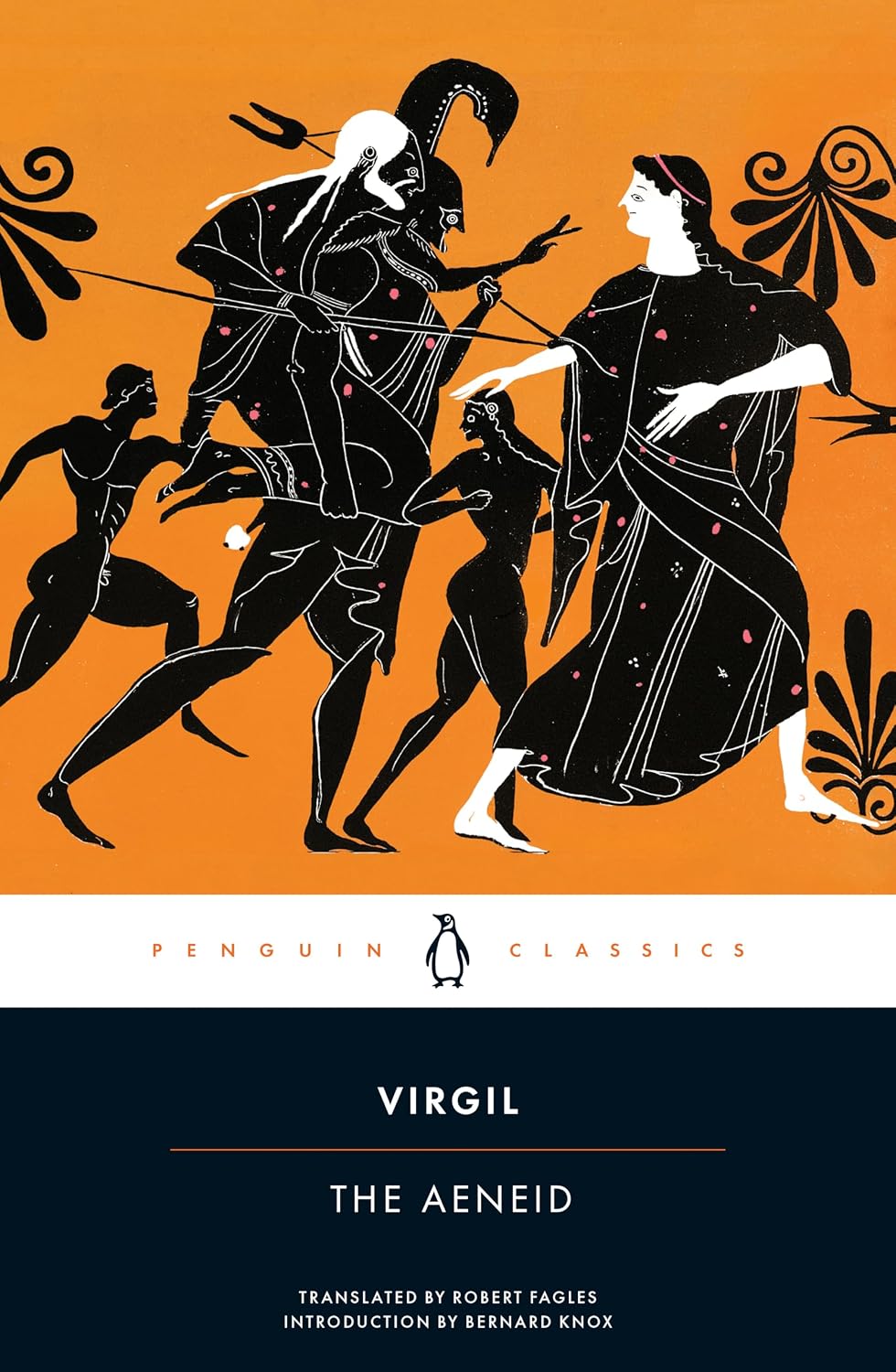
The Aeneid, written by the Roman poet Virgil (Publius Vergilius Maro) between approximately 29 and 19 BC and published posthumously, is an epic poem in 12 books totaling approximately ~10,000 lines of dactylic hexameter. It follows Aeneas — a Trojan hero and survivor of the fall of Troy depicted in Homer’s Iliad — on his divinely ordained journey to Italy, where he is fated to found the civilization that will become Rome. The poem is structured in two halves: Books 1–6 follow Aeneas’s sea voyage, including his catastrophic love affair with Dido, Queen of Carthage, and his descent into the Underworld (modeled on Homer’s Odyssey); Books 7–12 follow the wars Aeneas must fight in Italy to secure his destined homeland (modeled on Homer’s Iliad). Virgil died in 19 BC before completing final revisions to the poem; he reportedly asked that it be destroyed, but his literary executors Varius Rufus and Plotius Tucca published it at the instruction of the Emperor Augustus. The Aeneid has been read, taught, and translated continuously since its composition; it was a foundational text of Latin education for centuries and remains a standard AP Latin and AP Literature text. Because it exists for English readers in translation, the choice of edition matters significantly. This guide covers reading level, age appropriateness, content, structure, the translation question, themes, and similar texts.
For Parents
A Latin epic poem about a Trojan hero’s divinely guided journey from Troy to Italy, including a tragic love affair and wars of conquest. Ages 14–18, grades 10–12. Content: battle violence in Books 7–12; the suicide of Dido in Book 4 (one of the most discussed episodes in the poem); descent into the Underworld with descriptions of the dead and their fates; the killing of Turnus in the poem’s final lines. Standard AP Latin and AP Literature text. The poem is also foundational to the AP Latin exam’s Vergil curriculum.
For Teachers
A grades 10–12 and AP Literature text; also the core text for AP Latin (Vergil). Lexile NP (Not Prose — verse epic); ATOS not confirmed for verse originals. Approximately ~9,900 lines across 12 books. Translations in classroom use include Fagles (Penguin, 2006), Fitzgerald (1983), Mandelbaum (1971), and Ruden (2008). Most AP Literature curricula assign Books 1–4 and 6 in particular; AP Latin works from the Latin text. The Dido episode (Books 1–4) and the Underworld (Book 6) are the most frequently taught sections in English translation.
The Aeneid at a Glance
Find on Amazon →| Author | Virgil (Publius Vergilius Maro, 70–19 BC) |
| Original language | Latin; dactylic hexameter |
| Written | c. 29–19 BC; published posthumously |
| Form | Epic poem; 12 books; ~9,900 lines |
| Grade Level | 10–12 (our assessment); AP Literature; AP Latin |
| Recommended Age | 14–18 |
| Lexile | NP (Not Prose — verse epic; formulas do not apply) |
| ATOS Level | Varies by translation; not confirmed for verse originals |
| Notable translations | Robert Fagles (Penguin, 2006); Robert Fitzgerald (1983); Allen Mandelbaum (1971); Sarah Ruden (2008) |
| Genre | Epic poetry / Latin literature |
| Setting | Mediterranean Sea; Carthage; Italy; c. 13th–12th century BC (mythological time) |
| Status | Public domain (Latin original); translations under copyright |
Standard reading level formulas do not apply to Latin verse epic. For edition-specific data, visit Lexile.com or AR BookFinder and search by translation ISBN.
What Reading Level Is The Aeneid?
Reading level formulas do not apply to Latin verse epic in the standard way; Lexile designates such texts as NP (Not Prose). The reading level in practice depends on which translation is used. Fagles’s verse translation (Penguin, 2006) is generally accessible in contemporary English; Fitzgerald’s verse translation (1983) and Mandelbaum’s verse translation (1971) are somewhat more demanding in diction. Ruden’s prose-inflected translation (2008) offers a different approach. Our assessment: grades 10–12, ages 14–18, most commonly assigned in AP Literature and AP Latin. The poem’s primary reading challenges are contextual — knowledge of the Trojan War and Homeric tradition, Roman history and the figure of Augustus, and the poem’s network of allusions to both Greek epics and Roman history — rather than linguistic. For official scores by edition, visit Lexile.com or AR BookFinder.
The Translation Question
Four translations are in common classroom use:
Robert Fagles (Penguin, 2006) — A verse translation in contemporary English with Bernard Knox’s introduction. Fagles’s translations of the Homeric epics were already in wide use in AP courses; his Aeneid is accessible in diction and dramatic in tone. Available in Penguin Classics paperback.
Robert Fitzgerald (Vintage, 1983) — A verse translation that has been used in AP Latin and literature courses for decades. Fitzgerald also translated Homer’s Iliad and Odyssey; his three classical translations are sometimes taught as a set.
Allen Mandelbaum (Bantam, 1971) — A verse translation praised by scholars for its fidelity to Virgil’s Latin while remaining readable in English. Available in various paperback editions.
Sarah Ruden (Yale University Press, 2008) — A translation by a classical scholar that aims for the toughness and directness of Virgil’s Latin, sometimes described as harder-edged than Fagles or Fitzgerald. Available in Yale paperback with notes.
Scholars note that Virgil’s Latin is particularly difficult to translate because much of his artistry depends on word order, sound, and connotative meaning in Latin that cannot be fully replicated in English. Any translation involves significant interpretive choices. When looking up official Lexile or AR scores, search by the specific translation’s ISBN.
Structure — Two Halves, Twelve Books
The poem divides into two distinct halves, each modeled on a Homeric epic:
Books 1–6 (the Odyssean half): Aeneas’s sea voyage from Troy to Italy, delayed by storms, encounters with hostile peoples and places, and his fateful stop in Carthage. Book 1: the storm sent by Juno drives Aeneas to Carthage, where he meets Dido. Books 2–3: Aeneas tells Dido the story of Troy’s fall and his wanderings (the poem’s extended flashback, paralleling Odysseus’s account to the Phaeacians in the Odyssey). Book 4: Aeneas and Dido’s love affair; Jupiter sends Mercury to remind Aeneas of his duty; Aeneas departs; Dido kills herself. Book 5: funeral games for Aeneas’s father Anchises. Book 6: Aeneas descends into the Underworld, guided by the Cumaean Sibyl, where he meets his father Anchises, who shows him a pageant of Rome’s future greatness — the poem’s vision of Roman destiny.
Books 7–12 (the Iliadic half): Aeneas arrives in Italy and must fight to secure the land the gods have promised. He is allied with King Evander and his son Pallas; his enemies include Turnus, the Latin warrior king who was engaged to the princess Lavinia, whom Aeneas is now fated to marry. The war is prolonged and costly; Pallas is killed by Turnus. In the poem’s final scene, Aeneas kills Turnus — hesitating when Turnus pleads for mercy, then striking when he sees Pallas’s belt on Turnus’s shoulder.
What Is The Aeneid About?
Troy has fallen. Aeneas — son of the mortal Anchises and the goddess Venus — escapes with his father, his young son Ascanius (also called Iulus), and a group of Trojan survivors. He carries the household gods of Troy and has been told by prophecy that he is fated to found a city in Italy from which Rome will one day arise. His divine protector is Venus; his divine antagonist is Juno, who hates the Trojans and will do everything within her power to prevent the prophecy from being fulfilled.
Juno sends a storm that drives Aeneas’s fleet to Carthage, the North African city ruled by Dido — herself an exile who founded her city after fleeing her homeland. Their union in the cave is treated by Dido as a marriage, though its status has been debated since antiquity. Jupiter, seeing that Aeneas is delaying his mission, sends Mercury to remind him of his destiny. Aeneas decides to leave. Dido, feeling abandoned, kills herself on a funeral pyre. When Aeneas later descends to the Underworld, he meets Dido’s shade; she turns away from him without speaking.
Aeneas reaches Italy. His father Anchises — who died during the wanderings — appears to him in the Underworld and shows him the souls of the Romans yet to be born: a pageant of Roman history, culminating in the figure of Augustus. Armed with this vision and a new shield forged by Vulcan that depicts Rome’s future, Aeneas faces the war in Italy. The war costs him and his allies dearly, including the death of the young Pallas, son of his ally Evander. The poem ends with Aeneas killing Turnus — a conclusion that has been debated by readers and scholars since antiquity for its moral ambiguity: does Aeneas act rightly or is his final killing an act of passion?
The Aeneid Characters
Pietas — The Aeneid’s Central Value
The Latin word pietas — from which the English word “piety” derives but which means considerably more — is the central virtue the poem explores through Aeneas. Pietas encompasses duty to the gods, to one’s family, to one’s community, and to one’s mission; it is the willingness to subordinate personal desire to larger obligation. Aeneas is described in the poem’s opening as “pius Aeneas” — dutiful Aeneas — and his decisions throughout the poem are shaped by this value.
The tension between pietas and personal desire is the poem’s central moral engine. Aeneas’s departure from Dido — leaving a woman who loves him and whom he loves, because his duty to his mission requires it — is the clearest expression of this tension. The poem does not present this as easy or costless; Dido’s suffering and death are depicted with full emotional weight. But Aeneas leaves. The comparison between Aeneas’s pietas and Achilles’s personal honor in The Iliad is a standard AP Latin and AP Literature comparison exercise.
The Aeneid Themes and Lessons
The poem’s most debated passage is its final lines: Aeneas, about to spare Turnus’s life after defeating him in single combat, sees the belt of the dead Pallas on Turnus’s shoulder. The sight of Pallas’s belt — the boy Aeneas promised to protect — inflames Aeneas with grief and rage; he kills Turnus immediately. The poem ends there, without resolution. Readers have debated since antiquity whether Aeneas’s killing is justified — an act of righteous grief — or a failure of the pietas he embodies, a surrender to passion at the moment of supreme moral test.
The Dido episode (Books 1–4) raises parallel questions. Aeneas’s departure is dictated by divine command; he did not intend to harm Dido and does not wish to. But Dido’s suffering is real and the poem depicts it fully. The poem does not resolve whether Aeneas’s duty to his mission excuses or simply explains the suffering he causes. These unresolved moral questions are what make The Aeneid a productive AP text rather than simple propaganda for Roman imperial ambitions.
Discussion questions: What does pietas require of Aeneas — and what does it cost him? Is Aeneas’s killing of Turnus in the final lines an act of righteous grief or a failure of his defining virtue? How does the poem treat Dido — as a victim, as a warning, or as something more complicated? How does the Underworld scene (Book 6) function — what does Anchises’s pageant of Rome’s future mean for how we read Aeneas’s suffering throughout the poem?
Texts Similar to The Aeneid
About Virgil
Publius Vergilius Maro — known in English as Virgil or Vergil — was born on October 15, 70 BC, near Mantua in northern Italy, then part of the Roman Republic. He studied rhetoric and philosophy in Cremona, Milan, and Rome, and became associated with the literary circle around Maecenas, the cultural patron of the Emperor Augustus. His early works — the Eclogues (pastoral poems, c. 39–38 BC) and the Georgics (agricultural poems, c. 29 BC) — established him as the preeminent Roman poet of his age. He spent the last decade of his life working on The Aeneid. He died on September 21, 19 BC, in Brundisium (modern Brindisi), returning from a trip to Greece, before completing the poem’s final revisions. He reportedly asked his literary executors to burn the manuscript; instead, at Augustus’s instruction, Varius Rufus and Plotius Tucca published it with minimal changes. Dante Alighieri, writing in the 13th and 14th centuries, chose Virgil as his guide through Hell and Purgatory in the Divine Comedy — a testament to The Aeneid‘s sustained importance to European literary tradition.
The Aeneid: Frequently Asked Questions
What reading level is The Aeneid?
Reading level formulas designate epic verse as NP (Not Prose) — the standard formulas do not apply. Reading level depends on the translation. Our assessment: grades 10–12, ages 14–18, primarily AP Literature and AP Latin. Primary reading challenges are contextual — knowledge of Homer, Roman history, and the poem’s network of allusions — rather than linguistic. Search by specific translation ISBN for official scores at Lexile.com or AR BookFinder.
What is The Aeneid about?
Aeneas, a Trojan hero who survived Troy’s fall, journeys to Italy under divine mandate to found the civilization that will become Rome. The poem’s first half follows his sea voyage, including a tragic love affair with Dido, Queen of Carthage, who kills herself when he leaves. The second half follows his wars in Italy to secure his destined homeland. The poem ends with Aeneas killing his enemy Turnus in the final lines.
What is pietas in The Aeneid?
The Latin word pietas — from which “piety” derives — means duty to the gods, to one’s family, and to one’s mission. Aeneas is introduced as “pius Aeneas” and his decisions throughout the poem are shaped by this value. The tension between pietas and personal desire — most visible in his departure from Dido — is the poem’s central moral engine. Comparing Aeneas’s pietas with Achilles’s personal honor in The Iliad is a standard AP comparative topic.
Which translation of The Aeneid should I use?
Four translations are in common classroom use: Robert Fagles (Penguin, 2006), an accessible contemporary verse translation; Robert Fitzgerald (1983), a verse translation also used for many years; Allen Mandelbaum (1971), valued for fidelity to the Latin; and Sarah Ruden (2008, Yale), a harder-edged scholarly translation. Each makes different choices; search by ISBN when looking up official scores.
Why did Virgil want The Aeneid burned?
Virgil died in 19 BC before completing his final revisions to the poem and reportedly asked his literary executors to destroy the manuscript. The reasons are not certain; he may have been dissatisfied with the unfinished state of some passages. His executors Varius Rufus and Plotius Tucca, acting at Augustus’s instruction, published the poem with minimal changes rather than destroying it.
What grade is The Aeneid typically assigned?
In English translation, most commonly in 10th, 11th, or 12th grade AP Literature or classical literature courses. In Latin, it is the core text of the AP Latin exam (Vergil curriculum). Books most commonly assigned in English translation include Books 1–4 (arrival in Carthage, the Dido episode), Book 6 (the Underworld), and Books 11–12 (the final war and Turnus’s death).