
 = Partner Site
Invisible Man Reading Level: A Complete Guide
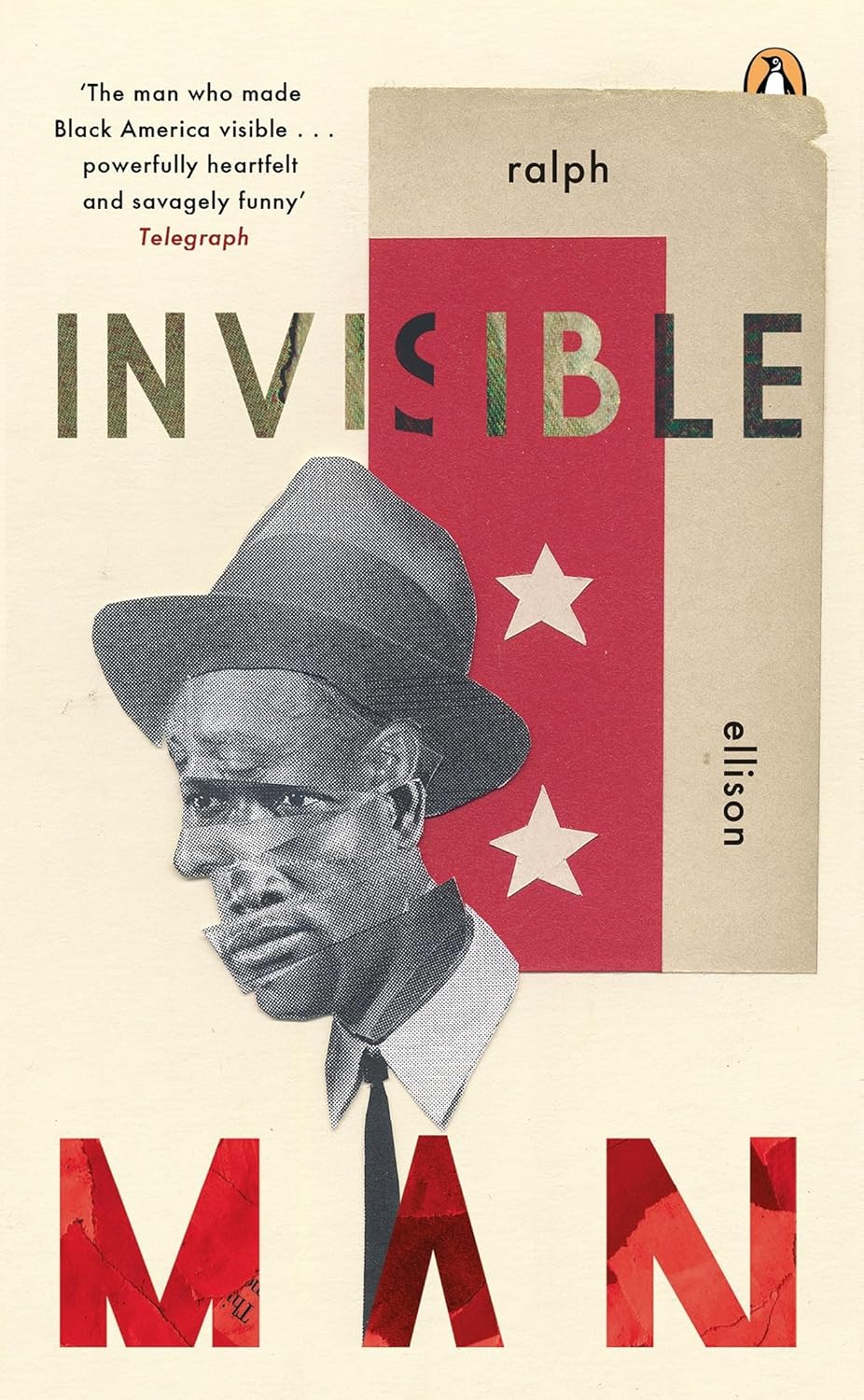
Invisible Man, written by Ralph Ellison and published by Random House in 1952, is a novel narrated by an unnamed Black man who opens by declaring that he is invisible — not supernaturally, but because the people around him refuse to see him as a specific individual rather than as a projection of their own expectations. Writing from a basement in Harlem where he lives surrounded by 1,369 light bulbs powered by stolen electricity, the narrator recounts the experiences that brought him there: growing up in the Jim Crow South, attending a Black college from which he is expelled, moving to New York City, working at a paint factory, and eventually becoming the chief spokesman for a political organization in Harlem called the Brotherhood — before retreating underground as the city erupts in riots. The novel is structured with a Prologue and Epilogue framing 25 chapters. It won the National Book Award for Fiction in 1953. It is among the most widely taught novels in American high school AP Literature and college curricula. This guide covers reading level, age appropriateness, content, structure, themes, and similar books.
For Parents
A first-person novel about an unnamed Black man’s passage from the Jim Crow South through New York City’s political organizations, ending in a Harlem riot and the narrator’s retreat underground. Ages 15–18, grades 11–12. Content: the opening “battle royal” scene depicts a degrading spectacle of violence; sexual content appears in several scenes; the Harlem riots include violence. The novel’s language and content make it most appropriate for grades 11–12 and AP Literature. National Book Award 1953.
For Teachers
A grades 11–12 and AP Literature standard. Lexile approximately 870L–950L depending on edition; word count approximately 145,000–177,000. No confirmed ATOS. Published 1952; National Book Award 1953. The novel requires significant background in the historical context of Jim Crow, the Great Migration, and the political left in the 1930s–1950s. Most commonly assigned in 11th–12th grade American literature and AP Literature courses.
Invisible Man at a Glance
Find on Amazon →| Author | Ralph Ellison (1914–1994) |
| Published | 1952 (Random House) |
| Grade Level | 11–12 (our assessment); AP Literature |
| Recommended Age | 15–18 |
| Lexile | 870L–950L (varies by edition) |
| ATOS Level | Not confirmed |
| Word Count | ~145,000–177,000 (editions vary) |
| Pages | ~581–608 (editions vary) |
| Chapters | Prologue + 25 chapters + Epilogue |
| Genre | Literary fiction / Bildungsroman |
| Setting | Jim Crow South; New York City (Harlem); mid-20th century |
| Awards | National Book Award for Fiction (1953) |
For official Lexile and AR levels, visit Lexile.com or AR BookFinder. ReadingVine provides independent editorial assessments.
What Reading Level Is Invisible Man?
Lexile approximately 870L–950L depending on edition (LightSail: 950L; Bookroo: 870L); no confirmed ATOS. Word count varies by edition, approximately 145,000–177,000. Our assessment: grades 11–12, ages 15–18, primarily for AP Literature courses. The Lexile range does not fully capture the demands of the novel — Ellison’s prose is formally complex, drawing on modernist stream-of-consciousness, jazz structures, folklore, allusion, and extended symbolism. The reading challenge is both linguistic and contextual: the novel requires background knowledge in Jim Crow–era American history, the Great Migration, and the political left of the 1930s–1950s that most students will need to have supplied through classroom instruction. For official scores, visit Lexile.com or AR BookFinder.
What Age Is Invisible Man Appropriate For?
Ages 15–18, grades 11–12. Content worth noting for parents and teachers:
The opening “battle royal” scene depicts a degrading spectacle in which Black boys are blindfolded, forced to fight each other for the entertainment of white men, and subjected to other forms of humiliation. It is among the most discussed scenes in American literature for its depiction of racial subjugation. Several scenes in the novel involve sexual content, including the narrator’s encounter with a white woman associated with the Brotherhood. The Harlem riots in the novel’s final section include violence. The novel’s racial slurs appear in historically contextualized dialogue and narration. These elements are central to the novel’s content and are handled as serious literary material rather than sensationally, but parents and teachers of younger readers should be aware of them. The novel is most appropriately assigned in grades 11–12 and AP Literature.
What Is Invisible Man About?
The unnamed narrator opens the novel in a basement in Harlem, explaining that he is invisible — not literally, but because others see in him only what they expect to see rather than who he actually is. What follows is a retrospective account of how he came to be there.
He grew up in a Black community in the South, where he was a gifted student and speaker — qualities that attracted both the patronage of local white civic leaders and the attentions of his Black college’s president, Dr. Bledsoe. After an incident in which the narrator inadvertently embarrasses a white benefactor of the college, Bledsoe expels him and sends him to New York with letters that he claims are recommendations but are actually instructions to keep him from being hired. In New York, the narrator works at a paint factory and is injured in an explosion; he recovers at the home of Mary Rambo, a woman who takes him in and asks nothing in return.
A speech the narrator gives during an eviction protest attracts the attention of Brother Jack, a white man who recruits him as the chief spokesman for the Brotherhood’s Harlem branch — a political organization modeled loosely on the Communist Party of the era. The narrator works with the Brotherhood for an extended period, achieving success in Harlem, before discovering that the organization is willing to sacrifice Harlem’s interests for national political goals. His colleague Tod Clifton is killed by a police officer; the narrator organizes a massive funeral march. He discovers through a case of mistaken identity the existence of a figure called Rinehart — a man who operates simultaneously as a numbers runner, a pimp, and a preacher — which opens the narrator’s eyes to the multiplicity of identities a Black man might adopt. In the Harlem riots that follow, the narrator falls into a manhole, burns the contents of his briefcase to light his way, and decides to remain underground rather than return to the world above.
Invisible Man Characters
Structure — Prologue, 25 Chapters, Epilogue
The novel is structured with a Prologue and Epilogue framing 25 chapters. The Prologue and Epilogue are set in the narrator’s underground basement, where he writes retrospectively about the experiences the chapters recount. This frame structure establishes from the first page that the narrator survives the events of the novel and has reached some form of understanding about them — though the Epilogue stops short of resolution, ending with the question “Who knows but that, on the lower frequencies, I speak for you?”
The narrative moves through several distinct phases — the Southern college, New York and the paint factory, the Brotherhood years in Harlem, and the riots — each functioning somewhat as a separate world the narrator enters and is expelled from. Most AP curricula assign the full novel over several weeks; the Prologue is typically discussed first for its framing of the novel’s central concern before the chapters begin.
Invisible Man Themes and Lessons
Each institution the narrator moves through — the college, the paint factory, the Brotherhood — presents itself as offering opportunity while actually assigning him a role that serves the institution’s interests rather than his own. Dr. Bledsoe uses the language of racial advancement while actively undermining Black students who threaten his position. The Brotherhood uses the language of equality while sacrificing Harlem’s interests for organizational strategy. The novel tracks the narrator’s gradual recognition of this pattern across every institution he has trusted.
Rinehart — who never appears directly in the novel but whose identity the narrator inadvertently assumes when he puts on dark glasses and a hat — represents a different kind of invisibility: the freedom that comes from having no fixed identity others can exploit. The narrator does not embrace Rinehart’s solution, but the episode opens the question of what kinds of identity are available to a Black man in mid-century America.
The novel draws on jazz and blues structures — the Prologue opens with the narrator listening to Louis Armstrong — and on African American folklore, modernist stream-of-consciousness in the tradition of Joyce and Eliot, and existentialist philosophy. Ellison explicitly acknowledged the influence of T.S. Eliot’s The Waste Land, Dostoevsky, and Richard Wright on the novel’s composition.
Discussion questions: What does the narrator mean when he says he is invisible? How does each institution the narrator enters exploit rather than assist him? What does Rinehart represent — and why does the narrator not adopt his solution? What does the narrator understand at the end of the novel that he did not understand at the beginning? What does the final question of the Epilogue — “Who knows but that, on the lower frequencies, I speak for you?” — mean?
Books Similar to Invisible Man
About Ralph Ellison
Ralph Waldo Ellison was born on March 1, 1914, in Oklahoma City, Oklahoma. His father, Lewis Ellison, died when Ralph was three; he was raised by his mother Ida, a domestic worker, in Oklahoma City. As a young man he studied jazz trumpet, and in 1933 he enrolled at the Tuskegee Institute in Alabama on a music scholarship. In 1936 he traveled to New York City to earn money for tuition and remained there, meeting writers and artists and beginning to write short stories and reviews. He became involved with the Federal Writers’ Project during the Great Depression and with the political left of the late 1930s and early 1940s — experiences that informed the Brotherhood sections of Invisible Man. He served in the Merchant Marine during World War II. In 1945, supported by a Rosenwald Fellowship, he began work on Invisible Man, finishing it in 1952. The novel won the National Book Award for Fiction in 1953. Ellison spent the remainder of his life working on a second novel; a fire in 1967 destroyed a substantial portion of the manuscript. He published two collections of essays, Shadow and Act (1964) and Going to the Territory (1986). The second novel was published posthumously as Juneteenth (1999), edited from the surviving manuscripts by John F. Callahan. Ellison died on April 16, 1994, in New York City.
Invisible Man: Frequently Asked Questions
What reading level is Invisible Man?
Lexile approximately 870L–950L depending on edition; no confirmed ATOS. Word count approximately 145,000–177,000. Our assessment: grades 11–12, ages 15–18, primarily for AP Literature. The Lexile does not fully capture the demands of the novel, which requires significant historical context and engages with formally complex prose. For official scores, visit Lexile.com or AR BookFinder.
What is Invisible Man about?
An unnamed Black narrator writes from a basement in Harlem, recounting his journey from the Jim Crow South through a Black college, a New York paint factory, and the Brotherhood — a Harlem political organization — to the riots that drive him underground. The novel’s central subject is the narrator’s struggle to define his own identity against the definitions imposed by every institution he passes through.
What does “invisible” mean in the title?
Not supernatural invisibility. The narrator explains on the first page that he is invisible because others refuse to see him as a specific individual — they project onto him their own expectations, fears, and desires instead. His invisibility is social and psychological, produced by others’ refusal to perceive him as he actually is.
Is Invisible Man the same as The Invisible Man by H.G. Wells?
No — these are different books. The Invisible Man by H.G. Wells (1897) is a science fiction novel about a scientist who makes himself literally invisible. Invisible Man by Ralph Ellison (1952) is a novel about racial identity and social invisibility; its narrator is invisible in a social and psychological sense, not a literal one. Ellison’s title does not include “The.”
What is the Brotherhood in Invisible Man?
A politically radical organization in New York City that recruits the narrator as a spokesman for its Harlem branch. The Brotherhood is modeled loosely on the Communist Party of America of the 1930s–1940s — Ellison was himself involved with left-wing politics during that period. In the novel, the Brotherhood presents itself as committed to racial equality while ultimately treating Harlem’s Black community as an expendable asset in pursuit of broader organizational goals.
What grade is Invisible Man typically assigned?
Most commonly in 11th or 12th grade American literature courses and in AP Literature and Composition. Its length (approximately 581–608 pages), content, and formal complexity make it most appropriate for advanced high school readers and college curricula.