
 = Partner Site
The Color Purple Reading Level: A Complete Guide
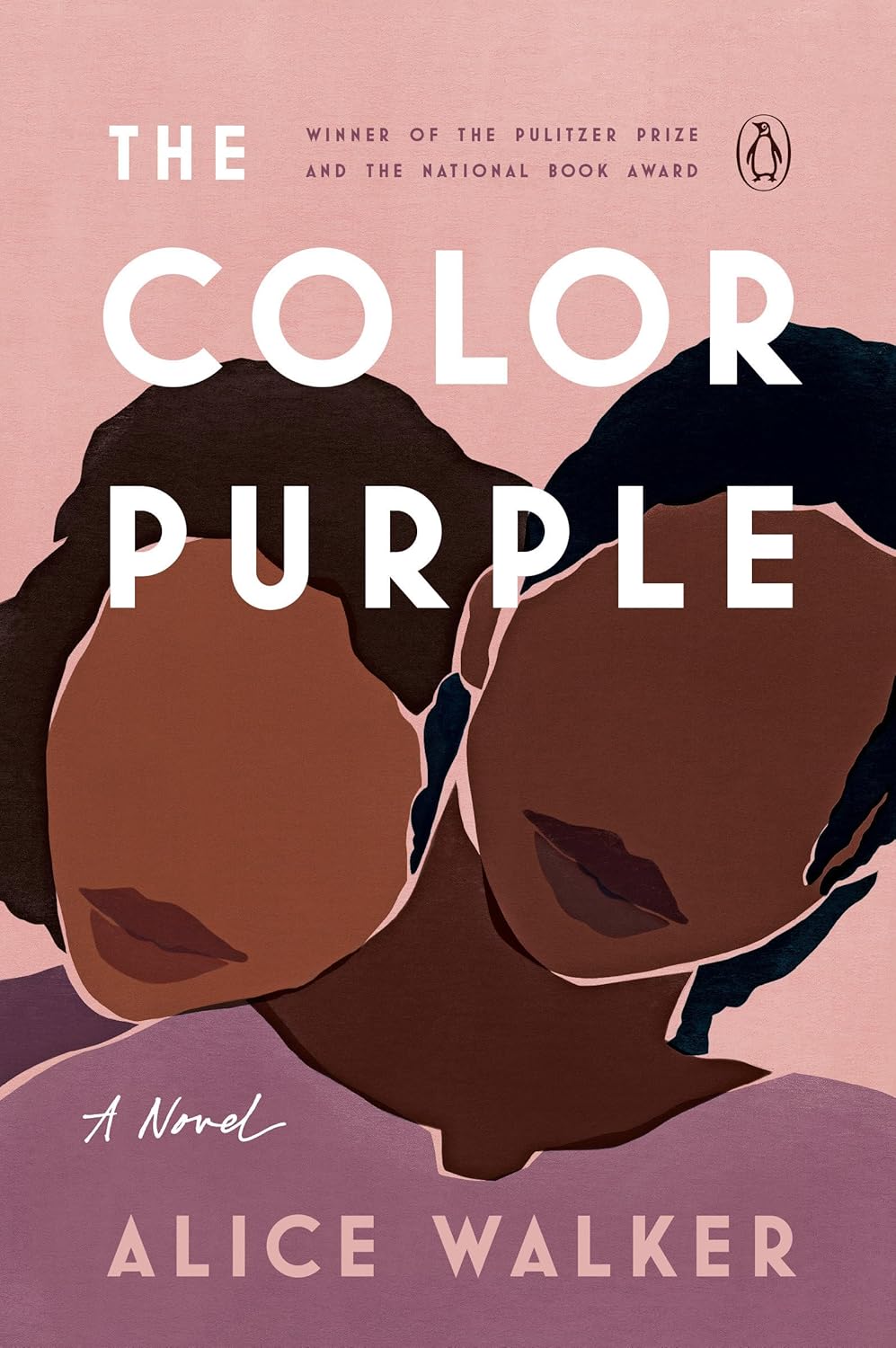
The Color Purple is a 1982 epistolary novel by Alice Walker, told entirely through letters written by Celie, a poor Black woman in rural Georgia, to God and later to her sister Nettie. Spanning nearly thirty years of Celie’s life—from her adolescence under extreme abuse and oppression through her hard-won journey toward independence, self-knowledge, and love—it is one of the most celebrated and most challenged novels in American literature. Winner of both the Pulitzer Prize and the National Book Award in 1983, it remains one of the most widely taught and most debated books in the high school canon. This guide covers the book’s reading level, age appropriateness, themes, characters, and teaching resources for high school students, parents, and educators.
For Parents
The Color Purple contains graphic depictions of sexual violence, domestic abuse, and racial oppression. These elements are purposeful and central to the novel’s moral and emotional architecture, but they are real and require parental awareness. The novel also depicts a lesbian relationship between the protagonist and Shug Avery with warmth and explicitness. It is most commonly assigned in grades 10–12 and is appropriate for mature readers ages 15 and older. Its challenge history is extensive, but so is its reputation as one of the most important works of American literature of the last fifty years.
For Teachers
The Color Purple is a foundational text for courses in American literature, African American literature, women’s literature, and the literature of the South. Walker’s use of African American vernacular English as a vehicle for profound moral and spiritual development is one of the most teachable demonstrations in the canon of how voice and language shape meaning. The novel pairs naturally with Their Eyes Were Watching God, with Alice Walker’s essay “In Search of Zora Neale Hurston,” and with historical material on sharecropping, Jim Crow, and the experiences of Black women in the early twentieth-century South.
The Color Purple at a Glance
Find on Amazon →| Author | Alice Walker |
| Published | 1982 |
| Grade Level | 10–12 (our assessment) |
| Recommended Age | 15–18 |
| Flesch-Kincaid Grade | 4.2 |
| Word Count | ~67,000 |
| Pages | ~288 (standard paperback) |
| Structure | Epistolary novel (90+ letters; no traditional chapters) |
| Genre | Epistolary novel / literary fiction |
| Setting | Rural Georgia and Africa, early-to-mid 20th century |
| Awards | Pulitzer Prize for Fiction (1983); National Book Award for Fiction (1983) |
For official Lexile and AR levels, visit Lexile.com or AR BookFinder. ReadingVine provides independent editorial assessments.
What Reading Level Is The Color Purple?
ReadingVine places The Color Purple at a grade 10–12 reading level, with a Flesch-Kincaid score of approximately 4.2. This is the same phenomenon found in Their Eyes Were Watching God and several other works in this guide: the score reflects the deliberate use of African American vernacular English, which renders Celie’s voice grammatically non-standard but linguistically precise, emotionally immediate, and in Walker’s hands one of the most carefully crafted voices in American fiction. A reader focused purely on decoding words will find the novel relatively accessible; a reader engaged with what Celie’s voice is doing—with the intelligence and dignity operating within its apparent simplicity—will find it endlessly rich.
The novel’s epistolary structure adds another layer of complexity. Because the story is told entirely through letters, there is no omniscient narrator to explain, summarize, or contextualize. Readers must infer a great deal from what Celie says, what she notices, what she doesn’t understand, and what she slowly comes to understand across the course of thirty years of correspondence. This requires active, attentive reading rather than passive reception, and benefits from classroom support. Most teachers find the novel best suited to grades 10–12, where students have the historical and literary context to engage with its full dimensions.
For official Lexile and AR scores, visit Lexile.com or AR BookFinder.
What Age Is The Color Purple Appropriate For?
ReadingVine recommends The Color Purple for mature readers ages 15–18. The novel’s content is among the most mature of any canonically assigned high school text. Celie is raped by her stepfather beginning in early adolescence; the sexual violence is described in her own plain, dissociated voice, which makes it more rather than less disturbing. The novel also depicts sustained domestic violence, the sexual relationship between Celie and Shug Avery, and Nettie’s letters from Africa, which include descriptions of colonial violence. Parental awareness of these elements is important before assigning the novel for home reading.
The Color Purple opens with Celie being raped by the man she believes to be her father, beginning in early adolescence; this violence is described in her first-person voice and is central to the novel’s moral and emotional architecture. The novel depicts sustained domestic violence—Celie is beaten and emotionally abused throughout her marriage to Mr. ______. There is an explicitly depicted lesbian romantic and sexual relationship between Celie and Shug Avery. The novel contains moderate profanity and period-accurate racial language. Nettie’s letters from Africa include depictions of colonial oppression and violence. Walker’s treatment of all this material is purposeful and literary rather than gratuitous, but parents of younger or more sensitive students should be fully aware before assigning it.
What Is The Color Purple About?
Celie is fourteen years old when the novel opens, already the victim of repeated rape by the man she calls her father—later revealed to be her stepfather, Alphonso. Her letters to God are her only outlet: “You better not never tell nobody but God. It’d kill your mammy.” She gives birth to two children, who are taken from her and given away. When her mother dies, Alphonso arranges for Celie to marry a widower known only as Mr. ______ (later Albert), who beats her, humiliates her, and expects her to care for his children and his farm. Celie endures this life with a flat, dissociated patience that she has learned as a survival mechanism.
Two relationships transform Celie’s interior life. The first is her bond with Shug Avery—a blues singer and Mr. ______’s longtime love—who comes to stay while ill and, in nursing her back to health, teaches Celie something no one has ever offered her before: that she is beautiful, that her body belongs to her, that she is worthy of love and pleasure. Their relationship becomes romantic and sexual, and Shug becomes the vehicle through which Celie begins to see herself. The second is the discovery, facilitated by Shug, that Mr. ______ has been hiding years of letters from Celie’s sister Nettie, who ran away after Mr. ______ tried to attack her and has been living in Africa as a missionary. Nettie’s letters arrive in the novel as a parallel narrative, describing her life among the Olinka people and gradually revealing that the two children Walker raised were in fact Celie’s biological children, now grown.
Celie’s arc moves from silent endurance to voice—she eventually confronts Mr. ______ and leaves, moves to Memphis with Shug, and starts a pants-making business that becomes the material expression of her new independence and self-possession. The novel’s ending is one of American literature’s great reconciliations: Nettie returns from Africa with Celie’s children, now adults; and even Mr. ______, transformed by his own suffering and isolation, becomes a friend rather than an oppressor. Walker wrote the novel while living in Brooklyn, channeling, she later said, the voices of her characters as if receiving dictation—particularly the voice of Celie, which she described as coming from somewhere deep in her own history and imagination.
The Color Purple Characters
Is The Color Purple Banned?
The Color Purple appears on the American Library Association’s list of the 100 Most Frequently Challenged Books of 2000–2009 at number seventeen. It has been challenged in school districts across the country since its publication, consistently for the same reasons: sexual content (including the depictions of rape and the lesbian relationship between Celie and Shug), violence, offensive language, and what some challengers have described as an unfavorable portrayal of men and of Christianity. In 2009, a school district in Virginia removed it from the optional reading list after a parent complained about the sexual content.
The book’s Pulitzer Prize and National Book Award have not insulated it from challenges—if anything, its canonical status has made it a more prominent target in recurring national debates about what belongs on school reading lists. Defenders consistently point to its literary significance, its unflinching honesty about the lives of Black women in the early twentieth century, and the moral and spiritual growth at its center. It remains widely assigned in AP and honors English courses at the high school level and is universally available in school and public libraries.
The Color Purple Themes and Lessons
The novel’s central journey is the reclamation of voice. Celie begins entirely without it: her opening letters are addressed to God because she has been instructed not to tell anyone else what is happening to her. Her letters are her inner life made visible, the only space in which she is free to articulate what she experiences. As the novel progresses and relationships accumulate—with Shug, with Sofia, with Nettie’s letters—Celie’s voice becomes more confident, her sentences longer, her consciousness more complex. By the novel’s end she is writing to “Dear God. Dear stars, dear trees, dear sky, dear peoples. Dear Everything. Dear God.” The expansion of her salutation maps her spiritual and psychological transformation.
Walker is also making an argument about the nature of spirituality that is deeply original and deserves careful classroom attention. Shug teaches Celie to move away from the old white man God of patriarchal religion toward a conception of the divine that is present in nature, in beauty, in the color purple in a field—a spirituality that is sensory and immediate rather than doctrinal and distant. This is the theological core of the novel, and it is what the title points to: not a literal color but a way of perceiving the world that becomes available only once you have stopped inhabiting someone else’s vision of who you are. Discussion questions: How does Celie’s relationship to God change over the course of the novel? What does Sofia’s experience teach Celie that Shug cannot? Why do you think Walker chose the epistolary form for this story?
How Long Is The Color Purple?
The Color Purple is an epistolary novel told through more than 90 letters and runs approximately 288 pages in the standard Mariner Books paperback. It has no traditional chapters. At approximately 67,000 words, it sits between Lord of the Flies and 1984 in length—substantial but not long by the standards of the high school canon. An average high school reader will complete it in 5–7 hours. Most teachers assign it over two to three weeks. The letter structure—many letters are short, a page or two—makes it well-suited to daily reading assignments that feel manageable, with each letter cluster generating its own discussion. Because so much meaning is embedded in what Celie does not say or cannot yet see, close reading of individual letters is particularly productive.
Books Similar to The Color Purple
About Alice Walker
Alice Malsenior Walker was born on February 9, 1944, in Eatonton, Georgia, the eighth child of sharecropper parents. She was shot in the eye with a BB gun by one of her brothers at age eight and lost sight in that eye; the resulting disfigurement, she later said, turned her inward and toward books and writing. She attended Spelman College and Sarah Lawrence College on scholarships, and was active in the Civil Rights Movement, registering voters in Georgia. She published her first novel, The Third Life of Grange Copeland, in 1970, and her first collection of poetry in 1968. She is also the writer responsible for the revival of Zora Neale Hurston’s reputation—her 1975 essay “In Search of Zora Neale Hurston” in Ms. magazine, and her physical location of Hurston’s unmarked grave, sparked the reassessment that brought Their Eyes Were Watching God back into print and the canon. The Color Purple was published in 1982 and won both the Pulitzer Prize and the National Book Award in 1983, making Walker the first Black woman to win the Pulitzer for fiction. It was adapted into a film by Steven Spielberg in 1985, into a Broadway musical in 2005, and into a new film musical in 2023. Walker has written more than thirty books across fiction, poetry, and essays. She coined the term “womanist” to describe a feminism rooted in the experiences of Black women.
The Color Purple: Frequently Asked Questions
What is the reading level of The Color Purple?
ReadingVine places The Color Purple at a grade 10–12 reading level, with a Flesch-Kincaid score of approximately 4.2. The low score reflects Walker’s use of African American vernacular English, which gives Celie’s voice apparent simplicity while carrying profound emotional and moral intelligence. The real complexity is in the epistolary structure, the accumulation of meaning across ninety-plus letters, and the historical and cultural context the novel requires. It is most appropriately assigned in grades 10–12.
What awards did The Color Purple win?
The Color Purple won the Pulitzer Prize for Fiction in 1983 and the National Book Award for Fiction in 1983. With these awards, Alice Walker became the first Black woman to win the Pulitzer Prize for fiction. The novel was also listed among the BBC’s 100 most influential novels (2019) and the BBC Big Read Top 100 (2003), and has been adapted into a 1985 Steven Spielberg film, a Tony Award–winning Broadway musical (2005), and a 2023 film musical.
What does the title The Color Purple mean?
The title comes from a conversation between Celie and Shug about the nature of God. Shug argues that God does not want you to go through life ignoring beauty—that noticing “the color purple in a field” is itself a form of reverence, a way of being present to what is divine and good in the world. The color purple, in this sense, is not a specific thing but a quality of attention—the capacity to see and be moved by beauty, pleasure, and grace even in the midst of a hard life. For Celie, learning to notice the color purple is part of her spiritual transformation.
Why is The Color Purple written in letters?
Walker chose the epistolary form—the novel-in-letters—because Celie’s voice is the whole substance of the book, and letters are the form in which an uneducated, isolated woman would most naturally give that voice expression. Letters are private, addressed to a specific reader (God, then Nettie), and shaped by the relationship with that reader—they allow Walker to show how Celie’s voice and consciousness change as her relationships change. The form also means there is no external narrator to interpret or mediate what Celie experiences, making the reader do the work of understanding alongside her rather than being told what to think.
Why is The Color Purple frequently banned or challenged?
The Color Purple appears on the ALA’s list of the 100 most challenged books of the 2000s at number seventeen. The primary objections are its depictions of sexual violence, including the rape of a minor; its explicit lesbian relationship; offensive language; and what some challengers describe as an unfavorable portrayal of Black men and of Christianity. Defenders of the novel argue that Walker’s honest portrayal of the lives of Black women in the early twentieth-century South is precisely its value, and that its Pulitzer Prize and National Book Award testify to its importance.
Is The Color Purple based on a true story?
The Color Purple is fiction, but Walker drew on her family history, particularly stories about her great-grandmother’s experiences as a sharecropper in Georgia. She has said that the characters came to her almost as presences she was receiving rather than inventing, and that Celie’s voice in particular emerged from somewhere deep in her own imaginative inheritance. The historical and social context—sharecropping, Jim Crow, domestic violence in rural Black communities, missionary activity in Africa—is all historically grounded, even as the specific characters and events are invented.
How does The Color Purple end?
Celie returns from Memphis to Georgia to claim the house and land that rightfully belong to her after Alphonso’s death—it was her biological father’s property all along. Her pants business flourishes. Nettie returns from Africa with Celie’s biological children, now adults, along with Samuel, whom she has married. Even Mr. ______, who has been slowly transformed by years of isolation and reflection, has become something approaching a friend. The ending is warmly redemptive—a family reunion that includes not just blood relations but the chosen family of people who have loved and survived together. Walker has said she wanted the novel to end in joy.
How many pages and words is The Color Purple?
The Color Purple is approximately 288 pages in the standard Mariner Books paperback and approximately 67,000 words. The novel is told through more than 90 letters with no traditional chapters. An average high school reader will complete it in 5–7 hours, and most teachers assign it over two to three weeks.