
 = Partner Site
The Kite Runner Reading Level: A Complete Guide
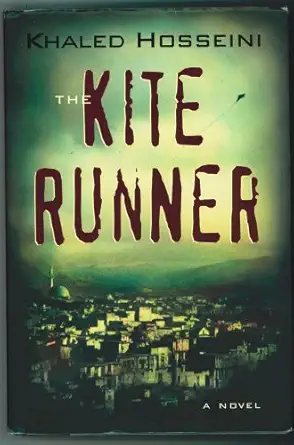
The Kite Runner is the 2003 debut novel of Afghan-American author Khaled Hosseini, set against the tumultuous history of Afghanistan from the fall of the monarchy through the Soviet invasion, the rise of the Taliban, and the aftermath of September 11. It tells the story of Amir, a privileged boy from Kabul, whose failure to protect his closest friend Hassan haunts him across decades and continents, and whose eventual journey back to Taliban-controlled Afghanistan becomes an attempt at redemption he is never sure he deserves. This guide covers the book’s reading level, age appropriateness, themes, characters, and teaching resources for high school students, parents, and educators.
For Parents
The Kite Runner contains a graphic depiction of the rape of a child, scenes of Taliban violence, and significant emotional weight throughout. These elements are purposeful and handled with literary seriousness, but they are real and require parental awareness. The novel is most commonly assigned in grades 9–12 and is appropriate for mature readers ages 14 and older. It is one of the most challenged books of the past two decades, and Hosseini himself has written extensively about why he believes high school students are more than ready for it.
For Teachers
The Kite Runner is one of the most taught contemporary novels in American high schools, valued for its emotional power, its accessible narrative voice, and its vivid portrayal of Afghan history and culture that most American students encounter nowhere else. The novel opens rich discussions on guilt and redemption, ethnic and class discrimination, the father-son relationship, and the moral weight of witnessing and doing nothing. It connects naturally to units on the Soviet-Afghan War, the Taliban, and the refugee experience, and pairs productively with nonfiction on Afghan history and with memoir and narrative journalism on displacement.
The Kite Runner at a Glance
Find on Amazon →| Author | Khaled Hosseini |
| Published | 2003 |
| Grade Level | 9–12 (our assessment) |
| Recommended Age | 14–18 |
| Flesch-Kincaid Grade | 6.2 |
| Word Count | ~100,000 |
| Pages | ~324 (standard paperback) |
| Chapters | 25 |
| Genre | Literary fiction / historical novel |
| Setting | Kabul, Afghanistan; Fremont, California; Pakistan; 1970s–2001 |
| Awards | ALA Alex Award (2004) |
For official Lexile and AR levels, visit Lexile.com or AR BookFinder. ReadingVine provides independent editorial assessments.
What Reading Level Is The Kite Runner?
ReadingVine places The Kite Runner at a grade 9–12 reading level, with a Flesch-Kincaid score of approximately 6.2. Hosseini’s prose is clear, direct, and emotionally accessible—he writes with a storyteller’s instinct for pace and momentum, and the novel’s first-person voice rarely demands the kind of interpretive work that more experimental literary fiction requires. Most high school readers find it a relatively fluid read at the sentence level.
The challenge lies in the emotional and moral weight the novel accumulates. Hosseini moves between 1970s Kabul, the Soviet invasion era, life as an Afghan immigrant in California, and a return to Taliban-controlled Afghanistan—a historical span that benefits considerably from background knowledge students gain in grades 9–12. The central ethical questions—What does a person owe for the wrongs they witnessed but did not commit? Can redemption be earned or only attempted?—are questions that reward the kind of moral reasoning that develops in adolescence and beyond. Most teachers find the novel engages students powerfully and reads quickly for its length, typically assigned over two to three weeks.
For official Lexile and AR scores, visit Lexile.com or AR BookFinder.
What Age Is The Kite Runner Appropriate For?
ReadingVine recommends The Kite Runner for mature readers ages 14–18. The novel’s most significant content concern is a scene in chapter 7 in which Hassan is raped by a teenage bully while Amir watches from hiding and does nothing. The scene is depicted with restraint but without ambiguity—it is the pivotal event of the entire novel and cannot be skipped or softened. Parents should be aware of this before assigning the book for home reading. Hosseini has written and spoken extensively about why he believes high school students are fully capable of processing this content within the novel’s moral framework.
The Kite Runner contains a scene depicting the rape of a child (chapter 7), which is the moral center of the novel—everything that follows flows from it. The novel also contains graphic depictions of Taliban violence, including public executions and stonings described in realistic detail during Amir’s return to Kabul. There is moderate profanity and ethnic slurs used as period-accurate markers of the discrimination the Hazara people face. There is no explicit sexual content between adults. The emotional intensity is high throughout—the novel deals with guilt, grief, betrayal, and the effects of war on families and individuals in ways that are deliberately affecting. It is most commonly assigned in 10th grade honors courses and in grades 11–12.
What Is The Kite Runner About?
Amir grows up in Kabul in the 1970s as the privileged son of Baba, a wealthy and respected Pashtun businessman. His closest companion is Hassan, the son of Baba’s servant Ali—a Hazara boy with a harelip who is Amir’s kite runner, his protector, and in every meaningful sense his best friend, even though Amir never fully grants him that status. The social and ethnic divide between them—Pashtun and Hazara, wealthy and servant—runs beneath their friendship like a fault line. During the winter kite-fighting tournament of 1975, Amir wins the championship and Hassan sets off to retrieve the losing kite as a prize. When Hassan doesn’t return, Amir searches for him and finds him cornered in an alley by Assef, a sociopathic bully. Assef rapes Hassan while Amir watches from around the corner, unable to make himself intervene. He says nothing afterward.
The guilt of that moment shapes the rest of Amir’s life. Unable to bear seeing Hassan daily, he frames him for theft, forcing Hassan and Ali to leave. Shortly after, the Soviet invasion of Afghanistan forces Amir and Baba to flee—an agonizing journey through the mountains to Pakistan and eventually to Fremont, California, where Baba works at a gas station and Amir finishes high school, attends college, becomes a published novelist, and marries Soraya, the daughter of an Afghan general. Through all of it, Hassan is never far from his conscience. When Baba dies of cancer in America, Amir receives a call from his father’s old friend Rahim Khan, who is dying in Pakistan and tells him: “There is a way to be good again.”
Rahim Khan reveals that Hassan—who has been living in Kabul with his wife and son Sohrab—was executed by the Taliban. He also reveals a secret that reframes everything Amir thought he knew about his father: Hassan was Baba’s illegitimate son, making Hassan and Amir half-brothers. Amir travels to Taliban-controlled Kabul, finds Sohrab in an orphanage run by Assef—now a Taliban official—and must fight to bring him home to America. The novel ends in suburban California, where a damaged and near-mute Sohrab begins, tentatively, to show signs of life. Hosseini wrote the novel while working as a physician in California, expanding a 25-page short story he had written in 2001 after learning that the Taliban had banned kite flying in Afghanistan.
The Kite Runner Characters
Is The Kite Runner Banned?
The Kite Runner has been one of the most frequently challenged books in American schools since its publication, appearing on the ALA’s top ten most challenged lists in 2008, 2012, 2014, and 2017. Challenges have occurred in Idaho, Illinois, North Carolina, New Jersey, Wisconsin, California, Indiana, Arizona, and Florida, among other states. The primary grounds for challenges are the depiction of the rape of a child, sexually explicit language, and offensive language. In 2017, challenges took an additional dimension when some objectors argued the book would “promote Islam” or “inspire terrorism”—a form of Islamophobic censorship that drew particular criticism from educators and civil liberties organizations.
In 2017, the Gilbert Unified School District in Arizona removed the book from its curriculum without formal review, despite the fact that it had been approved and in use for five years. Hosseini responded by writing an open letter to school boards arguing that banning the book “betrays” students by denying them the chance to develop empathy and understand a culture and history they would otherwise not encounter. The novel remains among the most assigned texts in American high school AP and honors English courses despite its challenge history. It is also banned in Afghanistan itself—both the novel and its 2007 film adaptation were prohibited by the Afghan government due to the rape scene and concerns about the portrayal of ethnic tensions.
The Kite Runner Themes and Lessons
The novel’s central and most personal theme is guilt—specifically, the guilt of a witness who could have acted and did not. Amir’s failure to intervene when Hassan is raped is not simple cowardice; it is a complex mixture of fear, social conditioning, ethnic prejudice, and the moral cowardice of a boy who knew what was right and chose what was safe. Hosseini is careful not to let Amir entirely off the hook even as the novel moves toward redemption. The act of rescuing Sohrab does not erase what happened to Hassan—it cannot—and the novel ends not with restored innocence but with the faint, hard-won possibility of something better. The question of whether redemption is something that can be achieved or only endlessly pursued is left productively open.
Running through the personal story is a portrait of Afghanistan across three decades of catastrophic history—the last days of the monarchy, the Soviet invasion, the chaos of the mujahideen, the Taliban’s brutal rule—that for most American readers is their primary literary encounter with Afghan culture and people. Hosseini has spoken about this aspect of the novel’s impact: many of the letters he receives from student readers describe it as the first time Afghanistan appeared to them as a real place with a real culture and real people, rather than a distant abstraction of war and extremism. Discussion questions: Is Amir’s eventual actions enough to constitute redemption? What does the novel suggest about the relationship between guilt and moral growth? How does the ethnic division between Pashtuns and Hazaras function similarly to other social hierarchies you know?
How Many Pages and Chapters Are in The Kite Runner?
The Kite Runner is divided into 25 chapters and runs approximately 324 pages in the standard Riverhead Books paperback edition. At roughly 100,000 words, it is one of the longer novels commonly assigned in high school—longer than The Great Gatsby, Of Mice and Men, or Their Eyes Were Watching God, and comparable in length to 1984. Despite its length, most readers and teachers find it moves quickly—Hosseini’s pacing is propulsive and the emotional engagement is high from early chapters. An average high school reader will complete it in 6–8 hours. Most teachers assign it over two to three weeks, with particular attention given to the historical context that shapes each phase of the novel.
Books Similar to The Kite Runner
About Khaled Hosseini
Khaled Hosseini was born in 1965 in Kabul, Afghanistan. His father was a diplomat in the Afghan Foreign Ministry, and the family moved to Paris in 1976 when his father was posted there. When the Soviet Union invaded Afghanistan in 1979, the family sought political asylum in the United States and settled in San Jose, California. Hosseini graduated from Santa Clara University with a degree in biology and earned his medical degree from the University of California, San Diego. He worked as a physician at Kaiser Hospital in Mountain View, California for several years while writing The Kite Runner—a debut novel that was rejected by more than thirty literary agencies before being published in 2003 by Riverhead Books. The novel became a word-of-mouth phenomenon, spending more than two years on the New York Times bestseller list and selling over 38 million copies worldwide. Hosseini followed it with A Thousand Splendid Suns (2007) and And the Mountains Echoed (2013), both international bestsellers. In 2006 he was named a Goodwill Ambassador to the United Nations High Commissioner for Refugees (UNHCR), and he established the Khaled Hosseini Foundation to provide humanitarian assistance in Afghanistan. He left medicine to write full time after seeing passengers at airports reading his novel.
The Kite Runner: Frequently Asked Questions
What is the reading level of The Kite Runner?
ReadingVine places The Kite Runner at a grade 9–12 reading level, with a Flesch-Kincaid score of approximately 6.2. Hosseini’s prose is clear, direct, and emotionally accessible, and most high school readers find it moves quickly for its length. The challenge is in the emotional and moral weight the novel accumulates, and in the historical span—three decades of Afghan history—that benefits from background knowledge students gain in grades 9–12.
What awards did The Kite Runner win?
The Kite Runner won the South African Boeke Prize (2004), the Borders Original Voices Award for debut fiction (2003), the ALA Alex Award recognizing adult books with special appeal to young adults (2004), and the California Book Award for Fiction (2004). It spent over two years on the New York Times bestseller list and has sold more than 38 million copies worldwide. It was adapted into a film in 2007 and into a stage play that has been produced in numerous countries.
What is the significance of kite running in The Kite Runner?
Kite fighting—in which participants use glass-coated strings to sever their opponents’ kite strings—was a beloved winter tradition in Kabul. After a kite is cut down, boys race to retrieve it; the best retriever is the kite runner. Hassan is the finest kite runner in the neighborhood, and his skill and loyalty are the expression of everything that makes him who he is. Kite running symbolizes Hassan’s devotion to Amir—”For you, a thousand times over”—and the kite the Taliban eventually banned becomes a symbol of the Afghanistan that was destroyed. The kite festival near the novel’s end, when Sohrab’s faint smile appears, represents the possibility of reclaiming something that was taken.
Does Amir achieve redemption in The Kite Runner?
This is one of the most productively debated questions the novel raises. Amir rescues Sohrab, brings him to America, and is clearly trying to honor a debt he can never fully repay. But Hosseini is careful not to engineer a tidy resolution: Hassan is dead, Sohrab is damaged, and the crime of watching and doing nothing cannot be undone by any later act of courage. Rahim Khan’s letter offers forgiveness while acknowledging that Amir must live with what he did. Most readers and scholars conclude that the novel offers the possibility of redemption—of becoming someone better—without guaranteeing it. The ending’s guarded hope is earned rather than given.
What is the relationship between Amir and Hassan?
Amir and Hassan grow up together as constant companions—Amir the privileged Pashtun son, Hassan the Hazara servant’s son who is loyal to Amir beyond reason. What neither knows for most of the novel is that they are half-brothers: Hassan is Baba’s illegitimate son by Ali’s wife Sanaubar. This secret, revealed by Rahim Khan near the novel’s end, reframes every aspect of their relationship and every decision Baba made—explaining both why he was harder on Amir than seemed fair, and why he could never publicly acknowledge Hassan.
Why has The Kite Runner been banned or challenged?
The Kite Runner appeared on the ALA’s top ten most challenged books list in 2008, 2012, 2014, and 2017. The primary reasons are the depiction of child sexual assault, sexually explicit language, and offensive language. In 2017, some challenges took on an Islamophobic dimension, with objectors arguing the book would “promote Islam” or “inspire terrorism.” The novel has been challenged in school districts across at least a dozen states and is also banned in Afghanistan due to the rape scene and concerns about its portrayal of ethnic tensions.
Is The Kite Runner based on a true story?
The Kite Runner is fiction, but Hosseini drew extensively on his own childhood in Kabul and his family’s experience of displacement. Like Amir, he grew up in an upper-middle-class Kabul household, fled Afghanistan with his family after the Soviet invasion, and resettled in California. Unlike Amir, he was eleven when his family left, and there is no Hassan figure in his personal history. The historical events depicted—the fall of the monarchy, the Soviet invasion, the mujahideen era, Taliban rule—are all real. The novel is his attempt, he has said, to introduce Afghanistan to readers who knew it only as a place of war.
How many pages and words is The Kite Runner?
The Kite Runner is approximately 324 pages in the standard Riverhead Books paperback edition, with 25 chapters and a word count of approximately 100,000 words. An average high school reader will complete it in 6–8 hours of reading time. Most teachers assign it over two to three weeks, typically pairing the reading with historical context on Afghanistan.