
 = Partner Site
Otis Reading Level: A Complete Guide
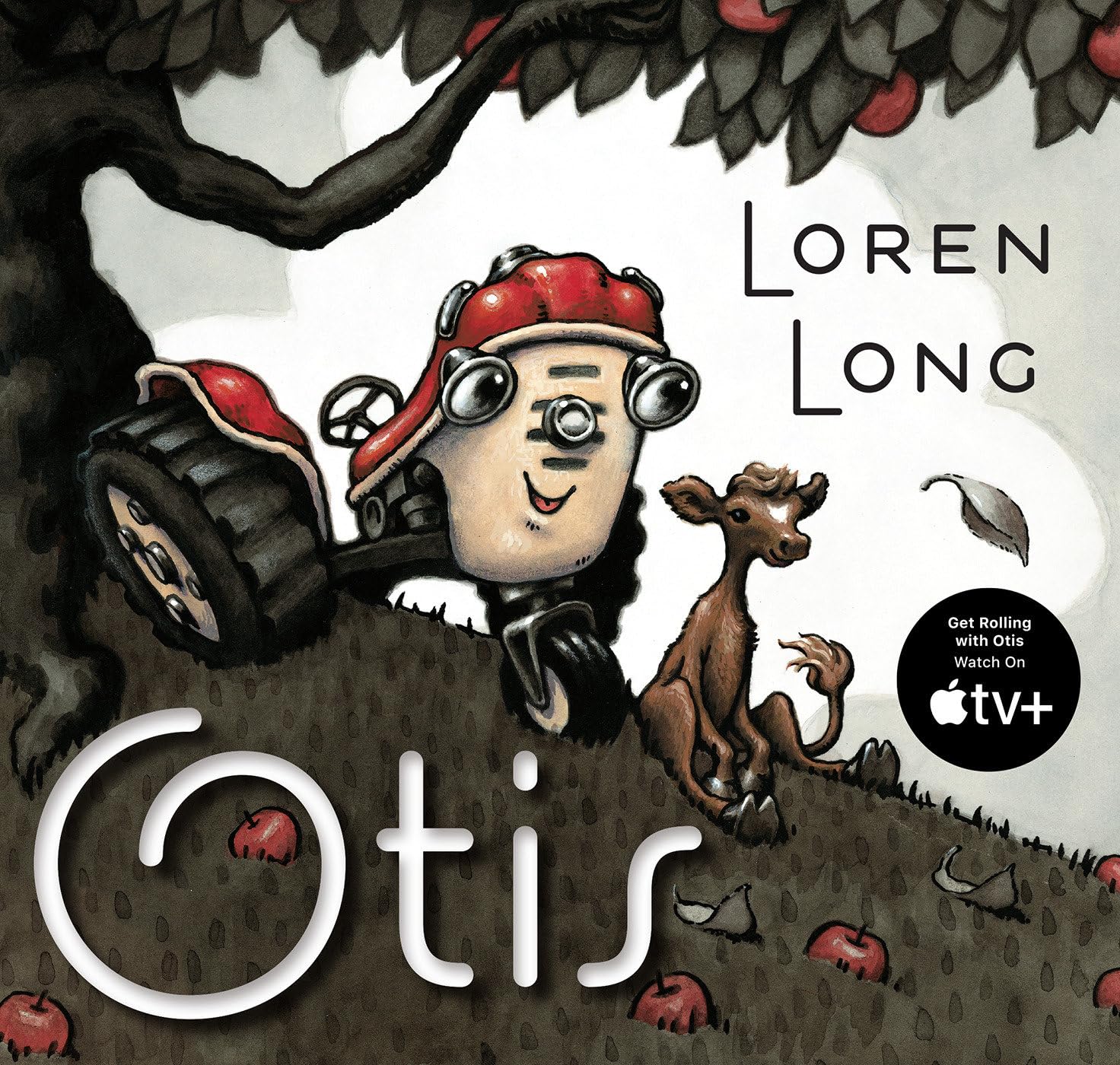
Otis, written and illustrated by Loren Long, is a 40-page picture book about a small, cheerful tractor who loves his farm, his farmer, and above all his friend — the little calf in the stall next door, whom he purrs to sleep with his soft motor each night. When a big new yellow tractor arrives and replaces Otis, he is pushed behind the barn to rust in the weeds, forgotten and unused. He stays there — watching seasons pass, watching the big yellow tractor work the fields — until the day the little calf wanders into Mud Pond and cannot get out. The big yellow tractor cannot help. The farmer cannot help. Only Otis, remembered at last, can chug out from behind the barn and pull his friend to safety. Published in 2009 by Philomel, it became a New York Times bestseller, the official 2013 Jumpstart Read for the Record selection, and the first book in a beloved series of Otis stories. Long’s WPA-influenced oil paintings — rich with texture, warm earth tones, and the specific weight of old machinery — give the book the quality of a classic rather than a new release, which is exactly what it has become. This guide covers Otis‘s reading level, whether it’s a read-aloud or independent read, what it’s about, its themes, how long it takes to read, and similar books — designed for parents and teachers of K–2 readers.
For Parents
A warm, beautifully illustrated picture book about a beloved little tractor who is replaced, forgotten, and ultimately redeems himself through friendship — in the tradition of Mike Mulligan and His Steam Shovel and The Little Engine That Could. Best for ages 3–8. No content concerns; the calf getting stuck in mud may worry some very young children briefly. A book that feels like a classic because it is becoming one.
For Teachers
A K–2 classroom staple for SEL units on friendship, loyalty, and perseverance — and a natural vehicle for discussions of being overlooked and finding your moment. Long’s WPA-style oil paintings are exceptional for art studies. The series has companion Otis books for multiple situations; the audio edition is read by Trace Adkins.
Otis at a Glance
Find on Amazon →| Author & Illustrator | Loren Long (author & illustrator) |
| Published | 2009 (Philomel / Penguin) |
| Grade Level | PreK–2 (our assessment) |
| Recommended Age | 3–8 |
| Lexile | AD580L |
| ATOS Level | 4.0 |
| Pages | 40 |
| Genre | Picture book / friendship / classic-tradition |
| Series | The Otis Books (multiple titles) |
For official Lexile and AR levels, visit Lexile.com or AR BookFinder. ReadingVine provides independent editorial assessments.
What Reading Level Is Otis?
Otis has a Lexile of AD580L and an ATOS level of 4.0 — notably high scores for a picture book with a PreK–K publisher recommendation. The ATOS 4.0 reflects Long’s literary prose style: his sentences are complete and varied, the vocabulary is richer than most picture books (“contentedly,” “bellowed,” “shuddering”), and the narrative unfolds at a pace that rewards the kind of sustained attention a longer read-aloud requires. The AD designation indicates it is designed as a read-aloud, and this is accurate — Long’s prose is best heard rather than decoded, and the emotional weight of the story benefits from the deliberate pacing a read-aloud makes possible.
Despite the ATOS 4.0, the book is widely used from preschool onward as a read-aloud, and strong second- and third-graders can engage with it comfortably as an independent reader. The story’s emotional arc is entirely accessible to the youngest listeners; the language rewards children who are ready to notice the craft in the telling. For official Lexile and AR scores, visit Lexile.com or AR BookFinder. ReadingVine’s assessments are independent editorial judgments.
Is Otis a Read-Aloud or Independent Read?
This is primarily a read-aloud for ages 3–8, with independent reading accessible for strong second- and third-graders. As a read-aloud, Otis rewards a slow, warm pace — Long’s prose has the cadence of a story told rather than read, and the illustrations on each spread deserve unhurried attention. The moment when Otis hears his friend in trouble and chugs out from behind the barn is the book’s emotional climax, and it lands with full weight when the build-up has been given its proper time.
For independent reading, children who are drawn to machines, animals, and friendship stories will find this book compelling to return to. The series offers multiple sequels for children who want more Otis after the first book.
Before turning to the page where Otis hears his friend, pause and ask: “Do you think Otis will help — even after everything that happened?” Let the child answer. Then read the rescue. The moment is more satisfying when the child has committed to a prediction, and the answer to the question is the book’s central argument: love is more durable than being set aside.
What Is Otis About?
Otis is a small, red tractor on a farm, and he loves everything about his life: the farmer, the fields, the sun, the smell of fresh hay. Most of all he loves the little calf in the stall next door, whom he purrs to sleep with his quiet motor each night. The two are best friends. They romp together in the fields, leap hay bales, and play ring-around-the-rosy by Mud Pond. It is a good life.
Then the big yellow tractor arrives — enormous, shiny, powerful, modern. It can do everything Otis can do, faster and more efficiently. The farmer chooses the big tractor. Otis is pushed behind the barn. The weeds grow up around him. Season after season passes — spring, summer, fall, winter — and Otis watches from behind the barn. He watches the big yellow tractor work. He watches the little calf grow. He does not go back.
Then one afternoon the little calf wanders to the edge of Mud Pond — and falls in. The mud is deep and thick and pulling, and the calf cannot get out. The farmer comes. Neighbors come. The big yellow tractor tries, its engine straining, and cannot help. The mud holds. The calf bellows.
And then someone thinks of Otis. He is fetched from behind the barn. He is old and dusty but he starts — putt puff puttedy chuff — and he chugs to the edge of Mud Pond. The same way he has always done things: carefully, steadily, with everything he has. He pulls. The mud releases. The calf is free. That night, Otis purrs his friend to sleep, just as he always has.
Otis and the Classic Tradition
The publisher’s description explicitly places Otis “in the tradition of classics like Mike Mulligan and His Steam Shovel and The Story of Ferdinand” — and this is accurate. All three books are about a beloved small thing (a steam shovel, a bull, a tractor) that is set aside by a world that has moved on, and that finds its moment when what was dismissed turns out to be exactly what is needed. The story structure is one of the oldest in literature: the outcast who is vindicated by the crisis that proves them indispensable.
Mike Mulligan and His Steam Shovel (1939) — Mary Anne the steam shovel is replaced by newer machines and proves herself by digging the town hall cellar in one day. The Story of Ferdinand (1936) — the bull who would rather sit and smell flowers than fight is ultimately allowed to be himself. Otis (2009) — the tractor who is replaced and set aside saves his friend when no one else can. All three books have the same essential faith: the thing that seems to be worthless is not worthless; it has simply not yet been given the right moment.
Long’s WPA-influenced painting style is itself a reference to the tradition: the Workers’ Progress Administration art of the 1930s and 1940s celebrated American labor, machinery, and rural life in exactly the warm, textured, heroic register that Long brings to Otis. Reading the book, you feel the weight and warmth of the farm world, and that feeling is inseparable from the story’s emotional argument.
Otis Characters
Otis is one of picture book literature’s most endearing protagonists: not a character who does impressive things, but a character who loves steadily and completely, and whose loyalty proves more durable than replacement. He does not protest being set aside; he simply waits. He does not resent the big yellow tractor; he watches it work. And when his friend needs him, he does not hesitate. The little calf is the emotional center of the book’s friendship — present from the first page, a source of the tenderness that makes Otis’s displacement genuinely sad and his rescue genuinely moving. The farmer is a good farmer who made a practical decision and is not wrong to have made it, which makes the story more honest than if he were a villain. The big yellow tractor is never made a bad guy; it simply cannot help in this specific crisis, which is different from being bad.
Otis Themes and Lessons
The book’s most honest and most beautiful argument is about the kind of love that does not require being needed. Otis loves the little calf before the crisis and he loves him after; the rescue is not the source of the love but the expression of it. He was doing this all along — purring the calf to sleep, playing ring-around-the-rosy, being a friend — and when the moment comes, the friendship simply does what it has always been doing, at full scale. This is worth discussing with children: Otis doesn’t save his friend because he wants to prove something. He saves his friend because that is who he is.
The seasonal structure of the middle section — Otis watching from behind the barn through spring, summer, fall, and winter — gives the book a quality of patient time that most picture books cannot achieve at their shorter lengths. Long takes the full weight of being set aside seriously; Otis’s time behind the barn is not glossed over. The sadness is real, and the rescue is more satisfying because of it.
Talking with your child: Why was Otis pushed behind the barn — was the farmer wrong to do it? How do you think Otis felt watching through the seasons? When the calf got stuck, why couldn’t the big yellow tractor help? What is something Otis had that the big yellow tractor didn’t? Is there someone in your life who is always there for you, even when things are hard?
How Long Is Otis?
Otis is 40 pages — slightly longer than the standard 32-page picture book — and at ATOS 4.0 with Long’s literary prose style, it takes about twelve to fifteen minutes as a read-aloud. This is toward the upper end of a single picture book session but well within reach; the story’s momentum carries listeners through. Long has extended the character into a full series: Otis and the Tornado (2011), Otis and the Puppy (2013), An Otis Christmas (2014), Otis and the Kittens (2016), and others. Each book features the same farm, the same characters, and the same warm WPA-style illustration. Otis is also available as a board book for the youngest readers and in an audio edition narrated by country music star Trace Adkins.
Books Similar to Otis
About Loren Long
Loren Long grew up in Lexington, Kentucky, and studied graphic design and art studio at the University of Kentucky before graduate-level study at the American Academy of Art in Chicago. He began his career as a freelance illustrator, developing the WPA-influenced oil painting style — warm, textured, heroic in its treatment of ordinary objects and people — that has become his signature. He has received two gold medals from the Society of Illustrators in New York and has appeared frequently in major annual illustration exhibitions including American Illustration and Communication Arts.
Before Otis, Long illustrated several major picture books by other authors, including a new edition of Watty Piper’s The Little Engine That Could and Barack Obama’s Of Thee I Sing: A Letter to My Daughters (2010). Otis was his first self-authored picture book, and he has said it grew from his love of old machinery, farm life, and the specific quality of loyalty in friendship — the kind that stays even when it has no particular reason to. He lives in Cincinnati, Ohio, with his family. The Otis series has grown to more than a dozen titles across board books, picture books, and early readers.
Otis: Frequently Asked Questions
What reading level is Otis?
Otis has a Lexile of AD580L and an ATOS of 4.0 — relatively high scores for a picture book with a PreK–K publisher recommendation, reflecting Long’s literary prose style. Our assessment: PreK–2, ages 3–8 as a read-aloud; grades 2–3 for comfortable independent reading. For official Lexile and AR scores, visit Lexile.com or AR BookFinder.
What is Otis about?
Otis is a small, cheerful tractor who loves his farm and his best friend — the little calf next door. When a big new yellow tractor replaces him, he is pushed behind the barn to rust through the seasons. Then the calf gets stuck in Mud Pond. The big yellow tractor cannot help. Only Otis — remembered at last — chugs out to save his friend.
Is Otis part of a series?
Yes — Long has extended the character into a full series: Otis and the Tornado (2011), Otis and the Puppy (2013), An Otis Christmas (2014), Otis and the Kittens (2016), and others. Each features the same farm, the same characters, and the same WPA-style illustration. Available in board book, picture book, and early reader formats. The audio edition of the original is narrated by Trace Adkins.
What books is Otis similar to?
Long explicitly places Otis in the tradition of Mike Mulligan and His Steam Shovel (the beloved steam shovel replaced by modern machines, vindicated by crisis) and The Story of Ferdinand (the overlooked one who turns out to be exactly right as he is). All three are about a small, beloved thing set aside by a changing world that rediscovers its value at a moment of need.
What is the significance of Loren Long’s illustration style?
Long paints in a WPA-influenced oil style — warm earth tones, textured surfaces, and a heroic treatment of ordinary objects and working life inspired by the Works Progress Administration art of the 1930s and 1940s. This style gives Otis a quality of weight and warmth that makes it feel like a classic on first reading. The illustration style is itself an argument: old machines and farm life are worthy of the full attention of a serious artist.
How long does it take to read Otis aloud?
About twelve to fifteen minutes at an appropriate pace — toward the upper end for a picture book, reflecting the 40-page length and Long’s literary prose. The seasonal middle section, where Otis watches from behind the barn, benefits from being read slowly. The rescue at the end earns the time the buildup takes.