
 = Partner Site
Running Out of Time Reading Level: A Complete Guide
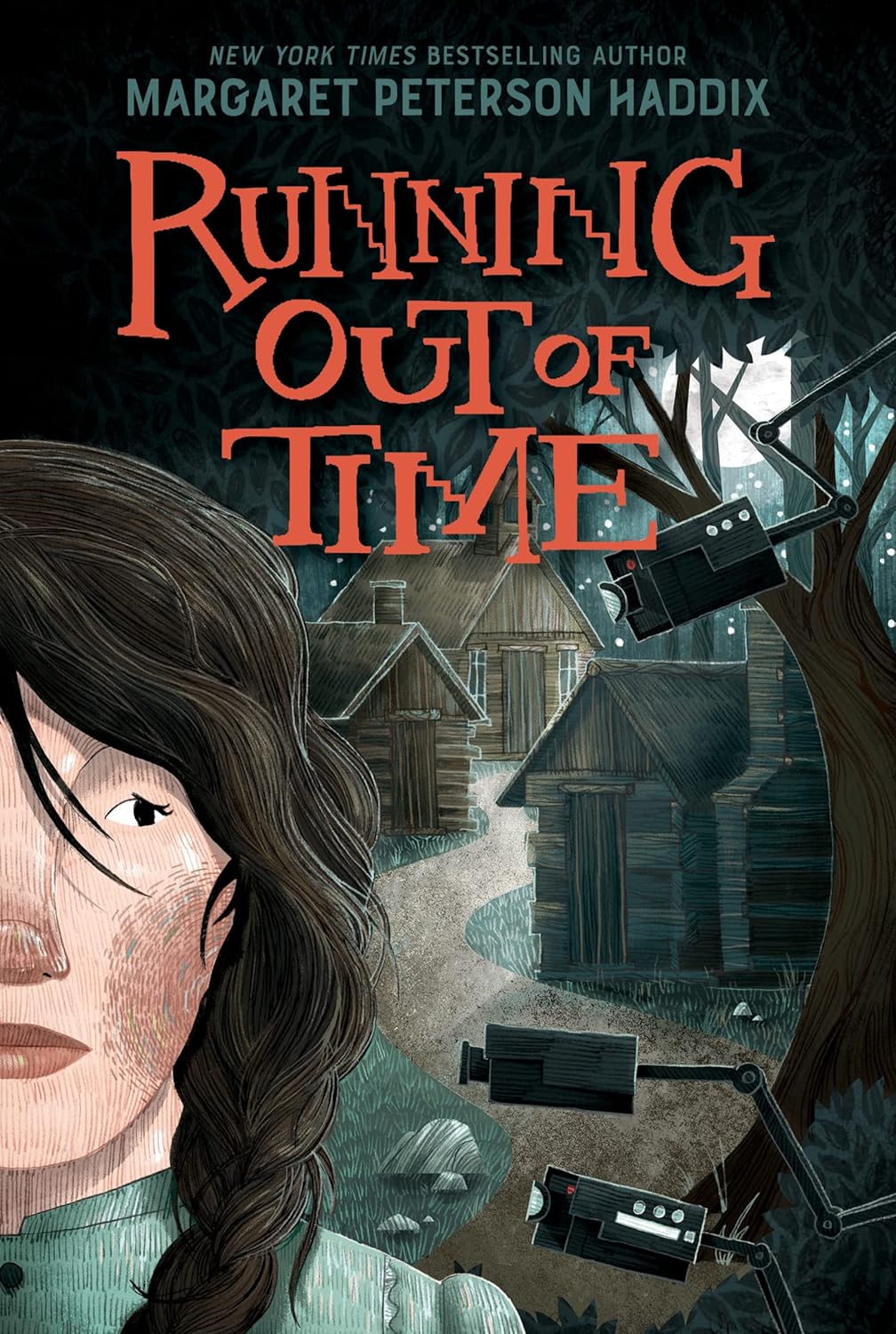
Running Out of Time, written by Margaret Peterson Haddix, is a 184-page historical thriller about thirteen-year-old Jessie Keyser, who has grown up in the frontier village of Clifton, Indiana — in the year 1840, or so she believes. When a diphtheria epidemic begins killing the children of Clifton and her mother runs out of medicine, Jessie’s mother reveals a shocking truth: it is actually 1996. Clifton Village is a living-history tourist attraction, its residents chosen to live as if in the 1840s without modern medicine, electricity, or knowledge of the outside world — under constant camera surveillance by scientists conducting a long-term experiment. The medicine that could save the dying children exists, but it is outside the village walls. Jessie’s mother sends her out. And Jessie, who has never seen a car, a telephone, or a fast-food restaurant, must navigate the modern world entirely alone before the children of Clifton run out of time. Published in 1995 by Simon & Schuster and the debut novel of one of middle-grade fiction’s most prolific authors, it received a starred review from School Library Journal (“the action moves swiftly, with plenty of suspense”) and has remained in print and in classroom use for thirty years. A sequel, Falling Out of Time, was published in 2023. This guide covers reading level, age appropriateness, content, themes, and similar books.
For Parents
A fast-paced historical thriller with a major central twist: a girl who thinks she lives in 1840 Indiana discovers it is actually 1996 and her village is a tourist experiment — then must escape into the modern world alone to save dying children. Ages 8–13, grades 4–7. No content concerns beyond diphtheria, children dying, and the general thriller premise. A natural entry point to Haddix’s catalog.
For Teachers
A grades 4–7 classroom text useful for historical fiction units (1840s frontier life), science and ethics discussions (the experiment premise), and as an entry point to Haddix’s catalog before Among the Hidden or the Shadow Children series. School Library Journal starred review. The twist makes it a productive text for discussing unreliable narration and the gap between what a character knows and what the reader comes to understand.
Running Out of Time at a Glance
Find on Amazon →| Author | Margaret Peterson Haddix |
| Published | 1995 (Simon & Schuster Books for Young Readers) |
| Grade Level | 4–7 (our assessment) |
| Recommended Age | 8–13 |
| Lexile | ~750L (estimated) |
| ATOS Level | Not confirmed; estimated ~5.0 |
| Pages | 184 |
| Genre | Historical fiction / thriller / science fiction |
| Setting | Clifton Village, Indiana; 1840 (and 1996) |
| Sequel | Falling Out of Time (2023) |
For official Lexile and AR levels, visit Lexile.com or AR BookFinder. ReadingVine provides independent editorial assessments.
What Reading Level Is Running Out of Time?
Bookroo estimates the Lexile at approximately 750L; a confirmed ATOS score for this specific title is not widely published. Based on the estimated Lexile and Haddix’s prose style across comparable novels — clear, direct, thriller-paced — an ATOS of approximately 5.0 is consistent with the grades 4–7 placement. The 184-page length makes it one of Haddix’s shorter novels; most readers in the target range complete it in three to five days. For official scores, visit Lexile.com or AR BookFinder. ReadingVine’s assessments are independent editorial judgments.
The Central Twist — A Note for Parents and Teachers
The novel’s central revelation — that Clifton Village is not actually in 1840 but is a 1996 tourist experiment — arrives early enough in the book that it is part of the premise rather than a spoiler to be protected. Jessie’s mother reveals the truth partway through, and the bulk of the novel follows Jessie navigating the modern world. Parents and teachers who want to pitch the book to students can describe it as “a girl who thinks she lives in 1840 discovers she’s actually in 1996 and has to escape into the modern world” — this is accurate and does not deprive the reader of the most significant narrative pleasures.
The premise shares structural similarity with M. Night Shyamalan’s 2004 film The Village, which generated some discussion about parallel premises when it was released. Both involve a community deliberately isolated from the modern world by those in authority, with members kept in ignorance of when and where they actually are. The Haddix novel was published nine years before the film.
What Age Is Running Out of Time Appropriate For?
Ages 8–13, grades 4–7. The diphtheria epidemic kills children in the village — this is the novel’s stakes and is handled with appropriate directness rather than graphic detail. The experiment premise — scientists watching a community of people without their knowledge or consent, withholding medicine that could save dying children — raises genuine ethical questions that are accessible to the recommended age range. No other content concerns.
What Is Running Out of Time About?
Jessie Keyser has grown up in Clifton, Indiana — a small frontier settlement in 1840, where her father works as a blacksmith, her mother tends the sick, and life follows the rhythms of the nineteenth century. When diphtheria begins spreading through the village’s children, Jessie’s mother runs out of medicine. One night she tells Jessie the truth: it is actually 1996. Clifton is a living-history tourist attraction; its residents were recruited to live as their 1840s counterparts, without modern conveniences, medicine, or knowledge of the outside world. Hidden cameras watch everything. Scientists observe the experiment. The world Jessie has always known is, in every essential detail, a fabrication.
Jessie’s mother cannot leave — her absence would be noticed immediately. But Jessie, small and young and unrecognized by the cameras as significant, can get out through a blind spot she knows about. She has a name and address: a journalist in Indianapolis who might help. The second half of the novel follows Jessie through 1996 Indianapolis — encountering cars, convenience stores, telephones, and a world she has no framework to understand — while evading the men who are trying to bring her back before she can get help to the dying children.
Running Out of Time Themes and Lessons
The novel’s ethical question — whether scientists can ethically conduct a long-term experiment on people who have not consented, including withholding lifesaving medicine — is both accessible to middle-grade readers and genuinely significant. Haddix does not present the scientists as cartoonishly evil; they believe in the value of their experiment, which makes their choices more disturbing rather than less. The question of what authority figures owe to the people under their care is a consistent theme across Haddix’s work, and it appears here in its clearest form.
The fish-out-of-water second half of the novel — Jessie encountering modern America for the first time — generates both comedy and genuine tension, and gives readers a specific tool for imagining their own world from the outside: what would a stranger from 1840 find most alarming, most confusing, most wonderful about 1996?
Discussion questions: Is the Clifton experiment ethical — can the scientists justify what they’re doing? What is the most alarming thing Jessie encounters in the modern world — and the most useful? How does Jessie manage in a world she has no framework for? What would you need to know to survive if you had never seen the modern world before?
Running Out of Time in Haddix’s Catalog
Running Out of Time was Margaret Peterson Haddix’s debut novel, published in 1995. Her second novel, Among the Hidden (1998), established the Shadow Children series and became her most widely taught book. The two novels share the same essential template — a young protagonist, a dangerous secret hidden by authority figures, and a world that looks familiar until it doesn’t — that Haddix would develop across more than forty books. Readers who encounter either novel first are typically drawn to the other. See our Among the Hidden guide for a full biography of Haddix and an overview of her catalog.
Books Similar to Running Out of Time
About Margaret Peterson Haddix
See our Among the Hidden guide for a full biography. Running Out of Time was Haddix’s debut novel, published in 1995 when she was thirty-one and working as a journalist and writing teacher. A repackaged edition was released in 2023, the same year as the sequel Falling Out of Time, which follows the next generation of Keysers.
Running Out of Time: Frequently Asked Questions
What reading level is Running Out of Time?
Estimated Lexile ~750L; ATOS not widely confirmed for this specific title. Our assessment: grades 4–7, ages 8–13, based on comparable Haddix novels and the book’s 184-page length. For official scores, visit Lexile.com or AR BookFinder.
What is Running Out of Time about?
Jessie Keyser thinks she lives in 1840 Indiana — until a diphtheria epidemic kills children and her mother reveals the truth: it is actually 1996, and Clifton is a living-history tourist experiment under camera surveillance. Medicine that could save the dying children exists outside the village walls. Jessie must escape into the modern world — a world she has never seen — to get help before it’s too late.
Is Running Out of Time similar to The Village?
The premise shares structural similarity with M. Night Shyamalan’s 2004 film The Village — both involve a community deliberately isolated from the modern world by those in authority, with members kept ignorant of when and where they actually are. The Haddix novel was published nine years before the film. The comparison is frequently made; it is worth noting that the two works handle the premise very differently.
Is there a sequel to Running Out of Time?
Yes — Falling Out of Time (2023) follows the next generation: Zola Keyser, a descendant of Jessie. It was published almost thirty years after the original novel, alongside a repackaged edition of Running Out of Time.
How does Running Out of Time relate to Among the Hidden?
Running Out of Time (1995) was Haddix’s debut novel; Among the Hidden (1998) was her second and her most widely taught. Both center on a young protagonist who discovers a dangerous secret hidden by authority figures and must act against that authority to save lives. Both are natural entry points to her catalog; readers who encounter one typically seek out the other.