
 = Partner Site
Stamped (for Kids) Reading Level: A Complete Guide
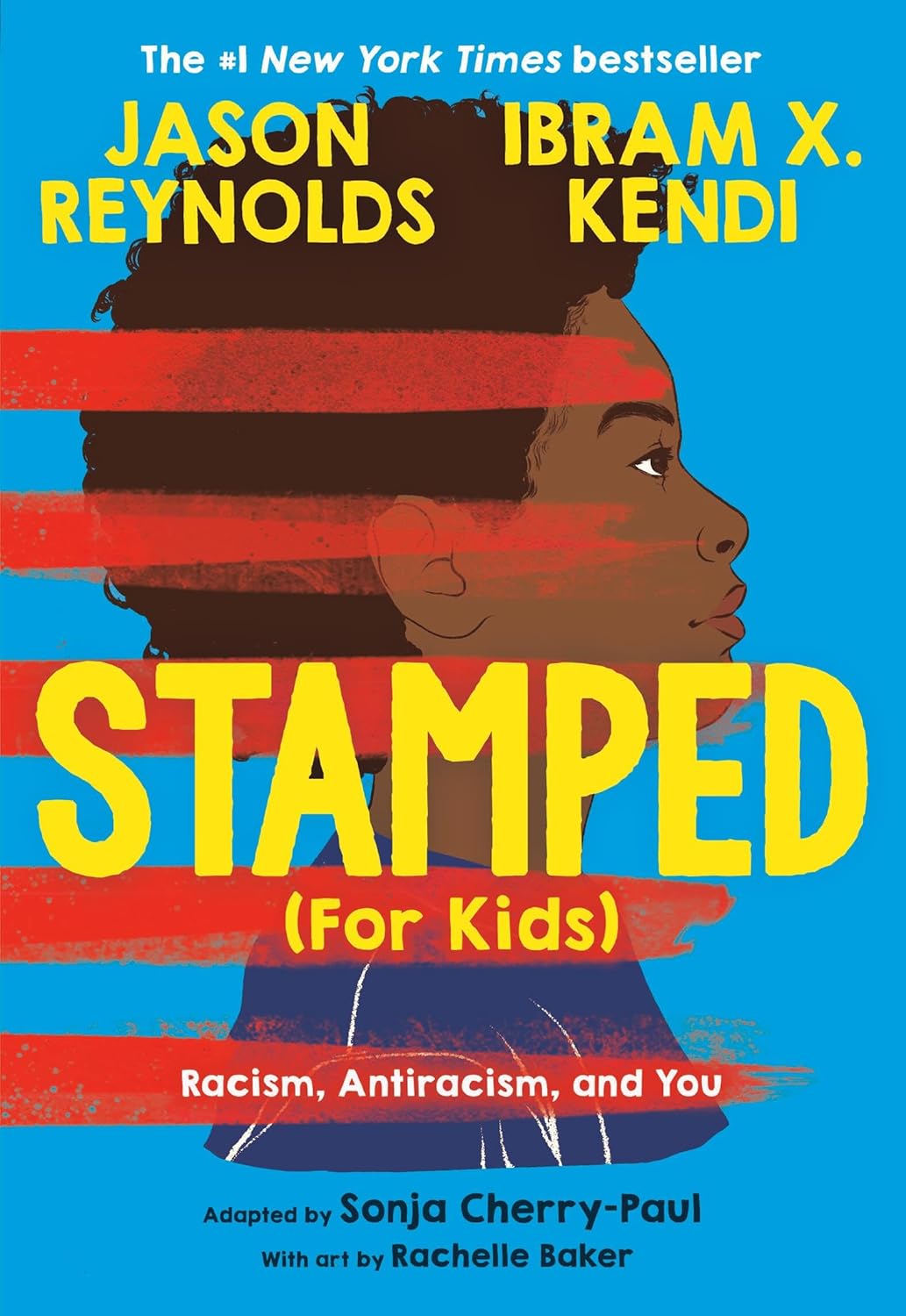
Stamped (for Kids): Racism, Antiracism, and You, adapted by Sonja Cherry-Paul with writing by Jason Reynolds and research by Ibram X. Kendi, illustrated by Rachelle Baker, is a chapter book adaptation of the bestselling Stamped: Racism, Antiracism, and You — itself a young adult remix of Kendi’s National Book Award-winning Stamped from the Beginning. The kids’ edition brings the same essential project — tracing the history of racist ideas in America, identifying who created and spread them, and exploring what antiracism looks like — to readers in grades 4–6, with shorter chapters, more accessible language, and Baker’s illustrations throughout. It takes readers on a journey from 1415 to the present, meeting the historical figures and ideas that shaped how race has been used and misused, and asking children to think about how those ideas still operate today. Published in May 2021 by Little, Brown Books for Young Readers, it reached #1 on the New York Times bestseller list, received starred reviews from Kirkus (“Exhilarating, excellent, necessary”) and School Library Journal (“A wonderfully accessible version of the already seminal work for teens”), and was named a 2022 ALA Notable Children’s Book. This guide covers reading level, age appropriateness, content, structure, and similar books. For guides to the full YA edition and the original adult text, see our Stamped: Racism, Antiracism, and You guide.
For Parents
A chapter book adaptation of the bestselling history of racist ideas in America — written for readers in grades 4–6, with illustrations and accessible language. #1 New York Times bestseller; ALA Notable Children’s Book. Content: the history of racism in America, from the first slave ship to contemporary events. No graphic content, but the subject matter is direct and historically honest. A natural conversation-starter.
For Teachers
A grades 4–6 nonfiction classroom text for social studies and history units on race in America — the most accessible entry point in the Stamped series. Comes with a glossary, timeline, and back matter. Includes an educator guide available free from the publisher. SLJ starred review: “A wonderfully accessible version of the already seminal work for teens.”
Stamped (for Kids) at a Glance
Find on Amazon →| Adapted by | Sonja Cherry-Paul |
| Based on writing by | Jason Reynolds |
| Research by | Ibram X. Kendi |
| Illustrated by | Rachelle Baker |
| Published | 2021 (Little, Brown Books for Young Readers) |
| Grade Level | 4–6 (our assessment) |
| Recommended Age | 9–12 |
| Lexile | Not widely published; estimated below 800L |
| ATOS Level | Not confirmed |
| Genre | Narrative nonfiction / history |
| Awards | ALA Notable Children’s Book (2022); #1 New York Times bestseller; starred reviews Kirkus, SLJ |
For official Lexile and AR levels, visit Lexile.com or AR BookFinder. ReadingVine provides independent editorial assessments.
What Reading Level Is Stamped (for Kids)?
A confirmed Lexile or ATOS score for Stamped (for Kids) is not widely published in standard databases. The publisher places it at grades 4–6 (ages 9–12). The YA edition — Stamped: Racism, Antiracism, and You — has a Lexile of 1000L; the kids’ edition is meaningfully more accessible, with shorter chapters, simpler vocabulary, and Baker’s illustrations breaking up the text. Our editorial assessment: grades 4–6, ages 9–12. The reading challenge is conceptual rather than linguistic — the ideas require attention and discussion rather than difficult decoding. For official scores, visit Lexile.com or AR BookFinder.
The Stamped Family — Which Version Is Right?
The Stamped project spans three books for three audiences:
Stamped from the Beginning (Ibram X. Kendi, 2016) — The adult original. National Book Award winner in nonfiction. A comprehensive scholarly history of racist ideas in America, approximately 600 pages. For adult readers and serious high school students.
Stamped: Racism, Antiracism, and You (Jason Reynolds and Ibram X. Kendi, 2020) — The young adult remix. Reynolds retells Kendi’s research in his own voice, organized around five historical figures. Approximately 320 pages, Lexile 1000L, grades 6–12. See our Stamped YA guide for full details.
Stamped (for Kids) (Sonja Cherry-Paul, Jason Reynolds, Ibram X. Kendi, 2021) — This book. Adapted from the YA edition for grades 4–6, with illustrations by Rachelle Baker, shorter chapters, a glossary, and a timeline. The most accessible entry point in the series.
All three books cover the same essential intellectual territory; the differences are in depth, length, and the specific voice of the telling. Families or classrooms that have used one can easily transition to another as readers grow.
What Is Stamped (for Kids) About?
The book traces the history of racist ideas in America — not just what happened, but where the ideas came from and how they spread. It begins in 1415, when Portuguese Prince Henry began developing the ideology that would underpin the transatlantic slave trade, and moves through American history to the present, identifying the specific people and texts and moments that created and perpetuated racist thinking. Along the way it introduces children to the concept of antiracism — the active work of identifying and resisting racist ideas — and asks them to examine how those ideas might be operating in their own lives and thinking.
The structure follows the same three-category framework from the YA edition: segregationists (who believe Black people are inferior and should be separated), assimilationists (who believe Black people need to change to be equal), and antiracists (who believe the problem is not with Black people but with the racist systems and ideas that treat them unequally). These categories are applied across American history to show how different responses to race have operated at different times.
The book includes a glossary of key terms, a historical timeline, discussion questions, and back matter that extends the reading into further research. Rachelle Baker’s illustrations appear throughout.
Stamped (for Kids) Themes and Lessons
The book’s central argument — that racist ideas were invented by specific people for specific reasons (usually to justify economic exploitation), and that they can therefore be identified, understood, and resisted — is the intellectual core of Kendi’s original work, preserved across all three versions. For children, the most important implication is that racist ideas are not natural or inevitable; they were made, and they can be unmade. This is a different framing than most children’s introductions to race, which focus on individual kindness and fairness rather than on the structural and historical origins of racist thinking.
The book has been both widely praised and challenged in school districts — it is on the ALA’s frequently challenged books list. Teachers and parents who use it should be aware of this context and should be prepared for the conversations it generates, which is rather the point.
Discussion questions: What is the difference between a segregationist, an assimilationist, and an antiracist — can you give an example of each from history? Where did racist ideas come from, according to the book? What does it mean to be “antiracist” rather than just “not racist”? What surprised you most about the history the book covers?
Books Similar to Stamped (for Kids)
About the Creators
Ibram X. Kendi is the author of Stamped from the Beginning: The Definitive History of Racist Ideas in America, which won the National Book Award in nonfiction in 2016, and How to Be an Antiracist (2019). He provided the research and intellectual framework that underlies all three versions of Stamped.
Jason Reynolds wrote the YA edition of Stamped and served as a source author for the kids’ edition. He is the award-winning author of Ghost, Look Both Ways, and the Track series, among many other middle-grade and young adult titles. He served as the National Ambassador for Young People’s Literature from 2020 to 2022.
Sonja Cherry-Paul adapted the YA edition for the kids’ audience. She is a literacy educator and diversity consultant who has worked extensively on antiracist curriculum development for elementary and middle school classrooms.
Rachelle Baker illustrated the kids’ edition. Her illustrations appear throughout the chapters and in the back matter.
Stamped (for Kids): Frequently Asked Questions
What reading level is Stamped (for Kids)?
A confirmed Lexile or ATOS score is not widely published. Publisher grade level: 4–6, ages 9–12. The YA edition has a Lexile of 1000L; the kids’ edition is meaningfully more accessible. Reading challenge is conceptual rather than linguistic. Our assessment: grades 4–6, ages 9–12.
What is the difference between Stamped (for Kids) and Stamped: Racism, Antiracism, and You?
Stamped: Racism, Antiracism, and You (2020) is the YA edition — written by Jason Reynolds, Lexile 1000L, grades 6–12. Stamped (for Kids) (2021) is adapted from the YA edition for grades 4–6 by Sonja Cherry-Paul, with illustrations by Rachelle Baker, shorter chapters, a glossary, and a timeline. Same core intellectual content; different depth and accessibility.
Is Stamped (for Kids) appropriate for elementary school?
The publisher recommends it for grades 4–6, ages 9–12. The content — the history of racist ideas in America — is handled directly and without graphic detail. The book has been challenged in some school districts; it is on the ALA’s frequently challenged books list. Teachers and parents should be prepared for the conversations it generates and may want to preview the content first.
Who adapted Stamped for Kids?
Sonja Cherry-Paul, a literacy educator and antiracist curriculum developer, adapted the Jason Reynolds YA edition for the kids’ audience. Ibram X. Kendi provided the original research; Rachelle Baker illustrated.