
 = Partner Site
Sulwe Reading Level: A Complete Guide
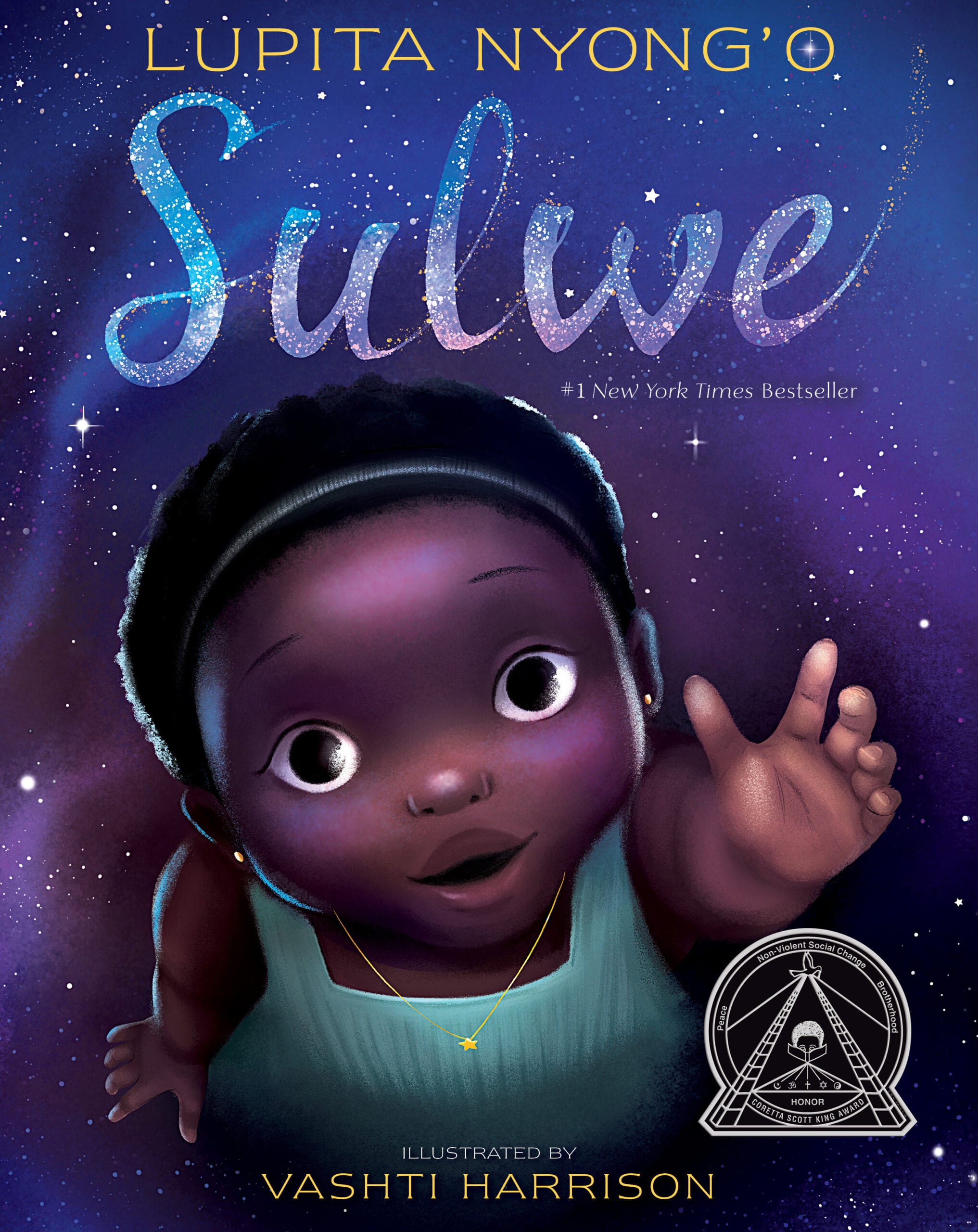
Sulwe, written by Lupita Nyong’o and illustrated by Vashti Harrison, is a 48-page picture book about a five-year-old Kenyan girl named Sulwe whose skin is the color of midnight — darker than anyone in her family, darker than anyone in her school — and who spends the first part of the story wishing she were lighter, until a shooting star brings her a dream-journey in which Night and Day tell her their story and change the way she sees herself. Published on October 15, 2019, by Simon & Schuster, it debuted as a New York Times bestseller, received starred reviews from Kirkus, Publishers Weekly, and Booklist, earned Vashti Harrison a Coretta Scott King Illustrator Honor Award and an NAACP Image Award, and was featured in its own episode of the Netflix series Bookmarks: Celebrating Black Voices. “Sulwe” means “star” in Luo — Nyong’o’s mother tongue and the language spoken by her family in Kenya. The book is based directly on Nyong’o’s own experience growing up as a dark-skinned girl in a family where lighter skin was considered more beautiful. This guide covers Sulwe‘s reading level, whether it’s a read-aloud or independent read, what it’s about, its themes, how long it takes to read, and similar books — designed for parents and teachers of K–2 readers.
For Parents
A beautiful, emotionally rich picture book about colorism and self-acceptance — told through a magical dream-journey and illustrated with Vashti Harrison’s luminous art. Best as a read-aloud for ages 4–8. No content concerns. An essential book for any child who has been made to feel that something about their appearance is not beautiful enough.
For Teachers
A K–2 classroom staple for units on identity, beauty standards, and self-acceptance — with the depth to support meaningful discussion about colorism that goes beyond surface-level “everyone is beautiful.” The embedded Night and Day fable gives the book a story-within-a-story structure that rewards close reading. Pairs naturally with Hair Love, illustrated by the same artist, for Vashti Harrison author-illustrator studies.
Sulwe at a Glance
Find on Amazon →| Author | Lupita Nyong’o |
| Illustrator | Vashti Harrison |
| Published | 2019 (Simon & Schuster Books for Young Readers) |
| Grade Level | PreK–2 (our assessment) |
| Recommended Age | 4–8 |
| Lexile | AD580L |
| Word Count | 862 |
| Pages | 48 |
| Genre | Picture book / realistic fiction / magical realism |
| Awards | Coretta Scott King Illustrator Honor (Vashti Harrison, 2020); NAACP Image Award for Outstanding Children’s Literary Work |
For official Lexile and AR levels, visit Lexile.com or AR BookFinder. ReadingVine provides independent editorial assessments.
What Reading Level Is Sulwe?
Sulwe has a Lexile of AD580L — Adult Directed, indicating it is designed as a read-aloud. At 862 words across 48 pages, it is longer and more narratively complex than most picture books in this catalog, sitting closer to Lilly’s Purple Plastic Purse (1,148 words) than to the very short books like Leo the Late Bloomer (164 words). The prose is warm and lyrical — Nyong’o writes with the cadences of someone telling a story she has carried for a long time — and it shifts registers twice: from realistic family life into the magical dream-sequence of the Night and Day fable, and back again. A confident K–1 reader can work through the text; the vocabulary is accessible and the sentence structures are clear throughout.
At grade K through 2 in most placement systems, it is appropriate for independent reading by strong kindergartners and comfortable for first- and second-graders. The book is longer than a single typical picture book read-aloud session warrants, but it moves quickly enough to hold children’s attention throughout. For official Lexile and AR scores, visit Lexile.com or AR BookFinder. ReadingVine’s assessments are independent editorial judgments.
Is Sulwe a Read-Aloud or Independent Read?
This is primarily a read-aloud for ages 4–8, with independent reading accessible for ages 5–8. The AD580L Lexile and the book’s emotional weight both favor reading it together — the Night and Day fable in the middle is the kind of embedded story that benefits from a reader who can give it the space and pacing it needs.
Harrison’s illustrations reward unhurried attention: the deep purples, blues, and golds of Sulwe’s dream-journey are among the most visually stunning pages in any picture book generated this session, and children who are read to with time to look will absorb something from the art that a child reading independently might move through too quickly.
Pause before the Night and Day fable begins and ask your child: “Who do you think is more important — Day or Night?” Then read the fable and ask afterward: “Did the story change your answer?” The embedded fable is the book’s most teachable moment, and it lands differently when children have made a prediction first. After the whole book, ask: “What does Sulwe’s name mean — and why do you think it fits her?”
What Is Sulwe About?
Sulwe is five years old and the color of midnight. Her mother’s skin is the color of dusk, her sister Mich’s the color of dawn. Sulwe loves her family deeply — but she has begun to notice that lighter skin is treated as more beautiful, by children at school who tease her and by a world that reflects lighter faces back as the standard of beauty. She tries to change her skin, scrubbing it with soap and eating only light-colored foods. Nothing works. She prays for lighter skin. At night, she cries.
Then a shooting star darts through her window and takes her on a dream-journey through the night sky. There, she encounters two sisters: Day, who is bright and celebrated, and Night, who is dark and feels unseen. The star tells Sulwe their story. Day and Night were once together, but Day’s brightness overshadowed Night, and Night retreated to the edges. But without Night, the world could not rest — crops could not grow, stars could not be seen, the moon had no partner. The world needed Night as much as it needed Day. Night was not less beautiful; she was differently beautiful, and she was necessary.
Sulwe wakes from the dream changed. She understands for the first time that her darkness is not a lack of something but a presence of something — that she is a star, as her name means, and that stars only shine in the dark. She carries herself differently. The book ends with Sulwe, no longer trying to be something other than what she is, shining in the night she was made for.
What Is Colorism — and Why Does It Matter for This Book?
Colorism is discrimination based on skin tone within a racial group — the preference for lighter-skinned people over darker-skinned people within communities of color. It is different from racism in that it operates inside communities as well as between them. In many Black, South Asian, East Asian, and Latinx communities, lighter skin has historically been associated with higher social status, beauty, and success, while darker skin has been associated with lower status, less beauty, and fewer opportunities. This hierarchy was shaped partly by colonialism — the association of lighter skin with proximity to white European standards — and partly by longstanding colorist practices in advertising, film, and media that continue today.
Nyong’o has spoken publicly and at length about her own experience with colorism growing up in Kenya: her lighter-skinned sister received compliments on her beauty while Nyong’o was teased about her darker complexion. She has said that writing this book was an attempt to give younger dark-skinned children the story she needed and did not have. The book does not use the word “colorism” — it is a picture book, not a lecture — but it depicts the experience with enough specificity that dark-skinned children who have lived it will recognize it immediately, and other children will understand something real about what it feels like to be on the wrong side of a beauty standard you did not choose and cannot change.
Parents and teachers using this book with mixed-age or mixed-background groups should be prepared for conversations that go beyond “everyone is beautiful.” The book’s argument is more specific than that: it argues that darkness specifically — not difference in the abstract, but dark skin in particular — is beautiful, necessary, and not the absence of something better. That specificity is the book’s greatest strength.
Sulwe Characters
Sulwe is the book’s heart — a girl whose pain is specific and real, whose attempts to change herself are depicted without mockery, and whose transformation is earned through the fable rather than simply declared. Her mother is one of the picture book catalog’s most tenderly drawn parents — present, warm, and wise without being preachy: when Sulwe cries to her mother about wanting lighter skin, her mother’s response is loving and true, but it is not enough, because love alone cannot give a child what the world has taken. It takes the star’s journey. Mich, the sister, represents the standard Sulwe is measured against — lighter-skinned, perceived as more beautiful — and is drawn with enough specificity to be recognizable without being made a villain; she loves Sulwe. Night and Day, the sisters in the embedded fable, are the book’s allegorical center: Night is dark and undervalued, Day is bright and celebrated, and the world cannot function without both.
A Note on Vashti Harrison
Vashti Harrison illustrated both Sulwe and Hair Love — the two picture books in this K–2 catalog that most directly celebrate Black beauty and Black family life. Her work on Sulwe earned a Coretta Scott King Illustrator Honor; her work on Big earned the 2024 Caldecott Medal. Her illustration style — deep, saturated colors; flowing, expressive figures; faces that carry entire emotional landscapes in a single expression — is perfectly suited to Sulwe’s journey from grief to wonder. The night sky sequences in particular, where Sulwe travels through deep purples and starlit blues, are among the most visually memorable pages Harrison has produced. Children who love the illustrations in Sulwe should know that the same artist illustrated Hair Love, and that both books are worth looking at as a pair — the same artistic vision, two different but complementary celebrations of Black girls and their specific beauty.
Sulwe Themes and Lessons
The Night and Day fable is the book’s most teachable structure and its most sophisticated argument. It is not a fable that says “everyone is equal” in an abstract sense — it is a fable that says Night is necessary, that the world needs what Night provides, and that Night’s darkness is not a failure to be Day but a distinct and irreplaceable quality. This transfers directly to Sulwe: she is not a failed version of her lighter-skinned sister or mother. She is something different and necessary, something that shines in conditions where lighter things cannot. The star — the shooting star that brings her the dream — is also named in the book’s title: Sulwe means star. She was always the thing she was longing to become.
Nyong’o has noted in interviews that the book is not only for Black children — it is for any child who has been made to feel that something about their appearance does not meet the world’s standard. The specific experience is colorism; the universal experience is the gap between who you are and who you are told you should be. But the specificity matters: the book does not abstract Sulwe’s experience into a general lesson about difference. It keeps the dark skin, the midnight color, the Luo name, the Kenyan girl jumping kati. It stays with the specific, because that is where dark-skinned children will find themselves.
Talking with your child: Why did Sulwe want her skin to be lighter? What did Night feel like when Day got all the attention? How did the star’s story help Sulwe understand herself differently? What does Sulwe’s name mean — and why does Nyong’o end the book with that meaning? Is there something about yourself that you sometimes wish were different?
How Long Is Sulwe?
Sulwe is 48 pages with 862 words — longer than most picture books in this catalog by page count, reflecting Nyong’o’s inclusion of the embedded Night and Day fable which adds structural depth. Most adults can read it aloud in about ten to twelve minutes. The longer length is appropriate: the emotional journey from Sulwe’s grief to her transformation requires space to breathe, and the fable needs room to unfold. It is a single-sitting read for most children ages 4 and up.
Books Similar to Sulwe
About Lupita Nyong’o and Vashti Harrison
Lupita Nyong’o was born on March 1, 1983, in Mexico City to Kenyan parents — her father Peter Anyang’ Nyong’o is a professor and politician, and the family returned to Kenya when she was a young child. She grew up in Nairobi and studied theater at Hampshire College in Massachusetts before earning an MFA from the Yale School of Drama. Her feature film debut in Steve McQueen’s 12 Years a Slave (2013) won her the Academy Award for Best Supporting Actress. She has since starred in Black Panther, the Star Wars sequel trilogy, and Jordan Peele’s Us, among many others. She wrote Sulwe as a direct response to her own experience of colorism growing up in Kenya — her lighter-skinned sister was praised for her beauty while she was teased about her dark complexion — and as the book she wished had existed when she was Sulwe’s age. The name Sulwe is from Luo, the language spoken by Nyong’o’s family, and means “star.” She lives in Brooklyn, New York.
Vashti Harrison is one of the most celebrated illustrators in contemporary American picture books. For a fuller biography including her 2024 Caldecott Medal for Big, see our Hair Love guide.
Sulwe: Frequently Asked Questions
What reading level is Sulwe?
Sulwe has a Lexile of AD580L — Adult Directed, designed as a read-aloud. At 862 words and 48 pages, it is longer than most picture books in this catalog. Our assessment: read-aloud for ages 4–8; independent reading for ages 5–8. For official Lexile and AR scores, visit Lexile.com or AR BookFinder.
What is Sulwe about?
A five-year-old Kenyan girl named Sulwe whose skin is the color of midnight wishes she were lighter — until a shooting star takes her on a dream-journey where she learns the story of Night and Day, two sisters whose relationship teaches her that darkness is not the absence of beauty but its own kind of beauty. She wakes transformed, ready to shine in the night she was made for.
What does Sulwe mean?
“Sulwe” means “star” in Luo — the language spoken by Lupita Nyong’o’s family in Kenya. The name is central to the book’s argument: Sulwe has always been the thing she was longing to become. Stars only shine in the dark. The book ends with this meaning made explicit.
What is colorism, and how does Sulwe address it?
Colorism is discrimination based on skin tone within a racial group — the preference for lighter-skinned people over darker-skinned people. Nyong’o experienced it growing up in Kenya, where her lighter-skinned sister received compliments on her beauty while Nyong’o was teased about her dark complexion. Sulwe addresses it directly and specifically: not as a general lesson about difference, but as the specific experience of a dark-skinned Black girl in a world that treats lighter skin as more beautiful. The Night and Day fable is the book’s argument that darkness is not a lack of something but a presence of something necessary and beautiful.
Who illustrated Sulwe?
Vashti Harrison, who also illustrated Hair Love by Matthew A. Cherry. Her work on Sulwe earned a Coretta Scott King Illustrator Honor Award. She won the 2024 Caldecott Medal for her picture book Big. Her illustration style — rich colors, expressive faces, luminous dream sequences — is immediately recognizable across both books and makes them natural companions.
Is Sulwe based on a true story?
Yes — Nyong’o has said the book is based directly on her own experience growing up as a dark-skinned girl in Kenya, where colorism shaped how she and others were perceived. Her lighter-skinned sister received beauty compliments that Nyong’o did not; she internalized early that lighter skin was treated as more beautiful. She wrote the book she wished had existed for the version of herself who needed it.
Is Sulwe on Netflix?
Sulwe was featured in its own episode of the Netflix original series Bookmarks: Celebrating Black Voices — a series in which celebrities read children’s books aloud. It is not a full animated adaptation, but the episode is a meaningful companion to reading the book. Nyong’o reads the book herself in the episode.