
 = Partner Site
The Day You Begin Reading Level: A Complete Guide
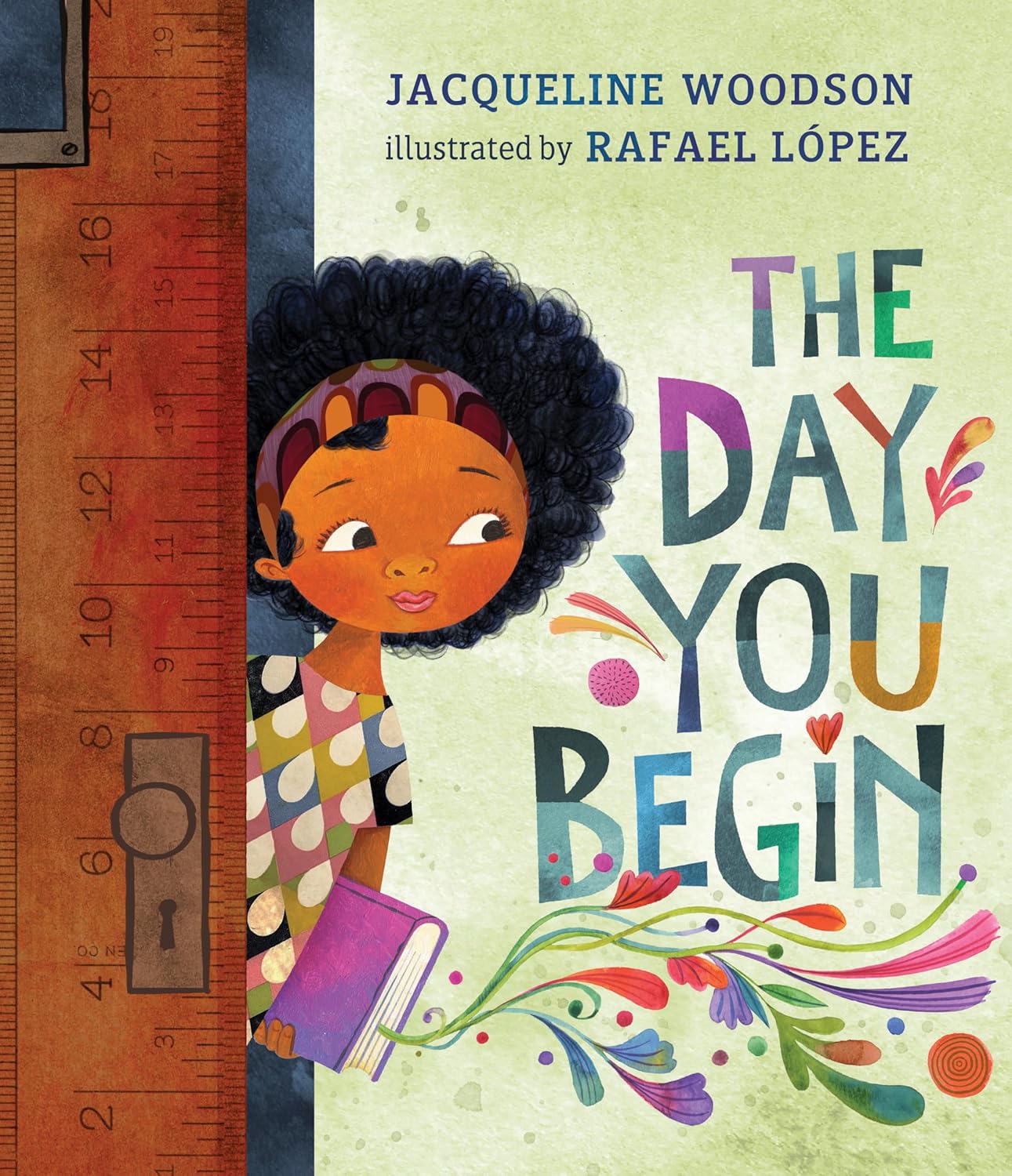
The Day You Begin by Jacqueline Woodson, illustrated by Rafael López, is a widely praised and emotionally resonant picture book — a lyrical free-verse story about the particular fear and courage of walking into a room where no one is quite like you. Published in 2018, The Day You Begin became a #1 New York Times bestseller, won the 2019 Jane Addams Children’s Book Award, and received starred reviews from six major publications. It is a book about difference and belonging that speaks to children from all backgrounds and circumstances, but with a particular warmth for children who have ever felt unseen, out of place, or too far from what a room seems to expect. This guide covers the reading level, recommended age, read-aloud vs. independent reading guidance, themes, and everything parents and teachers need to know about sharing The Day You Begin with young readers.
For Parents
Find out whether The Day You Begin works best as a read-aloud or independent read for your child, what age range it suits, and why this lyrical picture book — written in free verse by one of the most celebrated authors in children’s literature — is one of the most important books available for any child who has ever walked into a room and felt like they didn’t belong.
For Teachers
Grade-level data, read-aloud timing, key themes, and discussion questions for a classroom essential on belonging, courage, and the power of sharing your story. Strong for the first week of school, for diversity and identity units, and for any conversation about what it means to be seen — and to begin.
The Day You Begin at a Glance
Find on Amazon →| Author | Jacqueline Woodson |
| Illustrator | Rafael López |
| Published | 2018 |
| Grade Level | K–2 (our assessment) |
| Recommended Age | 4–8 |
| Best For | Read-aloud ages 4–8; independent reading ages 6–8 |
| Flesch-Kincaid Grade | 3.8 |
| Word Count | ~500 |
| Pages | 32 |
| Genre | Picture book / lyrical free verse / social-emotional |
| Setting | A classroom; a school |
| Awards | #1 New York Times Bestseller; Jane Addams Children’s Book Award (2019); six starred reviews |
For official Lexile and AR levels, visit Lexile.com or AR BookFinder. ReadingVine provides independent editorial assessments.
What Reading Level Is The Day You Begin?
The Day You Begin is a K–2 reading level by our editorial assessment, with a Flesch-Kincaid grade level of approximately 3.8. The relatively high FK score reflects the lyrical, free-verse structure of Woodson’s text — the sentence patterns are more complex and more varied than simple prose, and the meaning often rests as much on rhythm and image as on vocabulary. The individual words are largely accessible to beginning readers; it is the syntax and the emotional register that demand more.
This is a book best understood as a read-aloud first and an independent reader second — its Lexile is designated AD (Adult Directed), meaning the concepts are most richly experienced when an adult reads and discusses it with a child, rather than when a child reads it alone. A strong second or third grader can decode the text independently, but the emotional content — the specific feeling of being the one who didn’t go anywhere last summer while everyone else brings back souvenirs and stories — resonates most deeply in the company of a reader who can pause and ask what the words mean. For parents who use specific reading level systems: we recommend checking your child’s level on Lexile.com or AR BookFinder for official scores, or asking your child’s teacher for their Guided Reading or DRA level.
Is The Day You Begin a Read-Aloud or Independent Read?
The Day You Begin is primarily a read-aloud for ages 4–8 and a strong one: Woodson’s free verse is designed to be read aloud, and the rhythm and lilt of her language — what the Jane Addams Award committee called its “lovely, lyrical lilt” — is most fully felt when spoken. Most adults can read The Day You Begin aloud in about 8–12 minutes. It works as an independent read for ages 6–8, but a first encounter with it as a read-aloud is almost always richer.
As a read-aloud, The Day You Begin asks something specific of the reader: slowness. This is not a book to rush. Woodson’s verse moves through different children’s experiences of difference — the child who spent summer at home while classmates traveled, the child whose name is mispronounced, the child who brings unfamiliar food for lunch, the child who moved from another country and whose English is just beginning — and each experience deserves the space to be felt before moving to the next. Reading it quickly loses the particular emotional texture that makes the book work. A reader who slows down at each child’s story, lets the image settle, and allows a breath before moving on delivers the book that Woodson wrote.
For independent reading, a confident second grader can handle the vocabulary, though some of the more lyrical constructions — “your days spent at home caring for your little sister, who made you laugh out loud and hugged you hard at naptime” — may need brief support. Children who have heard the book read aloud first will navigate the independent reading more easily because the rhythm is already in their ear. The Day You Begin is one of those books that children often carry to a quiet corner to reread on their own after a first read-aloud, which is the best endorsement a picture book can have.
A note for parents and teachers: The Day You Begin addresses difference and belonging with a directness and emotional honesty that some children respond to immediately and others take longer to process. Children who have felt acutely different — newly arrived students, children from minority backgrounds, children with differences of any kind — may find it very moving in a way that benefits from space for conversation afterward. The book does not ask children to perform their vulnerability; it offers them recognition of it, which is something different and more generous.
After reading, ask your child: “Has there ever been a day like this for you — a day when you walked in and didn’t feel quite like everyone else?” Then listen. The Day You Begin is a book about being seen, and the most important thing you can do after reading it is to see your child. The conversation it opens is the point — the book is the invitation, not the whole gift.
What Is The Day You Begin About?
The Day You Begin begins with a simple, universal truth: there will be times when you walk into a room and no one there is quite like you. It moves through several children’s particular experiences of that feeling — a child who stayed home all summer while classmates traveled and has nothing to contribute when the teacher asks what everyone did; a child from Venezuela whose name is said softly and beautifully but who wonders if it will always feel like a foreign thing in this place; a child who brings food that looks different from everyone else’s lunches; a child whose skin is darker than anyone else’s in the room. Each child stands at the edge of silence, holding their difference, feeling small.
And then — the day begins. One child speaks. Shares something. Reaches out with what is hers alone. And someone meets her halfway. And someone else. The room shifts. The children’s stories begin to find each other. By the end, Woodson’s address to the reader is direct and warm: your story matters. Your difference is the beginning of something. The day you begin is the day everything can change.
The book is not a story about a single character with a beginning, middle, and end. It is more like a poem of witness — it notices several children in their moment of felt difference, and it promises them that sharing their story is both brave and possible, and that the world, more often than not, will make some space.
The Day You Begin Characters
The Day You Begin does not have a single protagonist. It follows several unnamed children through their experience of feeling different — the child who spent summer at home while classmates brought back souvenirs from France and Maine and India; Rigoberto, from Venezuela, whose name and homeland sound to the teacher “like flowers blooming, the first bright notes of a song”; the child whose lunch looks unfamiliar; the child who is the only one with skin as dark as night. Each child is briefly, precisely drawn — Woodson gives each one a specific experience rather than a generalized one, which is what makes the book feel so true. Rafael López gives each child a full visual life in his mixed-media illustrations: jewel-toned, textured, filled with growing things and patterns from each child’s world, making visible the richness that the room has not yet learned to see. None of these children is defined by their difference. Each is defined by the moment they choose to begin.
The Day You Begin Themes and Lessons
The central theme of The Day You Begin is the courage it takes to share your story when you feel like an outsider — and the specific promise that when you do, something opens. Woodson does not minimize the difficulty: she names it clearly in each child’s experience. The child who stayed home all summer while classmates traveled doesn’t feel like she has anything to offer when the teacher asks about the summer. The child from Venezuela wonders whether his name will ever feel at home here. These are real feelings, precisely observed, and the book honors them by not rushing past them toward comfort. The comfort comes — but it is earned, and it arrives because someone chose to begin, not because everything became easy.
The book is equally a study in what community requires. The Day You Begin asks not just the child who feels different to be brave, but the room to make space. Woodson’s promise — that “sometimes, when we reach out and begin to share our stories, others will be happy to meet us halfway” — is a mutual one. The belonging the book describes is not achieved by one child working hard enough to fit in; it is created when different people choose each other. This is a more accurate and more generous portrait of how community actually works than most books for this age offer.
For teachers, The Day You Begin is one of the most effective books available for opening the classroom community conversation at the start of a school year. It acknowledges that difference is real and sometimes hard without suggesting it is a problem to be solved. It does not ask children who feel different to hide their difference or to perform gratitude for being included. It asks the whole room — including children who have never felt like outsiders — to understand that someone in the room might be feeling this right now, and that meeting them halfway is both possible and important. The six starred reviews this book received reflect a consensus that it does this better than perhaps any other children’s book available.
Discussion starters for families: Have you ever walked into a room and not felt like you belonged? What did it feel like? What did the children in the book do when they felt that way? What does “the day you begin” mean? Is there something about yourself that you’ve been afraid to share? What do you think would happen if you did?
How Long Is The Day You Begin?
The Day You Begin has 32 pages and approximately 500 words of free-verse text. Most adults can read it aloud in about 8–12 minutes, though a reading that honors the pauses the verse requires often runs closer to 12. The book is short enough to read in a single sitting and rich enough to discuss for much longer — it is one of those picture books whose conversation extends well past the final page.
A child reading independently at a second-grade level will typically finish in about 8–10 minutes. Like much free verse, The Day You Begin can be read quickly or slowly, and the emotional meaning changes significantly depending on pace. Children who have heard it read aloud first bring the rhythm with them to independent reading, which makes the second encounter richer than the first.
Books Similar to The Day You Begin
If your child loves The Day You Begin, these titles share its themes of belonging, identity, and courage, or its place in the Identity and Belonging cluster:
About the Author and Illustrator
Jacqueline Woodson is one of the most celebrated children’s and young adult authors in American literature. Born in Columbus, Ohio, she grew up in Greenville, South Carolina, and Brooklyn, New York — an experience of moving between different worlds and different ways of belonging that runs through much of her work. She received the 2014 National Book Award for Brown Girl Dreaming, her memoir in verse, which also received a Coretta Scott King Award, a Newbery Honor, and an NAACP Image Award. She is a multiple Newbery Honor recipient, a MacArthur Fellow (2020), a recipient of the Hans Christian Andersen Award (2020) and the Astrid Lindgren Memorial Award (2018), and served as the National Ambassador for Young People’s Literature from 2018 to 2019. The Poetry Foundation named her Young People’s Poet Laureate in 2015. Among her picture books, Each Kindness — also on this list — won the Jane Addams Children’s Book Award, as did The Day You Begin. She writes with a poet’s precision and a teacher’s instinct for what children need to hear, and she brings both to every page of The Day You Begin. She lives with her family in Brooklyn.
Rafael López is a Mexican-born American illustrator who has received three Pura Belpré Award medals — for Dancing Hands, Drum Dream Girl, and Book Fiesta — as well as three Pura Belpré Honors, two Américas Book Awards, and the Tomás Rivera Children’s Book Award, among many others. His mixed-media illustrations for The Day You Begin are among the most visually celebrated in recent children’s picture book publishing: jewel-toned, textured, filled with the growing things and cultural patterns that surround each child’s inner world, they make visible what the words of the book reach toward — the richness that difference carries, and the beauty of a room that has learned to see it. López is also the founder of San Diego’s Urban Art Trail movement and has designed seven US Postal Stamps and official posters for two presidential campaigns. He has said that his work is driven by the belief that all children deserve to see themselves in books — fully, beautifully, without apology.
The Day You Begin: Frequently Asked Questions
What reading level is The Day You Begin?
The Day You Begin is a K–2 reading level by our editorial assessment, with a Flesch-Kincaid grade level of approximately 3.8. The higher FK score reflects Woodson’s lyrical free-verse structure, which is more complex than simple prose. The individual words are largely accessible to beginning readers; the emotional register and lyrical syntax are most richly experienced when read aloud with an adult. The Lexile designation is AD (Adult Directed), confirming it as primarily a read-aloud. For official Lexile and AR levels, visit Lexile.com or AR BookFinder.
What age is The Day You Begin for?
The Day You Begin is appropriate for ages 4–8. As a read-aloud it works from age 4 — younger children respond to the rhythm and warmth even before they can process the full emotional content. As an independent read it suits children ages 6–8. The themes of belonging, identity, and the courage to share your story resonate most strongly for children ages 5–8 who are actively navigating classroom social dynamics, though the book speaks meaningfully to children of all ages — and many adults.
What is the message of The Day You Begin?
The central message of The Day You Begin is that the moment you share your story — even when you feel most different, most alone, most unseen — is the moment things can begin to change. The book does not promise that sharing will be easy or that the room will always be ready. It promises that the act of beginning — of offering what is yours, even when it feels small or strange — is both brave and necessary, and that others, more often than not, will be glad to meet you halfway. It is a book about the courage that belonging requires, from every person in the room.
How long does it take to read The Day You Begin aloud?
Most adults can read The Day You Begin aloud in about 8–12 minutes. A reading that honors the pauses in the verse — allowing each child’s experience to settle before moving to the next — runs closer to 12 minutes and delivers the book more fully. The Day You Begin is not a book to read quickly. It is a book to read the way you would read a poem aloud: with attention to each word, each breath, each moment of silence that the rhythm creates.
Is The Day You Begin good for back to school?
The Day You Begin is one of the most widely used first-week-of-school read-alouds in American elementary classrooms, and with good reason. It opens the classroom community conversation from the first day by acknowledging what many children are actually feeling — that they don’t quite belong yet, that they’re not sure this room is for them — and it does so without asking children to pretend otherwise. It is also a book that speaks to every child in the room: children who have felt like outsiders recognize themselves in it immediately, and children who have never felt that way learn something about what their classmates may be carrying. It is the right book for that moment.
Is The Day You Begin available in Spanish?
Yes — The Day You Begin is available in Spanish as El Día En Que Descubres Quién Eres, published by Nancy Paulsen Books. This Spanish edition makes the book particularly valuable for bilingual classrooms, for families where Spanish is the primary language, and for any classroom conversation about the experience of navigating between languages — which is one of the specific experiences the book addresses in the character of Rigoberto, from Venezuela.