
 = Partner Site
Alma and How She Got Her Name Reading Level: A Complete Guide
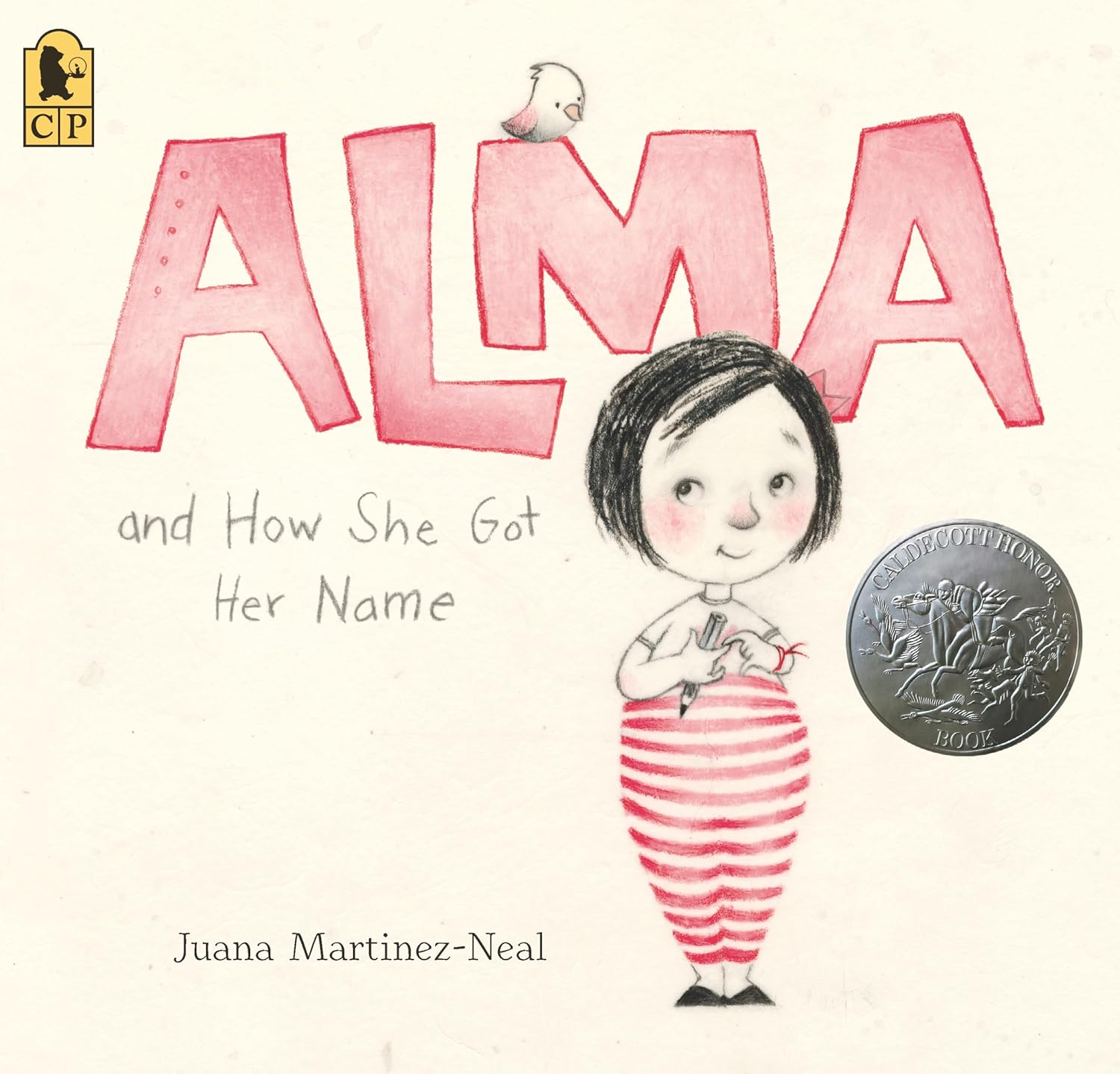
Alma and How She Got Her Name by Juana Martinez-Neal is a tender, Caldecott Honor-winning picture book about a small Peruvian-American girl who discovers that her long, seemingly unwieldy name — Alma Sofia Esperanza José Pura Candela — is not too much at all, but exactly right: a treasure chest of ancestors, each name a story, each story a piece of who she already is. Published in 2018 as Martinez-Neal’s debut as an author-illustrator, Alma and How She Got Her Name received five starred reviews, a 2019 Caldecott Honor, and simultaneous publication in Spanish as Alma y cómo obtuvo su nombre. This guide covers the reading level, recommended age, read-aloud vs. independent reading guidance, themes, and everything parents and teachers need to know about sharing Alma and How She Got Her Name with young readers.
For Parents
Find out whether Alma and How She Got Her Name works best as a read-aloud or independent read for your child, what age range it suits, and why this beautifully illustrated story about a girl learning the stories behind her name opens a natural and meaningful conversation you can have with any child: where did your name come from, and what story does it carry?
For Teachers
Grade-level data, read-aloud timing, key themes, and discussion questions for a Caldecott Honor Book that is a widely used text for identity, heritage, and belonging units in K–3 classrooms. The book’s author’s note at the end invites every child to discover and share the story of their own name — a natural classroom extension that requires no additional materials and generates rich discussion.
Alma and How She Got Her Name at a Glance
Find on Amazon →| Author & Illustrator | Juana Martinez-Neal |
| Published | 2018 |
| Grade Level | K–2 (our assessment) |
| Recommended Age | 4–8 |
| Best For | Read-aloud ages 4–8; independent reading ages 5–8 |
| Flesch-Kincaid Grade | 2.8 |
| Word Count | ~600 |
| Pages | 32 |
| Genre | Picture book / identity / family heritage |
| Setting | A child’s home; the imagined past of her ancestors |
| Awards | 2019 Caldecott Honor; five starred reviews; Simultaneous English/Spanish publication |
For official Lexile and AR levels, visit Lexile.com or AR BookFinder. ReadingVine provides independent editorial assessments.
What Reading Level Is Alma and How She Got Her Name?
Alma and How She Got Her Name is a K–2 reading level by our editorial assessment, with a Flesch-Kincaid grade level of approximately 2.8 and an AR level of 1.9. At around 600 words it is a short picture book text, and the vocabulary — while including some Spanish names and culturally specific proper nouns — is generally accessible to readers who have built basic fluency. The names themselves (Sofia, Esperanza, José, Pura, Candela) are part of the book’s content rather than obstacles to comprehension, and the story takes care to explain each one.
What makes Alma and How She Got Her Name somewhat richer than its FK score suggests is its emotional layering. Each spread introduces a new ancestor and asks the reader to hold that ancestor’s character — Sofia’s love of books and flowers, Esperanza’s longing to travel, José’s artistry — alongside Alma’s growing recognition of herself in each one. Children who are engaged by the accumulation of identity — each name adding to who Alma is rather than multiplying her confusion about it — are doing real inferential and empathetic reading, even if the individual sentences are simple. For parents who use specific reading level systems: we recommend checking your child’s level on Lexile.com or AR BookFinder for official scores, or asking your child’s teacher for their Guided Reading or DRA level.
Is Alma and How She Got Her Name a Read-Aloud or Independent Read?
Alma and How She Got Her Name works beautifully as both a read-aloud for ages 4–8 and an independent read for ages 5–8. As a read-aloud it is one of the gentlest and most discussion-generative picture books on this list — the structure of each name being revealed and explained naturally produces pauses where a child can say “me too” or ask a question, and the book positively invites this kind of interruption. Most adults can read it aloud in about 7–10 minutes. The author’s note at the end, in which Martinez-Neal shares the story of her own name and invites readers to do the same, is worth including in the read-aloud and allows an immediate extension into the most natural conversation the book opens.
As a read-aloud, Alma and How She Got Her Name rewards a pace that honors each ancestor — pausing after “I am Sofia” or “I am Esperanza” to let Alma’s recognition settle before moving to the next name. The book’s emotional logic is cumulative: each name adds to rather than distracts from the whole, and children who are given time to feel each connection arrive at the final revelation — that Alma’s first name belongs only to her, to fill with her own story — having earned it through all the preceding accumulation. The final line, “You will make your own story,” lands most fully when the reader and child have witnessed all the stories that came before it.
For independent reading, a confident kindergartner or first grader can handle the vocabulary. The repeating structure — each spread following the same pattern of ancestor introduction, characteristic, and Alma’s identification — makes the text highly predictable in the best sense: children who have decoded the first two ancestors can read the remaining ones with increasing confidence, because they know what the spread will do. The illustrations are essential to the full experience: Martinez-Neal embeds Peruvian cultural details throughout, and the color coding (red/pink for Alma in the present, soft blue for the ancestors in the past) gives children a visual guide to the time shifts that the text alone does not mark explicitly.
After reading, ask your child: “Do you know why you were given your name?” Then tell them — even if the story is simple, even if the name was chosen because someone liked the sound of it. Every name has a story, and children who have heard Alma’s story are hungry for their own. If your child has a name that connects to family history, cultural heritage, or a meaningful person, this is the moment to tell it. The book is an invitation; the conversation is the gift.
What Is Alma and How She Got Her Name About?
Alma Sofia Esperanza José Pura Candela has a problem: her name is too long. It never fits — not on a piece of paper, not in a room where names are shorter and easier. She tells her father, and he sits down with her to tell her the story of her name. Sofia was her grandmother, who loved books and poetry and jasmine flowers and taught Alma’s father to read. Alma loves books and flowers too — I am Sofia. Esperanza was her great-grandmother, who hoped to travel the world but never left her city, though her sailor son crossed seven seas in her name. Alma wants to see the world — I am Esperanza. José was her grandfather, who was an artist. Alma loves to draw — I am José. Then Pura, deeply spiritual, whose love held the family together. And Candela, bright and warm and full of life.
After the five names have been told, Alma asks about her first name. Her father’s answer is the book’s turning point: Alma is hers alone. No ancestor gave it to her. There is no story to inherit — only a story to make. In Spanish, Alma means soul. It is not too much name for a small person. It is exactly enough. And she has a story to tell.
The book ends with an author’s note in which Martinez-Neal shares the story of her own long name and invites every reader to discover the story of theirs.
Alma and How She Got Her Name Characters
Alma and How She Got Her Name Themes and Lessons
The central theme of Alma and How She Got Her Name is a name as something you inherit and also make your own. Alma’s name carries five ancestors and their stories — five pieces of who she already is, whether she knew it or not — and one space that is entirely hers to fill. The book makes a quietly radical argument about identity: that you are not only yourself in the present, but also the sum of everyone who came before you, and that knowing their stories is not a burden but a gift. Children who have heard Alma’s story often want to know their own name stories immediately, which is precisely the effect Martinez-Neal intended: the author’s note invites exactly this inquiry, and the question it plants — “What story would you like to tell?” — a valuable question for a children’s book to leave behind.
The book is equally a celebration of Peruvian and Latin American naming traditions, in which long names carrying multiple generations of family are common and significant rather than unusual. Alma’s name is not exotic or too much; it is exactly what a name can be when it is honored rather than abbreviated. Martinez-Neal, who was born in Lima and whose own name carries the same richness, made the simultaneous English and Spanish publication of the book a condition of its sale — she understood that the book’s audience included children who would recognize Alma’s experience of having a name that “doesn’t fit” in an English-speaking school setting, and she wanted them to hold the book in their own language.
For teachers, Alma and How She Got Her Name is a versatile available tool for the identity and heritage classroom conversation. It works for all children — every child has a name with a story, even if the story is simpler — but it speaks with particular directness to children whose names are frequently mispronounced, shortened without permission, or made to feel out of place. The book honors those names without making their bearers feel singled out; it places the experience of having a name that “doesn’t fit” inside a story of richness and inheritance rather than difference and exclusion. This is a more generous and more useful framing than most available treatments of the subject.
Discussion starters for families: Do you know the story of your name? Are you named after someone? What do you think Alma felt when she heard each ancestor’s story? Why do you think her first name is the most important? What story do you want to tell with your name?
How Long Is Alma and How She Got Her Name?
Alma and How She Got Her Name has 32 pages and approximately 600 words, making it one of the shorter books on the K–2 list. Most adults can read it aloud in about 7–10 minutes, including natural pauses for the illustrations. The author’s note at the end adds another minute or two and is worth including — it transforms the reading from a story about someone else’s name into an invitation about the reader’s own.
A child reading independently at a kindergarten or first-grade level will typically finish in about 8–12 minutes. Like many books that generate strong emotional responses, Alma and How She Got Her Name is often requested again immediately — children who have heard their own name story in response to Alma’s want to return to the book with that new knowledge in hand, and the second reading is different from the first in exactly the way the book hopes for.
Books Similar to Alma and How She Got Her Name
If your child loves Alma and How She Got Her Name, these titles share its themes of identity, heritage, and belonging, or its place in the Identity and Belonging cluster:
About the Author and Illustrator
Juana Martinez-Neal was born in Lima, Peru, the daughter and granddaughter of painters, and immigrated to the United States as an adult. She studied art and worked as an illustrator before making her debut as an author-illustrator with Alma and How She Got Her Name in 2018. The book grew directly from her experience as a Peruvian immigrant — the specific feeling of having a name that carries a whole world inside it, a name that can feel like too much in places that expect less — and from the birth of her own children and her desire to give them a book that honored the kind of name they carry.
Martinez-Neal has described the simultaneous Spanish and English publication of Alma and How She Got Her Name as a condition she insisted on during the book’s auction: she knew the book needed to exist in both languages from the beginning, for children whose primary language is Spanish and for families navigating two cultures at once. The book won the 2019 Caldecott Honor — the committee specifically cited her use of “smudgy graphite and colored pencil to convey a soft palette that gently transports readers into Alma’s rich ancestral past” — and received starred reviews from five major publications. Martinez-Neal also won the 2018 Pura Belpré Medal for her illustration work on La Princesa and the Pea and the 2020 Sibert Medal for illustrating Fry Bread: A Native American Family Story. She has said that her work is driven by the belief that children need to see themselves fully in books — not as exceptions or curiosities, but as the central story.
Her illustration method for Alma and How She Got Her Name — graphite and colored pencil print transfers, mostly monochromatic against cream backgrounds, with red and pink for Alma’s present and soft blue for the ancestors’ past — was designed to evoke the feel of an old family photo album: slightly soft at the edges, warm rather than sharp, saturated with the specific intimacy of images that have been kept and returned to. Each ancestor’s name is signed in their own unique handwriting style, reflecting Martinez-Neal’s background in typography and her conviction that the way a name is written carries as much personality as the name itself.
Alma and How She Got Her Name: Frequently Asked Questions
What reading level is Alma and How She Got Her Name?
Alma and How She Got Her Name is a K–2 reading level by our editorial assessment, with a Flesch-Kincaid grade level of approximately 2.8 and an AR level of 1.9. At around 600 words with accessible vocabulary and a clear repeating structure, it works best as a read-aloud for ages 4–8 and as an independent read for ages 5–8. For official Lexile and AR levels, visit Lexile.com or AR BookFinder.
What age is Alma and How She Got Her Name for?
Alma and How She Got Her Name is appropriate for ages 4–8. As a read-aloud it works from age 4 — the warmth of the father-daughter conversation and the gentle reveals of each ancestor engage very young children immediately. As an independent read it suits children ages 5–8 who are building early reading confidence. The themes of identity and family heritage resonate most strongly for children ages 5–8, though the book speaks meaningfully to all ages and to any child who has ever wondered about the story behind their name.
What are all of Alma’s names and who are they named after?
Alma’s full name is Alma Sofia Esperanza José Pura Candela. Sofia was her grandmother, who loved books, poetry, and jasmine flowers and taught Alma’s father to read. Esperanza was her great-grandmother, who longed to travel but never left her city, though her sailor son crossed seven seas in her name. José was her grandfather, who was a painter and artist. Pura was an ancestor associated with deep spirituality and love. Candela was known for her warmth and passionate spirit. And Alma — meaning “soul” in Spanish — belongs only to Alma herself, hers to fill with her own story.
How long does it take to read Alma and How She Got Her Name aloud?
Most adults can read Alma and How She Got Her Name aloud in about 7–10 minutes, including natural pauses for the illustrations. The author’s note at the end — in which Martinez-Neal shares the story of her own name and invites readers to discover theirs — adds another minute or two and is worth including in the read-aloud. The conversation the book generates typically extends well beyond the reading time.
What does Alma’s name mean?
In Spanish, Alma means “soul” — and in the book, this is the final and most profound revelation. Alma’s father explains that her first name belongs only to her; unlike the other five names, which each carry an ancestor’s story, Alma carries nothing but possibility. She will make her own story. The meaning of the word gives the book its emotional weight: Alma’s name is not her burden but her essence, and the story she will make with it is the most important story in the book.
Is Alma and How She Got Her Name available in Spanish?
Yes — Alma and How She Got Her Name was published simultaneously in Spanish as Alma y cómo obtuvo su nombre, a condition Martinez-Neal required as part of the book’s publication. This bilingual availability makes it particularly valuable for Spanish-speaking families, for bilingual classrooms, and for discussions about the experience of carrying a name between two languages and two cultures — which is one of the experiences the book addresses most directly.