
 = Partner Site
The House on Mango Street Reading Level: A Complete Guide
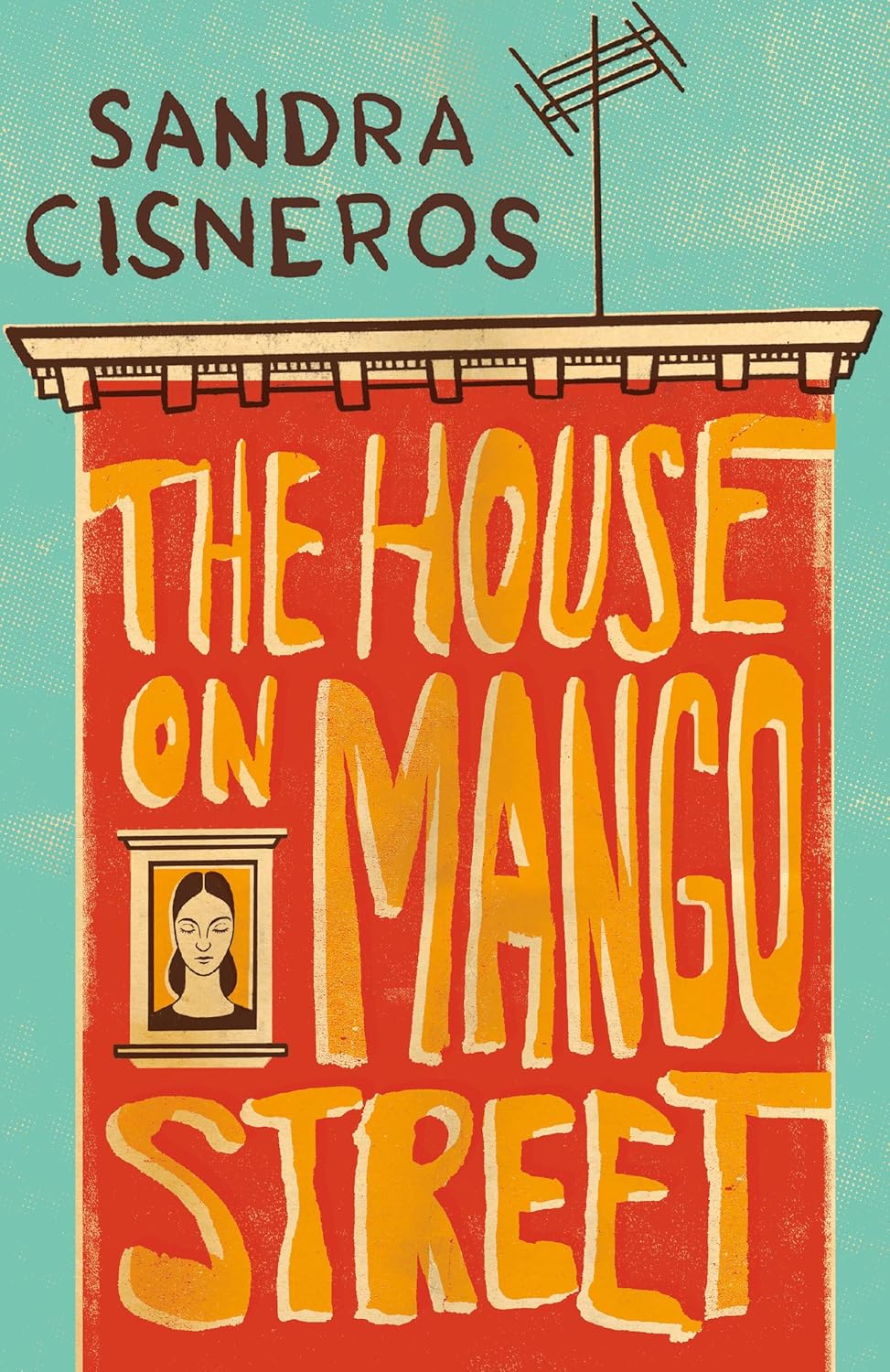
The House on Mango Street by Sandra Cisneros is one of the most distinctive, most widely taught, and most quietly powerful books in the American literary canon — a novel told in a series of vignettes, each one brief and complete as a poem, that follows Esperanza Cordero growing up in a Latino neighborhood in Chicago and dreaming of a house of her own. It is not a novel in the conventional sense: there is no single driving plot, no traditional arc of conflict and resolution. Instead, Cisneros builds a world through accumulation — through the voices and faces and moments of a neighborhood rendered so specifically and so lovingly that the whole of it becomes visible from its parts. Taught everywhere from middle school to graduate seminars, it is one of those rare books that grows with its reader and that gives back more with every encounter. This complete guide covers the reading level, age appropriateness, themes, characters, and everything parents and teachers need to know about this essential American novel.
For Parents
The House on Mango Street is a coming-of-age novel narrated by an adolescent girl moving through puberty, first awareness of the adult world, and the beginnings of her understanding of what it means to be a woman in the neighborhood she grows up in. It is not a children’s book — it is most commonly assigned in grades 6-8 and widely taught in high school and college as well. Parents should be aware that the novel includes vignettes dealing with sexual violence: one involves an older man who manipulates a girl’s trust, and another depicts assault. These are handled without graphic detail but with honesty, and they are among the novel’s most important and most carefully written sections. The novel also addresses poverty, racism, and the specific constraints placed on girls and women by their community and culture.
For Teachers
Among the most widely taught texts in American middle school, high school, and college curricula, The House on Mango Street is an exceptional text for teaching the prose poem and vignette as literary forms, the relationship between place and identity, coming-of-age as a narrative structure, and how a writer constructs a fully realized world from very small pieces. Cisneros’s sentences are among the most teachable in contemporary American literature: spare, rhythmic, precise, and doing more work per word than almost any other prose available at this level. The novel is ideal for units on Latina/o literature, women’s writing, immigrant experience, and the relationship between community and individual identity.
The House on Mango Street at a Glance
Find on Amazon →| Author | Sandra Cisneros |
| Published | 1984 (revised edition 1994) |
| Grade Level | 6-9 (our assessment) |
| Recommended Age | 11-18 |
| Flesch-Kincaid Grade | 4.2 |
| Word Count | ~27,000 |
| Pages | 110-160 |
| Chapters | 44 vignettes |
| Genre | Coming-of-age / prose poetry / literary fiction |
| Setting | A Latino neighborhood in Chicago, 1960s-1970s |
| Awards | American Book Award (1985); Before Columbus Foundation Award |
For official Lexile and AR levels, visit Lexile.com or AR BookFinder. ReadingVine provides independent editorial assessments.
What Reading Level Is The House on Mango Street?
Word and sentence difficulty: The House on Mango Street has a Flesch-Kincaid grade level of approximately 4.2. This score reflects only sentence length and syllable count — Cisneros’s sentences are deliberately short and her vocabulary deliberately plain, and the formula scores those choices as low difficulty. As a measure of how hard the words and sentences are to decode, the score is accurate. As a measure of how demanding the book is to read and understand, it is not useful. For official Lexile and Accelerated Reader scores, visit Lexile.com or AR BookFinder.
Thematic and literary complexity: The novel’s actual demands on a reader have nothing to do with vocabulary or sentence length. What makes it genuinely challenging is the gap between what Esperanza describes and what the reader is expected to understand from the description — a gap that is the source of the novel’s meaning and that no readability formula can measure. A vignette that appears to be about a neighbor’s shoes is also about desire, performance, and the traps laid for women. A vignette that appears to be about a game children play is also about power, bodies, and the way girls are taught to offer themselves to the world’s evaluation. None of this is stated; all of it is present. Reading the novel well requires holding the literal and the figurative simultaneously, across 44 vignettes with no conventional plot thread to hold onto. That is a high literary demand regardless of the FK score.
Typical teaching placement: Our editorial assessment is grades 6–9 for initial classroom use, with wide ongoing use in high school. It appears on the AP Literature reading list and in numerous state standards documents. The novel is also taught at the college and graduate level — not because it becomes harder to decode with age, but because its thematic richness supports increasingly sophisticated literary analysis. Grade placement reflects curricular context and thematic readiness, not word-level difficulty.
What Age Is The House on Mango Street Appropriate For?
We recommend The House on Mango Street for readers ages 11-18, with the understanding that the novel rewards readers at every level of that range differently — and that many readers who encounter it in middle school return to it in high school and college to find something new. It is a book that grows with its reader. The lower end of the range requires teacher guidance for the novel’s more difficult vignettes.
The novel contains two vignettes involving sexual violence that parents and teachers should be aware of. “The First Job” depicts an older man who takes advantage of a girl’s isolation and inexperience to force a kiss on her. “Red Clowns” depicts a sexual assault — it is narrated obliquely, in the voice of a girl whose experience does not match what she was told to expect, and the vignette’s power comes precisely from its indirection, but the assault is unambiguous to adult readers. These vignettes are among the novel’s most important and most carefully crafted, and they reflect Cisneros’s commitment to telling the truth of girls’ experience in this community. Most educators who teach the novel at the middle school level use them as opportunities for essential conversations rather than reasons to avoid the text. The novel also contains vignettes about poverty, racism, domestic violence, and the constraints placed on women by their community. There is no explicit sexual content and no strong language. The novel’s difficulty is thematic and literary.
The novel is on the American Library Association’s list of most frequently challenged books, challenged primarily for its frank treatment of sexuality, sexual violence, and the criticism of cultural constraints on women. The challenges have not been widely sustained, and it remains one of the most widely assigned texts in American education. Parents who have questions about specific vignettes are encouraged to read the novel before assigning or discussing it with their children — at 110-160 pages depending on the edition, it is a brief investment that will make the conversation considerably richer.
What Is The House on Mango Street About?
Esperanza Cordero is a young Latina girl growing up in a poor neighborhood in Chicago. Her family has just moved to a house on Mango Street — a real house, their own house, not an apartment — but it is not the house Esperanza’s parents promised, not the house she has been imagining: it is small and cramped, with windows “so small you’d think they were holding their breath,” and it belongs, she understands immediately, to a category of place that marks the people who live in it as not having arrived anywhere. Esperanza wants a house of her own — not her family’s house, not a house defined by her relationships to others, but a space that is entirely hers. The desire for that house is the novel’s organizing longing.
The novel is told in 44 vignettes, each named and each ranging from a single paragraph to a few pages. They do not follow a linear narrative: some are lyrical meditations, some are character portraits of neighbors and friends, some are stories of specific events, and some are direct addresses to the reader or to unnamed figures. Taken together, they build a world — the neighborhood, its people, its textures and sounds and smells — with the specificity and the economy of poetry.
The vignettes trace Esperanza’s growing awareness of the world she lives in: of poverty and what it means to be marked by it; of race and what it means to be Latina in a city that does not value what she is; of gender and what it means to be a girl in a community where girls are expected to stay, to serve, to remain. She watches the women around her — her great-grandmother, whose spirit was “a wild horse of a woman, so wild she wouldn’t marry,” but who was captured and spent her life looking out a window; her neighbor Sally, beautiful and dangerous and trapped in a way Esperanza cannot fully articulate; Marin, waiting for a man to take her somewhere better. She learns, vignette by vignette, what the neighborhood expects of girls, and she begins, also vignette by vignette, to understand that she does not want to give it.
The novel’s final movement is toward Esperanza’s understanding of what writing is for and what her own escape will require. She will leave Mango Street — she knows this with increasing certainty — but she will come back, “for the ones I left behind,” because leaving is not the same as abandoning, and the house on Mango Street, the neighborhood and its people, will always be part of who she is. The ending is not triumphant in the conventional sense; it is something richer — a young woman’s understanding of her own complexity, of what she owes and to whom, of what a writer does with the place she comes from.
The House on Mango Street Characters
Is The House on Mango Street Banned?
The House on Mango Street appears regularly on the American Library Association’s lists of frequently challenged books, challenged primarily for its frank treatment of sexual violence, its criticism of cultural constraints on women, and its depiction of poverty and racism. Challenges have occurred in school districts across the country, with objections ranging from the sexual content of specific vignettes to the novel’s perceived criticism of Latino cultural traditions. Most challenges have not been sustained, and the novel remains one of the most widely assigned texts in American middle school, high school, and college curricula. The National Council of Teachers of English has consistently defended its inclusion as a text of exceptional literary merit and educational value, and it appears on the AP Literature reading list and numerous state standards documents.
The House on Mango Street Themes and Lessons
The central theme of The House on Mango Street is the relationship between place and identity — the argument, pursued across 44 vignettes, that where we come from shapes who we are in ways we cannot simply leave behind, and that the task of becoming yourself requires both the courage to leave and the wisdom to carry your origins with you. Esperanza wants a house of her own — not Mango Street’s house, not her family’s house, but a space that is entirely her own making. The desire for that house is a desire for a self that is not defined by the neighborhood’s expectations, and the novel’s final movement is Esperanza’s understanding that leaving and belonging are not opposites.
Gender and its constraints are the novel’s second great themes — the specific, accumulated weight of what the community expects of girls and women, rendered through the lives of the women Esperanza observes around her. The novel does not argue abstractly; it shows. Here is the great-grandmother, forced into marriage, looking out a window. Here is Marin, waiting to be taken somewhere better. Here is Sally, whose beauty is both her power and the source of everything that is done to her. Here is Rafaela, locked inside on Tuesdays when her husband plays dominoes, leaning out the window to catch the mango and papaya on a string. Esperanza watches all of them, and what she is watching is the shape of the life she is being offered, and her refusal of it.
Writing and voice are the novel’s third great themes — the specific claim that Cisneros makes, through Esperanza’s development as a narrator, that writing is not an escape from a community but a way of honoring it while refusing to be trapped by it. Esperanza will leave Mango Street, but she will write it. She will come back for the ones she left behind — not to stay, but to carry them in her work. This is the novel’s most direct statement of what literature is for, and it is one of the most moving available in American fiction at any level.
Discussion starters for classrooms: What does the house on Mango Street mean to Esperanza, and why is it not the house she wanted? What do the women Esperanza observes have in common? What separates Alicia from the other women in the novel? What does Esperanza mean when she says she will come back for the ones she left behind? How does Cisneros use names in the novel — what does Esperanza’s name mean to her? What is the relationship between writing and leaving in the novel’s final movement?
How Many Pages and Chapters Are in The House on Mango Street?
The standard paperback edition of The House on Mango Street is 110-160 pages depending on the edition, structured as 44 named vignettes rather than traditional numbered chapters. The vignettes range from a single paragraph to about three pages, and the word count is approximately 27,000 words — making it one of the shorter books commonly assigned in this grade range, though its brevity is not a measure of its demands. The novel can be read in a single sitting by a motivated reader, but reading it that way misses much of what it offers; it rewards slow, close engagement with individual vignettes far more than it rewards reading for narrative momentum.
For readers in the target age range of 11-18, expect a reading time of roughly 2-3 hours if reading straight through. As a classroom text it is almost always taught slowly, with individual vignettes read and discussed in depth — many teachers spend a full week or more on the novel despite its brevity, using individual vignettes as the basis for writing exercises, close reading discussions, and explorations of Cisneros’s craft. The vignette form makes it exceptionally well suited to creative writing assignments: students are often asked to write their own vignettes about their neighborhood, their name, or a person they observe, using Cisneros’s style as a model. It is also widely used as a model for teaching figurative language, sentence rhythm, and the compression of meaning into small spaces.
Books Similar to The House on Mango Street
About Sandra Cisneros
Sandra Cisneros was born in 1954 in Chicago, the third child and only daughter in a family of seven children. She grew up in a series of houses in Chicago’s Latino neighborhoods — moving frequently, always slightly out of place, always aware of the gap between where her family lived and where she wanted to be. She attended Loyola University Chicago and then the Iowa Writers’ Workshop, where the experience of being the only Latina in a program full of students writing about experiences nothing like hers became the impetus for The House on Mango Street: she decided to write about the world she actually came from, in the voice of the girl she had actually been. Published in 1984 by a small press and revised for the 1994 Vintage Books edition that is now the standard text, the novel won the American Book Award and the Before Columbus Foundation Award and has sold millions of copies in dozens of languages. Cisneros is also the author of Woman Hollering Creek and Other Stories (1991), the poetry collections My Wicked Wicked Ways (1987) and Loose Woman (1994), and the novel Caramelo (2002). She is widely recognized as one of the foundational figures of Latina/o American literature and one of the essential voices in contemporary American fiction.
The House on Mango Street: Frequently Asked Questions
What reading level is The House on Mango Street?
The House on Mango Street has a Flesch-Kincaid grade level of approximately 4.2 — one of the most misleading readability scores in American literature. The formula measures sentence length and syllable count; Cisneros’s sentences are deliberately short and her vocabulary deliberately plain, and those choices produce a score that places the novel far below its actual demands. This is a book taught in graduate seminars. Its surface accessibility is a function of craft. What makes it genuinely demanding is the weight each vignette carries beneath its plain surface — the gap between what Esperanza describes and what the reader understands from the description. For official Lexile and AR scores, visit Lexile.com or AR BookFinder.
Is The House on Mango Street a novel?
Yes and no — it is the question most frequently raised about the book, and Cisneros has given various answers over the years. The novel is structured as 44 named vignettes rather than traditional chapters, and it does not have a conventional plot with a single driving conflict and resolution. Cisneros has called it a “novel-in-stories” and a “series of prose poems,” and both descriptions are accurate. What makes it a novel rather than simply a story collection is the sustained central consciousness — Esperanza’s voice and perspective are present throughout, and the vignettes accumulate into a portrait of a girl growing up that has the coherence and the emotional arc of a novel, even without the conventional narrative machinery. It is one of the foundational examples of the form in American literature.
What does the house on Mango Street symbolize?
The house on Mango Street is simultaneously a real place — the specific house Esperanza’s family moves into at the novel’s beginning — and a symbol of what poverty means as a marker of identity. It is not the house Esperanza’s parents promised: it is small, red, cramped, with windows “so small you’d think they were holding their breath,” and it immediately marks its residents as people who have not arrived anywhere. Against this house, Esperanza sets the house she wants: a house of her own, not shared with anyone, “with my porch and my pillow, my pretty purple petunias.” That house is not only about real estate — it is about a self that is not defined by anyone else’s expectations, a space that is entirely one’s own making. The novel’s arc is the movement from the house on Mango Street, which defines Esperanza by her poverty, to the house she will eventually make for herself through her writing.
What does Esperanza’s name mean, and why does it matter?
Esperanza means “hope” in Spanish, and also “waiting” — and the vignette “My Name” makes both meanings central to Esperanza’s relationship to her own identity. Her name, she tells us, was her great-grandmother’s name: a woman who was “a wild horse of a woman, so wild she wouldn’t marry,” who was nonetheless captured and taken and who “spent her whole life looking out a window.” Esperanza does not want to inherit her great-grandmother’s place at the window. She does not want her name to mean waiting. The name is a compressed statement of the novel’s central tension: the inheritance of identity from those who came before and the refusal of the parts of that inheritance that require constraint and diminishment.
Why does Esperanza say she will come back?
Near the novel’s end, Esperanza says that she will leave Mango Street — that she is “too strong” for it — but that she will come back “for the ones I left behind.” This is the novel’s most important statement about the relationship between leaving and belonging, between escape and responsibility. Esperanza’s leaving is not abandonment: it is the necessary act of a person who cannot become who she needs to be if she stays. But leaving does not mean severing — it means carrying. She will come back in her writing, in her work, in the act of telling these stories. The novel itself is the fulfillment of that promise: Cisneros left the neighborhoods she grew up in to become a writer, and The House on Mango Street is her return.
Is The House on Mango Street autobiographical?
Cisneros has been careful and consistent in describing the novel as fiction rather than autobiography, while acknowledging that it draws deeply from her own experience. Esperanza is not Sandra Cisneros: she is a composite character, and many of the vignettes are invented or substantially transformed from any specific event in Cisneros’s life. But the world the novel depicts — the neighborhoods, the community, the specific quality of life in a poor Latino barrio in Chicago — is the world Cisneros grew up in, and Esperanza’s desire to leave and her understanding of what leaving means reflect Cisneros’s own experience of being the only Latina at the Iowa Writers’ Workshop and discovering that the world she came from was the subject no one else was writing about. The novel is autobiographical in spirit rather than in fact.
What grade is The House on Mango Street typically assigned in?
The House on Mango Street is taught across an unusually wide range of grades and levels — from 6th grade through graduate seminars — which is a measure of its depth and its accessibility simultaneously. In middle school it is most commonly assigned in grades 6-8, often as part of units on Latina/o literature, coming-of-age narrative, or the prose poem form. In high school it appears on the AP Literature reading list and in numerous state standards documents. It is particularly well suited to writing workshop contexts, where individual vignettes serve as models for students’ own writing about place and identity. It pairs naturally with Brown Girl Dreaming for a unit on memoir in verse and the relationship between voice and community, and with Inside Out and Back Again for a unit on displacement and identity.