
 = Partner Site
The Invisible Man Reading Level: A Complete Guide
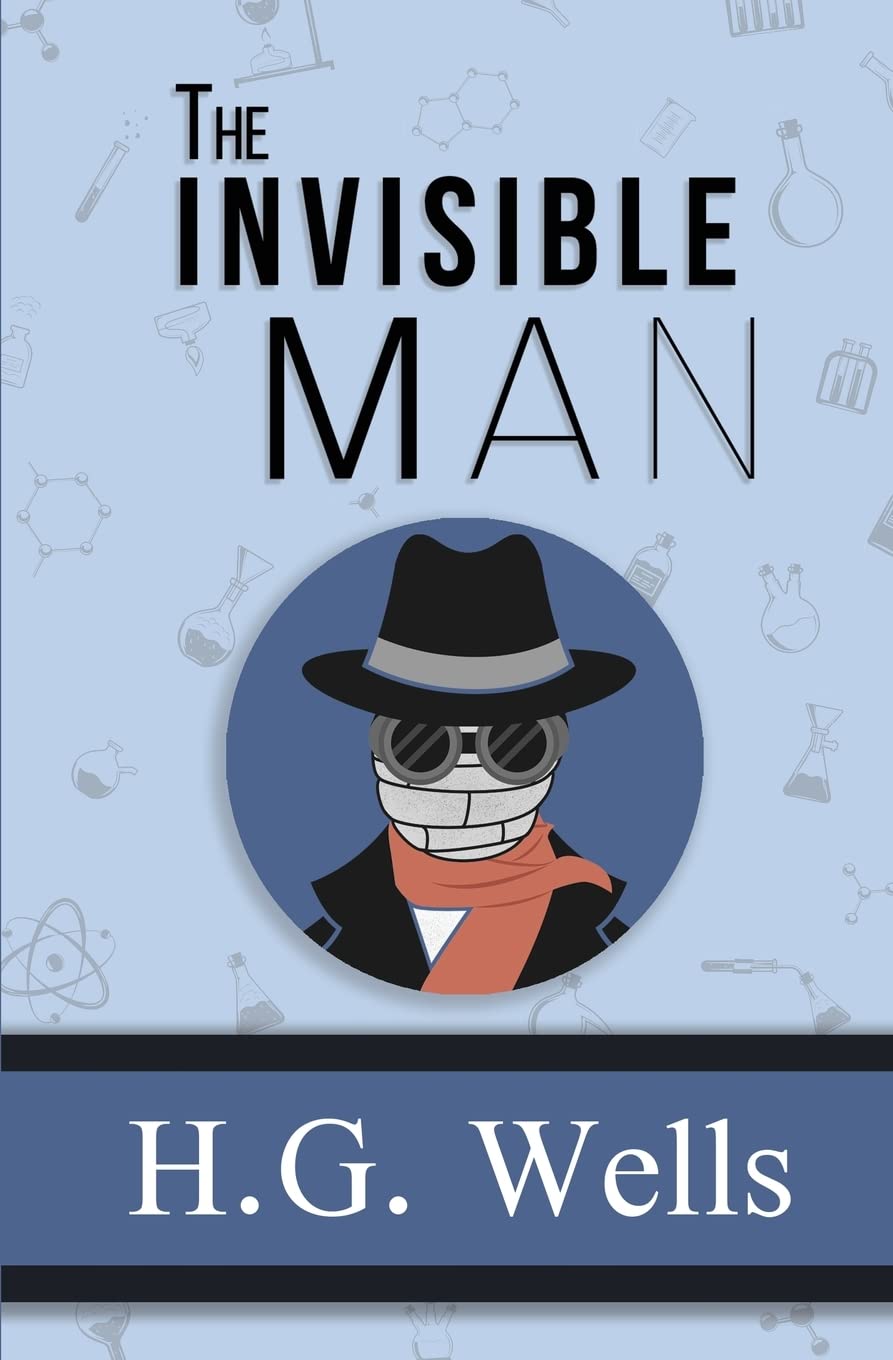
The Invisible Man, written by H.G. Wells and first serialized in Pearson’s Weekly in 1897 before publication as a novel the same year, is a science fiction novella about Griffin, a scientist who has discovered the secret of making living tissue invisible and has used the process on himself — only to find that invisibility, far from being the power he imagined, is a trap. The novel is set in the English village of Iping and the surrounding countryside, where Griffin arrives in February, bandaged from head to toe, demanding lodging and privacy. As the villagers grow increasingly suspicious and Griffin grows increasingly desperate and violent, the story traces his deterioration from eccentric scientist to murderous fugitive. The novel is frequently taught alongside other late Victorian science fiction as an early exploration of what happens when scientific ambition outruns ethical restraint. Wells published it in the same period as The Time Machine (1895), The Island of Dr. Moreau (1896), and The War of the Worlds (1898). It is in the public domain and available free at Project Gutenberg.
H.G. Wells’s The Invisible Man (1897) is a science fiction novel about a scientist who makes himself literally invisible. Ralph Ellison’s Invisible Man (1952) is a novel about racial identity and social invisibility — its narrator is invisible in a social and psychological sense, not a literal one. Ellison’s title deliberately omits “The.” If you are looking for the Ellison novel, see our Invisible Man guide here.
For Parents
A late Victorian science fiction novella about a scientist who makes himself invisible and descends into violence and paranoia as the experiment goes wrong. Ages 12–16, grades 7–10. Content: Griffin kills at least one person and threatens others; violence escalates across the novel’s second half; the scientist’s psychological deterioration is depicted directly. Public domain. Standard middle school and high school science fiction assignment.
For Teachers
A grades 7–10 science fiction and Victorian literature standard. Lexile 920L; ATOS 7.7; word count 48,105; 28 chapters plus an epilogue; approximately 200–240 pages depending on edition. Public domain; available free at Project Gutenberg. The novel’s central question — what invisibility reveals about the scientist’s character rather than concealing it — is the primary discussion anchor. Wells’s other scientific romances provide productive context: The Time Machine (1895), The Island of Dr. Moreau (1896), The War of the Worlds (1898).
The Invisible Man at a Glance
Find on Amazon →| Author | H.G. Wells (Herbert George Wells, 1866–1946) |
| Published | 1897 (serialized Pearson’s Weekly; book form same year) |
| Grade Level | 7–10 (our assessment) |
| Recommended Age | 12–16 |
| Lexile | 920L |
| ATOS Level | 7.7 |
| Word Count | 48,105 |
| Pages | ~200–240 (editions vary) |
| Chapters | 28 + epilogue |
| Genre | Science fiction / Gothic fiction |
| Setting | Iping village and Burdock, England; late Victorian era |
| Status | Public domain; available free at Project Gutenberg |
For official Lexile and AR levels, visit Lexile.com or AR BookFinder. ReadingVine provides independent editorial assessments.
What Reading Level Is The Invisible Man?
Lexile 920L, ATOS 7.7, word count 48,105, interest level grades 7–12. Our assessment: grades 7–10, ages 12–16. The 920L reflects Wells’s late Victorian prose — more formal than contemporary fiction but readable by strong middle school and high school readers. The ATOS of 7.7 places it in the 7th–8th grade range for sentence complexity. The reading challenge is primarily the period vocabulary and Wells’s dense descriptive passages rather than the plot, which is propulsive and accessible. At approximately 200 pages, most assigned readers complete it in two to three weeks. For official scores, visit Lexile.com or AR BookFinder.
What Age Is The Invisible Man Appropriate For?
Ages 12–16, grades 7–10. Content worth noting: Griffin kills at least one person during the novel — Mr. Wicksteed is found beaten to death — and threatens several others. Violence escalates across the novel’s second half as Griffin becomes increasingly desperate. His psychological deterioration — from calculating scientist to paranoid, murderous fugitive — is depicted directly throughout. The novel’s content is appropriate for the recommended age range and is considerably less graphic than many contemporary novels assigned at the same level.
What Is The Invisible Man About?
In February, a stranger arrives at the Coach and Horses inn in the English village of Iping. He is entirely wrapped in bandages, wears dark goggles, and keeps his coat and gloves on at all times. He pays for his room and demands privacy; he conducts experiments in his room day and night. The innkeeper Mrs. Hall and the villagers grow increasingly curious and alarmed. When Griffin is finally confronted and his true nature is revealed — he is invisible, the bandages concealing nothing — he escapes and begins to terrorize the countryside.
The novel then tells Griffin’s story in his own words, delivered to Dr. Kemp, a scientist from Griffin’s college days who has recognized him. Griffin explains how he discovered the principle of making living tissue transparent by manipulating its refractive index. He experimented on himself — choosing himself partly because he is an albino, which simplified certain aspects of the experiment. The process worked but proved irreversible. He burned down his lodgings to prevent others from replicating his discovery, stole clothes and money, and made his way to Iping to continue his research in private.
As Griffin tells his story to Kemp, it becomes clear that the invisibility itself has not corrupted him — rather, the experiment has revealed and accelerated qualities already present: grandiosity, contempt for others, a willingness to use people instrumentally. His plan, which he calls the Reign of Terror, is to use invisibility to hold society hostage. Kemp, who has contacted the police, betrays Griffin. The novel’s final section follows Griffin’s pursuit of Kemp and the townspeople’s eventual capture and killing of Griffin. An epilogue reveals that a tramp named Marvel, whom Griffin had earlier forced to serve as his assistant, has secretly kept Griffin’s notebooks — the only record of the invisibility formula.
The Invisible Man Characters
The Science — How the Invisibility Works
Wells takes care to give Griffin’s discovery a plausible scientific basis for its era. Griffin explains to Kemp that visibility depends on a material’s interaction with light — its absorption and reflection. A material that neither absorbs nor reflects light, and whose refractive index matches that of air, would be invisible. He worked out a process for reducing the refractive index of living tissue to match air, making the tissue transparent. His albinism was an advantage: albino tissue lacks pigment, which simplified certain steps in the process.
The novel is careful to note the practical problems of invisibility that popular imagination often overlooks: Griffin cannot see in the dark any better than before, because his eyes work by absorbing light — invisible eyes would be blind eyes. He must eat and wait for food to digest before going out, because undigested food would be visible inside him. Cold weather is a serious problem because his lack of clothing makes him vulnerable. Wells uses these practical constraints to make the premise feel consistent and to make Griffin’s situation increasingly desperate rather than triumphant.
The Invisible Man Themes and Lessons
The novel’s central irony is that invisibility, which Griffin pursued as a form of unlimited power, turns out to be a form of extreme vulnerability. He cannot eat without becoming partially visible. He cannot wear clothes without losing his advantage. He cannot sleep safely. He cannot get money or assistance without coercion. The power he imagined has made him dependent on the cooperation of a society he has alienated. The invisibility reveals and accelerates what was already in Griffin rather than creating something new: his contempt for others, his grandiosity, his willingness to use people instrumentally were present before the experiment. The experiment stripped away the social constraints that had kept those qualities in check.
Wells places The Invisible Man in a tradition of fiction about scientists whose discoveries outrun their wisdom: Mary Shelley’s Frankenstein (1818) and Robert Louis Stevenson’s Strange Case of Dr Jekyll and Mr Hyde (1886) are the most direct predecessors. All three novels use a scientist’s transgression of natural limits as the vehicle for exploring what happens when knowledge is pursued without moral framework.
Discussion questions: Does the invisibility change Griffin, or does it reveal what was already there? What does Kemp’s betrayal of Griffin represent — is it the right decision? What does the epilogue’s revelation about Marvel and the notebooks mean for the novel’s ending — is the threat truly over? How does Wells use the practical problems of invisibility (food, cold, sleep) to shape Griffin’s situation?
Books Similar to The Invisible Man
About H.G. Wells
Herbert George Wells was born on September 21, 1866, in Bromley, Kent, England. He worked as a draper’s apprentice before earning a scholarship to study biology under Thomas Henry Huxley at the Normal School of Science (later part of Imperial College London); he later earned a B.Sc. through the University of London’s External Programme. He began writing fiction while supplementing his income from teaching. His early scientific romances — The Time Machine (1895), The Island of Dr. Moreau (1896), The Invisible Man (1897), and The War of the Worlds (1898) — established the conventions of modern science fiction and were produced within four years of each other. He went on to write novels of social realism (Kipps, 1905; Tono-Bungay, 1909; The History of Mr. Polly, 1910), nonfiction history and social commentary (The Outline of History, 1920), and utopian speculation throughout his long career. He died on August 13, 1946, in London, at age seventy-nine.
The Invisible Man: Frequently Asked Questions
What reading level is The Invisible Man by H.G. Wells?
Lexile 920L, ATOS 7.7, word count 48,105, interest level grades 7–12. Our assessment: grades 7–10, ages 12–16. Late Victorian prose — more formal than contemporary fiction but readable by strong middle school and high school readers. For official scores, visit Lexile.com or AR BookFinder.
What is The Invisible Man by H.G. Wells about?
Griffin, a scientist who has made himself invisible, arrives in an English village in winter and gradually descends into violence and paranoia as the experiment’s practical consequences trap him rather than empowering him. He forces a tramp named Marvel into service, tells his story to a former college acquaintance named Dr. Kemp, and is eventually hunted down and killed by the townspeople after Kemp betrays him to the police.
Is The Invisible Man by H.G. Wells the same as Invisible Man by Ralph Ellison?
No — these are entirely different books. H.G. Wells’s The Invisible Man (1897) is a science fiction novel about a scientist who literally makes himself invisible. Ralph Ellison’s Invisible Man (1952) is a novel about racial identity and social invisibility — its narrator is invisible in a social and psychological sense, not a literal one. Ellison’s title deliberately omits “The.”
Why can’t Griffin simply enjoy being invisible?
Wells uses the practical problems of invisibility to make Griffin’s situation increasingly desperate. Griffin cannot eat without food being temporarily visible inside him. He cannot wear clothes without losing his advantage. He cannot sleep safely without being found. He is acutely vulnerable to cold weather. The power he imagined has made him dependent on others’ cooperation in a world he has alienated — invisibility isolates rather than empowers him.
What happens at the end of The Invisible Man?
Griffin pursues Dr. Kemp through Burdock after Kemp betrays him to the police. The townspeople intercept Griffin; in the struggle he is beaten and killed. When he dies, his body becomes visible again. An epilogue reveals that Thomas Marvel, the tramp Griffin had forced into service, has secretly kept Griffin’s notebooks — the only record of the invisibility formula — and studies them in private.
What grade is The Invisible Man by H.G. Wells typically assigned?
Most commonly in grades 7–10 in English, science fiction, or Victorian literature units. Its Lexile of 920L and ATOS of 7.7 place it in the middle school to early high school range. Frequently paired with Frankenstein and Strange Case of Dr Jekyll and Mr Hyde in units on Gothic and Victorian science fiction.