
 = Partner Site
The Metamorphosis Reading Level: A Complete Guide
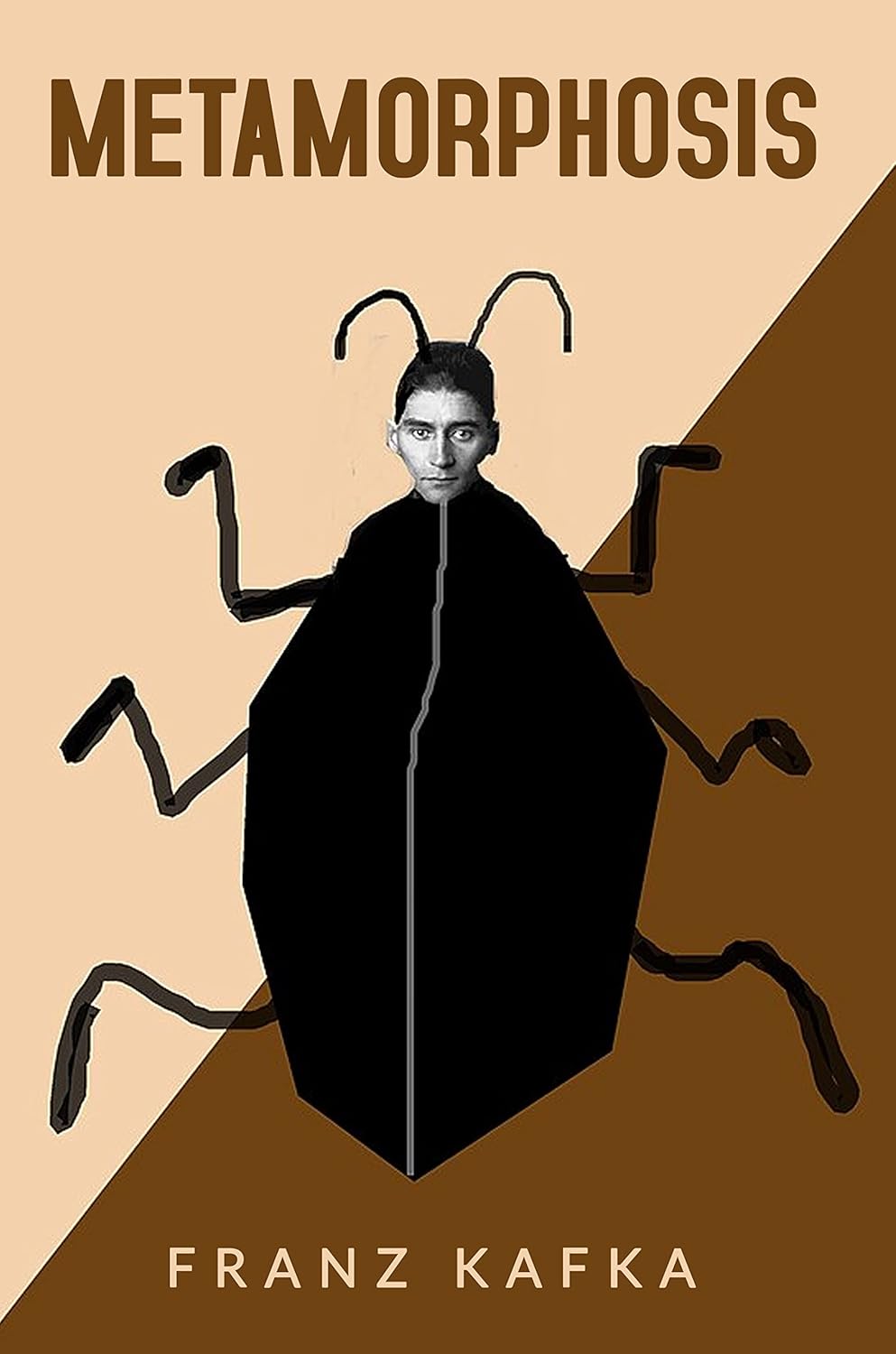
The Metamorphosis, written by Franz Kafka and first published in German in October 1915, is a novella of approximately 22,000 words — about 70 printed pages — in three chapters. On the first page, traveling salesman Gregor Samsa wakes to find himself transformed into a monstrous creature. The German word Kafka uses, Ungeziefer, means something like “vermin” or “creature unfit for sacrifice” — not a specific insect, and Kafka explicitly instructed his publisher not to illustrate the creature for the first book edition. The story follows the consequences of this transformation on Gregor and his family — his father, mother, and sister Grete — across the remaining weeks of his life. Gregor can no longer work; his family, initially dependent on him financially, must adjust to his new form while managing their own responses to it, which range from fear to revulsion to practical reckoning. The novella was first published in the October 1915 issue of the journal Die weißen Blätter and in book form in December 1915. It is a Common Core State Standards ELA Text Exemplar for grades 9–10 and among the most taught works of 20th-century European literature in American high school and AP Literature curricula. Because it exists for English readers only in translation from the German, and because translation choices significantly shape the reading experience, the choice of edition matters. This guide covers reading level, age appropriateness, content, the translation question, structure, themes, and similar books.
For Parents
A short novella (approximately 22,000 words; 70 pages; three chapters) about a man who wakes to find himself transformed into a monstrous creature and the consequences for his family. Ages 14–18, grades 9–12. Content: Gregor’s father strikes him and later throws apples at him, one of which becomes lodged in his body; Gregor dies in his room; the family’s relief at his death is depicted directly. No sexual content. The reading challenge is conceptual rather than linguistic. CCSS ELA Text Exemplar grades 9–10.
For Teachers
A grades 9–12 world literature standard — CCSS ELA Text Exemplar for grades 9–10. Lexile 1340L; ATOS 4.4; approximately 21,000–22,000 words; 70 pages; 3 chapters. Published in German 1915; public domain in the original German; translations under copyright. The Norton Critical Edition (Corngold translation) is a frequently used classroom edition with critical apparatus; the Bernofsky translation is a newer option. The translation of the opening word Ungeziefer varies across editions and is a productive AP discussion topic. The novella’s brevity makes it practical to assign in full and to teach closely.
The Metamorphosis at a Glance
Find on Amazon →| Author | Franz Kafka (1883–1924) |
| Original language | German (Die Verwandlung) |
| First published | October 1915 (journal); December 1915 (book form) |
| Notable translations | Stanley Corngold (Norton Critical Edition); Susan Bernofsky (Norton, 2014); Joyce Crick (Oxford) |
| Grade Level | 9–12 (our assessment); most commonly 10th–12th grade |
| Recommended Age | 14–18 |
| Lexile | 1340L (varies by translation) |
| ATOS Level | 4.4 |
| Word Count | ~21,000–22,000 |
| Pages | ~70 (original prose text); editions vary with notes |
| Chapters | 3 |
| Genre | Modernist fiction / absurdist fiction / novella |
| Setting | A family apartment; unnamed Central European city; early 20th century |
| Status | Public domain (original German); translations under copyright |
| Standards | CCSS ELA Text Exemplar, grades 9–10 |
For official Lexile and AR levels by specific edition, visit Lexile.com or AR BookFinder and search by ISBN. ReadingVine provides independent editorial assessments.
What Reading Level Is The Metamorphosis?
Lexile 1340L, ATOS 4.4, approximately 21,000–22,000 words, interest level grades 9–12. The Lexile of 1340L and the ATOS of 4.4 reflect very different things about this text. The 1340L reflects the formal, somewhat convoluted sentence structure of Kafka’s prose in translation — long German sentences rendered into English carry considerable syntactic complexity. The ATOS of 4.4 reflects the vocabulary level, which is not particularly demanding. Our assessment: grades 9–12, ages 14–18, most commonly assigned in 10th–12th grade and in AP Literature. The primary reading challenge is conceptual — what to make of a story that presents an impossible event in a realistic register and does not explain it — rather than vocabulary or sentence structure. The novella’s brevity (approximately 70 pages of prose text) makes it practical to assign in full. For official scores by edition, visit Lexile.com or AR BookFinder.
The Translation Question — and the First Word
Because The Metamorphosis was written in German, English readers encounter it in translation, and the first word of the story is itself a translation problem often discussed in class. Kafka’s original opens: “Als Gregor Samsa eines Morgens aus unruhigen Träumen erwachte, fand er sich in seinem Bett zu einem ungeheueren Ungeziefer verwandelt.” The word Ungeziefer has no precise English equivalent. It means something like “vermin” or “creature unfit for sacrifice” — a term for a creature that is not just unpleasant but categorically inappropriate, not the kind of thing that has a place in an ordered world. Different translations render it differently:
Stanley Corngold (Norton Critical Edition): “monstrous vermin” — a frequently used classroom translation, available with critical essays and scholarly apparatus in the Norton Critical Edition. Corngold’s preface states his aim as following “Kafka’s actual idiom.”
Susan Bernofsky (Norton, 2014): “monstrous vermin” — commissioned as a new Norton Critical Edition translation for classroom use; available as a standalone volume and with critical essays. Bernofsky is also a Kafka scholar and has written extensively on the translation challenges of the text.
Joyce Crick (Oxford World’s Classics): “monstrous insect” — accessible and clean; available with an introduction and notes from Ritchie Robertson.
The cockroach identification in popular culture — and in many classroom discussions — is not in the original text. Kafka himself, in a letter to his publisher about the first book edition’s cover illustration, wrote that the insect should not be depicted: “The insect itself is not to be drawn. It is not even to be seen from a distance.” The original German is deliberately imprecise about what Gregor has become, and this imprecision is part of the story’s meaning. The translation of Ungeziefer is a productive AP close-reading topic: what do the different choices signal about each translator’s priorities, and what does each choice do to a reader’s entry into the story?
What Age Is The Metamorphosis Appropriate For?
Ages 14–18, grades 9–12. Content worth noting: Gregor’s father strikes him with a newspaper and chases him back into his room; later throws apples at him, one of which lodges in his back and causes an infection; the injury is not treated and contributes to Gregor’s death. Gregor dies alone in his room; the family’s reaction to his death — relief, and the sense that they can now move forward — is depicted directly without sentimentality. These elements are integral to the story’s subject and are handled matter-of-factly rather than graphically. No sexual content. Appropriate for grades 9–12.
What Is The Metamorphosis About?
The story opens on the first sentence: Gregor Samsa, a traveling salesman, wakes one morning to find himself transformed into a monstrous creature. He is not sure at first that this is real. He lies in bed trying to understand his new body — the many legs, the shell, the difficulty of moving — while worrying about missing his train and what his supervisor will say. His family knocks on his door. His manager arrives from the office. Eventually his father sees him and chases him back into his room with a newspaper.
The story follows three chapters across what appears to be several months. Chapter One: the transformation and its immediate aftermath — the family’s shock, Gregor’s confinement to his room, his discovery that he can no longer eat the food he used to enjoy. Chapter Two: the family’s adjustment — his sister Grete takes responsibility for feeding him and cleaning his room; the family takes in three lodgers to help with finances now that Gregor cannot work; his father, who had seemed feeble, returns to work and regains a kind of severity; his father throws apples at him, one of which becomes embedded in his back. Chapter Three: the deterioration — Gregor’s wound festers; his room fills with unwanted furniture; Grete plays violin for the lodgers; Gregor, drawn by the music, leaves his room and frightens the lodgers away; the family discusses the burden he represents; Gregor returns to his room and dies overnight. The family discovers him in the morning and goes on a tram ride to discuss their futures — which seem brighter now.
The Metamorphosis Characters
Kafka and the Manuscripts — An Important Note
Franz Kafka published very little during his lifetime and asked his friend and literary executor Max Brod to burn all his unpublished manuscripts after his death. Brod did not comply; he published the manuscripts instead, giving the world The Trial, The Castle, and Amerika. The Metamorphosis is among the small number of works Kafka himself prepared for publication and considered complete. It is the longest piece of prose he published in his lifetime.
Kafka was born in Prague in 1883 into a German-speaking Jewish family. He worked as an insurance official for most of his adult life while writing in the early morning hours. He died of tuberculosis in 1924 at age forty. His other major works — the novels The Trial and The Castle — were published posthumously by Brod against Kafka’s stated wishes.
The Metamorphosis Themes and Lessons
The story’s most discussed formal feature is what it does not do: it does not explain the transformation, treat it as a miracle or a nightmare, or suggest any cause. Gregor wakes transformed; the story treats this as the situation and proceeds from there. The effect — sometimes called the “Kafkaesque” register — is to present an impossible event in the same matter-of-fact prose used for everything else, which forces the reader to ask what the transformation means without being told.
The most common interpretive frameworks in classroom use: the transformation as a literalization of how Gregor already felt in his life (a burden, a provider, not quite a person); the story as an account of what happens to a family when the income-earner can no longer earn; the story as an exploration of the dynamics of guilt, obligation, and the limits of love. Vladimir Nabokov, who taught the story at Cornell, argued against allegorical readings and insisted that the story should be read as a precise, literal account of a specific physical situation — that Gregor is simply an insect, and the story’s power comes from the specificity with which Kafka renders that condition.
Discussion questions: Why doesn’t Kafka explain the transformation — what effect does the absence of explanation create? How does the family’s treatment of Gregor change across the three chapters — and what drives each change? What does Grete’s final declaration mean? How does the transformation change the family’s power dynamics, particularly the father’s?
Books Similar to The Metamorphosis
About Franz Kafka
Franz Kafka was born on July 3, 1883, in Prague, then part of the Austro-Hungarian Empire, into a German-speaking Jewish family. His father, Hermann Kafka, was a self-made businessman whose forceful personality and expectations shaped Kafka’s sense of himself in ways he documented extensively in a long letter — “Letter to His Father” (written 1919, never sent) — that is sometimes assigned alongside The Metamorphosis for biographical context. Kafka studied law at the German University of Prague and worked as an insurance official at the Workers’ Accident Insurance Institute for the Kingdom of Bohemia for most of his career, writing in the early morning hours before work. He published very little during his lifetime and asked his friend Max Brod to burn all his unpublished manuscripts after his death. Brod did not comply; he published them instead. The works Brod preserved — The Trial (written 1914–1915, published posthumously 1925), The Castle (written 1922, published posthumously 1926), and Amerika — became central texts of 20th-century literature. The Metamorphosis is the longest prose work Kafka himself prepared for publication. He died of tuberculosis on June 3, 1924, in Kierling, Austria, at age forty.
The Metamorphosis: Frequently Asked Questions
What reading level is The Metamorphosis?
Lexile 1340L, ATOS 4.4, approximately 21,000–22,000 words, interest level grades 9–12. Our assessment: grades 9–12, ages 14–18, most commonly 10th–12th grade. The Lexile reflects syntactic complexity in translation; the ATOS reflects accessible vocabulary. The primary reading challenge is conceptual. CCSS ELA Text Exemplar for grades 9–10. For official scores by edition, visit Lexile.com or AR BookFinder.
What is The Metamorphosis about?
Traveling salesman Gregor Samsa wakes one morning transformed into a monstrous creature. He retains his human consciousness but can no longer work. The story follows his family — his father, mother, and sister Grete — across the weeks after his transformation, tracking their responses as they adjust to life without his income and with the burden of his presence. Gregor eventually dies in his room; the family’s relief is depicted directly.
What does Gregor turn into in The Metamorphosis?
Kafka’s original German uses the word Ungeziefer — a term meaning something like “vermin” or “creature unfit for sacrifice,” without specifying an insect species. Kafka explicitly told his publisher not to illustrate the creature for the first book edition. The cockroach identification common in popular culture is not in the original text. Different translations render the word differently: “monstrous vermin” (Corngold, Bernofsky), “monstrous insect” (Crick). The deliberate imprecision is part of the story’s design.
Why doesn’t Kafka explain the transformation?
The story offers no explanation and treats the transformation as the given situation from which the narrative proceeds. This is a deliberate formal choice: presenting an impossible event in a matter-of-fact prose register without explanation forces the reader to ask what the transformation means rather than being told. Most classroom readings focus on this question rather than expecting a literal answer.
Which translation of The Metamorphosis should I use?
The Stanley Corngold translation (Norton Critical Edition) is a frequently used classroom edition with substantial critical apparatus — essays and contextual materials alongside the text. The Susan Bernofsky translation (Norton, 2014) is a newer option, also commissioned for classroom use and available with critical essays. The Joyce Crick translation (Oxford World’s Classics) is clean and readable with good notes. Each translation makes different choices; when looking up Lexile or AR scores, search by the specific edition’s ISBN.
What grade is The Metamorphosis typically assigned?
Most commonly in 10th, 11th, or 12th grade — in world literature, AP Literature, or existentialism units. It is a CCSS ELA Text Exemplar for grades 9–10 and an AP Literature standard. Its brevity (approximately 70 pages of prose text) makes it practical to teach closely over two to three weeks.