
 = Partner Site
The Stranger Reading Level: A Complete Guide
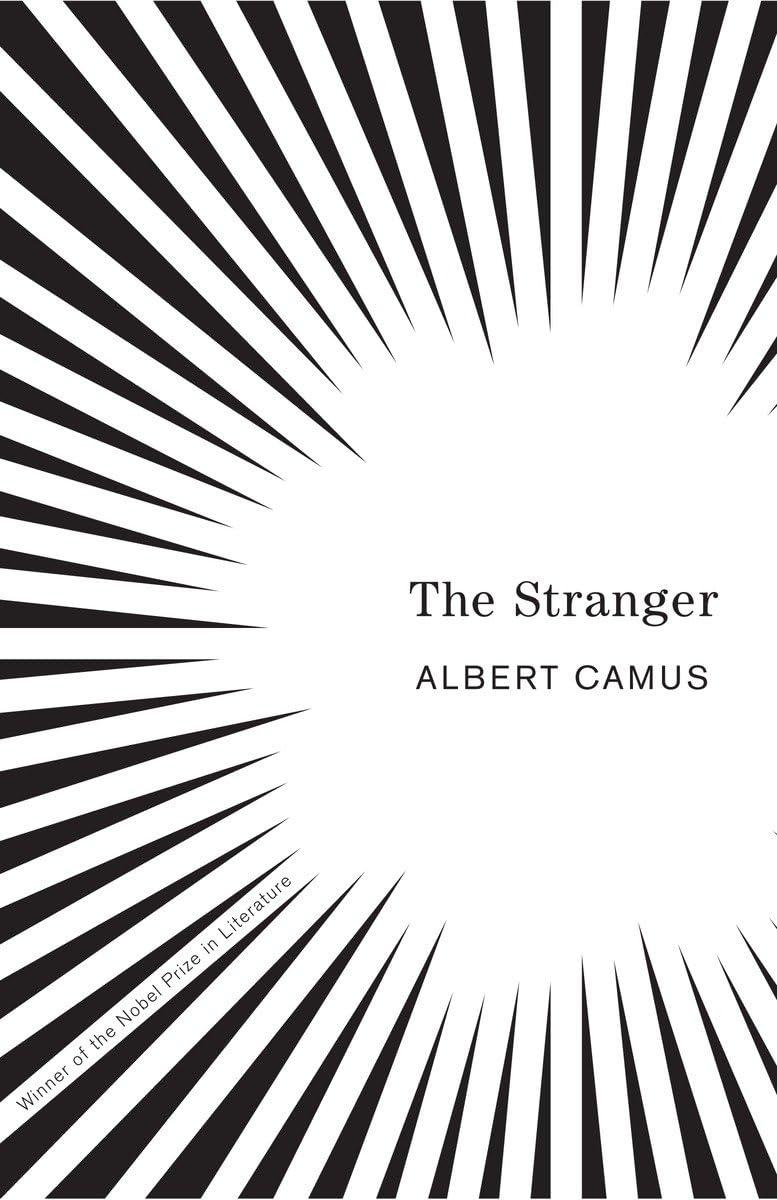
The Stranger (French: L’Étranger; also published in English as The Outsider), written by Albert Camus and published in French on May 19, 1942, by Gallimard, is a novella of approximately 32,000 words in two parts. The narrator and protagonist is Meursault, a French Algerian office worker who opens the story by learning of his mother’s death — “Maman died today. Or yesterday maybe, I don’t know” — and whose emotional detachment throughout the novel, from his mother’s funeral through his killing of an unnamed Arab man on an Algerian beach and his subsequent trial and sentencing, is the work’s central subject. The novel was published the same year as Camus’s philosophical essay The Myth of Sisyphus, which articulates the philosophical concept of the absurd that the novel embodies in fictional form. Camus received the Nobel Prize in Literature in 1957, with the Nobel Committee citing the “clear-eyed earnestness” with which he illuminated “the problems of the human conscience.” The French title L’Étranger means “the foreigner” or “the stranger” — someone who is outside, who does not belong. The novel has been translated into English under both titles: The Stranger (United States) and The Outsider (United Kingdom). This guide covers reading level, age appropriateness, content, translations, structure, the absurdist context, the unnamed Arab and colonial Algeria, and similar books.
For Parents
A short novella (approximately 32,000 words; 144 pages) about a French Algerian man who kills an unnamed Arab man on a beach, is tried, and is sentenced to death — narrated in a flat, detached first person that is the work’s central formal feature. Ages 15–18, grades 10–12. Content: the killing is described directly; the execution is anticipated but not depicted; the colonial context of French Algeria and the treatment of the unnamed Arab victim are significant discussion topics in contemporary curricula. No graphic sexual content. Standard AP Literature text.
For Teachers
A grades 10–12 and AP Literature text. Lexile 880L; ATOS 6.8; word count ~32,820; published 1942. Two parts; approximately 144 pages. The Matthew Ward translation (Vintage, 1988) is a well-regarded American edition commonly used in classrooms; the Stuart Gilbert translation (1946) remains in circulation. The unnamed Arab victim and the colonial context of French Algeria are standard AP discussion topics, particularly in light of Kamel Daoud’s The Meursault Investigation (2015). Pairs directly with Camus’s essay The Myth of Sisyphus (1942). Public domain in original French; translations under copyright.
The Stranger at a Glance
Find on Amazon →| Author | Albert Camus (1913–1960) |
| Original language | French (L’Étranger) |
| First published | May 19, 1942 (Gallimard, Paris) |
| Notable translations | Stuart Gilbert (1946); Matthew Ward (Vintage, 1988); Joseph Laredo (1982, UK); Sandra Smith (Penguin, 2013) |
| Grade Level | 10–12 (our assessment); AP Literature |
| Recommended Age | 15–18 |
| Lexile | 880L |
| ATOS Level | 6.8 |
| Word Count | ~32,000–32,820 |
| Pages | ~144 (Vintage edition) |
| Structure | 2 parts |
| Genre | Philosophical fiction / absurdist fiction / novella |
| Setting | Algiers, French Algeria; 1930s–1940s |
| Awards | Nobel Prize in Literature (1957, Camus’s full body of work) |
| Status | Public domain in original French; translations under copyright |
For official Lexile and AR levels, visit Lexile.com or AR BookFinder. ReadingVine provides independent editorial assessments.
What Reading Level Is The Stranger?
Lexile 880L, ATOS 6.8, word count approximately 32,000, interest level grades 7–12. Our assessment: grades 10–12, ages 15–18, primarily for AP Literature and advanced senior English. The Lexile and ATOS reflect Camus’s sparse, declarative prose style in translation — short sentences, minimal subordinate clauses, a flat affect that is sustained throughout. The reading challenge is primarily conceptual: Meursault’s emotional detachment, the absurdist philosophical framework, the colonial context of French Algeria, and the question of what the novel is actually arguing require background instruction and discussion for most high school readers. At approximately 32,000 words and 144 pages, the novella’s brevity makes it practical to assign in full. For official scores, visit Lexile.com or AR BookFinder.
The Translation Question — and the First Sentence
The novel was written in French and exists for English readers in translation. Several translations are in classroom circulation:
Stuart Gilbert (1946) — The first English translation, which was the English text for several decades. Gilbert’s opening renders “Aujourd’hui, maman est morte” as “Mother died today.” The New York Review noted that Gilbert’s version “was the standard English text” until the 1980s, when newer translations appeared. It is considered by some scholars too loose a translation by modern standards — one that overinterprets, paraphrases, or embellishes. It remains in circulation in some editions.
Matthew Ward (Vintage, 1988) — An American translation that preserves “Maman” in the opening line: “Maman died today.” Ward’s translator’s note explains his aim to follow “the letter of Camus’s novel” more closely than Gilbert. The New York Review described Ward’s version as “highly respected,” rendering “the idiom of the novel more contemporary and more American.” A commonly used American classroom edition.
Joseph Laredo (1982) — Published for UK and Commonwealth audiences around the same time as Ward; available as The Outsider in Penguin editions.
Sandra Smith (Penguin, 2013) — A more recent translation, available in Penguin Modern Classics.
The opening sentence is itself a productive AP close-reading topic. The choice to translate “Maman” or substitute “Mother” shapes a reader’s first impression of Meursault’s register: “Maman” is childlike and affectionate — incongruous in an adult man’s narration — and creates an immediate sense of strangeness that “Mother” does not. When looking up Lexile or AR scores, search by the specific edition’s ISBN.
What Is The Stranger About?
Part One opens with Meursault receiving a telegram informing him that his mother has died in a nursing home. He travels to the home, attends the vigil and burial, and returns to Algiers — noting the heat, his physical discomfort, his tiredness. He does not cry. The next day he goes swimming, meets a woman named Marie, goes to a comedy film, and begins a relationship with her. He helps his neighbor Raymond draft a letter intended to humiliate Raymond’s girlfriend. He goes to the beach with Raymond and Marie and Raymond’s friend Masson. On the beach, Raymond has a fight with a group of Arab men, one of whom is the brother of Raymond’s girlfriend. Later, alone on the beach, Meursault encounters one of the Arab men. The Arab draws a knife; the sun is blazing and the light reflecting off the blade is in Meursault’s eyes. Meursault fires his revolver — once, then four more times. The Arab man dies.
Part Two covers Meursault’s imprisonment, trial, and sentencing. The prosecution focuses less on the killing itself than on Meursault’s behavior at his mother’s funeral — that he did not cry, that he returned to a normal life immediately, that he seems to feel no remorse. Meursault is convicted and sentenced to death. In his cell, awaiting execution, he is visited by a prison chaplain who tries to bring him to religious consolation; Meursault refuses, angrily. In the novel’s final pages, he reaches a state of calm acceptance — not of God or afterlife, but of the indifference of the universe and his own place within it.
The Absurd — Camus’s Philosophical Framework
Camus published The Myth of Sisyphus — a philosophical essay — the same year as The Stranger, and the two works are typically read together as complementary explorations of the same idea. The absurd, as Camus defines it, is not simply meaninglessness: it is the tension between the human need for clarity and meaning and the universe’s silence on these questions. The universe does not provide meaning; human beings cannot stop needing it. The absurd is what exists in the gap between that need and that silence.
Meursault is often described as an absurd hero because he does not pretend — he does not perform grief he does not feel, does not claim to believe in God, does not arrange his experience into a narrative of moral growth. This refusal to perform is what the court finds most damning. The prosecutor argues that a man who did not weep at his mother’s funeral is morally capable of anything. Meursault has no answer because he does not operate within the framework the court is using.
For AP Literature, The Myth of Sisyphus — particularly the closing section on Sisyphus — provides the explicit philosophical statement of which The Stranger is the fictional embodiment. Most teachers assign excerpts from the essay alongside the novel.
The Unnamed Arab and Colonial Algeria
The Arab man Meursault kills is never named in the novel. He is referred to throughout as “the Arab.” This is a significant fact about the novel that contemporary curricula address directly. French Algeria in the 1940s was a colonial society in which Algerian Arabs were legally and socially subordinated to French settlers; the legal system Meursault is tried in is a French colonial system. The Arab man’s lack of a name, his function in the plot primarily as a catalyst for Meursault’s crisis, and the novel’s relative indifference to his death as a human event are aspects of the colonial structure Camus wrote within — whether intentionally or not.
In 2015, Algerian author Kamel Daoud published The Meursault Investigation (Meursault, contre-enquête), a novel narrated by Harun, described as the brother of the Arab man Meursault killed. Daoud names the murdered man Musa and tells the story of his family’s grief and his brother’s long reckoning with the event. The novel has been taught alongside The Stranger in AP Literature and college courses as a postcolonial response to Camus’s novel. It won the Prix Goncourt du premier roman in 2015.
The Stranger Themes and Lessons
The trial in Part Two is the novel’s most discussed structural element. Meursault is on trial for murder, but the prosecution’s case rests primarily on his emotional conduct at his mother’s funeral: that he did not cry, that he drank coffee, that he returned immediately to a normal life. Camus’s point — stated explicitly in The Myth of Sisyphus and embodied in the trial — is that the court is condemning Meursault for refusing to perform emotions he does not feel, which is to say for his honesty, which is to say for his refusal to participate in the collective fiction of meaning.
Meursault’s rejection of the prison chaplain in the novel’s final pages is the most direct statement of his philosophy: he refuses the consolation of religion not because he is nihilistic but because he will not accept a false comfort. His subsequent calm — described in terms of “the gentle indifference of the world” — is not despair but acceptance of the absurd in the sense Camus defines it.
Discussion questions: Why does the prosecution focus on Meursault’s behavior at his mother’s funeral rather than on the killing itself? What does Meursault mean when he says the world is “gently indifferent”? What does the Arab man’s lack of a name say about the novel’s perspective — and what does Daoud’s The Meursault Investigation do with that absence? What is the difference between “the absurd” as Camus defines it and simple nihilism?
Books Similar to The Stranger
About Albert Camus
Albert Camus was born on November 7, 1913, in Mondovi (now Dréan), French Algeria, to a French settler father — who died in World War I when Camus was less than a year old — and a partially deaf, illiterate mother of Spanish descent. He grew up in poverty in Algiers, attended the University of Algiers on scholarship, and was prevented from completing his academic career by tuberculosis. He worked as a journalist in Algiers and Paris, joining the French Resistance during the German occupation and serving as an editor at the underground newspaper Combat. His major works include The Stranger (1942), The Myth of Sisyphus (1942), The Plague (1947), and The Fall (1956). He received the Nobel Prize in Literature in 1957 — at forty-four, he was the second-youngest laureate at the time. He died on January 4, 1960, in a car accident near Sens, France, at age forty-six. An unfinished autobiographical novel, The First Man, was found in the wreckage and published posthumously in 1994.
The Stranger: Frequently Asked Questions
What reading level is The Stranger?
Lexile 880L, ATOS 6.8, word count approximately 32,000, interest level grades 7–12. Our assessment: grades 10–12, ages 15–18, primarily AP Literature. Sparse, declarative prose is accessible at the sentence level; the reading challenge is conceptual — the absurdist framework, Meursault’s detachment, the colonial context. For official scores, visit Lexile.com or AR BookFinder.
What is The Stranger about?
Meursault, a French Algerian office worker, learns of his mother’s death, attends her funeral without crying, returns to his ordinary life, and shortly after kills an unnamed Arab man on a beach. In Part Two he is tried and sentenced to death — the prosecution’s case resting largely on his emotional conduct at his mother’s funeral rather than the killing itself. In his cell awaiting execution, he refuses religious consolation and reaches a state of calm acceptance of the world’s indifference.
Why doesn’t Meursault cry at his mother’s funeral?
The novel does not explain it, and Meursault does not examine it. He does not cry because he does not feel the grief the situation conventionally calls for — and he will not perform emotions he does not feel. This refusal to perform is presented as Meursault’s defining characteristic and becomes the prosecution’s primary evidence against him at trial.
What is the absurd in The Stranger?
The absurd, as Camus defines it in The Myth of Sisyphus (published the same year), is the tension between the human need for meaning and clarity and the universe’s silence on these questions. Meursault embodies the absurd hero by refusing to pretend — he will not construct a narrative of moral meaning around his experience or accept the consolation of religion. His final acceptance of “the gentle indifference of the world” is Camus’s model of facing the absurd honestly.
What is The Meursault Investigation and how does it relate to The Stranger?
The Meursault Investigation (2015) by Algerian author Kamel Daoud is a novel narrated by Harun, the brother of the Arab man Meursault killed — naming him Musa and telling the story from the perspective absent in Camus’s novel. It won the Prix Goncourt du premier roman and is taught alongside The Stranger in AP Literature and college courses as a postcolonial response to Camus’s work.
Which translation of The Stranger should I use?
The Matthew Ward translation (Vintage, 1988) is a well-regarded American edition that preserves “Maman” in the opening line and aims for fidelity to Camus’s spare style. The Stuart Gilbert translation (1946) was the English text for several decades and remains in circulation. The Joseph Laredo translation (1982) is the UK and Commonwealth edition; the Sandra Smith translation (Penguin, 2013) is a more recent option. Each makes different choices; confirm by ISBN when looking up Lexile or AR scores.
What grade is The Stranger typically assigned?
Most commonly in 10th, 11th, or 12th grade — in AP Literature, world literature, or existentialism and absurdism units. Its brevity (approximately 144 pages) makes it practical to assign in full and to teach closely. Frequently paired with The Metamorphosis and with excerpts from The Myth of Sisyphus.