
 = Partner Site
The River Reading Level: A Complete Guide
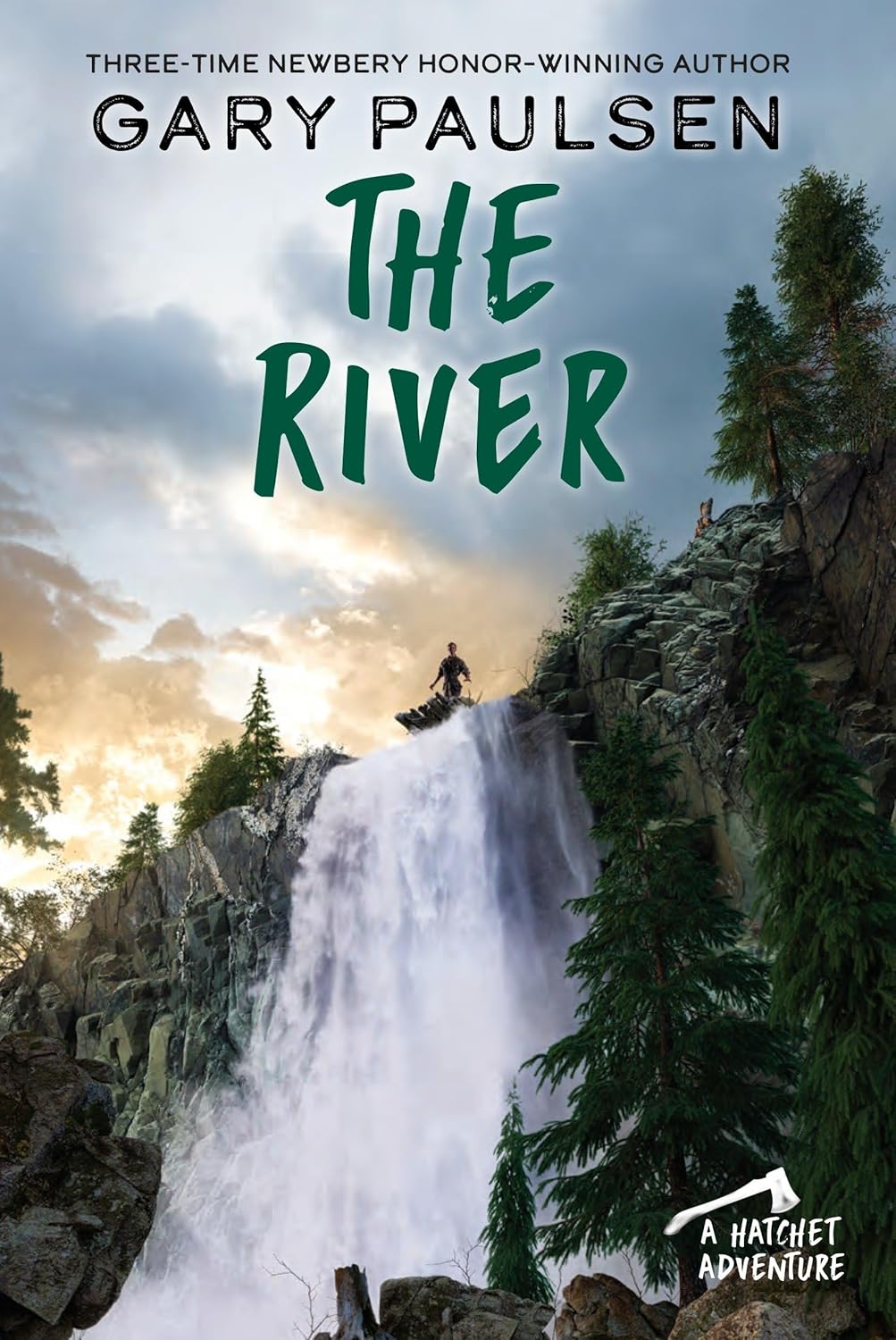
The River by Gary Paulsen is the direct sequel to Hatchet — a leaner, darker, and in some ways more demanding novel that takes Brian Robeson back to the wilderness not by accident but by choice, this time carrying the weight of another person’s life. Where Hatchet asked what a boy could do alone to survive, The River asks something harder: what can he do when survival is not just his own problem, when a man he is responsible for lies unconscious and dying and the only possible rescue is a hundred miles of river away? It is a novel about the difference between knowledge and wisdom, between surviving for yourself and acting for someone else, and about the specific transformation that comes when the skills you built in crisis are tested not by the wilderness’s indifference but by a deadline, a current, and a life that depends on every decision you make. Shorter and more intense than either Hatchet or Brian’s Winter, it is the Brian’s Saga novel most organized around a single sustained problem and the one that drives hardest toward its conclusion. This complete guide covers the reading level, age appropriateness, themes, characters, and everything parents and teachers need to know about this essential companion novel.
For Parents
The River is the darkest of the Brian’s Saga novels — a story in which Brian is responsible for another person’s life and in which the novel’s sustained tension comes from the question of whether he will be able to save that person before it is too late. Best suited for readers ages 10-13 who have read Hatchet first, it builds directly on the first novel’s events and assumes familiarity with Brian’s character and history. Parents who read Hatchet with their children will find it a natural and rewarding continuation, though they should be prepared for a novel that is tenser and less hopeful in atmosphere than the original.
For Teachers
Well suited to grades 5-7 as a companion to Hatchet, The River is particularly valuable for teaching the narrative mechanics of sustained tension — how Paulsen constructs and maintains urgency across a novel built around a single time-pressured problem. The novel also raises rich questions about responsibility, the ethics of putting someone in danger in the name of knowledge, and the difference between theoretical knowledge and knowledge tested by genuine stakes. Brian’s relationship with Derek is the series’ most fully realized human relationship and rewards discussion of how adversity creates connection.
The River at a Glance
Find on Amazon →| Author | Gary Paulsen |
| Published | 1991 |
| Grade Level | 5-7 (our assessment) |
| Recommended Age | 10-13 |
| Flesch-Kincaid Grade | 5.8 |
| Word Count | ~25,000 |
| Pages | 132 (standard paperback) |
| Chapters | 18 |
| Genre | Survival fiction / adventure / coming-of-age |
| Setting | The Canadian boreal wilderness; a river journey of approximately 100 miles |
| Awards | Awards: None widely recorded |
For official Lexile and AR levels, visit Lexile.com or AR BookFinder. ReadingVine provides independent editorial assessments.
What Reading Level Is The River?
The River reads at approximately a 5th-7th grade level by our editorial assessment, with a Flesch-Kincaid grade level of around 5.8 — the highest score in the Brian’s Saga series, which runs slightly contrary to its reputation as the most accessible of the sequels. The difference is more about intensity than complexity: Paulsen’s prose in The River is the same spare, physically immediate style as in Hatchet and Brian’s Winter, but the novel’s sustained urgency and the emotional weight of Brian’s responsibility for Derek create a reading experience that is more demanding than either predecessor despite using comparable language.
The novel’s primary challenge is not vocabulary or sentence structure but the sustained management of tension that the plot demands of its readers. The River is organized around a single extended crisis — Brian must get Derek down a hundred miles of river before Derek dies — and the tension of that crisis must be held and felt across 132 pages for the novel to work. Readers who engage fully with the stakes, who allow themselves to feel the urgency and the weight of Brian’s responsibility, will find the novel considerably more demanding and considerably more rewarding than its page count suggests. It is among the most efficiently constructed tension narratives available in middle grade fiction.
The book is most commonly recommended for grades 5-7, typically as a follow-up to Hatchet. For official Lexile and Accelerated Reader scores, visit Lexile.com or AR BookFinder.
What Age Is The River Appropriate For?
We recommend The River for readers ages 10-13. It is the most emotionally intense of the Brian’s Saga novels — not because of graphic content but because of the sustained weight of Brian’s responsibility for another person’s life and the genuine uncertainty about whether he will succeed.
The novel’s central dramatic situation is Derek being struck by lightning and falling into a coma — he is unconscious and dying throughout most of the novel’s second half, and Brian must get him to help alone. The lightning strike and its aftermath are depicted with matter-of-fact directness. Brian must construct a raft and navigate a hundred miles of river while managing Derek’s unconscious body — the physical demands and risks of this journey are depicted honestly. Brian faces whitewater, portages, and the constant danger of the river with a directness appropriate to the survival narrative. There is no violence beyond nature, no sexual content, and no strong language. The novel’s difficulty is almost entirely the emotional weight of Brian’s responsibility and the tension of not knowing whether Derek will survive. It is entirely appropriate for the recommended age range, and the sustained tension is productive rather than gratuitous — it is the mechanism by which the novel makes its central argument about responsibility and the difference between surviving for yourself and acting for someone else.
Parents who are reading the Brian’s Saga series with their children should be prepared for The River to be a more emotionally tense experience than either Hatchet or Brian’s Winter — the stakes are higher because another life is at risk, and Paulsen does not soften that. The novel’s tension is its greatest strength and its most demanding quality simultaneously.
What Is The River About?
Two years after his rescue from the Canadian wilderness, Brian Robeson has settled back into ordinary life — school, friends, the rhythms of adolescence — but the wilderness has not settled out of him. He thinks about it. He dreams about it. The skills he built and the knowledge he earned in those fifty-four days feel more real to him than most of what surrounds him now.
Then the government comes calling. Derek Holtzer is a psychologist working with the military and survival training programs who has read about Brian’s survival and wants to study how it happened — not from reports and interviews, but firsthand, in the wilderness itself. The proposal is this: Brian will go back to the Canadian wilderness with Derek, to the same lake, and will demonstrate his survival skills while Derek observes and documents. Brian will have no outside equipment beyond what he had the first time. Derek will carry a radio for emergencies. They will stay two weeks.
Brian agrees, partly because the wilderness pulls at him and partly because the proposal seems manageable — Derek is an experienced outdoorsman, the radio is a safety net, and two weeks is not fifty-four days. He is not afraid. He has done this before.
What he has not accounted for is the Canadian wilderness’s indifference to plans. A lightning storm rolls in on their third night on the lake — the kind of storm Brian remembers from his first time, violent and total. Lightning strikes Derek directly, and Brian watches him fall. Derek is alive but unconscious, his body in a coma that Brian cannot assess and cannot treat, and the radio — the one piece of equipment that could bring help — is destroyed in the strike.
Brian is alone again. But this time he is not alone with his own survival — he is alone with Derek’s, and Derek cannot help himself, cannot communicate, cannot move. Brian must get him out. The only possible route is down the river that feeds the lake, a hundred miles through wilderness to a trading post Brian does not know is there but assumes must exist somewhere downstream. He builds a raft. He lashes Derek to it. He starts downriver, alone, navigating by the current, managing Derek’s unconscious body through every obstacle the river presents, working against the clock of a coma he cannot measure and a deadline he cannot know.
The river journey is the novel’s entire second half — sustained, tense, and organized around the single question of whether Brian can get Derek to help in time. It is the most propulsive narrative in the Brian’s Saga series, and its resolution — earned, not given, the product of Brian’s accumulated knowledge deployed under the highest possible pressure — is one of the most satisfying in Paulsen’s catalog.
The River Characters
Is The River Banned?
The River has not been challenged or banned and does not appear on any lists of challenged books. Like Hatchet, it is among the most consistently appropriate and most widely recommended novels in its grade range. It is widely available in school and public libraries and is embraced by educators, librarians, and parents as a natural and worthy continuation of Brian’s story.
The River Themes and Lessons
The central theme of The River — and what most clearly distinguishes it from Hatchet — is the difference between surviving for yourself and acting for someone else. Brian’s survival in Hatchet was, at its core, a problem of self-preservation: every decision he made was in service of his own continued life, and the standard of success was simply staying alive. The River changes that standard entirely. Brian’s survival is not the question — he has already proved he can survive. The question is whether he can deploy everything he knows in service of Derek’s survival, under time pressure, without the feedback of another person’s input or the safety net of the radio. The novel’s argument is that genuine responsibility for another person is a more demanding test than any self-preservation problem, and that passing it requires not just the skills that self-reliance built but the specific willingness to spend those skills completely on someone else’s behalf.
Knowledge and wisdom are the novel’s second great themes — the distinction between knowing what to do and being able to do it under the conditions that actually obtain. Brian knows how to survive in the boreal wilderness; the first novel established that comprehensively. But The River is not about survival knowledge in the abstract — it is about that knowledge deployed in the specific, uncontrolled, time-pressured conditions of a river journey with an unconscious man and no margin for error. The gap between what Brian knows and what the river requires of him at every bend is where the novel’s tension lives, and Paulsen renders that gap with the honesty of someone who understands that knowledge and wisdom are not the same thing.
The ethics of risk is the novel’s third notable theme — a quieter thread that runs beneath the survival plot. Derek’s injury is, in a meaningful sense, a consequence of the decision to put himself in the wilderness without adequate preparation for what the wilderness might do. The novel does not moralize about this, but it does not look away from it either: Brian chose to come back, Derek chose to come, and the lightning that strikes Derek is the wilderness’s reminder that choice and consequence are not always proportionate. What Brian does with that — the guilt he carries, the responsibility he takes, the decision to try rather than to wait for help that may not come — is the novel’s moral center.
Discussion starters for classrooms: How is Brian’s situation in The River different from his situation in Hatchet? What does having to care for Derek require of Brian that surviving alone did not? Why does Brian decide to build the raft and go rather than stay and wait? What is the difference between knowing how to do something and being able to do it under pressure? What would you have done in Brian’s situation?
How Many Pages and Chapters Are in The River?
The standard paperback edition of The River is 132 pages, divided into 18 chapters averaging around seven pages each. The word count is approximately 45,000 words — comparable to Hatchet and Brian’s Winter in length but considerably more concentrated in its narrative structure, since the novel’s second half is essentially one sustained sequence. The chapters move with the urgency of a story in which time is running out, and the novel is difficult to put down once Derek is struck — which is, given what follows, exactly the right effect.
For readers in the target age range of 10-13, expect a reading time of roughly 3-4 hours for engaged readers. As a classroom text it works best in a two-week unit following a Hatchet unit, with the comparison between the two novels’ central problems as the organizing discussion thread. The novel’s second half — the river journey itself — is well suited to daily read-aloud in class, since its chapter structure and sustained tension make it naturally compelling as shared reading. The ethical question raised by Derek’s injury — the decision to go back, what it cost, whether it was right — is among the most productive discussion topics in the Brian’s Saga series and one that generates genuine disagreement among students. The series continues with Brian’s Return (1999), in which Brian chooses to go back to the wilderness permanently, and Brian’s Hunt (2003).
Books Similar to The River
About Gary Paulsen
Gary Paulsen (1939-2021) was one of the most prolific and most beloved authors of middle grade and young adult fiction in American literary history, the author of more than two hundred books and three-time Newbery Honor recipient — for Hatchet (1988), Dogsong (1986), and The Winter Room (1990). The River, published in 1991, was the first of four sequels to Hatchet and the one Paulsen has described as the most naturally arising from the first novel’s premise: the obvious question after a boy survives alone in the wilderness is what happens when he has to go back and the stakes are higher. The river journey at the novel’s center draws on Paulsen’s own extensive canoe and wilderness experience — he spent years traveling rivers in the Minnesota and Canadian wilderness, and the specific challenges of river navigation in the boreal forest are rendered with the same firsthand accuracy that defines the survival details in Hatchet. Paulsen died in October 2021, leaving behind a catalog that includes the complete Brian’s Saga series and remains one of the most important bodies of wilderness fiction for young people in the American tradition.
The River: Frequently Asked Questions
What reading level is The River?
The River has a Flesch-Kincaid grade level of approximately 5.8 — the highest in the Brian’s Saga series, which runs slightly contrary to its reputation as accessible and fast-moving. The prose is the same spare, physically immediate style as Hatchet, but the sustained tension of Brian’s responsibility for Derek creates a reading experience more demanding than the word-level score suggests. For official Lexile and AR scores, visit Lexile.com or AR BookFinder.
Do I need to read Hatchet before The River?
Yes, strongly recommended. The River is a direct sequel to Hatchet that picks up two years after Brian’s rescue and assumes familiarity with his character, his history, and the wilderness experience that defines him. Readers who come to The River without Hatchet will understand the plot but miss the novel’s deepest pleasures — the comparison between what Brian could do then and what he can do now, and between surviving for himself and acting for someone else. Unlike Brian’s Winter, which works reasonably well as a standalone, The River is genuinely best read second.
What happens to Derek in The River?
Derek is struck by lightning on the third night of his and Brian’s return to the wilderness and falls into a coma. He remains unconscious for the rest of the novel — he cannot communicate, cannot move, cannot help himself in any way — and Brian must get him down a hundred miles of river to a trading post before Derek dies. The lightning strike and its immediate aftermath are depicted with matter-of-fact directness, and Derek’s unconscious state is rendered honestly throughout the river journey. Without giving away the ending: the novel resolves Derek’s situation, and the resolution is earned by everything Brian does on the river.
How is The River different from Hatchet?
The most important difference is the nature of the problem. In Hatchet, Brian must survive for himself — every decision he makes is in service of his own continued life, and success means staying alive. In The River, Brian’s own survival is not in question — he has already proved he can survive. The question is whether he can keep Derek alive, deploying everything he knows under time pressure and without the feedback loop of another functional person. The novel is also darker in atmosphere, shorter, and more tightly organized around a single crisis — less a series of survival problems and more a sustained race against time. Many readers who loved Hatchet consider The River the stronger novel on its own terms.
Why does Brian go back to the wilderness in The River?
The government — specifically a psychologist named Derek Holtzer working with military survival training programs — contacts Brian and asks him to return to the wilderness so that Derek can observe and document his survival skills firsthand. Brian agrees partly because the wilderness still pulls at him and partly because the conditions seem manageable: Derek is an experienced outdoorsman, the plan includes a radio for emergencies, and two weeks is far shorter than his original fifty-four days. The decision to go back, and the question of whether it was the right decision given what follows, is one of the novel’s most productive ethical discussions — Paulsen raises it without resolving it cleanly, which is characteristically honest.
How long is the river journey in The River?
The river Brian must navigate to reach the trading post is approximately one hundred miles of the Canadian boreal wilderness. Brian has no map, no prior knowledge of the river’s course, and no way to know exactly where the trading post is or how long the journey will take. He navigates by the current, manages Derek’s unconscious body through rapids and portages, and makes every decision alone under the pressure of not knowing how much time Derek has. Paulsen does not specify the exact number of days the journey takes, which is a deliberate choice — the reader feels the time pressure without being able to calculate it, which produces the same uncertainty Brian is navigating.
What grade is The River typically assigned in?
The River is most commonly assigned in grades 5, 6, and 7, almost always as a companion to Hatchet. It is particularly well suited to units on narrative tension and how authors construct and sustain urgency, on the ethics of decision-making under pressure, and on the difference between surviving for yourself and acting for someone else as a narrative and philosophical distinction. Many teachers who teach Hatchet and want to extend the unit assign The River rather than Brian’s Winter because its direct sequel relationship and its escalated stakes provide a more focused comparative discussion. It pairs naturally with Holes for a unit on protagonists who must keep moving under impossible conditions, and its read-aloud potential in the second half makes it an excellent classroom text for the sustained tension discussion.