
 = Partner Site
Magnus Chase and the Gods of Asgard: The Ship of the Dead Reading Level: A Complete Guide
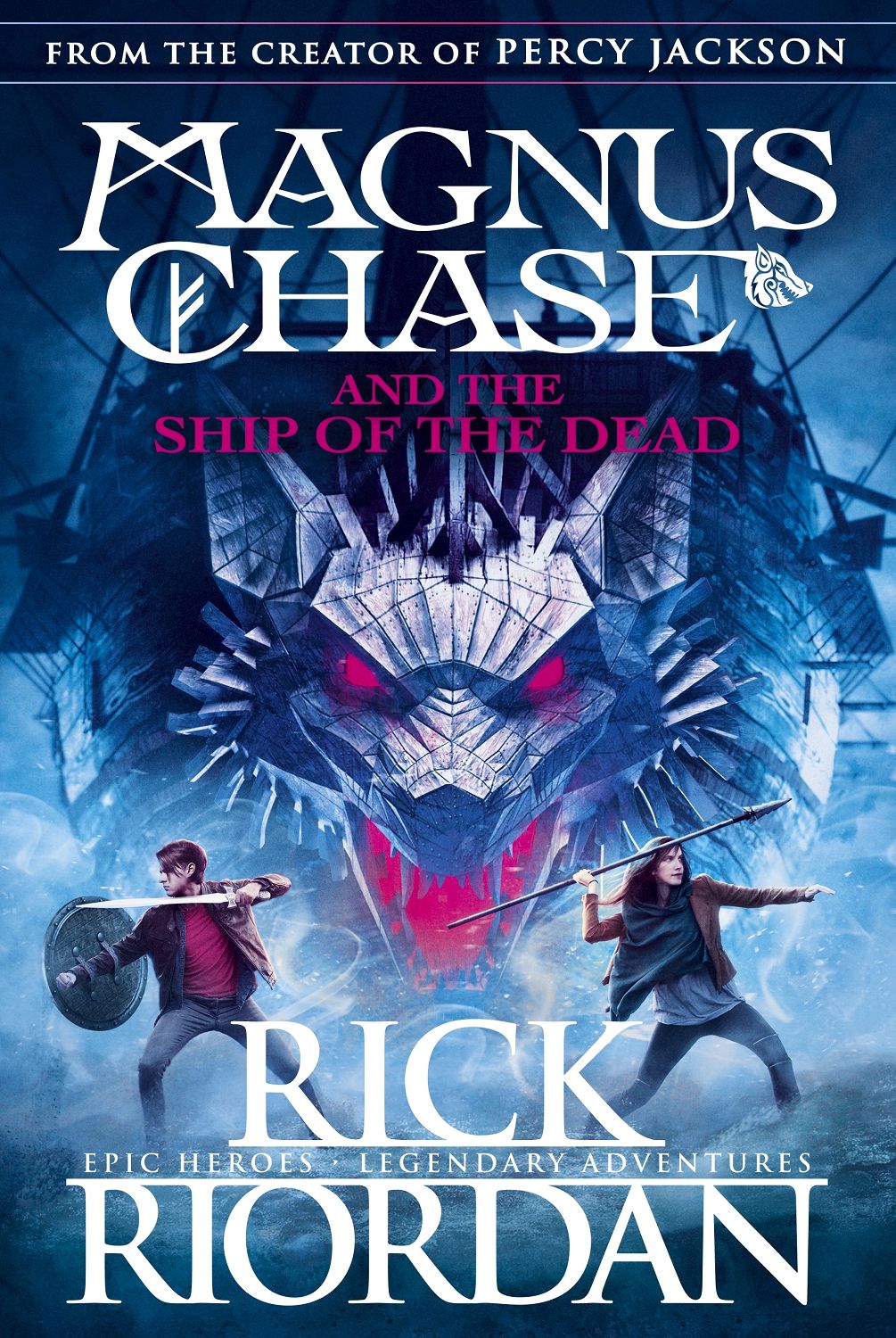
The Ship of the Dead by Rick Riordan is the third and final book in the Magnus Chase and the Gods of Asgard trilogy, following Magnus and his companions as they sail to the farthest reaches of Jotunheim and Niflheim to stop Loki from launching Naglfar — the Ship of the Dead — and beginning Ragnarök. The series’ most confident and emotionally resonant volume, it brings every major character arc to completion while delivering the trilogy’s most ambitious set pieces and its clearest statement of what the series has always been about: chosen family, healing from trauma, and the courage it takes to face something you cannot fully win. This complete guide covers The Ship of the Dead‘s reading level, recommended age, content considerations, characters, themes, and books similar to The Ship of the Dead, designed for parents, teachers, and students.
For Parents
A satisfying and fully earned conclusion — the battle against Loki is won not through fighting but through flyting, a genuine Norse tradition of competitive verbal combat, which is one of Riordan’s most inventive series-ending choices. Best for readers ages 10–14 who have read the first two books. Percy Jackson appears in this volume.
For Teachers
The flyting contest at the novel’s climax is rooted in genuine Norse tradition and worth significant classroom discussion — the Lokasenna of the Poetic Edda is the direct source, and the novel’s version is faithful to the spirit of the original. The series’ conclusion, in which Magnus uses his father’s healing gift rather than a fighting power to resolve the crisis, is one of middle-grade fiction’s best arguments for non-violent heroism.
The Ship of the Dead at a Glance
Find on Amazon →| Author | Rick Riordan |
| Published | 2017 |
| Grade Level | 5–8 (our assessment) |
| Recommended Age | 10–14 |
| Flesch-Kincaid Grade | ~5.1 |
| Word Count | 101,274 |
| Pages | ~496 (Disney Hyperion hardcover) |
| Chapters | 57 |
| Genre | Fantasy / mythology / adventure |
| Setting | Boston; Hotel Valhalla; Jotunheim; Niflheim; the open sea; contemporary |
| Series | Magnus Chase and the Gods of Asgard, Book 3 |
For official Lexile and AR levels, visit Lexile.com or AR BookFinder. ReadingVine provides independent editorial assessments.
What Reading Level Is The Ship of the Dead?
The Ship of the Dead reads at approximately a 5th–8th grade level by our editorial assessment, with a Flesch-Kincaid grade level of around 5.1 — consistent with The Hammer of Thor. At 101,274 words, it is the shortest book in the trilogy and the fastest read; the voyage structure gives the novel a different rhythm from the first two books, moving from encounter to encounter with a clear destination rather than the more sprawling quest format of its predecessors.
The reading demands are primarily contextual — almost nothing in The Ship of the Dead is accessible to readers who haven’t completed the first two books, and the emotional payoffs of the conclusion depend entirely on the investment built across 228,000+ words of preceding story. For readers who have followed the series, the novel’s precision and confidence are enormously satisfying. For official Lexile and AR scores, visit Lexile.com or AR BookFinder. ReadingVine’s assessments are independent editorial judgments.
What Age Is The Ship of the Dead Appropriate For?
We recommend The Ship of the Dead for readers ages 10–14 who have read the first two books. The content is appropriate for the full range — no sexual content, no profanity, and the violence is adventure-story combat. The final battle sequence is the most intense in the trilogy, involving genuine mortal peril for multiple characters and a climax that requires Magnus to risk his soul. These are handled within the adventure genre’s conventions, but parents of readers at the lower end of the age range should expect the conclusion to carry real emotional weight.
What Is The Ship of the Dead About?
Loki is free, and he is building toward Ragnarök. Naglfar — the Ship of the Dead, constructed from the fingernails and toenails of the dead and crewed by giants and draugr — waits at the border of Niflheim, ready to sail the moment Loki gives the order. Magnus must stop it. His only option is to challenge Loki to a flyting — a ritual contest of verbal combat rooted in genuine Norse tradition — and win. To do this, he needs Kvasir’s Mead: a legendary substance made from the blood of the wisest being ever created, which grants the drinker irresistible eloquence. Finding it requires sailing across the seas of Jotunheim with his companions aboard a ship called the Big Banana.
The voyage structure suits the series well — the encounters with giants, sea monsters, and mythological challenges are the kind of episodic adventure Riordan has always handled with particular pleasure, and the confined space of the ship deepens the ensemble’s dynamics. Percy Jackson and Annabeth appear early in the novel, with Percy giving Magnus sailing lessons and the encounter serving both as fan service and as genuine mentorship — a more experienced hero passing something along to a less experienced one.
The flyting climax is the trilogy’s most inventive resolution: Magnus wins not through combat but through words, using everything he has learned about grief and healing and chosen family to craft an argument that Loki cannot answer. The novel’s final chapters — the resolution of the battle, the establishment of Chase Space as a home for homeless children, Magnus and Alex’s relationship reaching its natural conclusion — are among Riordan’s most warmly satisfying endings.
The Ship of the Dead Characters
Is The Ship of the Dead Banned?
The Ship of the Dead has been challenged in some schools and libraries, primarily in connection with the series’ overall treatment of Norse mythology and the continuation of Alex Fierro’s character from the second book. These challenges have not resulted in widespread removal. The book is widely available and has been recognized for its inclusive representation and its creative use of genuine Norse mythological traditions.
The Ship of the Dead Themes and Lessons
The flyting climax is the series’ thematic statement in its most concentrated form. Magnus wins not through superior fighting ability — he has never been the series’ strongest combatant — but through his capacity to articulate what he has learned about loss, healing, and chosen family. The flyting tradition is genuinely Norse: it is a contest of wit and words, and the texts that record it (the Lokasenna in particular) show Loki as a master of verbal combat who can be defeated by someone who speaks more honestly than he can. Magnus’s victory is earned by his genuine experience of grief and recovery, which Loki — who has never allowed himself to be vulnerable — cannot match.
The novel’s ending — Chase Space, a home for homeless children established in Magnus’s uncle’s old mansion — is the trilogy’s most direct statement of what its hero has become. Magnus started as a homeless child with no family and no future. He ends by creating a home for children in the same situation. This is Riordan’s best series conclusion in terms of what it says about heroism: not the defeat of the enemy but the building of something for the people who need it.
The series’ treatment of Ragnarök — not a battle to be won but a fate to be faced with courage — reaches its fullest expression here. The gods know Ragnarök is coming. Magnus and his friends know it too. What they do is delay it, and face it with dignity, and in the meantime build things worth defending. This is a more honest relationship with inevitability than most adventure series allow, and it gives the Magnus Chase trilogy a philosophical depth that separates it from lighter fare.
Discussion questions for classrooms and families: Why is flyting the right way to defeat Loki — what does it say about where Loki’s real power lies? What has Magnus learned by the end of the trilogy that he didn’t know at the beginning? How does Chase Space as the series’ conclusion change what you understand the series to have been about? How does the Norse attitude toward Ragnarök (face it with courage) differ from how Greek heroes approach fate?
How Many Pages and Chapters in The Ship of the Dead?
The Disney Hyperion hardcover is approximately 496 pages across 57 chapters. Word count is 101,274 words — the shortest in the trilogy and the fastest read. Most readers in the target age range finish it in about one week; readers who have been following the series closely often finish it in a weekend once the voyage begins. The novel ends the trilogy completely, and the paperback edition includes “9 from the Nine Worlds,” a short story collection featuring the supporting cast on solo adventures.
Books Similar to The Ship of the Dead
About Rick Riordan
Rick Riordan was born in 1964 in San Antonio, Texas. He has said that the Magnus Chase series is the one he is most personally invested in of all his mythology series — that the themes of grief, chosen family, and healing from trauma reflect things he cared about more specifically than the Greek and Egyptian books, and that Magnus’s arc from homeless teenager to someone who builds a home for other homeless children was the ending he wanted from the beginning. The flyting conclusion was, he has said, the most research-intensive scene he has written: he read the Lokasenna multiple times, consulted with Norse scholars, and worked to make Magnus’s winning argument genuinely rooted in what the Norse tradition understood flyting to be about.
The Magnus Chase trilogy was completed in 2017, and a companion short story collection — 9 from the Nine Worlds — was published in 2018. Riordan has continued to expand his mythology universe. He lives in Boston.
The Ship of the Dead: Frequently Asked Questions
What reading level is The Ship of the Dead?
The Ship of the Dead has a Flesch-Kincaid grade level of approximately 5.1. Our editorial assessment places it at grades 5–8 (ages 10–14). It is the shortest and fastest read in the trilogy; the emotional and contextual demands are the highest since everything depends on the investment built in Books 1 and 2. For official Lexile and AR scores, visit Lexile.com or AR BookFinder.
What grade is The Ship of the Dead appropriate for?
We recommend grades 5–8, for readers who have completed the first two books. Content is appropriate for ages 10–14. The final battle and Magnus’s soul-risk in the flyting carry real emotional weight; parents of sensitive readers should be prepared.
How many pages are in The Ship of the Dead?
The Disney Hyperion hardcover is approximately 496 pages across 57 chapters. Word count is 101,274 words — the shortest in the trilogy. Most readers finish it in about one week.
What is The Ship of the Dead about?
Loki is free and building toward Ragnarök. Magnus must stop Naglfar — the Ship of the Dead — from sailing by challenging Loki to a flyting (a Norse ritual contest of verbal combat) and winning. To prepare, he must find Kvasir’s Mead, which grants irresistible eloquence, sailing across Jotunheim with his companions before Loki can launch the fleet.
Does Percy Jackson appear in The Ship of the Dead?
Yes — Percy and Annabeth appear in the novel’s opening act, with Percy giving Magnus sailing lessons and Annabeth checking in on her cousin. It is the series’ most extended crossover with the Percy Jackson universe and a genuine highlight for fans of both series. Percy’s practical competence and Magnus’s different kind of heroism are contrasted thoughtfully rather than competitively.
What is Naglfar in Norse mythology?
Naglfar is a ship from genuine Norse mythology — described in the Prose Edda as a vessel constructed from the fingernails and toenails of the dead, which will carry an army of giants and the dead at Ragnarök. Its construction is one of the reasons the Norse believed it was important to trim the nails of the dead before burial. In the novel, preventing Naglfar from sailing is the central goal.
What is the flyting in The Ship of the Dead?
Magnus defeats Loki not in combat but in a flyting — a Norse ritual of competitive insult and verbal combat rooted in genuine tradition. The Lokasenna in the Poetic Edda is the direct mythological source: a poem in which Loki insults all the gods at a feast and is eventually silenced by Thor’s threat of violence. Riordan’s version has Magnus defeat Loki through the specific truth of his own experience of grief and healing — something Loki, who has never allowed himself to be vulnerable, cannot counter.
What is Chase Space?
Chase Space is the home for homeless children that Magnus establishes in his uncle Randolph’s old mansion at the novel’s end — staffed by einherjar and providing a safe, permanent shelter for children without homes. It is the trilogy’s most direct statement of what Magnus has become: a boy who was homeless and found a chosen family, paying it forward to children in the same situation. Riordan has said it was always going to be the ending.