
 = Partner Site
The Sneetches and Other Stories Reading Level: A Complete Guide
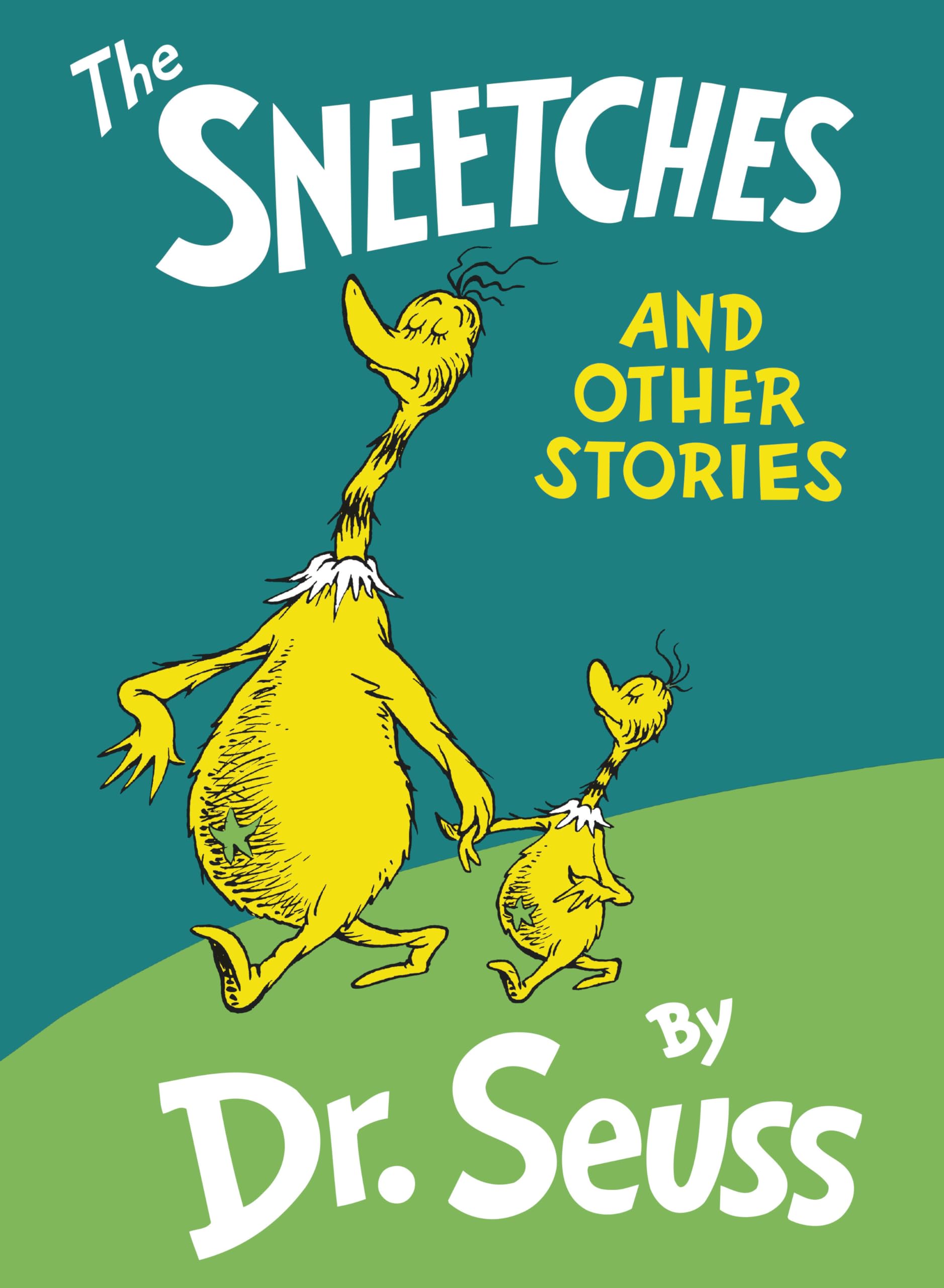
The Sneetches and Other Stories, written and illustrated by Dr. Seuss, is a 72-page collection of four verse stories published in 1961. The lead story — “The Sneetches” — is one of the most widely taught picture books in American classrooms: a rhyming tale about two groups of yellow bird-like creatures who are identical in every way except that the Star-Belly Sneetches have a star on their bellies and the Plain-Belly Sneetches do not, and about how this single difference becomes the basis for a complete social hierarchy, until a fast-talking entrepreneur named Sylvester McMonkey McBean arrives with a machine that can fix everything — for a price. Written as an allegory for discrimination and antisemitism, and directly inspired by Dr. Seuss’s experiences during World War II, it has remained one of the most enduring and most discussed picture books in American children’s literature for over sixty years. This guide covers The Sneetches‘s reading level, whether it’s a read-aloud or independent read, what it’s about, its themes, how long it takes to read, and similar books — designed for parents and teachers of K–2 readers.
For Parents
A rhyming picture book allegory about discrimination, prejudice, and the cost of arbitrary in-group/out-group thinking — written in Dr. Seuss’s signature bouncing anapestic verse, funny and pointed simultaneously. Best as a read-aloud for ages 4–8 and an independent read for ages 6–8. No content concerns. One of the best starting points in picture book literature for conversations about fairness, prejudice, and belonging.
For Teachers
A classroom staple from kindergarten through middle school — used at the youngest grades for basic discussions of fairness and belonging, and at older grades for more sophisticated discussions of in-group/out-group dynamics, the economics of discrimination, and the limits of a market-based solution to prejudice. The allegory is explicit enough for children to grasp and rich enough for adults to discuss seriously. Pairs naturally with Chrysanthemum, The Name Jar, and Last Stop on Market Street for units on diversity and belonging.
The Sneetches at a Glance
Find on Amazon →| Author & Illustrator | Dr. Seuss (Theodor Seuss Geisel) |
| Published | 1961 (Random House / Penguin Random House) |
| Grade Level | K–2 read-aloud; 1–3 independent (our assessment) |
| Recommended Age | Read-aloud ages 4–8; independent reading ages 6–8 |
| Best For | Read-aloud ages 4–8; independent reading ages 6–8 |
| Lexile | NP (Non-Prose — written in verse) |
| ATOS Level | 3.4 (full collection) |
| Word Count | 1,872 (full collection of four stories) |
| Pages | 72 (full collection); “The Sneetches” story: ~30 pages |
| Genre | Picture book / verse / allegory |
| Contents | “The Sneetches,” “The Zax,” “Too Many Daves,” “What Was I Scared Of?” |
For official Lexile and AR levels, visit Lexile.com or AR BookFinder. ReadingVine provides independent editorial assessments.
What Reading Level Is The Sneetches?
The Sneetches and Other Stories has an ATOS level of 3.4 for the full collection. The Lexile is listed as NP — Non-Prose — because the book is written entirely in verse, and Lexile’s formula is designed for prose rather than poetry. This is not a measure of difficulty; it simply means the Lexile system cannot reliably score rhyming narrative the way it scores prose narrative. Dr. Seuss’s verse has its own reading demands: the anapestic meter (da-da-DUM) is the same bouncing rhythm used throughout his catalog, and children who have grown up with Seuss will find it immediately familiar. The invented vocabulary (Sneetches, McBean’s Star-On machine, the Zax) is context-readable — the rhyme and meter make meaning clear even when the words are new.
The ATOS 3.4 reflects the full collection’s vocabulary and sentence complexity, which skews slightly higher than the lead story alone. Our editorial assessment places the “Sneetches” story specifically at a K–2 read-aloud level (ages 4–8) and a 1–3 independent reading level (ages 6–8). The story is long enough — approximately 30 pages and roughly 900–1,000 words — to be a full read-aloud session on its own, and it moves quickly enough to hold the attention of children who may struggle with longer texts. For official Lexile and AR scores, visit Lexile.com or AR BookFinder. ReadingVine’s assessments are independent editorial judgments.
Is The Sneetches a Read-Aloud or Independent Read?
This works excellently as both a read-aloud for ages 4–8 and an independent read for ages 6–8.
As a read-aloud, The Sneetches is one of the great Dr. Seuss experiences — the anapestic verse builds momentum as the machines run faster and the Sneetches run in and out in more and more frantic circles, and reading it aloud lets the rhythm do the work. The comedy of Sylvester McMonkey McBean’s escalating scheme is best experienced at pace, and the gentle landing of the ending — “And no kind of Sneetch is the best on the beaches” — lands with more weight after the frantic middle when it is heard rather than read silently. The full collection’s other three stories (“The Zax,” “Too Many Daves,” “What Was I Scared Of?”) are shorter and can be read in a single extended session or spread across multiple sittings.
For independent reading, a confident first- or second-grader can work through the verse with growing fluency. The anapestic meter is self-teaching in a sense — once a child has the rhythm, the line endings become predictable and manageable even when individual words are unfamiliar.
Let your child join in on the repeating refrains — “We’re exactly like you! You’re exactly like us!” — after the first time through. The repetition is built for participation. After the story, ask: “Can you think of a time when someone was left out because of something that didn’t really matter?” The Sneetches give children a safe, funny, fictional container for a very real experience.
What Is The Sneetches About?
On the beaches lived two kinds of Sneetches. The Star-Belly Sneetches had stars on their bellies — a small green star, right in the middle. The Plain-Belly Sneetches had none. This difference, which is entirely arbitrary, has become the basis of the entire Sneetch social order: the Star-Bellies do not let the Plain-Bellies join their frankfurter roasts or their marshmallow toasts or their ball games. The Star-Bellies think they are better. The Plain-Bellies have internalized the belief that they are less. The status quo on the beaches is stable and miserable.
Then Sylvester McMonkey McBean arrives with a machine. For three dollars each, his Star-On machine will put a star on any plain-belly Sneetch who wants one. The Plain-Belly Sneetches pay. They emerge with stars. The Star-Belly Sneetches are outraged — and then McBean offers them the solution: his Star-Off machine, for ten dollars, will remove stars from the Original Star-Belly Sneetches, making them once again distinguishable. The Star-Belly Sneetches pay. Then the Plain-Belly Sneetches (now star-bellied) pay to have their stars removed. Then the original Star-Bellies pay to have stars put back on. The machines run day and night. McBean charges more and more. The Sneetches run in and out of the machines until no one can remember who originally had stars and who did not — and McBean drives away, rich, laughing.
Left without a way to tell each other apart, the Sneetches have a revelation: they are exactly alike. “And no kind of Sneetch is the best on the beaches.” The story ends with the Sneetches mingling on the beaches together, the old distinction dissolved — though Seuss is careful to note that McBean, watching from his car, doubts they have really learned anything at all. The ending is warm but not naively optimistic: the Sneetches changed, and an outside observer is not sure the change will last.
The three shorter stories in the collection carry related themes: “The Zax” is about stubbornness and the refusal to compromise; “Too Many Daves” is a comic piece about individuality and names; and “What Was I Scared Of?” is about the fear of difference and the discovery that the thing you feared was afraid of you too.
The Sneetches Characters
The Sneetches themselves — both the Star-Belly and the Plain-Belly varieties — are deliberately undifferentiated as individuals. They are a collective, not a cast of characters, which is exactly the point: the only difference between them is the star, and when the star is removed as a reliable marker, the difference vanishes entirely. Sylvester McMonkey McBean is the story’s one individualized figure — a fast-talking, profit-motivated entrepreneur who sees in the Sneetches’ prejudice a business opportunity. He is not malicious exactly; he simply has no investment in the Sneetches’ wellbeing and a very clear investment in their willingness to pay to feel superior. He is one of children’s literature’s most efficient portraits of how discrimination can be monetized, and his final departing laugh — watching the Sneetches below him — is one of Seuss’s darkest moments in an otherwise warm book.
The Sneetches Themes and Lessons
Dr. Seuss has confirmed that “The Sneetches” was written as an allegory for antisemitism — a response to his own experiences during World War II and his horror at the Holocaust. The star that marks the Plain-Belly Sneetches as inferior is a direct reference to the yellow Star of David that Jews were forced to wear in Nazi-occupied Europe. Seuss was writing for children, and he knew children’s books could do something that political arguments could not: make the absurdity of discrimination viscerally clear before a child has enough investment in the existing social order to resist the argument. The stars on the Sneetches’ bellies are so obviously arbitrary — they carry no meaning, they confer no actual advantage or disadvantage — that a child can see immediately what an adult might rationalize away.
The story’s most sophisticated move is Sylvester McMonkey McBean. He does not create the Sneetches’ prejudice; he finds it and profits from it. His machines do not solve anything — they simply accelerate the system to the point of absurdity, until the system breaks down under its own momentum. The lesson is not that a clever outside intervention can fix discrimination; it is that discrimination, taken to its logical conclusion, becomes incoherent. The Sneetches stop discriminating not because someone taught them better but because the system of discrimination itself collapsed. Whether they will rebuild it, McBean suspects, is another question — and Seuss does not pretend to know the answer.
“The Zax” is a perfect companion piece about a different kind of rigidity: the stubbornness that refuses to yield even when yielding would cost nothing and benefit everyone. The two Zax, standing nose to nose refusing to step aside, watch the world literally build around them while they remain frozen in their standoff. The Zax is the story Seuss tells about people who would rather be right than move — a recognizable figure to any child who has ever had an argument about who goes first on the slide.
Talking with your child: Why do you think the Star-Belly Sneetches thought they were better than the Plain-Belly Sneetches? Was there anything real that made them different? What did Sylvester McMonkey McBean do — did he help the Sneetches or hurt them? What did the Sneetches figure out at the end, and do you think they will remember it? (For older children: Why do you think McBean laughed as he drove away?)
A Note on Dr. Seuss and 2021
In March 2021, Dr. Seuss Enterprises — the organization that manages Seuss’s estate — announced it would stop publishing six of Dr. Seuss’s titles due to imagery now considered racially insensitive: And to Think That I Saw It on Mulberry Street, If I Ran the Zoo, McElligot’s Pool, On Beyond Zebra!, Scrambled Eggs Super!, and The Cat’s Quizzer. The Sneetches and Other Stories was not among the withdrawn titles and remains in print. Parents and teachers should be aware of this distinction when discussing Dr. Seuss’s catalog: the withdrawal affected specific books for specific imagery; it did not reflect on the entire body of work. The Sneetches, with its explicit anti-discrimination message, is among the most unambiguous of Seuss’s books in its moral argument.
How Long Is The Sneetches?
The full Sneetches and Other Stories collection is 72 pages. The lead story, “The Sneetches,” occupies approximately the first 30 pages; the remaining three stories divide the rest of the book. The lead story runs approximately 900–1,000 words on its own; the full collection’s word count is 1,872. Most adults can read “The Sneetches” alone in about eight to ten minutes as a read-aloud. All four stories together run approximately twenty to twenty-five minutes. The most common classroom practice is to read “The Sneetches” as a standalone story in a single session and treat the other three as optional extensions or additional read-alouds for subsequent days.
Books Similar to The Sneetches
About Dr. Seuss
Dr. Seuss was the pen name of Theodor Seuss Geisel, born on March 2, 1904, in Springfield, Massachusetts, to a family of German heritage — his grandfather had emigrated from Bavaria. He attended Dartmouth College and began graduate study at Lincoln College, Oxford, but left without completing a degree. He began his career as a cartoonist and advertising illustrator, with his work appearing in magazines including Life and Vanity Fair. During World War II, he produced editorial cartoons and animated training films for the U.S. Army, including work satirizing Nazism and American isolationism; his wartime experience — including his horror at Nazi persecution — directly shaped The Sneetches.
His first children’s book, And to Think That I Saw It on Mulberry Street, was rejected by twenty-seven publishers before being accepted in 1937. The Cat in the Hat, published in 1957, was a deliberate response to the dull “Dick and Jane” early readers that dominated American classrooms; it used a controlled vocabulary of 236 words and became one of the bestselling children’s books of all time. He published forty-four children’s books in total, received the Pulitzer Prize Special Citation in 1984, and two Academy Awards during his lifetime. He died on September 24, 1991, in La Jolla, California. March 2 is now celebrated as “Read Across America Day” in his honor, making his birthday one of the most recognized dates in American literacy education.
The Sneetches: Frequently Asked Questions
What reading level is The Sneetches?
The Sneetches and Other Stories has an ATOS level of 3.4 for the full collection. The Lexile is listed as NP (Non-Prose) because the book is written in verse, which the Lexile formula cannot reliably score. Our assessment: read-aloud for ages 4–8; independent reading for ages 6–8. For official Lexile and AR scores, visit Lexile.com or AR BookFinder.
Can a kindergartner read The Sneetches alone?
A strong kindergartner can follow along with the anapestic verse, particularly after hearing it read aloud first. Independent reading of the full story is most accessible for confident first- and second-graders. The meter and rhyme make the text self-reinforcing — children who can hear the rhythm can often decode the words even when they are unfamiliar.
How long does it take to read The Sneetches aloud?
The lead story “The Sneetches” alone takes about eight to ten minutes as a read-aloud. The full collection of four stories runs approximately twenty to twenty-five minutes. Most classroom uses treat “The Sneetches” as a standalone read-aloud and use the other three stories as extensions.
What is The Sneetches about?
Two groups of identical creatures — the Star-Belly Sneetches and the Plain-Belly Sneetches — are divided by a single arbitrary difference: a star on the belly. The Star-Bellies exclude the Plain-Bellies from everything. An entrepreneur named Sylvester McMonkey McBean arrives with machines that can add or remove stars for a fee — and runs the Sneetches through them until no one can remember who originally had stars, at which point the Sneetches realize they are exactly alike. McBean drives away rich.
What is The Sneetches an allegory for?
Dr. Seuss has confirmed the story was written as an allegory for antisemitism and discrimination more broadly — inspired by his experiences during World War II and his horror at the Holocaust. The star on the Plain-Belly Sneetches is a reference to the yellow Star of David that Jews were forced to wear in Nazi-occupied Europe. The book argues that all discrimination based on arbitrary markers of identity is equally absurd — and equally harmful.
Was The Sneetches banned in 2021?
No. In March 2021, Dr. Seuss Enterprises withdrew six Seuss titles from publication due to racially insensitive imagery. The Sneetches and Other Stories was not among the six withdrawn books and remains in print. Its anti-discrimination message makes it among the most clearly unambiguous of Seuss’s works in its moral argument.
What are the other stories in The Sneetches and Other Stories?
Three shorter stories follow “The Sneetches”: “The Zax,” about two stubborn creatures who refuse to step aside for each other and spend their lives frozen in a standoff while the world builds around them; “Too Many Daves,” a comic piece about a mother who names all twenty-three of her sons “Dave” and regrets it; and “What Was I Scared Of?,” about a creature who is terrified of a pair of empty green pants — only to discover the pants were equally terrified of him. All four carry related themes of difference, belonging, and the arbitrary nature of what frightens or divides us.