
 = Partner Site
Warriors: Into the Wild Reading Level: A Complete Guide
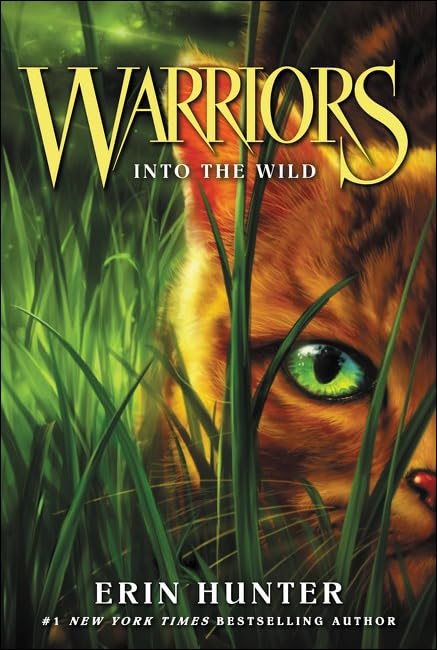
Warriors: Into the Wild by Erin Hunter is the thrilling first installment of one of the bestselling middle-grade series of all time — a richly imagined world of wild cat clans with their own warrior code, traditions, and conflicts, told through the eyes of a house cat named Rusty who leaves his comfortable life to join the wild and discovers he may have a destiny larger than anyone expected. This complete guide covers the book’s reading level, recommended age, content considerations, characters, themes, and books similar to Warriors: Into the Wild, designed for parents, teachers, and students.
For Parents
Warriors: Into the Wild is one of the most powerful reluctant-reader series in existence — a book that routinely turns children who claim they hate reading into children who have consumed dozens of books in a single summer. The cat world is immersive and fully realized, the action is exciting, and the social dynamics of clan life give the series an addictive quality that keeps readers coming back volume after volume. Content concerns are moderate: there is cat-on-cat combat and death that is more intense than a typical gentle animal story. Most parents find it appropriate for readers ages 8 and up, with the strongest fit at ages 9–11.
For Teachers
Warriors works well in grades 4–6 as an independent reading selection, particularly for reluctant readers who have not yet found a series they connect with. The book’s themes — loyalty, identity, the tension between rules and conscience, the nature of courage — are substantive and support classroom discussion. The clan political structure maps naturally onto real-world discussions of community, hierarchy, and what makes a society function. The series has been particularly effective at building reading stamina in readers who find most chapter books uncompelling.
Warriors: Into the Wild at a Glance
Find on Amazon →| Author | Erin Hunter |
| Published | 2003 |
| Grade Level | 4–6 (our assessment) |
| Recommended Age | 8–12 |
| Flesch-Kincaid Grade | 5.2 |
| Word Count | ~68,000 |
| Pages | 272 (standard paperback) |
| Chapters | 25 |
| Genre | Fantasy / animal fiction / adventure |
| Setting | A forest and surrounding territories; a world of wild cat clans |
| Awards | — |
For official Lexile and AR levels, visit Lexile.com or AR BookFinder. ReadingVine provides independent editorial assessments.
What Reading Level Is Warriors: Into the Wild?
Warriors: Into the Wild reads at approximately a 5th-grade word level by standard readability measures (Flesch-Kincaid grade 5.2), placing it solidly in the middle-grade range. Our editorial assessment is grades 4–6 for independent reading, though the series is widely read and loved by strong 3rd-grade readers and frequently serves as the gateway series for reluctant middle school readers who have not yet found their book. Erin Hunter’s prose is clear and action-forward — the world is built through scene and event rather than lengthy description — which makes the book highly accessible even for readers who are still building reading stamina.
The main complexity in Warriors comes from its world-building: Erin Hunter creates four distinct clans — ThunderClan, ShadowClan, WindClan, and RiverClan — each with their own territory, customs, strengths, and political relationships, plus an extensive cast of cat characters who all have clan-specific names. Most editions include a list of characters at the front organized by clan, which is worth consulting as new characters are introduced. Readers who enjoy tracking a large ensemble cast in a richly built world will find this immediately satisfying; readers who prefer smaller casts may find the early chapters require patience as the clan world clicks into place. Once it does, the series becomes remarkably hard to put down. For official Lexile and AR scores, visit Lexile.com or AR BookFinder.
What Age Is Warriors: Into the Wild Appropriate For?
We recommend Warriors: Into the Wild for readers ages 8–12, with the strongest fit at ages 9–11. The series has an exceptionally wide effective age range — strong 2nd- and 3rd-grade readers who love cats and adventure frequently discover it early, while reluctant readers well into middle school find it as the series that finally makes them readers. It is one of the most reliably effective series for readers who love animals, who are drawn to stories with complex social dynamics, or who simply haven’t found a book world they want to live in yet.
Warriors: Into the Wild contains cat-on-cat combat and death that is more intense than most gentle animal fiction. Cats fight, cats are injured, and cats die — including characters that readers have come to care about. The violence is not gratuitous and is handled at a level appropriate for the target age group, but parents of very sensitive younger readers or children who are particularly attached to cats should be aware that the series treats death as a real and present consequence of the world it depicts. The book also contains some cat-on-prey hunting that is described naturalistically. There is no profanity, sexual content, or human violence. A mythology involving cat ancestors and a spiritual realm called StarClan is woven through the series — some parents have questioned this on religious grounds, though it functions as a storytelling device rather than a doctrine.
Warriors has an especially strong track record with reluctant readers — children who have resisted chapter books often respond to the cat perspective with an immediacy they haven’t felt with human protagonists. The social politics of clan life, which can feel abstract in a human story, become riveting when filtered through the animal world, and the series’ enormous cast and long run mean that readers who fall in love with it have essentially unlimited reading material waiting for them.
What Is Warriors: Into the Wild About?
Rusty is a young house cat — a kittypet, in the language of the wild cats — who has always been drawn to the forest beyond his garden fence. When he ventures into the woods one evening, he encounters a young cat from ThunderClan, one of four clans of wild cats who have lived in the forest for generations according to a strict warrior code. ThunderClan’s leader Bluestar, impressed by Rusty’s courage and instinct, offers him the rare chance to leave his domesticated life behind and train as a ThunderClan apprentice. Rusty accepts, takes the apprentice name Firepaw, and steps into a world he barely understands.
Life in ThunderClan is nothing like the comfortable safety of his house. Firepaw must learn to hunt, fight, and navigate a complex social hierarchy — while also earning the trust of cats who are deeply suspicious of a kittypet in their ranks. As he trains and proves himself, he begins to uncover something troubling: ShadowClan, the most feared and aggressive of the four clans, is growing stronger and more threatening under its ruthless new leader Brokenstar, and there may be a traitor inside ThunderClan itself feeding information to the enemy. Firepaw’s loyalty to the warrior code and to his new clan will be tested in ways he could not have anticipated when he first crossed the fence.
“Erin Hunter” is a pen name shared by a team of authors — primarily Kate Cary, Cherith Baldry, and Tui T. Sutherland, working with editor Victoria Holmes who created the original concept — who developed the Warriors world collaboratively. The series has since grown to over eighty books across multiple arcs and spin-off series, making it one of the longest-running and most expansive middle-grade franchises in publishing history. The original six-book arc — called The Prophecies Begin — is the recommended starting point and tells a complete story before the series continues into its subsequent arcs.
Warriors: Into the Wild Characters
Warriors: Into the Wild Themes and Lessons
Warriors: Into the Wild is fundamentally a story about what it means to belong — and what it costs to belong to something that asks you to become someone you weren’t before. Firepaw’s journey from house cat to warrior is a journey of identity: he must let go of one way of being in the world and build another, and the novel is honest about how difficult and disorienting that process is. His house cat origins mark him as an outsider in ways that don’t disappear simply because he has joined the clan, and the warrior code’s demands frequently conflict with his own moral instincts — which are, the novel quietly argues, more reliable than the code in crucial moments.
The series also raises substantive questions about the relationship between rules and conscience. The warrior code is presented as the foundation of clan life — a set of principles that has sustained the clans for generations and gives their society structure and meaning. But Firepaw repeatedly finds situations where following the code to the letter would require him to do something his sense of right and wrong tells him is wrong. Erin Hunter doesn’t resolve this tension cheaply; the code is genuinely valuable and the exceptions are genuinely costly. This makes Warriors a richer ethical text than it might appear on the surface. Discussion questions worth exploring: What does it mean for Firepaw to leave his old identity behind, and does he fully do so? When is it right to break the rules of your community, and when is it wrong? How does Tigerclaw’s respect for the warrior code coexist with his true character? What does StarClan represent for the cats who believe in it?
How Many Pages and Chapters Are in Warriors: Into the Wild?
Warriors: Into the Wild is 272 pages in the standard paperback edition, divided into 25 chapters plus a prologue. The word count is approximately 68,000 words. At an average middle-grade reading pace of around 250 words per minute, most readers in the target age range finish the book in roughly 7–9 hours of total reading time, typically one to two weeks of 30-minute daily sessions — though readers who get fully absorbed frequently move much faster. Most editions include a list of characters organized by clan at the front of the book, which is worth consulting before starting and returning to when new characters are introduced. An allegiances list is also included, and some editions feature a map of the clans’ territories. The series is notable for the way it rewards re-reading: details in the early chapters of the first book take on new significance once readers know where the story is headed.
Books Similar to Warriors: Into the Wild
About Erin Hunter
“Erin Hunter” is a pen name used by a team of authors who collaborate to produce the Warriors series and its related franchises. The original Warriors concept was developed by editor Victoria Holmes, who worked with authors Kate Cary and Cherith Baldry to bring the clan world to life beginning in 2003. Tui T. Sutherland — also the author of the Wings of Fire series under her own name — later joined the team as an additional author. The pen name was chosen to give the series a unified authorial identity across what was planned from the beginning as a long-running franchise. The “Erin Hunter” name has since been used for multiple other animal-focused series including Seekers (about bears), Survivors (about dogs), and Bravelands (about African savanna animals), all produced by variations of the same collaborative team. The Warriors series itself has grown to over eighty books across six main arcs and numerous super editions, novellas, and manga adaptations, making it one of the longest-running and highest-selling middle-grade franchises in publishing history. New readers are consistently advised to start with the original six-book arc — The Prophecies Begin, beginning with Into the Wild — before exploring the later arcs and companion series.
Warriors: Into the Wild: Frequently Asked Questions
What grade level is Warriors: Into the Wild?
By standard readability measures, Warriors: Into the Wild reads at approximately a 5th-grade word level (Flesch-Kincaid grade 5.2). Our editorial assessment is grades 4–6 for independent reading. The prose is clear and action-forward, making it accessible to strong readers as young as 3rd grade. The main complexity comes from the large ensemble cast and four-clan world-building rather than sentence-level difficulty.
Who is Erin Hunter — is it one person or multiple authors?
“Erin Hunter” is a pen name shared by a team of authors who collaborate on the Warriors series, not a single individual. The concept was originated by editor Victoria Holmes, and the books have been written primarily by Kate Cary, Cherith Baldry, and Tui T. Sutherland, among others. The pen name was chosen to give the series a consistent identity across its very long run. This is a common practice for high-volume series in children’s publishing, similar to how the Hardy Boys and Nancy Drew were written by multiple authors under single pen names.
How many Warriors books are there?
The Warriors franchise has grown to over eighty books since 2003, making it one of the longest middle-grade series in existence. The main series is divided into six arcs: The Prophecies Begin (books 1–6), The New Prophecy (books 1–6), Power of Three (books 1–6), Omen of the Stars (books 1–6), Dawn of the Clans (books 1–6), and A Vision of Shadows (books 1–6). There are also numerous Super Editions (longer standalone novels about individual characters), novellas, manga adaptations, and field guides. New readers are strongly advised to start with the original arc — Into the Wild through The Darkest Hour — before exploring further.
What are the four warrior clans?
The four clans of the original Warriors arc each have their own territory, characteristics, and warrior traditions. ThunderClan, whose territory is a dense forest, is the clan Firepaw joins — known for courage and a strong sense of justice. ShadowClan occupies a dark, marshy pine forest and is known for cunning, aggression, and a willingness to bend the warrior code. WindClan lives on open moorland and is known for speed and fierce independence. RiverClan occupies territory near a river and is known for its swimming ability and love of fish. The tensions and alliances between these four clans — and the seasonal gatherings at which they meet under a truce — form the political backdrop of the entire original arc.
What is StarClan?
StarClan is the warrior cats’ equivalent of an afterlife and a spiritual realm — the place where the spirits of deceased warrior cats go after death, from which they can communicate with living cats through dreams and visions and guide medicine cats through prophecy. StarClan functions as the clans’ mythology, religion, and moral authority — the warrior code is understood to be sanctioned by StarClan, and medicine cats serve as intermediaries between the living clans and their warrior ancestors. StarClan is a storytelling device that allows the series to explore questions of honor, legacy, and what we owe to those who came before us without requiring a direct engagement with human religious traditions.
Is Warriors appropriate for a child who loves cats?
Warriors is very often the perfect series for a child who loves cats — the cat world is rendered with genuine affection and attention to feline behavior and instinct, and children who are deeply attached to cats tend to find the clan world immediately compelling. However, parents should be aware that cats in the Warriors world fight, are injured, and die, including characters that readers come to love. For a child who is very sensitive about animal welfare or who has recently lost a pet, it may be worth previewing the first few chapters before sharing.
What order should I read the Warriors books in?
New readers should start with the original six-book arc in order: Into the Wild, Fire and Ice, Forest of Secrets, Rising Storm, A Dangerous Path, and The Darkest Hour. This arc introduces the world, establishes the core characters, and tells a complete story with a satisfying resolution. After finishing the first arc, readers can continue with The New Prophecy arc, which introduces new protagonists and a new challenge, or explore the Super Editions to learn the backstories of beloved characters from the first arc.
Is Warriors similar to Wings of Fire?
Yes — Warriors and Wings of Fire are the two closest comparisons in middle-grade fiction, and fans of one series reliably love the other. Both are set in worlds with no humans, told entirely from non-human animal perspectives, feature multiple competing tribes or clans with their own cultures and political tensions, center on a young protagonist navigating a world larger and more complex than they expected, and have generated enormous, devoted readerships among the same demographic. The key differences: Warriors is grounded in a realistic forest setting with naturalistic cat behavior, while Wings of Fire is a full secondary-world fantasy with invented geography and dragon-specific magic. Warriors tends to appeal particularly to readers who love cats; Wings of Fire to readers who love dragons.