
 = Partner Site
Wings of Fire: The Dragonet Prophecy Reading Level: A Complete Guide
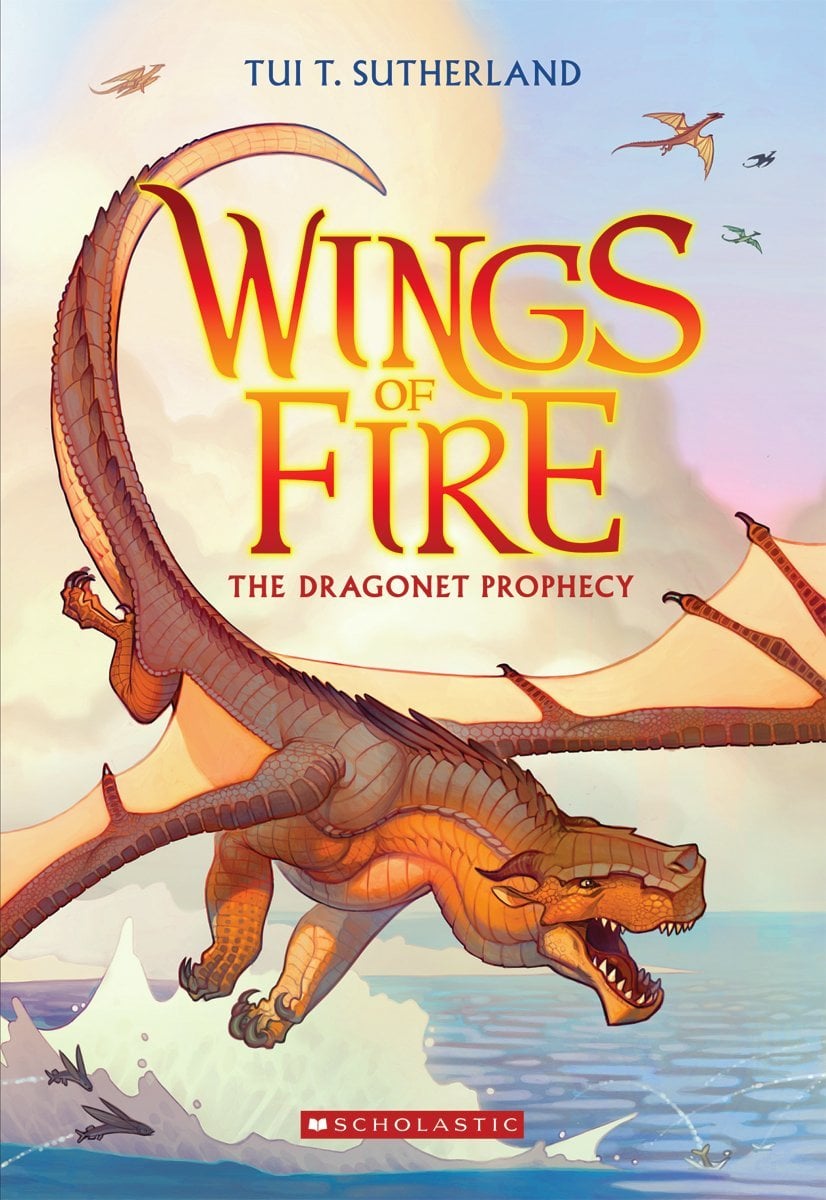
Wings of Fire: The Dragonet Prophecy by Tui T. Sutherland is the action-packed first installment of one of the most popular middle-grade fantasy series of the past decade — a richly imagined dragon world told entirely from a dragon’s point of view, following five young dragons raised in secret beneath a mountain who are destined by prophecy to end a war that has consumed their world for generations. This complete guide covers the book’s reading level, recommended age, content considerations, characters, themes, and books similar to Wings of Fire: The Dragonet Prophecy, designed for parents, teachers, and students.
For Parents
Wings of Fire is one of the most reliable series recommendations for upper elementary readers — particularly for reluctant readers who have resisted chapter books, and for children who love animals, fantasy, and adventure. The dragon perspective is fresh and thoroughly realized, the action is exciting without being gratuitously violent, and the series’ themes of friendship, free will, and questioning authority are handled at exactly the right level for the target age group. Most parents find it appropriate for readers ages 8 and up, and the series has a well-earned reputation for turning non-readers into voracious ones.
For Teachers
Wings of Fire works well in grades 4–6 as an independent reading choice, a literature circle selection, or a read-aloud for classrooms of reluctant readers. The book’s themes — prophecy and free will, loyalty versus obedience, the cost of war — are rich discussion material, and the dragon world’s tribal politics map neatly onto real-world concepts of conflict, alliance, and identity. The series has been particularly effective at reaching readers who have not yet found a book they love, making it an invaluable classroom tool. A graphic novel adaptation of the first volume is also available for readers who prefer that format.
Wings of Fire: The Dragonet Prophecy at a Glance
Find on Amazon →| Author | Tui T. Sutherland |
| Published | 2012 |
| Grade Level | 4–6 (our assessment) |
| Recommended Age | 8–12 |
| Flesch-Kincaid Grade | 5.4 |
| Word Count | ~52,000 |
| Pages | 295 (standard paperback) |
| Chapters | 28 |
| Genre | Fantasy / adventure |
| Setting | Pyrrhia, a dragon continent; a world with no humans |
| Awards | New York Times bestseller |
For official Lexile and AR levels, visit Lexile.com or AR BookFinder. ReadingVine provides independent editorial assessments.
What Reading Level Is Wings of Fire: The Dragonet Prophecy?
Wings of Fire: The Dragonet Prophecy reads at approximately a 5th-grade word level by standard readability measures (Flesch-Kincaid grade 5.4), placing it solidly in the middle-grade range. Our editorial assessment is grades 4–6 for independent reading, though the series is widely and enthusiastically read by strong 3rd-grade readers and, at the other end, by reluctant middle schoolers who are finally finding a series that captures them. Sutherland’s prose is clear, vivid, and fast-paced — she prioritizes momentum and accessibility over stylistic complexity — which makes the book a reliable choice for readers who are still building confidence with longer chapter books.
The primary complexity in Wings of Fire comes not from prose difficulty but from world-building: Sutherland creates a fully realized dragon continent with seven distinct dragon tribes, each with their own abilities, territories, cultures, and political allegiances. A map and guide to the tribes is included in most editions. Readers who enjoy tracking the details of a richly built world will find this deeply satisfying; readers who prefer simpler settings may occasionally find the tribe taxonomy a lot to keep track of in the early chapters. Once the world clicks into place, however, the series becomes nearly impossible to put down, and its devoted readership — which runs into the tens of millions of books sold — is a reliable indicator of how effectively it pulls readers in and keeps them. For official Lexile and AR scores, visit Lexile.com or AR BookFinder.
What Age Is Wings of Fire Appropriate For?
We recommend Wings of Fire: The Dragonet Prophecy for readers ages 8–12, with the strongest fit at ages 9–11. The series has an unusually wide effective age range — strong 2nd- and 3rd-grade readers frequently pick it up early and love it, and reluctant readers well into middle school regularly discover it as the series that finally makes them readers. It is a widely recommended series in the fantasy canon for upper elementary readers.
Wings of Fire contains dragon-on-dragon violence — battles, attacks, and deaths — that is more intense than a typical gentle fantasy but handled at a level appropriate for the target age range. Dragons are killed in combat, including in ways that are emotionally significant to the dragonet protagonists, and the threat of death is real and sustained throughout. The book opens with the dragonets imprisoned and escaping under dangerous circumstances. There is no human violence, no profanity, and no sexual content. The war that has consumed the dragon world for generations is depicted with appropriate moral complexity — there is no single clean villain, and all three warring queens have done terrible things — which may prompt discussion about the nature of war and leadership. Parents of very sensitive younger readers should be aware that the dragon deaths can be upsetting, particularly for readers who become attached to characters.
Wings of Fire has a particularly strong record with reluctant readers — children who have resisted chapter books or struggled to find a series they connect with. The dragon protagonist perspective, the action pacing, and the genuine emotional stakes of the dragonets’ situation tend to pull in readers who have been unmoved by more traditionally structured middle-grade novels. Librarians and teachers frequently cite it as one of the first series that certain readers have ever chosen to finish voluntarily.
What Is Wings of Fire: The Dragonet Prophecy About?
The continent of Pyrrhia is at war. Three dragon queens each claim the right to rule all dragonkind, and their war has raged for decades, consuming countless dragon lives across all seven tribes. A prophecy says that five dragonets — one from five of the seven tribes — will hatch under a blood-red moon, be raised together in secret, and ultimately choose the next queen of the dragons and end the war. For six years, five dragonets have been raised in a deep cave beneath a mountain by a group called the Talons of Peace, who believe they are fulfilling the prophecy. Clay the MudWing, Tsunami the SeaWing, Glory the RainWing, Starflight the NightWing, and Sunny the SandWing have known nothing but the cave, their guardians, and each other.
The story is told from Clay’s perspective — a big, gentle, endlessly good-natured MudWing who has been labeled slow and clumsy by his guardians but whose loyalty and warmth are the glue that holds the group together. When a dramatic escape attempt goes wrong and the dragonets find themselves fleeing both the Talons who raised them and the warring queens who want to use or destroy them, they begin to discover the truth about the war, the prophecy, and their own identities. Nothing about their situation is as simple as their guardians told them — and the question of whether five young dragons can really end a war they didn’t start, and whether they even want to, drives the entire arc of the first book and the series beyond it.
Tui T. Sutherland — a pseudonym for Thea Sutherland, who writes the series under her pen name — conceived the Wings of Fire world as a fully realized alternative to the human-centric fantasy tradition, asking what it would feel like to be inside a dragon’s head rather than watching one from the outside. The series has since grown to fifteen main-arc books across three arcs, plus a companion series called Legends and a separate arc called The Lost Continent. The first five books, following the original dragonets, form a complete and satisfying story arc.
Wings of Fire: The Dragonet Prophecy Characters
Wings of Fire Themes and Lessons
The central question of Wings of Fire — one that runs through all fifteen books in the main series — is whether the dragonets are obligated to fulfill the prophecy that was written about them before they were born, or whether they have the right to choose their own path. This is a remarkably sophisticated question to anchor a series aimed at 8-to-12-year-olds, and Sutherland never simplifies it. The dragonets didn’t ask to be part of the prophecy, didn’t choose the roles assigned to them, and increasingly question whether the Talons of Peace — who are ostensibly the good side — are actually any better than the queens they oppose. The first book is a sustained argument that being told you have a destiny doesn’t mean you have to accept it, and that young people have both the right and the responsibility to think for themselves.
The war itself is depicted with genuine moral complexity. None of the three claimant queens is simply evil; all of them have reasons for what they do and followers who believe in them, and the suffering the war causes falls on ordinary dragons who had no say in starting it. This makes Wings of Fire one of the few middle-grade series that treats war as genuinely tragic rather than straightforwardly exciting — the action is exciting, but the cost is always visible. Discussion questions worth exploring: Do the dragonets have an obligation to fulfill the prophecy? What makes someone a good leader in this world? How does Glory’s experience of being underestimated shape her character? What does the series suggest about the relationship between power and responsibility?
How Many Pages and Chapters Are in Wings of Fire: The Dragonet Prophecy?
Wings of Fire: The Dragonet Prophecy is 295 pages in the standard paperback edition, divided into 28 chapters, plus a prologue. The word count is approximately 52,000 words — a full-length middle-grade novel that reads considerably faster than its page count suggests, thanks to Sutherland’s propulsive pacing and the short, action-forward chapters that rarely run longer than 10 pages. Most readers in the target age range finish the book in 5–7 hours of total reading time — typically one to two weeks of 30-minute daily reading sessions, though readers who get pulled in frequently finish it in a long weekend. Most editions include a map of the continent of Pyrrhia and a guide to the seven dragon tribes at the back, both of which are worth consulting before or during reading to help orient new readers in the world. A graphic novel adaptation illustrated by Mike Holmes is also available and covers the same story in a format that works particularly well for visual learners and readers who prefer that medium.
Books Similar to Wings of Fire: The Dragonet Prophecy
About Tui T. Sutherland
Tui T. Sutherland is the pen name of Thea Sutherland, an American author born in Venezuela and raised across several countries before settling in the United States. She worked for years as an editor at a children’s publishing house before turning to writing full time, and her editorial background is evident in the precise pacing and structural confidence of her storytelling. She had published several other series under both her pen name and her given name before Wings of Fire, but nothing that prepared either her or her publisher for the scale of the series’ success. Wings of Fire: The Dragonet Prophecy was published in 2012 and quickly became one of the bestselling middle-grade series in the country, eventually surpassing 40 million copies sold across the series globally. The main series currently runs to fifteen books across three arcs, with additional companion books in the Legends and Lost Continent sub-series. Sutherland has said that she wanted to write a fantasy series that took the dragon perspective completely seriously — not as a backdrop or a vehicle for human stories, but as the actual subject of the fiction — and the result has introduced tens of millions of young readers to the pleasures of immersive secondary-world fantasy. She lives in Massachusetts with her family.
Wings of Fire: The Dragonet Prophecy: Frequently Asked Questions
What grade level is Wings of Fire: The Dragonet Prophecy?
By standard readability measures, Wings of Fire: The Dragonet Prophecy reads at approximately a 5th-grade word level (Flesch-Kincaid grade 5.4). Our editorial assessment is grades 4–6 for independent reading. The prose is clear and accessible, the chapters are short and action-forward, and the book is widely read and enjoyed by strong readers as young as 3rd grade. The main complexity comes from the multi-tribe world-building rather than prose difficulty.
How many books are in the Wings of Fire series?
The Wings of Fire main series currently runs to fifteen books across three arcs. The first arc, following the original five dragonets, runs from book 1 (The Dragonet Prophecy) through book 5 (The Brightest Night) and tells a complete story with a satisfying resolution. The second arc, called the Jade Mountain Prophecy, runs from books 6 through 10 and follows a new set of protagonists. The third arc, The Lost Continent Prophecy, runs from books 11 through 15. There are also companion books in the Wings of Fire Legends series (standalone stories about historical figures in the dragon world) and a separate companion arc. Graphic novel adaptations of the early books are also available. New readers can start with book 1 and read as far as their interest takes them — the first arc works as a complete story on its own.
What are the seven dragon tribes in Wings of Fire?
Pyrrhia, the dragon continent, is home to seven tribes: MudWings (large, sturdy, fire-breathing dragons who live in swamps), SeaWings (aquatic dragons who can breathe underwater and glow with bioluminescent scales), SkyWings (fast, powerful fliers who live in mountains), SandWings (desert dragons with venomous barbed tails), RainWings (colorful, camouflaging jungle dragons who can shoot blinding venom), IceWings (artic dragons with freezing breath and rigid social hierarchies), and NightWings (mysterious, secretive dragons with rumored psychic abilities). Each tribe has a distinctive set of abilities, a home territory, and a culture, and the political relationships between them are central to the series’ world-building and plot.
Is there a Wings of Fire graphic novel?
Yes. The Wings of Fire graphic novel series, adapted by Barry Deutsch and illustrated by Mike Holmes, covers the same story as the prose novels in graphic format. The first graphic novel adapts The Dragonet Prophecy, and additional volumes follow the series. Many readers — particularly visual learners and those who prefer graphic formats — find the graphic novels an ideal entry point into the Wings of Fire world, and some readers enjoy both formats. The graphic novels are appropriate for the same age range as the prose books.
Is Wings of Fire appropriate for a 3rd grader?
Strong 3rd-grade readers frequently enjoy Wings of Fire, and the series has a devoted following in that age group. The word-level difficulty is manageable for confident upper-elementary readers, and the dragon perspective and action pacing are enormously appealing to younger readers who love fantasy and adventure. The main content consideration for younger readers is the dragon-on-dragon violence — dragons are killed in combat — which is handled at a level appropriate for most 9-year-olds but may be intense for very sensitive younger readers. Parents of 3rd graders who are sensitive to conflict or death in stories may want to preview the first few chapters before sharing.
Which dragonet’s perspective is each book told from?
Each of the five books in the first arc is narrated by a different dragonet, giving readers a deep perspective on each of the five main characters. Book 1 (The Dragonet Prophecy) is narrated by Clay the MudWing. Book 2 (The Lost Heir) is narrated by Tsunami the SeaWing. Book 3 (The Hidden Kingdom) is narrated by Glory the RainWing. Book 4 (The Dark Secret) is narrated by Starflight the NightWing. Book 5 (The Brightest Night) is narrated by Sunny the SandWing. This rotating perspective structure is one of the series’ great strengths — it lets readers understand each character from the inside and see the same events from multiple points of view.
Is there a Wings of Fire TV show or movie?
A Wings of Fire animated series was announced and is in development with Netflix, with the involvement of Ava DuVernay as a producer. As of this writing the series had not yet been released. Given the scale of the books’ popularity, the adaptation has generated significant anticipation. Check current entertainment news sources for the latest updates on its release status.
Why is Wings of Fire so popular with reluctant readers?
Wings of Fire has an unusually strong track record with children who have resisted chapter books — a phenomenon that librarians, teachers, and parents have noted consistently since the series launched. Several factors contribute: the non-human protagonist perspective removes the self-consciousness that some reluctant readers feel about identifying with characters, the action is immediate and the stakes are clear from the first chapter, the chapters are short enough to give frequent stopping points and a sense of accomplishment, and the world-building is delivered through action rather than description. Crucially, the dragonets are genuinely funny and emotionally relatable despite being dragons — and readers who find them at the right moment frequently go on to read all fifteen books, making Wings of Fire one of the most effective series for building reading stamina in the upper elementary grades.