
 = Partner Site
Gregor the Overlander Reading Level: A Complete Guide
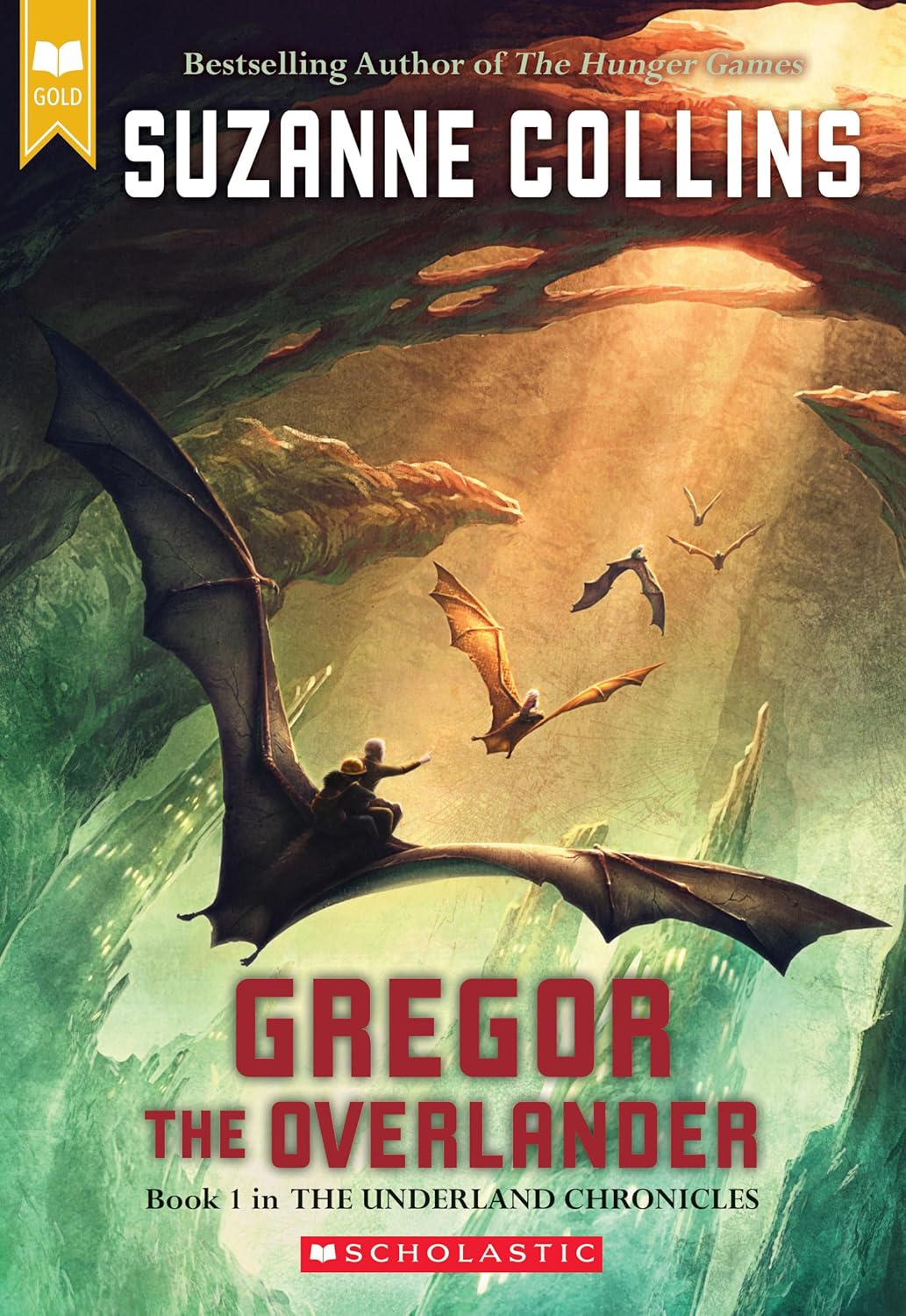
Gregor the Overlander by Suzanne Collins is the first novel in the Underland Chronicles — a dark, richly imagined fantasy series that predates The Hunger Games by several years and that reveals, in retrospect, exactly the writer Collins was becoming: someone with an extraordinary gift for building worlds with genuine stakes, for writing child protagonists who carry adult-sized burdens with grace and without sentimentality, and for embedding serious questions about war, loyalty, and sacrifice inside narratives that move at thriller speed. When eleven-year-old Gregor falls through a grate in his apartment building’s laundry room, he lands in the Underland — a vast subterranean world beneath New York City, lit by a phosphorescent glow, inhabited by giant cockroaches, bats, spiders, and rats, and populated by a human civilization called the Regalians who have lived underground for centuries. What begins as a rescue mission to find Gregor’s missing father becomes something considerably larger: a prophesied quest, a war long in the making, and a boy who must decide what he is willing to do for the people — and creatures — who depend on him. Darker and more ambitious than most middle grade fantasy, Gregor the Overlander is a novel that respects its readers enough to tell them the truth about what courage costs. This complete guide covers the reading level, age appropriateness, themes, characters, and everything parents and teachers need to know about this essential series opener.
For Parents
Gregor the Overlander is best suited for readers ages 9-12, with the caveat that it is darker in tone and more emotionally intense than most middle grade fantasy at this level. Collins does not sanitize the stakes — characters die, war is depicted with genuine consequences, and the moral questions the novel raises about violence and prophecy are real rather than decorative. Parents who want an adventurous, intellectually serious fantasy for a strong reader in this range will find it exceptional. Parents of more sensitive readers in the lower end of the age range may want to preview it first.
For Teachers
Well suited to grades 4-7, Gregor the Overlander is particularly valuable for teaching the craft of world-building — how Collins constructs the Underland’s ecology, politics, and history through what characters reveal rather than what the narrator explains. It also opens rich discussions about prophecy and free will, the ethics of war, what it means to be a hero when heroism has costs, and how the same conflict looks entirely different depending on whose side you’re on. The novel’s treatment of the rat-Regalian conflict as a war with history and grievances on both sides is one of its most teachable qualities.
Gregor the Overlander at a Glance
Find on Amazon →| Author | Suzanne Collins |
| Published | 2003 |
| Grade Level | 4-6 (our assessment) |
| Recommended Age | 9-12 |
| Flesch-Kincaid Grade | 5.1 |
| Word Count | ~54,000 |
| Pages | 311 (standard paperback) |
| Chapters | 26 |
| Genre | Fantasy / adventure / coming-of-age |
| Setting | New York City and the Underland, a vast subterranean world beneath the city, present day |
| Awards | New York Public Library Best Books for Reading and Sharing |
For official Lexile and AR levels, visit Lexile.com or AR BookFinder. ReadingVine provides independent editorial assessments.
What Reading Level Is Gregor the Overlander?
Gregor the Overlander reads at approximately a 4th-6th grade level by our editorial assessment, with a Flesch-Kincaid grade level of around 5.1. That score is reasonably accurate as a measure of word and sentence complexity but significantly undersells the novel’s emotional and thematic demands. Collins writes with clarity and directness — her prose is never obscure or decorative — but she uses that clarity in service of ideas and situations that are considerably more serious than most fiction at this reading level. The novel’s questions about war, sacrifice, and whether a prophecy can be refused are not simplified for a young audience; they are presented with the honesty of a writer who believes her readers can handle the truth.
The world-building is dense in the best sense — the Underland has a fully realized ecology, history, and political situation that Collins reveals gradually and efficiently, trusting readers to build their understanding of it from context rather than explanation. Readers who engage with the world fully will find it considerably more immersive and more demanding than the F-K score suggests. The novel moves quickly — Collins is one of the most propulsive plotters in the genre — and the pacing carries developing readers forward even through the more complex world-building passages.
The book is most commonly recommended for grades 4-6, with the series growing darker and more demanding through grades 5-7 as it progresses. For official Lexile and Accelerated Reader scores, visit Lexile.com or AR BookFinder.
What Age Is Gregor the Overlander Appropriate For?
We recommend Gregor the Overlander for readers ages 9-12. It is darker than most middle grade fantasy in the same grade range, and parents of readers at the lower end of the age range should be aware of the content note below before recommending it.
Gregor the Overlander is a fantasy novel with genuine stakes, and Collins does not soften those stakes for her audience. Characters die in this novel — not all of them villains, not all of them anticipated — and their deaths are handled with weight rather than deflection. The novel depicts battle and combat between the quest party and hostile creatures; the violence is not graphic by adult standards but is more substantive than the typical middle grade fantasy. The Underland’s ecosystem — giant cockroaches, bats, spiders, and rats as sentient civilizations — may be unsettling for younger or more sensitive readers, though Collins renders the non-human characters with enough individuality and dignity that the initial strangeness tends to give way to genuine investment. The novel’s central situation — a boy responsible for his two-year-old sister in a dangerous underground world — carries real emotional weight that younger readers may find intense. The rat civilization and its conflict with the Regalians is depicted as a war with history and grievances on both sides, which means the novel does not offer the moral simplicity of a clear villain — a quality that is one of its greatest strengths and one that requires a reader old enough to hold ambiguity. No sexual content, no strong language. Best for readers 9 and up, with parental preview recommended for readers at the lower end of the range.
The series grows progressively darker across its five volumes — Gregor the Overlander is the most accessible entry point, and parents who want to assess the series’ fit for their child will find the first novel a reliable indicator of what follows, amplified. Readers who connect with the first book tend to find the series among the most rewarding available in middle grade fantasy, precisely because Collins takes the stakes seriously throughout.
What Is Gregor the Overlander About?
Gregor is eleven years old, living in a New York City apartment with his mother, grandmother, and two younger sisters. His father disappeared two years ago — walked out one day and never came back, or so the family has been told. Gregor is a quiet, responsible boy who has taken on more than his share of the household’s weight in his father’s absence, and who does not entirely believe the official story about where his father went.
The answer arrives when Gregor’s two-year-old sister Boots falls through a grate in the laundry room of their apartment building and disappears. Gregor follows immediately and finds himself falling — a long, impossible fall — into the Underland: a vast subterranean world of caverns and waterways lit by phosphorescent organisms, entirely unknown to the surface world, and inhabited by giant cockroaches, bats, spiders, and rats alongside a human civilization called the Regalians, descendants of Elizabethan-era English settlers who followed a man named Bartholomew of Sandwich underground centuries ago and never returned.
The Regalians recognize Gregor immediately. He fits the description in a prophecy written by Bartholomew of Sandwich — a prophecy called “The Prophecy of Gray” that speaks of an Overlander who will come and lead a quest to find something lost. The lost thing, Gregor will discover, is his father — alive in the Underland, prisoner of the rat civilization whose king, the Bane’s prophecy-driven ambitions, has pushed the Underland toward war. The Regalians need Gregor to fulfill the prophecy. Gregor needs to find his father. Boots, who has befriended every giant cockroach she has encountered with the serene confidence of a two-year-old who does not understand danger, comes along.
The quest assembles: Gregor and Boots, a Regalian girl named Luxa and her giant bat Henry, two cockroaches Boots has adopted, and a reluctant addition or two that the prophecy requires. Their destination is the rat lands — the most dangerous territory in the Underland, ruled by a rat king named Gorger whose grievances against the Regalians run deep and whose willingness for war runs deeper. The journey is dangerous in every direction: the Underland’s geography is hostile, its politics are complex, and the prophecy that is supposed to guide the quest contains elements that Gregor does not fully understand until it is too late to make a different choice.
Collins builds the Underland’s world with the confidence of a writer who has thought it through completely — its ecology, its history, its politics, and the specific way that centuries of underground living have shaped the Regalian culture and their relationships with the other species. The novel’s greatest achievement is making the non-human civilizations feel genuine rather than allegorical — the rats are not simply evil, the cockroaches are not simply comic, and the bats are not simply transportation. Each species has its own dignity, its own logic, and its own relationship to the conflict that is coming. Gregor, as an Overlander with no stake in the Underland’s centuries of grievance, is the reader’s guide to a world that is more complicated than any side in it wants to admit.
Gregor the Overlander Characters
Is Gregor the Overlander Banned?
Gregor the Overlander has not been challenged or banned and does not appear on major lists of challenged books. It is widely available in school and public libraries and is consistently recommended by educators and librarians as a serious, ambitious middle grade fantasy. The series’ darker elements have occasionally prompted parental concern — primarily around the violence and death in the later volumes — but the first novel is broadly regarded as appropriate for its recommended age range. Collins’s more widely known work, The Hunger Games, has drawn considerably more challenge attention; the Underland Chronicles have largely avoided controversy.
Gregor the Overlander Themes and Lessons
The central theme of Gregor the Overlander — and the theme that most clearly anticipates The Hunger Games — is war and what it costs. The conflict between the Regalians and the rat civilization is not presented as a simple good-versus-evil struggle. The rats have grievances that are real. The Regalians have done things that justify those grievances. The war that is coming has been building for centuries on both sides, and Gregor — arriving from the surface with no stake in the history — is one of the few characters positioned to see it clearly. Collins does not resolve this ambiguity by the end of the first novel; she deepens it, establishing the Underland Chronicles as a series genuinely interested in the question of what war is for and whether it can be avoided, rather than one that uses war as an exciting backdrop for individual heroism.
Prophecy and free will are the series’ second great themes, introduced in the first novel and developed across all five. Bartholomew of Sandwich’s prophecies are real — they predict events with genuine accuracy — but they are not simple instructions, and Gregor’s relationship to the prophecy he is supposed to fulfill is one of the series’ most productive tensions. The prophecy names him as the Overlander but does not tell him what he must sacrifice to complete his role. The question of whether a prophecy can be refused, whether knowing what you are supposed to do obligates you to do it, and what you owe to a world that needs you but did not ask your consent — these are the questions the series asks of Gregor and of its readers.
Loyalty and its complications are the novel’s third great theme, embodied in the relationships between the quest members and tested by the revelations that arrive in the novel’s final sections. Collins builds trust between characters — and between reader and character — with considerable care, which means that the moments when that trust is complicated or broken land with genuine force. The novel’s treatment of betrayal is honest about its costs without being melodramatic about them, which is characteristic of Collins at her best.
Discussion starters for classrooms: Why do the rats and the Regalians hate each other? Is either side entirely wrong? What does it mean to fulfill a prophecy — does knowing what you’re supposed to do mean you have to do it? What makes Gregor brave — is it the absence of fear or the presence of something stronger? How does Collins use the Underland’s ecology to say something about the surface world? Why is Boots so important to the novel?
How Many Pages and Chapters Are in Gregor the Overlander?
The standard paperback edition of Gregor the Overlander is 311 pages, divided into 26 chapters averaging around twelve pages each. The word count is approximately 54,000 words. The chapters move quickly — Collins is one of the most propulsive plotters available at this level — and the novel’s 311 pages tend to pass faster than most comparable fantasy novels of similar length. The world-building is front-loaded but efficient, and the quest begins early enough that momentum is established well before the midpoint.
For readers in the target age range of 9-12, expect a reading time of roughly 5-7 hours for engaged readers. The Underland Chronicles series consists of five novels: Gregor the Overlander (2003), Gregor and the Prophecy of Bane (2004), Gregor and the Curse of the Warmbloods (2005), Gregor and the Marks of Secret (2006), and Gregor and the Code of Claw (2007). The series grows progressively darker and more demanding across its five volumes — the final novel is significantly more intense than the first — and readers and parents should be aware that committing to the series means following Gregor into territory that is genuinely serious about the costs of war and heroism. The series is complete and fully resolved; Collins wrote it with a clear ending in mind, and the fifth novel provides a conclusion that is earned, honest, and affecting. Readers who love The Hunger Games and want to explore Collins’s earlier work will find the Underland Chronicles both recognizably hers and distinctively different — written for a slightly younger audience but not, in any meaningful sense, simpler.
Books Similar to Gregor the Overlander
About Suzanne Collins
Suzanne Collins was born in 1962 in Hartford, Connecticut, and grew up in a military family — her father was a U.S. Air Force officer and Vietnam veteran who made a deliberate effort to educate his children about war and its realities, an influence that is visible throughout everything Collins has written. She studied theater and drama at Indiana University and New York University before working as a television writer, including for children’s programming on Nickelodeon. The Underland Chronicles, launched with Gregor the Overlander in 2003, was her first major work of fiction and already displayed the qualities that would define The Hunger Games: a gift for propulsive plotting, a serious engagement with the costs of violence, and an instinct for the specific emotional truth of a young person navigating circumstances far beyond their years. Collins has spoken about the Underland Chronicles as rooted partly in Alice in Wonderland — the portal fantasy of a child falling into another world — and partly in her father’s teachings about war: that it has causes and consequences and that understanding those causes and consequences is part of being a citizen of the world. The Hunger Games (2008) made her one of the most widely read authors of the 21st century; the Underland Chronicles, read in its light, reveals the consistency of her preoccupations and the seriousness with which she has always brought them to her work.
Gregor the Overlander: Frequently Asked Questions
What reading level is Gregor the Overlander?
Gregor the Overlander has a Flesch-Kincaid grade level of approximately 5.1, which reasonably reflects its word and sentence complexity but significantly undersells its emotional and thematic demands. Collins writes with clarity and directness, but uses that clarity in service of ideas — war, prophecy, sacrifice, the enemy’s perspective — that are considerably more serious than most fiction at this level. The world-building is dense and efficiently rendered, and readers who engage with it fully will find the novel considerably more immersive than the score suggests. Most commonly recommended for grades 4-6 (ages 9-12). For official Lexile and AR scores, visit Lexile.com or AR BookFinder.
What is the Underland in Gregor the Overlander?
The Underland is a vast subterranean world beneath New York City — a network of caverns and waterways lit by phosphorescent organisms, entirely unknown to the surface world. It is home to several civilizations: the Regalians, a human society descended from Elizabethan-era English settlers who followed Bartholomew of Sandwich underground centuries ago; the rat civilization, the Regalians’ primary adversaries; giant bats who bond with Regalian riders; giant cockroaches; giant spiders; and various other oversized fauna. The Underland has its own history, politics, ecology, and prophetic tradition, all of which Collins reveals gradually and efficiently across the series.
Is Gregor the Overlander related to The Hunger Games?
They are written by the same author but are separate series with no shared characters or world. The Underland Chronicles predates The Hunger Games by five years and is written for a somewhat younger audience — grades 4-6 versus grades 6-9. What they share is Collins’s authorial voice: the propulsive plotting, the serious engagement with war and its costs, the protagonist who carries adult burdens without self-pity, and the refusal to offer comfortable resolutions. Readers who loved The Hunger Games and want to explore Collins’s earlier work will find the Underland Chronicles recognizably hers; readers who love the Underland Chronicles and are ready for older, darker material will find The Hunger Games a natural progression.
Why are the animals so big in the Underland?
Collins does not provide a scientific explanation for the Underland’s oversized fauna within the first novel, and the series as a whole treats the giant creatures as an established fact of the world rather than a puzzle to be solved. The ecological reasoning — that a lightless subterranean environment might produce different evolutionary pressures than the surface world — is implicit rather than stated, and Collins is more interested in the political and cultural relationships between the species than in the biology that produced them. The giant cockroaches, bats, spiders, and rats are rendered as fully realized civilizations with their own cultures, loyalties, and moral complexity rather than as monsters or novelties.
How many books are in the Underland Chronicles?
The Underland Chronicles consists of five novels: Gregor the Overlander (2003), Gregor and the Prophecy of Bane (2004), Gregor and the Curse of the Warmbloods (2005), Gregor and the Marks of Secret (2006), and Gregor and the Code of Claw (2007). The series is complete and fully resolved — Collins wrote it with a clear ending in mind, and the fifth novel provides a conclusion that is earned and honest. The series grows progressively darker across its five volumes, and parents should be aware that the later books are considerably more intense than the first. The first novel is the most accessible entry point and a reliable indicator of what follows, amplified.
Is Gregor the Overlander too scary for younger readers?
It depends on the reader. The novel is darker than most middle grade fantasy in its grade range — characters die, the violence has real consequences, and the moral questions about war and betrayal are genuine rather than decorative. Readers who handle stories like Hatchet, The Lion, the Witch and the Wardrobe, or A Wrinkle in Time without distress will generally find Gregor the Overlander appropriate. The giant insects and rodents may be unsettling for readers with relevant phobias, though Collins renders them with enough individuality and dignity that the initial strangeness tends to give way to investment rather than fear. Parents of readers at the lower end of the recommended age range (9-10) may want to preview the novel before recommending it independently.
What grade is Gregor the Overlander typically assigned in?
Most commonly recommended for independent reading in grades 4, 5, and 6, and occasionally taught as a classroom text in grades 5-7. It is particularly well suited to units on world-building and fantasy genre conventions, on the ethics of war and the complexity of conflict when both sides have genuine grievances, and on prophecy as a narrative device and what it says about fate and free will. It pairs naturally with The Lion, the Witch and the Wardrobe for a portal fantasy unit, and with The Hunger Games for older students exploring Collins’s preoccupations across her work.