
 = Partner Site
Coraline Reading Level: A Complete Guide
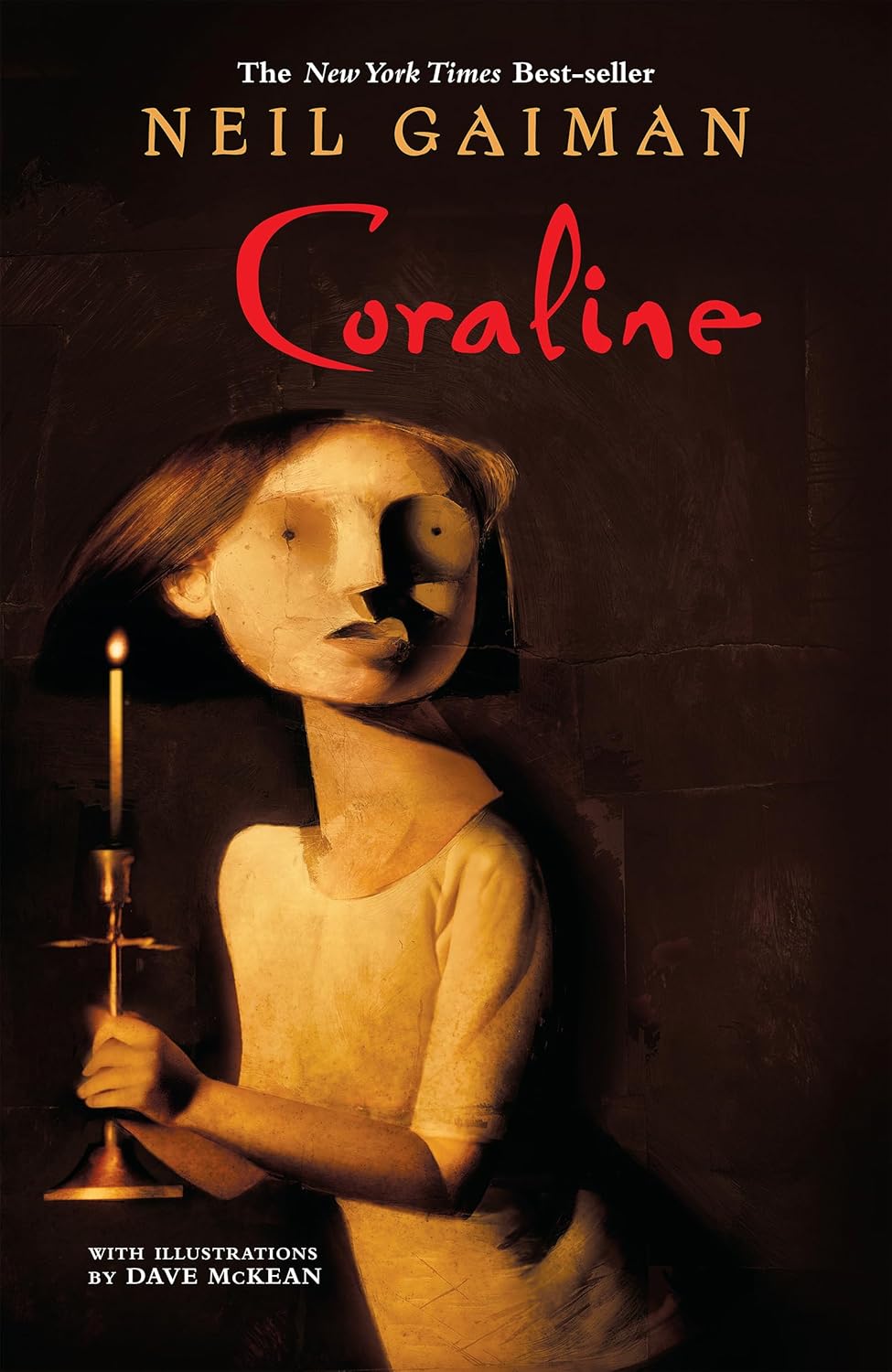
Coraline by Neil Gaiman is a darkly inventive novella about a girl who discovers a secret door in her new home — and a parallel world that seems too good to be true. This complete guide covers Coraline’s reading level, recommended age, content considerations, characters, themes, and books similar to Coraline, designed for parents, teachers, and students from middle school through high school.
For Parents
Coraline is a genuinely unsettling story aimed at older middle-grade and early high school readers. The horror elements are psychological rather than graphic, but the book deals with themes of neglect, manipulation, and danger that may disturb sensitive younger readers. Most parents find it appropriate around ages 10–14, though some may want to preview it before sharing with children on the younger end.
For Teachers
Coraline is a rich text for teaching Gothic literature, narrative structure, symbolism, and the hero’s journey. Its brevity (around 30,000 words) makes it manageable for a one- to two-week unit. It pairs well with discussions of fairy tale conventions and works effectively alongside other horror or fantasy texts for grades 5–10. Gaiman’s precise, literary prose rewards close reading.
Coraline at a Glance
Find on Amazon →| Author | Neil Gaiman |
| Published | 2002 |
| Grade Level | 4–6 (our assessment); suitable through grade 10 |
| Recommended Age | 9–15 |
| Flesch-Kincaid Grade | 5.1 |
| Word Count | ~30,000 |
| Pages | 162 (standard paperback) |
| Chapters | 13 |
| Genre | Dark fantasy / Gothic horror / Children’s fiction |
| Setting | A sprawling old house divided into flats, England (unnamed town) |
| Awards | Hugo Award, Nebula Award, Bram Stoker Award (awarded 2003) |
For official Lexile and AR levels, visit Lexile.com or AR BookFinder. ReadingVine provides independent editorial assessments.
What Reading Level Is Coraline?
Coraline reads at approximately a 5th-grade word level by standard measures such as Flesch-Kincaid, which places it comfortably within the middle-grade range. Our editorial assessment is grades 4–6 for independent reading, though the book’s thematic depth, psychological complexity, and Gothic atmosphere make it equally rewarding — and arguably better suited — for readers through grade 10. We recommend it most strongly for grades 5–8 as a core classroom text, and for grades 9–10 as an accessible entry point to Gothic and horror literary traditions.
What makes Coraline read above its word-level difficulty is Gaiman’s highly literary prose style: careful sentence construction, deliberate pacing, sustained dread, and layered symbolic imagery. A 4th-grade reader may decode the words with ease but miss the full thematic resonance. The emotional complexity — particularly around parental neglect and the seduction of false comfort — lands with more impact for readers in middle school and beyond. For official Lexile and AR scores, check Lexile.com or AR BookFinder.
What Age Is Coraline Appropriate For?
We recommend Coraline for readers ages 9–15, with ages 10–13 being the sweet spot. Most children in 5th through 8th grade can engage meaningfully with the story without being overwhelmed by the horror elements. However, younger or more sensitive readers — even at age 9 or 10 — may find the atmosphere and imagery genuinely frightening. This is intentional on Gaiman’s part: Coraline is a horror story for children, and it takes that seriously.
Coraline contains sustained psychological horror and dread, including a villain (the “Other Mother”) who is manipulative, threatening, and truly menacing. There are images of trapped, suffering ghost children. The story involves themes of parental neglect and emotional abandonment — Coraline’s real parents are inattentive and dismissive, which is central to the plot. There is no profanity, sexual content, or graphic violence, but the book is designed to be scary and succeeds at that goal. Readers who are sensitive to horror, spiders, or themes of being unloved may want parental guidance.
For readers at the older end of the range (grades 8–10), Coraline functions less as a scary story and more as a sophisticated allegory about identity, autonomy, and the difference between love and control. High school readers in particular appreciate the fairy-tale architecture beneath the surface horror.
What Is Coraline About?
Eleven-year-old Coraline Jones has just moved with her parents to a large, drafty old house divided into flats. Her parents are busy and distracted — her father works from home and her mother runs errands, but neither has much time or attention for Coraline. Bored and restless, she explores the flat and discovers a small door in the drawing room. When her mother unlocks it, the door opens only onto a brick wall. But late one night, Coraline finds the door open — and on the other side is a passage to another flat, almost exactly like her own, but better in every way.
In this “Other” world, Coraline’s Other Mother and Other Father are attentive, playful, and endlessly accommodating. The food is delicious, the neighbors are entertaining, the garden is magical. The only unsettling detail: the Other Mother and Other Father have black buttons where their eyes should be, and the Other Mother offers Coraline the chance to stay forever — if she’ll agree to have her own eyes sewn with buttons. Coraline refuses and returns home, but her real parents have disappeared. To rescue them and free herself, she must return to the Other world and outwit a creature far more dangerous than it first appeared.
Gaiman has described the book as growing from a simple premise: what would happen if a child found a better version of her home? The story draws on fairy tale traditions — particularly the idea of a witch who offers false gifts — filtered through a contemporary Gothic sensibility. Gaiman wrote the novel chapter by chapter over several years, sharing it with his daughters as he went.
Coraline Characters
Is Coraline a Banned Book?
Coraline has faced challenges in school libraries and classrooms, primarily related to its horror content and themes. The American Library Association has recorded challenges against it citing the scary imagery, the depiction of menacing supernatural elements, and concerns that the story is too frightening for younger children. Some challengers have raised objections to what they describe as occult themes or witchcraft-adjacent content related to the Other Mother.
Despite these challenges, Coraline has not been widely banned and continues to be commonly taught in middle schools and upper elementary classrooms, though it has faced occasional challenges in schools and libraries. Gaiman has addressed these challenges publicly, arguing that children’s literature has always used fear as a vehicle for teaching courage, and that Coraline is fundamentally a story about a child’s bravery in the face of real danger.
Coraline Themes and Lessons
At its core, Coraline is a story about the difference between what we want and what we need. The Other world offers Coraline everything she thinks she wants — attentive parents, exciting food, a beautiful garden, neighbors who perform for her entertainment — and the novel’s central question is why she ultimately refuses it. Gaiman’s answer is subtle: love, real love, includes being told no. It includes parents who are tired, distracted, imperfect. The Other Mother’s version of love is pure appetite; she wants to possess Coraline, not raise her. Recognizing that distinction — and choosing the imperfect real over the perfect false — is what constitutes Coraline’s heroism.
The book also rewards reading as a fairy tale in the classical tradition. Like many fairy tales, it involves three tasks, a trickster figure, a world hidden just behind the ordinary one, and a protagonist who succeeds not through strength but through cleverness and courage. Teachers often find Coraline useful for teaching students to identify genre conventions and understand how modern authors rework traditional story structures. Discussion questions worth exploring with students: What makes Coraline brave, as opposed to simply reckless? Is Coraline’s real mother a good parent? Why does Gaiman give the cat no name? What does the Other world reveal about what Coraline actually needs?
How Many Pages and Chapters Are in Coraline?
Coraline is 162 pages in the standard paperback edition and is divided into 13 chapters. The word count is approximately 30,000 words, making it a novella rather than a full-length novel. At average middle-school reading speed (roughly 250 words per minute), most readers in the target age range finish the book in 3–4 hours of total reading time, which translates to about 4–6 days reading in 30–45 minute sessions. For read-aloud use in a classroom, the book takes approximately 5–7 hours to read in full, or around 2–3 weeks at a chapter or two per session. The short chapter lengths and consistent pacing make it well-suited for read-aloud.
Books Similar to Coraline
About Neil Gaiman
Neil Gaiman was born in 1960 in Portchester, England, and grew up with a deep love of fantasy, mythology, and horror — particularly the works of C.S. Lewis, J.R.R. Tolkien, and G.K. Chesterton. He began his career as a journalist and critic before gaining widespread acclaim for his comic book series The Sandman in the late 1980s, which is considered one of the most significant works in the medium’s history. Gaiman moved into prose fiction with novels including Good Omens (co-written with Terry Pratchett), American Gods, and Stardust, before writing Coraline, which was published in 2002. His children’s novel The Graveyard Book won the Newbery Medal in 2009, making him one of the very few authors to win both the Newbery (American) and the Carnegie Medal (British) for the same book. Gaiman has said that he wrote Coraline chapter by chapter over several years, reading it aloud to his daughters as he went — and that their reactions to the Other Mother were part of how he calibrated the story’s level of menace.
Coraline: Frequently Asked Questions
Is Coraline appropriate for a 4th grader?
Coraline’s word-level reading difficulty is appropriate for many 4th graders, but the content — sustained psychological horror, a genuinely menacing villain, and themes of neglect and entrapment — is better suited for 5th grade and up. Sensitive younger readers may find it frightening in ways that linger. If your 4th grader is a confident reader who enjoys scary stories and handles tension well, it can work, but previewing a few chapters first is a good idea.
What grade level is Coraline?
By standard readability measures, Coraline falls at approximately a 5th-grade reading level (Flesch-Kincaid grade 5.1). Our editorial assessment is grades 4–6 for independent reading, with the book being equally valuable and thematically richer for readers through grade 10. It is most commonly assigned in grades 5–8 and used as an introduction to Gothic literature in grades 8–10.
Is Coraline based on a true story?
No — Coraline is entirely fictional. However, Gaiman drew on fairy tale traditions, particularly the motif of a hidden world that offers false gifts, and on his own children’s reactions to the story as he wrote it. The house in the book is loosely inspired by a large, rambling residence Gaiman once lived in, but the Other world and the Beldam are purely imaginative.
Is Coraline a banned book?
Coraline has been challenged in some school libraries and classrooms, primarily due to its horror content, frightening imagery, and what some parents have described as occult themes. It has not been subject to a widespread ban and remains commonly taught in middle school classrooms across the United States. The American Library Association has recorded challenges against it, but it remains one of Gaiman’s most widely read and assigned works.
How scary is Coraline?
Coraline is genuinely scary by design. Neil Gaiman has described it as a horror novel for children, and it succeeds at that goal. The horror is psychological rather than gory — there is no graphic violence or blood — but the Other Mother is a deeply unsettling villain, the atmosphere is sustained dread, and several images (including the button eyes and the trapped ghost children) are designed to be disturbing. Most readers ages 10 and up handle it well, but it is not a cozy or gentle book.
Is there a movie version of Coraline?
Yes. Director Henry Selick adapted Coraline into a stop-motion animated film released in 2009. The film is widely praised and remains very faithful to the book’s tone and visual imagination, though it adds a new character (Wybie) not present in the novel. The film is rated PG and is similarly appropriate for ages 9 and up, though it may be more immediately frightening than the book for very young viewers due to its visual style.
What is the “Other Mother” in Coraline?
The Other Mother — also called the Beldam — is the book’s primary villain. She is a supernatural creature who builds elaborate alternate worlds to lure and trap children, feeding on their love and life. She initially appears as a perfected, attentive version of Coraline’s real mother, but as the story progresses her true nature reveals itself: she is ancient, predatory, and incapable of genuine love. Her offer to sew buttons over Coraline’s eyes is the novel’s most iconic image and a symbol of the price of surrendering one’s identity for false comfort.
Does Coraline have a happy ending?
Yes, though it earns its resolution. Coraline does rescue her parents and escape the Other world, and the ending is genuinely hopeful. Gaiman gives Coraline a sense of peace and perspective that feels hard-won rather than handed to her. The final chapters also suggest that her relationship with her parents may improve — not because they become different people, but because Coraline understands them differently after what she has experienced.