
 = Partner Site
Helping Verbs Worksheets, Definition, Examples
We’ve included several helping verbs worksheets you can use in class or at home. Helping verbs are verbs that help the main verb in a sentence to express the mood, tense, or voice of the action. They usually come before the main verb. Students typically begin learning about helping verbs in elementary school.
Here are a couple of examples:
- “She is playing basketball.” In this sentence, “is” is a helping verb that shows the continuous aspect of the action, while “playing” is the main verb.
- “They have finished the movie.” In this sentence, “have” is a helping verb, while “finished” is the main verb.
Common helping verbs include “be” (is, am, are, were, was), “have” (have, has, had), and “do” (does, do, did), as well as modal helping verbs such as can, could, will, would, shall, should, may, might, and must.
To print the worksheets below, just click on the link and print or download to your computer!
Helping Verbs

Asking Questions with Helping Verbs Activity
Practice forming questions by rewriting sentences with helping verbs, changing statements into interrogative sentences.

Comparing Types of Verbs Worksheet
Practice comparing linking verbs, helping verbs, and being verbs using a Venn diagram to analyze their similarities and differences.
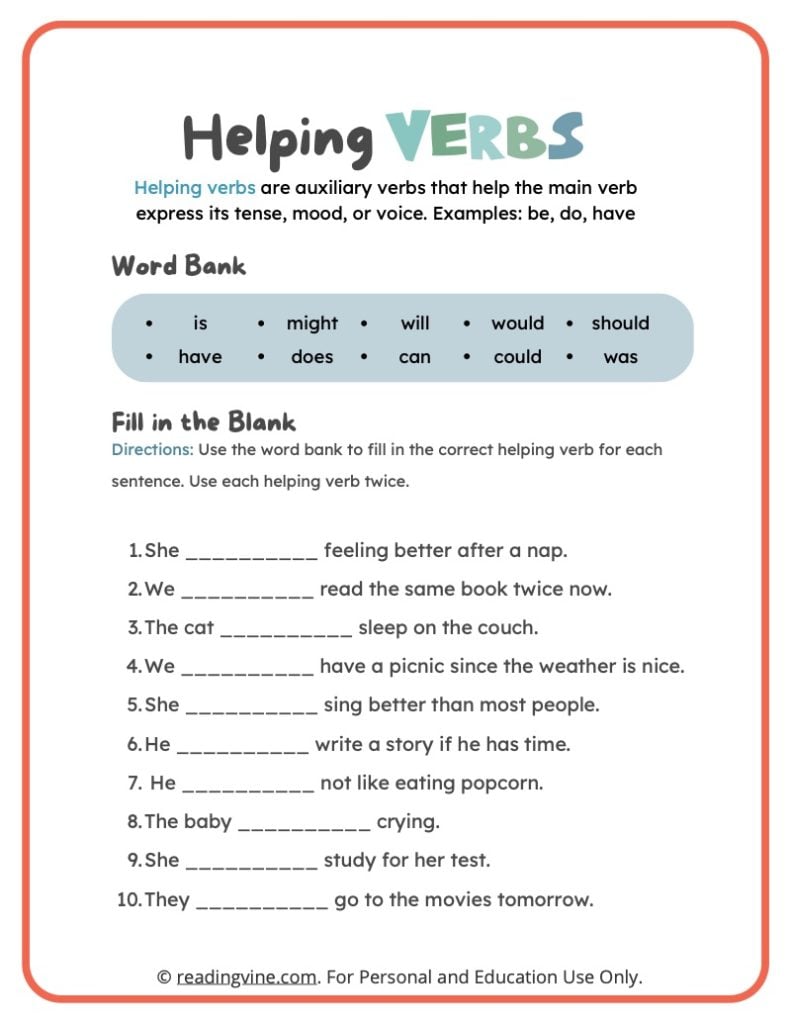
Fill in the Blanks with Helping Verbs Worksheet
Use words from the word bank to fill in sentence blanks with correct helping verbs that complete each verb phrase.
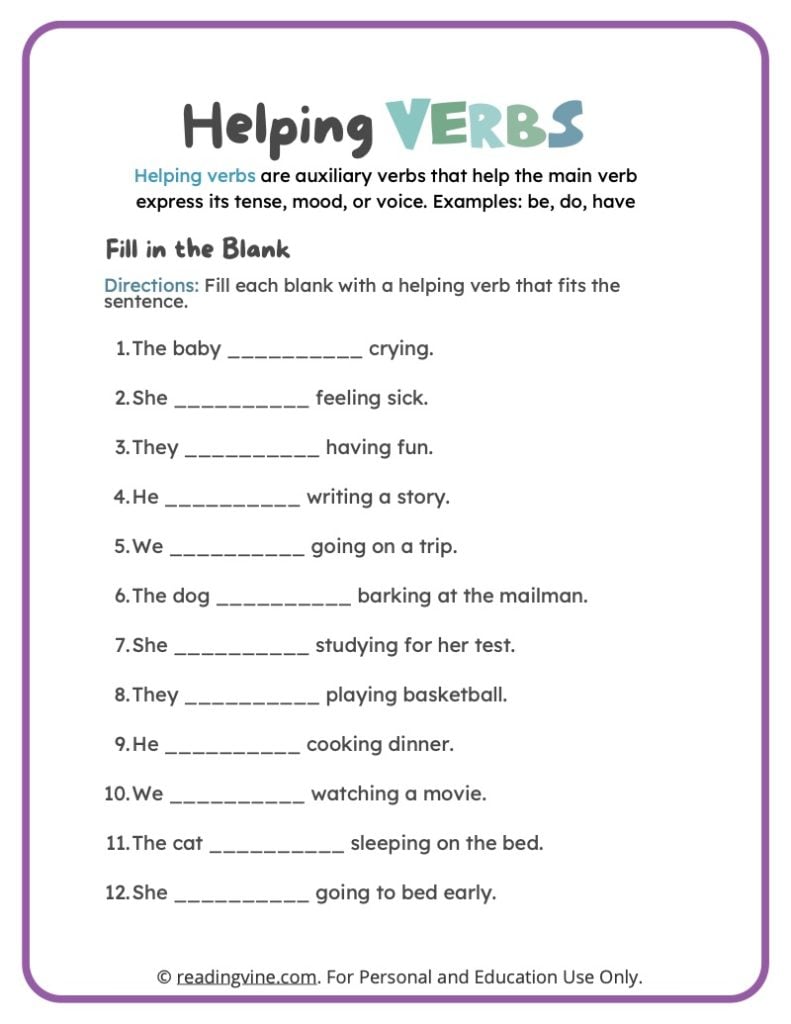
Fill in the Blank Helping Verbs Activity
Complete sentences by selecting appropriate helping verbs that work with main verbs to express correct tense and meaning.
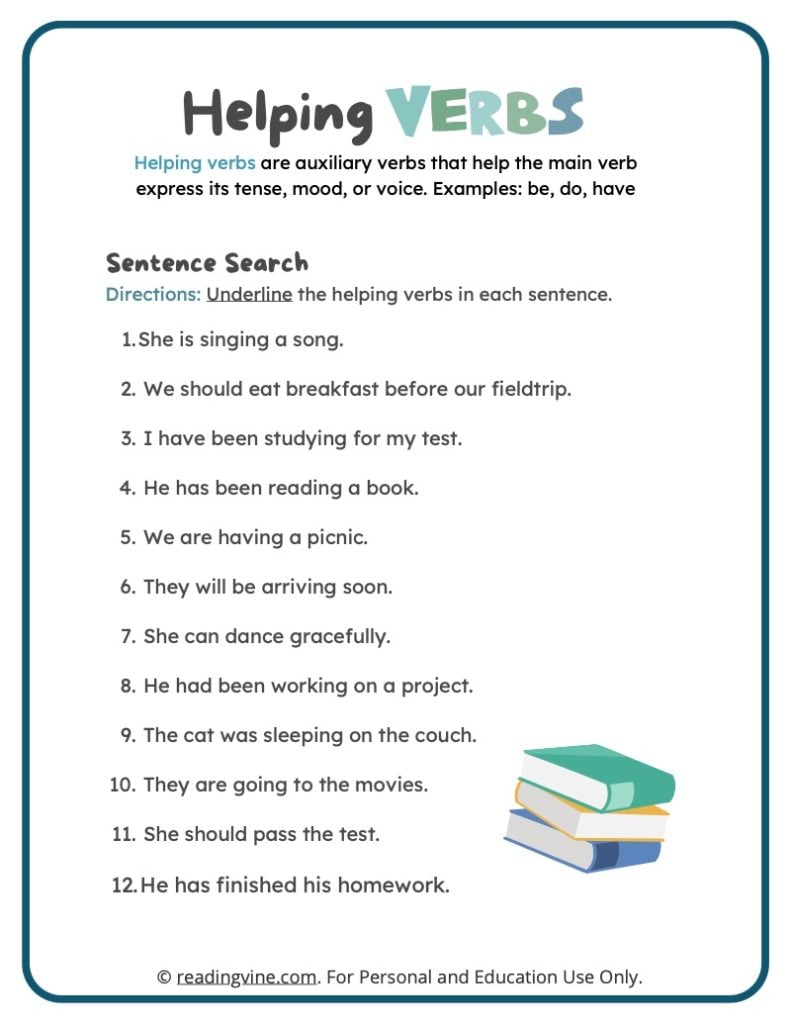
Underline the Helping Verbs Sentence Activity
Identify and underline helping verbs in twelve sentences, demonstrating understanding of auxiliary verb function.

Highlight the Helping Verbs Worksheet
In this advanced activity, read complex sentences and identify helping verbs by highlighting or underlining them throughout the text.
