
 = Partner Site
A Farewell to Arms Reading Level: A Complete Guide
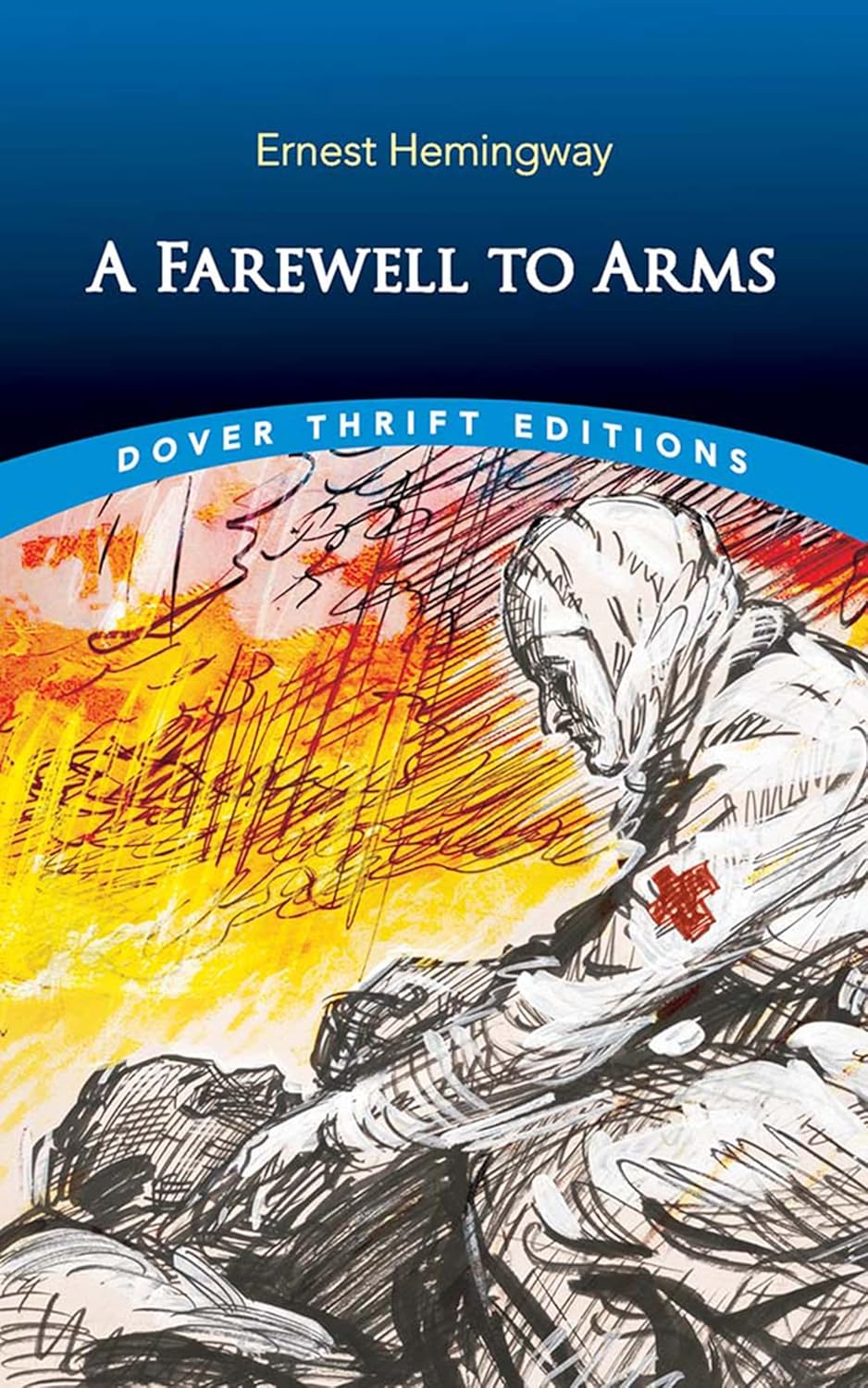
A Farewell to Arms by Ernest Hemingway is a novel about Frederic Henry, an American lieutenant serving in the Italian ambulance corps during World War I, and his love affair with Catherine Barkley, a British nurse. Published in 1929 and based on Hemingway’s own wartime experiences in Italy, it became his first bestseller and cemented his place as a major American writer. It is simultaneously a war novel and a love story, and Hemingway was clear that he intended neither element to redeem the other: the war is brutal and pointless, and the love is real and doomed, and the two facts exist together without resolution. This complete guide covers A Farewell to Arms‘s reading level, recommended age, content considerations, characters, themes, and books similar to A Farewell to Arms, designed for parents, teachers, and students.
For Parents
A World War I novel and love story written in Hemingway’s most mature and controlled prose — darker in its treatment of both war and love than most high school war fiction, and with sexual content and an ending that is genuinely devastating rather than heroically resolved. Appropriate for readers ages 15 and up. Widely assigned in grades 11–12 and in AP English courses.
For Teachers
A rich grades 11–12 text that works in conversation with The Old Man and the Sea as a longer, earlier Hemingway novel — both demonstrate his iceberg theory of prose, but A Farewell to Arms applies it to a more conventional narrative structure and across greater length. The ending Hemingway rewrote thirty-nine times (by his count) is the most discussed conclusion in his work and a natural anchor for a unit on revision and intentionality in fiction.
A Farewell to Arms at a Glance
Find on Amazon →| Author | Ernest Hemingway |
| Published | 1929 (Scribner) |
| Grade Level | 11–12 (our assessment) |
| Recommended Age | 15+ |
| Lexile | 700L |
| Word Count | ~80,000 |
| Pages | 332 (Scribner paperback) |
| Chapters | 41 (in 5 books) |
| Genre | War novel / literary fiction / romance |
| Setting | Northern Italy; Switzerland; World War I, 1916–1918 |
| Awards | ALA Notable Book; cited in Nobel Prize (1954) |
For official Lexile and AR levels, visit Lexile.com or AR BookFinder. ReadingVine provides independent editorial assessments.
What Reading Level Is A Farewell to Arms?
A Farewell to Arms has a Lexile of 700L — the same score as The Grapes of Wrath and East of Eden, and for the same reason: Hemingway’s deliberately plain prose keeps the sentence-level metrics low while the actual reading demands are those of serious adult literary fiction. Short declarative sentences. Anglo-Saxon vocabulary. Minimal adjectives and almost no metaphor at the surface level — what Hemingway achieves through arrangement rather than ornamentation.
The novel is longer and structurally more conventional than The Old Man and the Sea — 41 chapters across 5 books, approximately 80,000 words — and the reading experience is closer to that of a traditional war novel than to the concentrated novella. But Hemingway is doing the same thing in both works: writing with enormous precision about things that are left unsaid, trusting the reader to feel the weight of what is not there. The war is described in flat, factual sentences that make no claim to meaningfulness, and the love affair is described with the same flatness — which means both are given exactly equal weight, and neither is aestheticized. Readers who bring genuine emotional maturity to the novel will find more in it than readers who don’t; this is why it is assigned in grades 11–12 rather than earlier. Most classroom readers complete it over three to four weeks. For official Lexile and AR scores, visit Lexile.com or AR BookFinder. ReadingVine’s assessments are independent editorial judgments.
What Age Is A Farewell to Arms Appropriate For?
We recommend A Farewell to Arms for readers ages 15 and up. The novel contains explicit sexual content, significant violence associated with the conduct of World War I, and an ending that deals directly with childbirth death. It is adult literary fiction that happens to be widely assigned in secondary school, and parents should approach it with that understanding.
The relationship between Frederic Henry and Catherine Barkley is depicted with considerable frankness — their nights together in the hospital in Milan, their time at the hotel in Milan after his recuperation, and their months in Switzerland are all depicted directly, though not graphically. The war sections include combat wounds, descriptions of field surgery, execution scenes, and the physical experience of retreat under fire. The novel’s final sequence involves Catherine’s labor, a breech birth requiring emergency intervention, and Catherine’s death from hemorrhage following a cesarean section — described with clinical specificity and emotional devastation. Parents of students at the lower end of the recommended age range should be prepared to discuss all of these elements. The ending, in particular, is not softened: Frederic walks out of the hospital alone in the rain. There is no consolation offered.
What Is A Farewell to Arms About?
Frederic Henry is an American who enlisted in the Italian army as an ambulance officer before the United States entered the war — one of many young men from various countries who found their way into the Italian campaign for reasons they cannot entirely account for. In the summer of 1917, he meets Catherine Barkley, a British VAD nurse attached to an Italian hospital near the front. Her fiancé has been killed. Frederic pursues her with the uncomplicated directness of a man who wants company, and she responds with a kind of deliberate surrender — she has decided to give herself to the relationship entirely rather than carefully, having learned from her fiancé’s death that carefulness does not protect you.
Frederic is wounded by a mortar shell while eating cheese in a trench. He is transported to Milan, where Catherine is also transferred, and the two spend his convalescence together — this is the novel’s most fully developed portrait of them as a couple, the months in Milan where the war is far enough away that they can almost forget it. When he returns to the front, the Italian army is in catastrophic retreat from Caporetto. Frederic witnesses the disintegration of the Italian forces, is nearly executed by the battle police during the retreat, deserts into the river, and eventually reunites with Catherine. They escape together to Switzerland by rowboat at night.
The Swiss period — months of waiting in the mountains for the baby — is the novel’s most quietly terrible section. Everything is fine, and everything is wrong, and Hemingway’s prose gives both equal weight. When Catherine goes into labor and the baby is delivered stillborn, and when Catherine herself dies of hemorrhage in the small hours of the morning, the reader has been prepared for the disaster without being warned of it — which is exactly Hemingway’s method throughout. The ending is not a surprise. It is an inevitability that the prose has been building toward without announcing itself, and when it arrives it lands with the full weight of everything that came before it.
A Farewell to Arms Characters
Is A Farewell to Arms Banned?
A Farewell to Arms has a significant ban history that begins before the novel was even published in book form. When it was serialized in Scribner’s Magazine in 1929, two issues were banned in Boston for sexual content and language — the chief effect of which was to increase sales dramatically elsewhere. The novel was banned in Italy under Mussolini’s Fascist government, which was outraged by Hemingway’s unflinching portrayal of the Italian army’s retreat from Caporetto; the ban remained in place until 1948. It was banned in Ireland in 1939 for sexual content. It was among the books blacklisted and burned by the Nazis in Germany in 1933. It was challenged by parents in the Dallas, Texas, Independent School District in 1974 and in the Vernon-Verona-Sherrill school district in New York in 1980, described in one challenge as “a sex novel.”
The international ban history is notable for the range of objections it encompasses: American bans focused on sexual content and language; Italian censorship focused on its portrayal of military failure; Nazi banning focused on its anti-militarism and its implicit critique of nationalist ideology. A book that offends three such different censors on three different grounds is doing something complicated. A Farewell to Arms does not appear prominently on the ALA’s current challenged books lists and is widely available and taught without controversy in contemporary American high schools.
A Farewell to Arms Themes and Lessons
Hemingway’s view of the war in this novel is not the heroic loss of All Quiet on the Western Front or the bitter irony of Wilfred Owen’s poetry — it is closer to blankness. The Italian campaign is described with the flat accuracy of someone recording what happened, and what happened was mostly wet and cold and absurd and occasionally lethal. Frederic’s famous passage about abstract words — “I was embarrassed by the words sacred, glorious, and sacrifice and the expression in vain” — is the novel’s most explicit rejection of the rhetoric used to give the war meaning. The war doesn’t have that kind of meaning. Neither does death. And the novel insists on this not as nihilism but as honesty.
The love story is the novel’s argument about what remains when the abstract has been stripped away. Frederic and Catherine build something genuinely private between themselves — a world of two that exists inside and against the war. This is Hemingway’s version of what love is for: not transcendence, not meaning-making, but a specific warmth between two specific people who have chosen each other in the absence of larger systems to trust. When Catherine dies, what Frederic loses is not a symbol or an idea but the one thing that was actually his. The ending’s devastation comes from this specificity.
Rain functions as the novel’s primary symbol — Catherine tells Frederic early in the novel that she is afraid of rain because she sometimes sees herself dead in it. Hemingway deploys rain throughout with unusual consistency: the retreat from Caporetto is soaked in it; Frederic walks home from the hospital in it at the novel’s end. It is not subtle symbolism, and Hemingway did not intend it to be — he wanted the connection between rain and death to be felt rather than decoded, to accumulate atmospheric weight over the course of the novel rather than arrive as a single revelatory moment.
Discussion questions for classrooms and families: What does Frederic mean when he says he is “embarrassed” by abstract words like “sacred” and “glorious”? How does Hemingway use rain throughout the novel — track its appearances and consider whether they all carry the same weight? What does Catherine’s decision to surrender herself entirely to the relationship tell us about what she has already lost? Why does Hemingway describe Frederic’s desertion with the same flat tone he uses to describe everything else — what effect does this have on how we judge the choice? What does the ending argue about the relationship between love and the universe?
How Many Pages and Chapters in A Farewell to Arms?
The Scribner paperback is 332 pages across 41 chapters organized into five “books” — Hemingway’s term for the major structural sections. The five books correspond roughly to: the front and the summer before the wounding (I), the Milan hospital and convalescence (II), the return to the front and Caporetto (III), the escape to Switzerland (IV), and the Swiss winter and its end (V). Word count is approximately 80,000 words. Most classroom readers complete the novel over three to four weeks.
The novel’s 41 short chapters — most running four to eight pages — give it a rhythmic, almost documentary quality: each chapter presents one unit of experience, and the accumulation builds the novel’s weight through addition rather than acceleration. Hemingway rewrote the ending approximately thirty-nine times by his own count (a 2012 edition collected forty-seven alternate endings). The ending as published — Frederic walking out of the hospital alone in the rain — was Hemingway’s final answer to the question of what the novel’s last sentence should be, and it is worth reading some of the alternate versions to understand what he rejected and why.
Books Similar to A Farewell to Arms
About Ernest Hemingway
Ernest Hemingway was born in 1899 in Oak Park, Illinois. He drove ambulances for the Italian army during World War I, was wounded near Fossalta di Piave in 1918, and fell in love with Agnes von Kurowsky, an American nurse at the Milan hospital where he recovered. She ended the relationship after his return to the United States. The biographical parallels with A Farewell to Arms are direct — Frederic Henry is Hemingway at one remove — though the novel departs from autobiography substantially and Catherine Barkley is not a portrait of von Kurowsky. Hemingway was thirty years old when he published the novel in 1929; his second wife Pauline was undergoing a cesarean section at their home in Kansas as he wrote the childbirth scene.
The novel was his first bestseller, selling 45,000 copies within three months of publication and making him financially independent. He serialized it in Scribner’s Magazine before book publication, with profanity censored at the editors’ insistence; he later restored the text in editions he personally corrected by hand. His other major works include The Sun Also Rises (1926), For Whom the Bell Tolls (1940), and The Old Man and the Sea (1952). He received the Nobel Prize for Literature in 1954 and died by suicide in 1961.
A Farewell to Arms: Frequently Asked Questions
What reading level is A Farewell to Arms?
A Farewell to Arms has a Lexile of 700L — the same score as The Grapes of Wrath, and misleading for the same reason: Hemingway’s plain prose keeps the formula metrics low while the actual demands are those of serious adult literary fiction. Our editorial assessment places it at grades 11–12, ages 15 and up. For official Lexile and AR scores, visit Lexile.com or AR BookFinder.
What grade is A Farewell to Arms appropriate for?
We recommend grades 11–12, ages 15 and up. The novel contains explicit sexual content, sustained descriptions of wartime violence, and an ending involving childbirth death. It is adult literary fiction widely assigned in AP English and senior-year literature courses.
How many pages are in A Farewell to Arms?
The Scribner paperback is 332 pages across 41 chapters in five structural sections Hemingway called “books.” Word count is approximately 80,000 words. Most classroom readers complete it over three to four weeks.
What is A Farewell to Arms about?
An American ambulance officer in the Italian army falls in love with a British nurse during World War I. They build a private life together against the backdrop of the war — in Milan during his recuperation from a wound, in Switzerland after his desertion at the retreat from Caporetto — until Catherine’s death from complications of childbirth ends everything. The novel argues that the universe is indifferent to love and loss alike, and offers no consolation for either.
Is A Farewell to Arms based on a true story?
Substantially autobiographical in its origins. Hemingway drove ambulances in Italy during World War I, was wounded near Fossalta di Piave in 1918, and fell in love with Agnes von Kurowsky, an American nurse at the Milan hospital where he recovered — she ended the relationship after his return home. The novel departs significantly from biography, but the Italian military experience and the hospital love affair are drawn from Hemingway’s life. He was writing the childbirth scene while his wife was undergoing a cesarean section at home.
What does the rain mean in A Farewell to Arms?
Rain is the novel’s most sustained symbol. Catherine tells Frederic early in the story that she is afraid of rain because she sometimes sees herself dead in it. Hemingway then deploys rain at key moments throughout — the retreat from Caporetto, the final walk from the hospital — building its association with death and loss through accumulation rather than announcement. Frederic walks out alone in the rain at the novel’s end. The connection is not subtle; Hemingway intended the reader to feel it rather than decode it.
Why does Hemingway say he rewrote the ending thirty-nine times?
By Hemingway’s account, he wrote thirty-nine versions of the final pages before settling on the published ending — Frederic walking out of the hospital alone in the rain. A 2012 Hemingway Library Edition collected forty-seven alternate endings, showing the range of conclusions he considered: some more explanatory, some more hopeful, some more bitter. The published ending is the most minimal of all of them, and its minimalism is its power — it refuses to tell the reader how to feel about what has happened. Reading the alternates is one of the best available demonstrations of what literary revision actually is.
Is there an A Farewell to Arms movie?
Two major film adaptations: a 1932 film starring Gary Cooper as Frederic and Helen Hayes as Catherine; and a 1957 remake starring Rock Hudson and Jennifer Jones. Neither is widely considered definitive. A 1996 film, In Love and War, depicts the real-life events behind the novel — Hemingway’s wartime experiences and his relationship with Agnes von Kurowsky — rather than adapting the novel itself. The 1932 version is PG by contemporary standards; the 1957 version is unrated.