
 = Partner Site
A Little Princess Reading Level: A Complete Guide
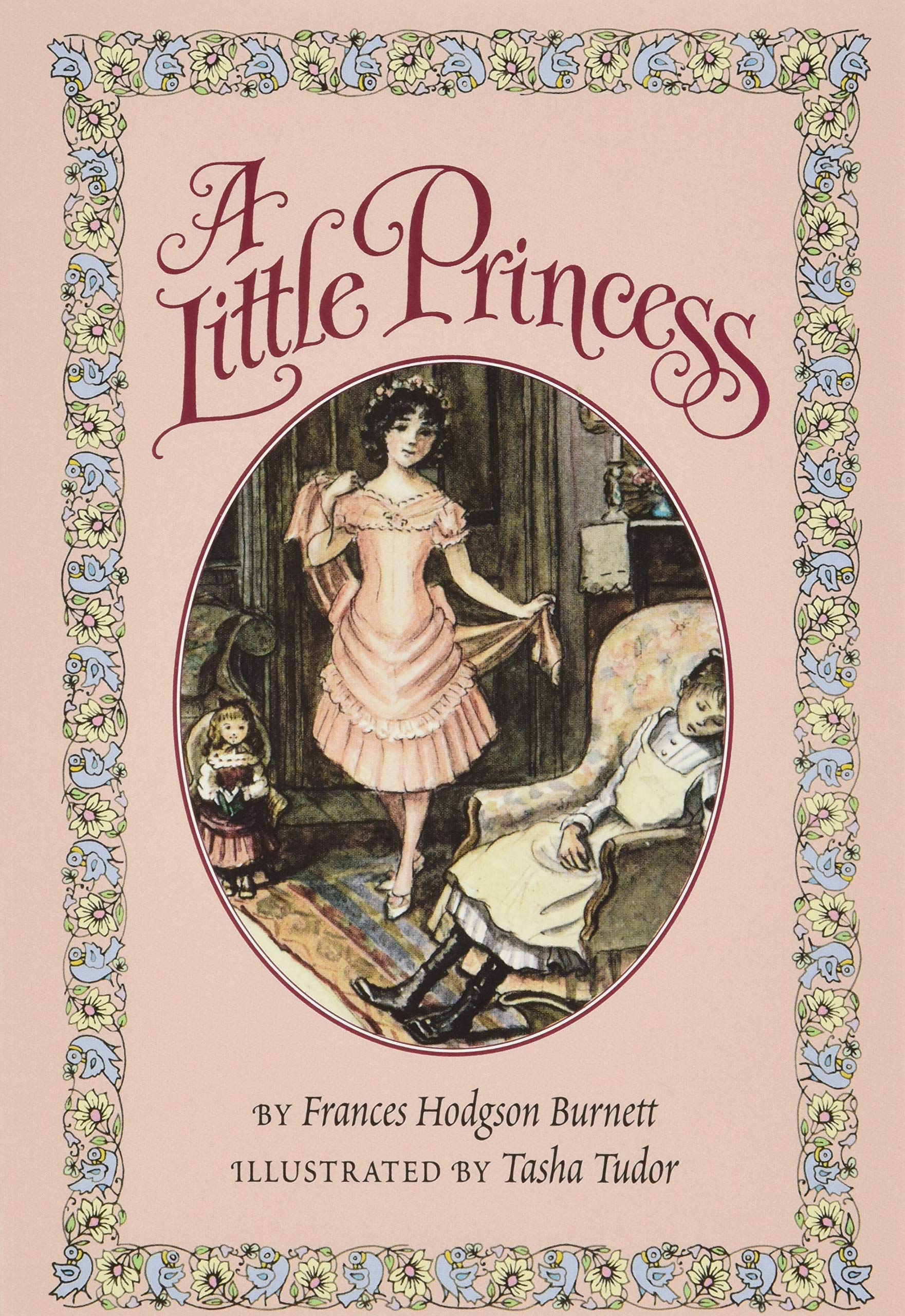
A Little Princess by Frances Hodgson Burnett is a beloved Victorian novel about Sara Crewe, a wealthy and imaginative girl who arrives at a London boarding school as its most privileged pupil and is reduced, through sudden catastrophe, to its most wretched servant — and who endures her reversal of fortune through the power of storytelling, imagination, and an unshakeable sense of her own dignity. First published in expanded novel form in 1905, it is a story about resilience, the nature of kindness, and what it means to be a princess not in circumstance but in spirit. This complete guide covers A Little Princess‘s reading level, recommended age, content considerations, characters, themes, and books similar to A Little Princess, designed for parents, teachers, and students.
For Parents
A warm, emotionally rich Victorian novel that deals honestly with loss, poverty, and cruelty without being dark or frightening. Sara’s resilience and her refusal to abandon her sense of self under terrible circumstances make her one of children’s literature’s most enduring heroines. Best for readers ages 8–12.
For Teachers
A strong grades 4–7 text for teaching Victorian social class, the power of imagination and narrative, and a female protagonist who maintains her moral center under sustained pressure. Pairs naturally with The Secret Garden for a Burnett unit, or with A Single Shard for a unit on children who earn belonging through dignity and perseverance.
A Little Princess at a Glance
Find on Amazon →| Author | Frances Hodgson Burnett |
| Published | 1905 (novel); 1888 (serialized as Sara Crewe) |
| Grade Level | 4–7 (our assessment) |
| Recommended Age | 8–12 |
| Flesch-Kincaid Grade | ~7.2 |
| Word Count | ~83,000 |
| Pages | ~272 (Puffin Classics paperback) |
| Chapters | 19 |
| Genre | Classic fiction / historical fiction |
| Setting | London, a girls’ boarding school; late Victorian era |
| Awards | — |
For official Lexile and AR levels, visit Lexile.com or AR BookFinder. ReadingVine provides independent editorial assessments.
What Reading Level Is A Little Princess?
A Little Princess reads at approximately a 4th–7th grade level by our editorial assessment, with a Flesch-Kincaid grade level of around 7.2. Burnett’s prose is Victorian in its rhythms — sentences are longer and more complex than modern children’s fiction, descriptive passages are more extended, and the narrative voice is formal and slightly elevated by contemporary standards. A strong 4th-grade reader will find the text accessible; readers in 5th–7th grade will engage with it more fully.
The higher Flesch-Kincaid score reflects the Victorian sentence structure rather than any difficulty in following the story — the plot is clear, the characters are vivid, and Burnett’s emotional intelligence is entirely accessible to readers in the recommended age range. Parents who are concerned about the reading level should note that the book has been successfully read and loved by children as young as 8 for over a century, and that its prose style, while formal, is not obscure. For official Lexile and AR scores, visit Lexile.com or AR BookFinder. ReadingVine’s assessments are independent editorial judgments.
What Age Is A Little Princess Appropriate For?
We recommend A Little Princess for readers ages 8–12. The novel contains no sexual content, no profanity, and no significant violence. Its emotional difficulty is real but appropriate for the age range: Sara’s father dies, she is reduced to poverty and servant status, she is treated with sustained cruelty by the school’s headmistress, and she goes genuinely hungry on multiple occasions. These experiences are depicted honestly but never gratuitously, and they are resolved in a way that is fully satisfying.
The novel’s central difficulty is sustained emotional hardship. Sara loses her father, her fortune, and her status in quick succession and spends the novel’s second half living in a cold attic, working as a servant, and going hungry while being treated cruelly by Miss Minchin. The hunger scenes in particular are vivid — Burnett does not soften the reality of Sara’s poverty — and the sustained cruelty of Miss Minchin is depicted with enough specificity to be genuinely affecting. None of this is inappropriate for the recommended age range, but parents of sensitive readers at the younger end (8–9) should be aware that the middle section of the novel is genuinely hard before the resolution arrives. The ending is fully satisfying and the darkness is purposeful throughout.
For readers 8 and up, A Little Princess handles its difficult material with the craft of a writer who understood children deeply. The resolution is earned rather than convenient, and Sara’s journey from privilege to poverty and back is one of children’s literature’s most enduring examinations of what genuine nobility of character actually means.
What Is A Little Princess About?
Sara Crewe arrives at Miss Minchin’s Select Seminary for Young Ladies in London as its most exceptional pupil — brought by her adoring father, a wealthy officer stationed in India, who has arranged for her to have everything. Sara is clever, imaginative, and kind, and she is also unusual: she treats everyone around her, from the scullery maid to the French teacher, with the same consideration. She believes that being a princess is not a matter of birth or wealth but of how one behaves — that anyone can be a princess if they choose to act like one.
Her circumstances change overnight. Her father dies in India, ruined by a bad investment, and Sara is left penniless. Miss Minchin, who has always resented Sara’s effortless superiority, strips her of her privileges immediately — her fine room, her clothes, her status — and puts her to work as a servant. Sara moves to a cold attic, wears rags, runs errands in the freezing London streets, and is regularly humiliated in front of the other girls. The question the novel asks, and answers with great care, is whether Sara’s belief in her own dignity and in the importance of kindness can survive what is being done to her.
Burnett’s answer is yes — but she does not make it easy. Sara’s survival is not passive acceptance but active imagination: she transforms her attic into a palace in her mind, invents stories to sustain herself, treats the other servants with the same consideration she once showed everyone, and maintains her code of behavior not because things are going well but precisely because they are not. The novel’s resolution, when it comes, involves a mysterious benefactor in the neighboring house, a connection to India, and a reversal of fortune that is entirely satisfying without feeling unearned.
A Little Princess Characters
Is A Little Princess Banned?
A Little Princess has not been banned or formally challenged in American schools or libraries. It is a canonical work of children’s classic fiction and has been continuously in print since its publication in 1905. Some modern readers have noted the novel’s colonial-era attitudes toward India and its Indian characters — Ram Dass and the unnamed “Lascar” are rendered with the condescension typical of the period — and this is worth contextualizing in a classroom setting, but it has not generated formal challenge activity.
A Little Princess Themes and Lessons
Burnett’s central argument is that being a princess is a way of behaving rather than a social position — that dignity, kindness, and imaginative generosity are available to anyone regardless of circumstances, and that maintaining them under duress is the truest form of nobility. Sara’s code is not passive or sentimental; it is active and demanding. She chooses to treat people well when there is no material benefit to doing so, chooses to imagine abundance when she is literally cold and hungry, and chooses to maintain her inner world when the outer one has stripped her of everything.
The novel is also one of children’s fiction’s clearest arguments for the practical value of storytelling and imagination. Sara’s attic is genuinely cold and genuinely miserable, and the way she transforms it through narrative is not denial but a form of active coping — she uses story to make experience bearable without pretending it is other than it is. Burnett treats this imaginative capacity not as a childish escape but as a serious human skill.
The friendship between Sara and Ermengarde, and Sara’s consistent treatment of Becky, together make the novel’s most important moral point: that how we treat people when we have no reason to treat them well — when they cannot help us, when it costs us something — is the real measure of character. This is, quietly, a radical argument for the age it was written in, and it remains one of the things that keeps the book alive.
Discussion questions for classrooms and families: What does Sara mean when she says anyone can be a princess — do you agree? How does Sara’s behavior toward Becky illustrate her beliefs? Is Miss Minchin simply a villain, or does Burnett give her any humanity? How does Sara use imagination to survive her circumstances — is this a realistic strategy? What does the novel suggest about the relationship between how we are treated and how we treat others?
How Many Pages and Chapters in A Little Princess?
The standard Puffin Classics paperback edition of A Little Princess is approximately 272 pages across 19 chapters. At roughly 83,000 words, it is a mid-length novel for its age range — longer than The Great Gilly Hopkins but considerably shorter than Inkheart. Most readers in the target age range finish it in one to two weeks of steady reading. The pacing is slower than contemporary children’s fiction, as is typical of Victorian novels, and the middle section — Sara’s years of hardship — is the most emotionally demanding stretch before the resolution.
For classroom use, the novel works well in a three-week unit. The clearest discussion break points are at Sara’s fall from privilege (around Chapter 7), the nadir of her hardship (around Chapter 13), and the beginning of the resolution (around Chapter 16). The novel’s Victorian prose style is worth discussing explicitly with students as a historical artifact — the way language has changed is itself interesting, and understanding why the prose feels formal helps students engage with it rather than being put off by it.
Books Similar to A Little Princess
About Frances Hodgson Burnett
Frances Hodgson Burnett was born in 1849 in Manchester, England, and emigrated to the United States with her family at age sixteen after her father’s death left them in poverty — an experience that shaped her lifelong interest in the relationship between financial circumstance and human dignity. She began writing to help support her family as a teenager and published her first story at eighteen. She became one of the most successful and widely read authors of the late Victorian era on both sides of the Atlantic.
Her three most enduring works — Little Lord Fauntleroy (1886), A Little Princess (first published as the shorter Sara Crewe in 1888, expanded to its current form in 1905), and The Secret Garden (1911) — all share a central preoccupation with children who transform their circumstances through the quality of their inner life rather than through action or luck. The Secret Garden is generally considered her masterpiece. Burnett died in 1924, having spent the last decades of her life moving between England, Bermuda, and Long Island. Her work has never been out of print.
A Little Princess: Frequently Asked Questions
What reading level is A Little Princess?
A Little Princess has a Flesch-Kincaid grade level of approximately 7.2. Our editorial assessment places it at grades 4–7 (ages 8–12). The higher score reflects Victorian sentence structure rather than story complexity — the plot is clear and the characters vivid, and the book has been read and loved by children as young as 8 for over a century. For official Lexile and AR scores, visit Lexile.com or AR BookFinder.
What grade is A Little Princess appropriate for?
We recommend grades 4–7 as the primary range. Strong 4th-grade readers who are comfortable with longer, more formal prose will enjoy it; it is most commonly read in 5th and 6th grade. The sustained hardship of the middle section makes it better suited to readers 8 and up.
How many pages are in A Little Princess?
The standard Puffin Classics paperback is approximately 272 pages across 19 chapters. Word count is roughly 83,000 words. Most readers in the target age range finish it in one to two weeks of steady reading.
What is A Little Princess about?
Sara Crewe arrives at a London boarding school as its most privileged pupil and is reduced, through her father’s sudden death and financial ruin, to its most wretched servant. The novel follows her through years of cold, hunger, and cruelty as she maintains her dignity, kindness, and imaginative inner life — and her belief that being a princess is a matter of how one behaves, not one’s circumstances.
Is A Little Princess appropriate for an 8-year-old?
Yes, for most 8-year-olds who are strong readers. The content considerations are emotional rather than mature — Sara’s father dies, she goes hungry, and she is treated cruelly for an extended period before the resolution. The Victorian prose style is more formal than modern children’s books. An 8-year-old who reads widely and is not particularly sensitive to stories of hardship will find it engrossing; a more sensitive reader might do better waiting until 9 or 10.
What does “a little princess” mean in the title?
The title refers to Sara’s belief — which her father shared and which she maintains throughout her hardship — that being a princess is not a matter of birth or wealth but of character. A “little princess” is a girl who chooses to behave with dignity, kindness, and generosity regardless of her circumstances. The novel’s central argument is that this kind of princess is the real kind, and that circumstance cannot take it away from someone who genuinely has it.
Is there a movie version of A Little Princess?
Yes — several. The most celebrated is the 1995 film directed by Alfonso Cuarón, starring Liesel Matthews as Sara Crewe. It is rated G and is widely considered one of the finest children’s film adaptations of a classic novel, though it makes significant changes to the setting and ending. An earlier 1986 BBC television adaptation is also well regarded and more faithful to the book. Both are appropriate for the same age range as the novel.
How is A Little Princess different from The Secret Garden?
Both are by Frances Hodgson Burnett and share a Victorian setting and a preoccupation with children transformed by their circumstances. A Little Princess is warmer and more plot-driven, with a clearer villain and a more conventionally satisfying resolution. The Secret Garden is more inward and atmospheric, centered on the transformation of two unhappy children through their relationship with a neglected garden. Most readers who love one love the other; A Little Princess is typically encountered first.