
 = Partner Site
A Long Way Gone Reading Level: A Complete Guide
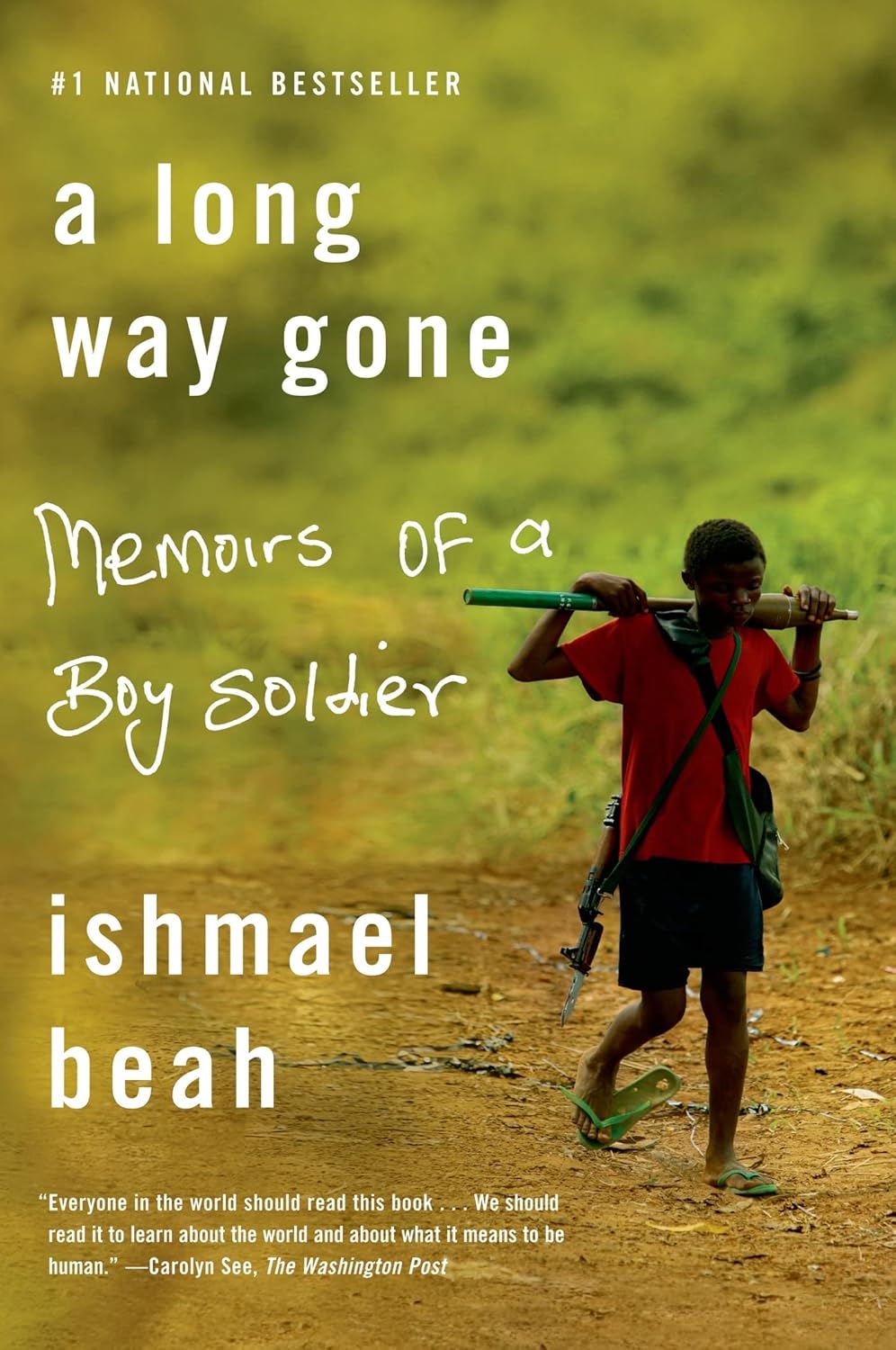
A Long Way Gone: Memoirs of a Boy Soldier, written by Ishmael Beah and published by Farrar, Straus and Giroux in 2007, is a memoir about Beah’s experience as a child soldier in the Sierra Leone Civil War (1991–2002). Beah was twelve years old when rebels attacked his village and he fled with a group of friends. For months he wandered through a country at war, separated from his family. At thirteen he was recruited by the Sierra Leone government army, given drugs, and trained to fight. He spent approximately two years as a soldier before being evacuated by UNICEF to a rehabilitation center in Freetown in 1996. He was eventually brought to New York City, where he attended a United Nations Children’s Conference and met the American woman who would become his guardian. He attended Oberlin College, graduating in 2004 with a B.A. in Political Science. He was twenty-five years old when the memoir was published. The American Library Association named it one of the Top Ten Books for Young Adults in 2008. Time magazine’s Lev Grossman ranked it among the top ten nonfiction books of 2007. It is among the most widely assigned memoirs in American high school curricula for units on child soldiers, human rights, and contemporary African history. This guide covers reading level, age appropriateness, content, accuracy questions, themes, and similar books.
For Parents
A memoir by a man who was a child soldier in Sierra Leone’s civil war — covering his flight from his village, his time fighting with the government army, and his rehabilitation. Ages 14–18, grades 9–12. Content: graphic combat violence throughout; drug use (the military gave soldiers cocaine, marijuana, and amphetamines); references to sexual violence. The content is direct and unflinching. Most commonly assigned in 10th–12th grade with classroom historical context provided.
For Teachers
A grades 9–12 memoir standard for human rights, global history, and contemporary African literature units. Lexile 920L; ATOS 6.1; word count 80,500; 21 chapters; 240 pages. ALA Top Ten Books for Young Adults 2008. A 2008 Australian newspaper article raised questions about specific details of the memoir; Beah and Farrar, Straus and Giroux maintained the accuracy of the account. The accuracy question is itself a productive discussion topic on memoir as a genre. Pairs productively with A Long Walk to Water and the full curriculum on child soldiers and the Sierra Leone Civil War.
A Long Way Gone at a Glance
Find on Amazon →| Author | Ishmael Beah (born 1980) |
| Published | 2007 (Farrar, Straus and Giroux) |
| Grade Level | 9–12 (our assessment; most commonly 10th–12th grade) |
| Recommended Age | 14–18 |
| Lexile | 920L |
| ATOS Level | 6.1 |
| Word Count | 80,500 |
| Pages | ~240 |
| Chapters | 21 |
| Genre | Memoir / autobiography / nonfiction |
| Setting | Sierra Leone; New York City; 1993–2004 |
| Awards | ALA Top Ten Books for Young Adults (2008); Quill Award nominee (2007) |
For official Lexile and AR levels, visit Lexile.com or AR BookFinder. ReadingVine provides independent editorial assessments.
What Reading Level Is A Long Way Gone?
Lexile 920L, ATOS 6.1, word count 80,500, interest level grades 7–12. Our assessment: grades 9–12, ages 14–18, most commonly assigned in 10th–12th grade. The Lexile and ATOS reflect Beah’s direct, clear prose style — accessible in sentence-level complexity. The reading challenge is primarily the content: graphic violence, drug use, and the psychological experience of a child at war require maturity to process and benefit from classroom discussion and historical context. At 240 pages and 21 chapters, most readers in the target range complete it within two weeks. For official scores, visit Lexile.com or AR BookFinder.
What Age Is A Long Way Gone Appropriate For?
Ages 14–18, grades 9–12. Content worth noting for parents and teachers:
The memoir contains graphic depictions of combat violence, including descriptions of killing and of witnessing deaths of comrades and civilians. The military unit Beah served with gave soldiers drugs — cocaine, marijuana, and amphetamines — as part of keeping them fighting; this is described directly. There are references to sexual violence. These elements are the factual record of what Beah experienced; they are not gratuitous but they are direct and unflinching. The memoir is most appropriate for students in grades 9–12 reading it with historical context and classroom discussion support.
The Sierra Leone Civil War — Background
The Sierra Leone Civil War lasted from 1991 to 2002. It involved the government of Sierra Leone and the Revolutionary United Front (RUF), a rebel group that financed its operations partly through control of diamond mines. Both sides recruited and used child soldiers. The conflict was characterized by extreme violence against civilians, including systematic mutilation. An estimated 50,000–75,000 people were killed; millions were displaced. A UN-backed Special Court for Sierra Leone prosecuted war crimes committed during the conflict, resulting in the convictions of several senior commanders on both sides. The war ended with a peace agreement in 2002. The context of diamond mining and its role in financing the war — sometimes called “blood diamonds” or “conflict diamonds” — is relevant background for classroom discussion.
What Is A Long Way Gone About?
The memoir opens with Beah in New York City — teenagers who have heard he is from Sierra Leone ask him about the war as if it is something distant and exotic. The narrative then moves back to 1993, when Beah was twelve and living in Mogbwemo, Sierra Leone.
Beah and a group of friends — including his brother Junior and several classmates — were in a nearby town performing in a talent show when rebels attacked their village. They could not return home. For months they wandered through the Sierra Leone countryside, moving between towns, sometimes welcomed and sometimes driven away by communities who feared that children associated with either side were dangerous. Beah describes this period — the hunger, the fear, the loss of his friends one by one, the gradual disappearance of the ordinary world — as the first phase of his undoing.
At thirteen, Beah and his surviving companions were picked up by the Sierra Leone government army. They were given weapons, given drugs, given cassettes of rap music, and trained to fight. Beah fought with the army for approximately two years, during which he committed acts of violence that the memoir describes with directness. He notes that during this period he felt nothing — the drugs, the indoctrination, and the sustained exposure to violence had altered him in ways he describes both behaviorally and psychologically.
In 1996, a UNICEF representative visited the base and identified Beah’s unit as child soldiers. He and other boys were transported to a rehabilitation center in Freetown, run by an organization called UNICEF and staffed partly by a Benin-born nurse named Esther. The rehabilitation is the memoir’s central turning point: Beah describes the slow, difficult, sometimes violent process of withdrawal from the drugs, the gradual return of feeling, and the specific role that Esther and others played in making this possible. Music — particularly rap — is the thread connecting Beah’s pre-war identity to his rehabilitation.
Beah was subsequently selected to attend a UN conference on the use of child soldiers in New York City. There he met Laura Simms, an American storyteller who became his guardian. He eventually moved to the United States, attended Oberlin College, graduating in 2004 with a B.A. in Political Science, and became an advocate for children affected by war. The memoir ends with Beah leaving Sierra Leone as the civil war intensifies again in the late 1990s.
The Accuracy Question
In 2008, an article in the Australian newspaper The Australian raised questions about specific details in the memoir, including the timeline of events and whether Beah was in certain locations at the times he described. Beah and Farrar, Straus and Giroux maintained the accuracy of the account; Beah said that the newspaper’s research was based on incomplete records from a country in the midst of a civil war. The publisher stood by the book.
This controversy is worth noting for teachers using the memoir in AP Literature or in units on memoir as a genre, because it is a documented and public dispute about the accuracy of a first-person account. The broader question — how do we evaluate memoir, particularly memoir about traumatic events in places where records are incomplete — is a productive discussion topic that does not require resolving the specific factual dispute.
A Long Way Gone Themes and Lessons
The memoir’s opening frames the central problem: Beah’s American teenage acquaintances hear “war” and think it sounds exciting. The gap between that understanding and what Beah actually experienced — and the challenge of communicating across that gap — runs throughout the book. Beah describes not only what happened to him but the process by which he became someone capable of committing the acts he committed, and the subsequent process by which he became someone capable of feeling again.
Music — specifically rap music — appears at two points as a structuring element. Before the war, Beah and his friends loved hip-hop and were learning to rap. During his time as a soldier, the military gave them cassettes of rap music alongside the drugs; the music was used to keep them in a fighting state. At the rehabilitation center, Esther gives Beah a rap cassette and this connection to his pre-war identity is part of what allows him to begin returning to himself. The use of the same cultural form in two such different contexts is one of the memoir’s most specific and most discussed structural details.
Discussion questions: How did Beah and his friends become soldiers — what was the process? How does the memoir describe the experience of rehabilitation — what made it possible, and what made it difficult? What role does music play in the memoir — how does it appear differently in the soldier sections and in the rehabilitation sections? What does the memoir’s opening scene — Beah’s American friends asking about the war — establish about who the book is written for and why?
Books Similar to A Long Way Gone
About Ishmael Beah
Ishmael Beah was born in 1980 in Sierra Leone. He fled his village at twelve when the civil war reached it, was recruited as a child soldier at thirteen, and was evacuated by UNICEF to a rehabilitation center in Freetown in 1996. He attended a United Nations conference on child soldiers in New York City, where he met Laura Simms, who became his guardian. He moved to the United States, completed high school at the United Nations International School in New York, and earned a B.A. in Political Science from Oberlin College in 2004. He subsequently served as a visiting scholar at the Center for International Conflict Resolution at Columbia University. He became an advocate for children affected by war and has spoken before the United Nations, the Council on Foreign Relations, and other organizations. A Long Way Gone (2007) was his memoir. His subsequent works include Radiance of Tomorrow (2014), a novel set in post-war Sierra Leone, and Little Family (2020), a novel about five homeless teenagers in an unnamed African city. He is a member of Human Rights Watch’s Children’s Rights advisory board.
A Long Way Gone: Frequently Asked Questions
What reading level is A Long Way Gone?
Lexile 920L, ATOS 6.1, word count 80,500, interest level grades 7–12. Our assessment: grades 9–12, ages 14–18, most commonly 10th–12th grade. Prose is accessible; the reading challenge is the content — graphic violence, drug use, and the psychological experience of a child soldier require maturity and classroom context. For official scores, visit Lexile.com or AR BookFinder.
What is A Long Way Gone about?
Ishmael Beah’s memoir of the Sierra Leone Civil War — how he fled his village at twelve, wandered for months, was recruited by the government army at thirteen and fought as a child soldier for approximately two years, was evacuated by UNICEF to a rehabilitation center, and eventually came to the United States, where he graduated from Oberlin College with a B.A. in Political Science and became an advocate for children affected by war.
Is A Long Way Gone a true story?
Yes — it is a memoir, a first-person account of Beah’s own experiences. In 2008 an article in an Australian newspaper raised questions about specific details of the timeline. Beah and his publisher maintained the accuracy of the account, citing the difficulty of verifying records from a country in the middle of a civil war. The book remains in publication and in wide academic use as a memoir.
What was the Sierra Leone Civil War?
A conflict from 1991 to 2002 between the Sierra Leone government and the Revolutionary United Front (RUF), a rebel group that financed its operations partly through control of diamond mines. Both sides used child soldiers. The war was characterized by extreme violence against civilians and resulted in an estimated 50,000–75,000 deaths and the displacement of millions. A UN-backed Special Court for Sierra Leone prosecuted war crimes from the conflict.
What grade is A Long Way Gone typically assigned?
Most commonly in 10th, 11th, or 12th grade — in English, global history, or human rights units. It is also assigned in some 9th grade courses. The ALA interest level is grades 7–12; the content makes it most appropriate for grades 9–12 with classroom support. Frequently paired with A Long Walk to Water (for a middle school–accessible companion) and with non-fiction about the Sierra Leone Civil War and child soldiers.