
 = Partner Site
Al Capone Does My Shirts Reading Level: A Complete Guide
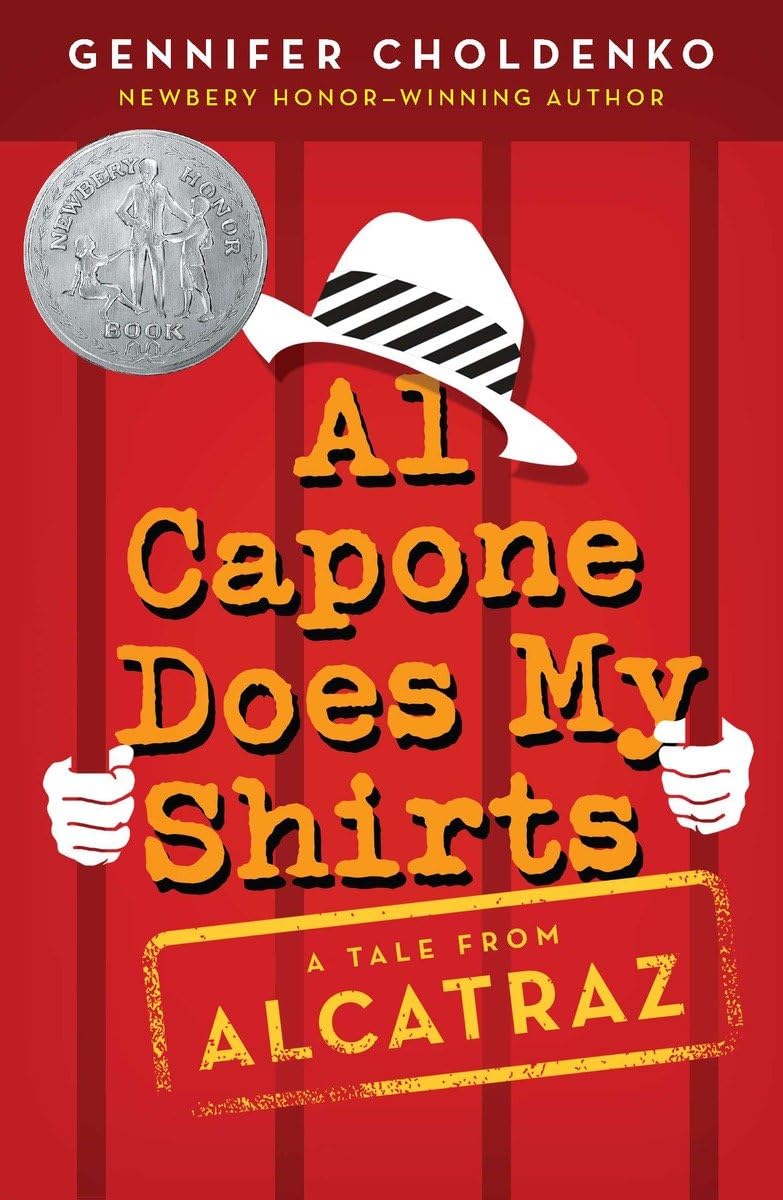
Al Capone Does My Shirts by Gennifer Choldenko is a funny, tender, and shrewdly observed novel about a twelve-year-old boy who moves with his family to Alcatraz Island in 1935 — where his father works as a prison guard, Al Capone is Inmate 85, and his older sister Natalie’s autism makes everything more complicated and more urgent than it already was. This complete guide covers Al Capone Does My Shirts’ reading level, recommended age, content considerations, characters, themes, and books similar to Al Capone Does My Shirts, designed for parents, teachers, and students.
For Parents
Al Capone Does My Shirts is one of the most warmly received middle-grade novels of the past two decades — a book that balances humor, heart, and genuine historical detail with unusual grace. It handles the subject of autism with care and historical authenticity, depicting a family doing their best to support a child with significant needs in an era when almost no support existed. Content concerns are minimal: there is some mild peril and the background presence of dangerous criminals, but nothing graphic. Most parents find it appropriate for readers ages 9 and up and deeply enjoyable for adults reading alongside children.
For Teachers
Al Capone Does My Shirts is an outstanding classroom text for grades 4–7, offering rich material for discussions of disability and neurodiversity, family loyalty, historical context (1930s Depression-era America, Alcatraz as a federal penitentiary), and the experience of being an outsider. Moose’s first-person voice is engaging and funny, making it an excellent choice for reluctant readers. The book pairs naturally with nonfiction resources on Alcatraz, the history of autism and disability in America, and the Great Depression. A sequel, Al Capone Shines My Shoes, continues the story.
Al Capone Does My Shirts at a Glance
Find on Amazon →| Author | Gennifer Choldenko |
| Published | 2004 |
| Grade Level | 4–6 (our assessment) |
| Recommended Age | 9–13 |
| Flesch-Kincaid Grade | 5.0 |
| Word Count | ~43,000 |
| Pages | 225 (standard paperback) |
| Chapters | 35 |
| Genre | Historical fiction / realistic fiction |
| Setting | Alcatraz Island, San Francisco Bay; 1935 |
| Awards | Newbery Honor (2005) |
For official Lexile and AR levels, visit Lexile.com or AR BookFinder. ReadingVine provides independent editorial assessments.
What Reading Level Is Al Capone Does My Shirts?
Al Capone Does My Shirts reads at approximately a 5th-grade word level by standard readability measures (Flesch-Kincaid grade 5.0), placing it solidly in the middle-grade range. Our editorial assessment is grades 4–6 for independent reading, with the book most rewarding for readers in grades 5–6. Choldenko’s prose is conversational and immediate — Moose narrates in a voice that is funny, self-deprecating, and entirely believable as a twelve-year-old boy trying to make sense of a world that keeps surprising him — which makes the book highly accessible even for readers on the younger end of the range.
What gives Al Capone Does My Shirts depth beyond its word-level score is the complexity of what Moose is navigating: a new school and new friendships on an island full of the country’s most dangerous criminals, a father under constant pressure, a mother consumed by Natalie’s care, and his own conflicted feelings about a sister he loves and resents and worries about in equal measure. Choldenko handles all of this with a light touch that never tips into sentimentality, which is its own kind of literary achievement. For official Lexile and AR scores, visit Lexile.com or AR BookFinder.
What Age Is Al Capone Does My Shirts Appropriate For?
We recommend Al Capone Does My Shirts for readers ages 9–13, with the strongest fit at ages 10–12. The humor, the compelling setting, and Moose’s relatable voice make it broadly appealing across the middle-grade range, and it has strong crossover appeal for adults. Younger readers who are strong, confident readers can engage with it fully, and it works particularly well as a family read-aloud where parents and children can share the humor and discuss the more complex emotional territory together.
Al Capone Does My Shirts is set on Alcatraz Island, a maximum-security federal penitentiary, and the background presence of violent criminals is part of the book’s atmosphere — though the convicts are never depicted graphically or in ways that are frightening to young readers. There is mild peril in a couple of scenes, and Moose gets involved in some rule-bending schemes that put him and his friends in awkward situations with real consequences. The book’s treatment of Natalie’s autism is historically grounded: in 1935, autism was not understood, diagnosed, or supported the way it is today, and Natalie’s mother in particular is driven to desperate measures to get her daughter the help she needs. This historical context may spark important conversations about how society’s treatment of people with disabilities has changed. There is no profanity, violence, or sexual content. The overall tone is warm, funny, and ultimately hopeful.
The book is a particularly valuable read for children who have a sibling or family member with autism or another disability, as well as for children developing empathy and understanding of neurodiversity more broadly. Choldenko has said she drew on her own experience with a sister who had significant developmental disabilities when writing Natalie’s character.
What Is Al Capone Does My Shirts About?
It is 1935, and twelve-year-old Matthew “Moose” Flanagan has just moved with his family to Alcatraz Island, where his father has taken a job as an electrician and guard at the federal penitentiary. Living on Alcatraz means attending a new school on the mainland, navigating a tight-knit island community of guards’ families, and being surrounded at all times by some of America’s most infamous criminals — including, in Cell Block B, Inmate 85: Al Capone himself. Moose would much rather be playing baseball in his old neighborhood, but he doesn’t get a vote.
The real reason the family has come to Alcatraz is Natalie, Moose’s sixteen-year-old sister, who has what we would today recognize as autism. Natalie is brilliant with numbers, fixated on her button collection, and unable to navigate the social world in ways that make independent life possible. Their mother is desperate to enroll Natalie in the Esther P. Marinoff School, a progressive institution in San Francisco that might be able to help her — but the school has a strict age limit, and their mother has been quietly shaving years off Natalie’s age for so long that Moose isn’t entirely sure how old his sister actually is. Getting Natalie into the Marinoff School is the engine driving the family’s every decision, including the move to Alcatraz.
Into this already complicated situation comes Piper, the warden’s daughter — bold, entrepreneurial, and entirely willing to use her father’s position to her advantage. When Piper hatches a scheme to charge their classmates for the privilege of having their laundry done by Alcatraz’s famous inmates, Moose gets pulled along despite his better judgment. The scheme — and the title — turns out to have consequences none of them fully anticipated. Gennifer Choldenko spent years researching the real Alcatraz and the families who lived there, and the historical detail of the novel is precise and vivid.
Al Capone Does My Shirts Characters
Al Capone Does My Shirts Themes and Lessons
At its core, Al Capone Does My Shirts is a book about what it costs a family to love a child who needs more than the world knows how to give. Moose’s experience of growing up as Natalie’s brother — the way her needs shape every family decision, the way he sometimes resents her and then feels guilty for resenting her, the way he genuinely loves her and worries about her and doesn’t always know what to do with any of those feelings — is rendered with exceptional honesty. Choldenko never asks readers to see Natalie as a burden or a saint, and she never asks readers to see Moose as a hero for being her brother. She simply shows what it is actually like, which is more valuable than either of those easier choices.
The novel also uses its extraordinary setting — a federal penitentiary on a fog-wrapped island in San Francisco Bay — to explore what it means to be an outsider. Moose is new, different, and marked by where he lives in ways that set him apart from his mainland classmates. This experience of being defined by circumstances outside his control connects him, quietly, to Natalie, who is defined by her neurology in ways she didn’t choose. The historical context adds a layer that rewards classroom discussion: in 1935, autism was not a recognized diagnosis, and the options available to families like the Flanagans were extraordinarily limited. What does that history tell us about how society defines and responds to difference? Discussion questions worth exploring: How does Moose’s relationship with Natalie change across the novel? What does the Marinoff School represent for each member of the family — and do they all want the same thing? Is Piper a good friend to Moose? What does living on Alcatraz teach Moose that he couldn’t have learned anywhere else?
How Many Pages and Chapters Are in Al Capone Does My Shirts?
Al Capone Does My Shirts is 225 pages in the standard paperback edition, divided into 35 chapters. The word count is approximately 43,000 words. At an average middle-grade reading pace of around 200–250 words per minute, most readers in the target age range finish the book in 4–6 hours of total reading time — typically one to two weeks of 30-minute daily reading sessions. The chapters are short and punchy, most running 5–8 pages, which gives the book strong momentum and makes it easy to read in focused bursts. It is well-suited for classroom read-aloud, where Moose’s distinctive voice and the book’s frequent humor make it a consistent crowd-pleaser. A note on historical context at the back of some editions provides useful background on the real Alcatraz and the families who lived there.
Books Similar to Al Capone Does My Shirts
About Gennifer Choldenko
Gennifer Choldenko was born in Santa Monica, California, and grew up with a sister who had significant developmental disabilities — an experience that shaped her understanding of what it means to be a family navigating a world that isn’t built to accommodate everyone in it, and that lies directly behind her creation of Natalie Flanagan. Choldenko studied fine arts at Brandeis University and illustration at the Art Center College of Design before turning to writing. Al Capone Does My Shirts was her third book for children and her breakthrough novel, earning a Newbery Honor in 2005 and launching a series: the sequels Al Capone Shines My Shoes (2009) and Al Capone Does My Homework (2013) continue Moose and Natalie’s story on Alcatraz. Choldenko spent considerable time researching the real Alcatraz penitentiary and interviewed people who had lived on the island as children of guards, and the historical authenticity of the novel’s setting reflects that research. She has said that the title — which she arrived at before the story — was the seed from which everything else grew: she simply had to figure out what kind of story would make that title make sense.
Al Capone Does My Shirts: Frequently Asked Questions
What grade level is Al Capone Does My Shirts?
By standard readability measures, Al Capone Does My Shirts reads at approximately a 5th-grade word level (Flesch-Kincaid grade 5.0). Our editorial assessment is grades 4–6 for independent reading, with the book most rewarding for readers in grades 5–6. Moose’s conversational, funny first-person voice makes it highly accessible, while the emotional and historical complexity give it genuine depth for older readers in the range.
Is Al Capone Does My Shirts a true story?
No — Moose Flanagan and his family are fictional characters. However, the setting is historically grounded: Alcatraz did operate as a federal penitentiary from 1934 to 1963, and guards’ families did live on the island alongside the inmates. Al Capone (1899–1947) was a real person who was indeed incarcerated at Alcatraz from 1934 to 1939, serving time for tax evasion. The Esther P. Marinoff School is fictional, but it is based on the kinds of progressive schools that began emerging in the early 20th century to serve children with developmental differences. Choldenko researched the real Alcatraz community extensively and the historical details of island life — the ferry commute to school, the social world of guards’ families, the physical geography of the island — are accurate.
Does Al Capone actually appear in the book?
Al Capone is a constant presence in the novel — his reputation, his celebrity, the way the children of guards both fear and are fascinated by the famous inmates — but he appears only briefly and indirectly in the story itself. Moose never has a direct conversation with Capone. The title refers to a scheme Piper devises to have the island inmates (including Capone) do laundry for the mainland kids, and the question of whether Capone is actually involved in what happens is part of the book’s pleasurable ambiguity.
Is Al Capone Does My Shirts a Newbery book?
Yes. Al Capone Does My Shirts received a Newbery Honor in 2005, awarded by the American Library Association to recognize distinguished contributions to American literature for children. The Newbery Honor — distinct from the Newbery Medal, which goes to one book per year — recognizes books considered among the finest children’s novels published in a given year.
Is there a sequel to Al Capone Does My Shirts?
Yes — two of them. Al Capone Shines My Shoes (2009) picks up immediately after the events of the first book, with Moose receiving an unexpected message that suggests Al Capone may have had something to do with Natalie getting into the Marinoff School — and that Capone now expects a favor in return. Al Capone Does My Homework (2013) continues the series with Moose’s third year on Alcatraz. All three books can be read independently, but they reward reading in order.
How does the book portray Natalie’s autism?
Natalie is never identified as autistic in the novel — the word itself wasn’t in common use in 1935, and the diagnosis of autism would not be widely recognized or understood until the 1940s. What Choldenko depicts is recognizable to contemporary readers as autism: Natalie’s intense focus on numbers and her button collection, her difficulty with social interaction and communication, her sensitivity to change and routine, and her capacity for deep emotional connection expressed in ways that aren’t always easy for others to read. Importantly, Natalie is portrayed as a full person — not a symbol or a teaching moment — with her own humor, her own preferences, and her own relationship with Moose that is distinct and genuine. Choldenko has been praised by autism advocacy organizations for the care and authenticity of Natalie’s portrayal.
Why is the main character called Moose?
Matthew Flanagan’s nickname “Moose” is a nod to his size — he’s a big kid for his age, which is part of why he’s such a good baseball player. The nickname is used by everyone in the novel, including his family, and it suits the slightly ungainly, good-natured quality of his character. It also distinguishes him immediately from the other characters and gives the book some of its informal, affectionate tone from the very first page.
What is Alcatraz, and is it a good setting for a children’s book?
Alcatraz is a small island in San Francisco Bay that housed a maximum-security federal penitentiary from 1934 to 1963, known for holding some of America’s most dangerous criminals in an escape-proof facility surrounded by cold, fast-moving water. After the prison closed it became a national park and remains one of San Francisco’s most visited tourist sites. As a setting for a children’s book, Alcatraz turns out to be inspired: it is genuinely fascinating to young readers, it creates a built-in sense of danger and intrigue without requiring graphic content, and the tight-knit community of guards’ families living on the island alongside the prison creates a social world that is both claustrophobic and rich with story possibilities. Choldenko uses the setting brilliantly — the fog, the ferry, the sounds of the prison — to create an atmosphere unlike anything else in middle-grade fiction.