
 = Partner Site
Hoot Reading Level: A Complete Guide
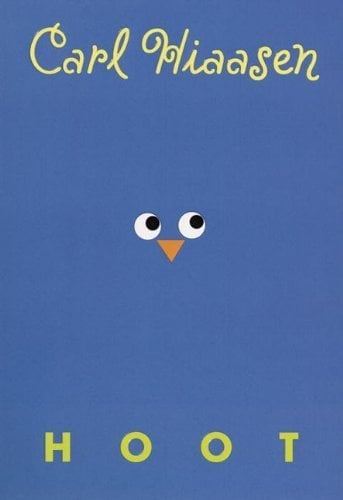
This complete guide to Hoot by Carl Hiaasen covers everything parents, teachers, and students need to know — from reading level and age appropriateness to characters, themes, and similar books. Published in 2002 and a Newbery Honor winner in 2003, Hoot follows Roy Eberhardt, a new kid in a small Florida town, who gets swept up in a scrappy effort to stop a pancake restaurant chain from bulldozing a colony of endangered burrowing owls. It was Hiaasen’s first novel for young readers — a departure from his bestselling crime thrillers for adults — and it carries the same satirical energy and genuine outrage at environmental destruction that runs through all his work, repackaged for a middle-grade audience with abundant humor, eccentric characters, and a kid-driven plot. This guide is designed to help parents, teachers, and readers approach it with clear expectations about its content, reading level, and what makes it a classroom staple.
For Parents
Hoot is a funny, fast-moving adventure story with a clear environmental message and a cast of lovable misfits. Its content is generally appropriate for the middle-grade audience it targets, though parents should be aware that the novel includes bullying that gets physically rough (a bully chokes and head-slams Roy; another student gets tied to a flagpole in his underwear), some mild language, an undercurrent of domestic neglect and possible abuse in one character’s home life, and both a teen and an adult who smoke. The kid protagonists lie, skip school, and commit acts of vandalism in service of their good cause — a moral complexity that is handled openly and worth discussing with younger readers. There is no sexual content, no significant violence beyond the bullying, and no character deaths. Overall it reads as a warm, optimistic adventure, and most parents of readers aged 9 and up will find the content manageable.
For Teachers
Hoot is one of the most classroom-friendly environmental novels in middle-grade fiction, and one of the few that makes environmental activism both funny and genuinely compelling. Hiaasen’s satirical sensibility — his instinct to make the adult authority figures bumbling or corrupt while the kid heroes are resourceful and morally serious — gives the book a subversive energy that middle schoolers respond to strongly. It raises real and discussable questions about when it is acceptable to break rules for a good cause, whether economic development and environmental protection can coexist, and what meaningful citizenship looks like for young people. It pairs naturally with science units on endangered species, local ecosystems, and Florida wildlife. Common classroom grades are 5–7, with grade 6 being the most typical assignment. The multi-perspective narration (chapters alternate between Roy, Officer Delinko, and Curly) also offers strong opportunities to discuss point of view.
Hoot at a Glance
Find on Amazon →| Author | Carl Hiaasen |
| Published | 2002 |
| Grade Level | 4–6 (our assessment) |
| Recommended Age | 9–12 |
| Flesch-Kincaid Grade | 5.2 |
| Word Count | ~60,000-62,000 |
| Pages | 292 (hardcover) / 320 (paperback) |
| Chapters | 21 chapters + epilogue |
| Genre | Middle-grade fiction / Adventure / Environmental comedy |
| Setting | Coconut Cove, Florida (fictional small town) |
| Awards | Newbery Honor Book (2003); New York Times Bestseller; Parade Best Kids Book of All Time |
For official Lexile and AR levels, visit Lexile.com or AR BookFinder. ReadingVine provides independent editorial assessments.
What Reading Level Is Hoot?
Hoot has a Lexile score of 760L and an ATOS level of 5.2, worth 9 AR points. Our Flesch-Kincaid calculation is consistent with the ATOS at approximately grade 5.2. These numbers tell you that the prose is accessible — straightforward sentences, familiar vocabulary, and a fast-moving narrative style that Kirkus Reviews noted was clearly shaped by Hiaasen’s background as a newspaper journalist. Everything in the prose moves efficiently toward the next plot development, and even reluctant readers tend to find the pacing pulls them forward.
The reading level metrics are well aligned with the intended audience here, which makes Hoot a less complicated case than many titles on our list. A strong fourth-grade reader can handle the prose without difficulty, and the content — adventure, environmental activism, bullying, and comedy — is appropriate for that age range with only mild considerations (see below). The publisher’s stated interest level of grades 5–8 is slightly conservative; we think grades 4–6 is the sweet spot, with most classroom use landing in grade 5 or 6. The multi-perspective narration (Roy’s story alternates with chapters following Officer Delinko and the construction foreman Curly) gives the book slightly more structural complexity than a single-narrator novel, which may warrant a brief teacher introduction in the lower grades. For official Lexile and AR scores, visit Lexile.com or AR BookFinder.
What Age Is Hoot Appropriate For?
We recommend Hoot for readers ages 9–12. Common Sense Media rates it for ages 10 and up. The publisher lists interest level as grades 5–8. For most readers in that range, the content is engaging and age-appropriate, and the novel’s humor and fast pacing make it accessible to younger independent readers in the 4th grade who are looking for a step up in adventure fiction.
Bullying is the most prominent content consideration. Dana Matherson, the novel’s bully, is physically aggressive: he grabs Roy by the head and presses his thumbs into his temples, chokes him, and headlocks him. The novel also includes a scene where Dana ends up tied to a flagpole in his underwear — played for comedy rather than cruelty, but physical humiliation nonetheless. A character is knocked unconscious, another is bitten by a dog, and there are references to a prior violent incident involving a bear. Language is mild by most standards, and some insults are the strongest instances. One significant background detail is that Mullet Fingers, the runaway boy at the center of the plot, lives in the woods rather than return home because his home life is portrayed as neglectful and possibly abusive (his mother is dismissive and harsh). This is handled with restraint rather than graphic depiction, but it’s a real element of the story. A teen character and an adult both smoke. There is no sexual content and no significant deaths among major characters.
The novel’s moral complexity — the kid heroes lie to authority figures, skip school, and commit acts of vandalism (removing survey stakes, releasing snakes on a construction site) — is handled by Hiaasen as a deliberate feature rather than something to gloss over. Roy wrestles with whether it’s acceptable to break rules when the rules are protecting something wrong. That tension is one of the book’s most interesting discussion topics and is appropriate for the middle-grade age range. Parents who prefer fiction in which child protagonists always operate within institutional boundaries should know this going in.
What Is Hoot About?
Roy Eberhardt is the new kid — again. His family has moved to Coconut Cove, Florida, and on his first day on the school bus he is already dealing with Dana Matherson, the school’s resident bully, who grabs Roy’s head and mashes his face against the window. But that’s also how Roy notices the running boy — a barefoot, tow-headed kid sprinting through the neighborhoods at full speed, apparently skipping school, apparently unconcerned about any of it. Roy is baffled. He’s also hooked. Tracking down the running boy becomes Roy’s mission, one that eventually leads him to Beatrice Leep, the tough girl who beats up boys who mess with her, and through Beatrice to her stepbrother: the boy known as Mullet Fingers, who lives wild in the Florida scrub and has been waging a one-kid guerrilla campaign against the construction site of a new Mother Paula’s All-American Pancake House.
Meanwhile, Officer David Delinko is trying to figure out who keeps vandalizing that same construction site — pulling up survey stakes, spray-painting patrol car windows, releasing alligators and cottonmouth moccasins into the equipment yard. And Curly, the flustered construction foreman, just wants to get the pancake house built before his corporate bosses fire him. What Mullet Fingers knows, and what Roy gradually discovers, is that the construction site sits on top of a colony of burrowing owls — tiny, round-eyed creatures who nest underground and who, unlike the corporation, cannot file a complaint or hire a lawyer. If the concrete is poured, they’re gone.
The plot that unfolds is part screwball caper, part environmental courtroom drama, and part coming-of-age story about Roy figuring out what he believes and whether he’s willing to do something about it. Hiaasen peoples the adult world with corrupt officials, incompetent enforcers, and a pancake chain spokeswoman who is cheerfully willing to lie about whether owls exist on the property. Against them he places a kid who is too stubborn and too decent to look the other way. The result is one of the most satisfying David-versus-Goliath plots in middle-grade fiction.
Hoot Characters
Is Hoot Banned?
Hoot does not have a documented history of significant formal challenges or library removals. It does not appear on the ALA’s most frequently challenged books lists. The novel has occasionally been flagged by individual parents for its bullying content, mild language, and depiction of child protagonists who lie to and circumvent adult authority in pursuit of their goals — but none of these concerns have generated the kind of organized challenges documented for other titles. Given its Newbery Honor status and its widespread use in schools, it is one of the more institutionally established titles in middle-grade environmental fiction. Parents with concerns about the specific content elements can review the age-appropriateness section of this guide for a complete picture.
Hoot Themes and Lessons
The central tension in Hoot is between law and justice — a tension Hiaasen takes seriously even as he wraps it in comedy. The burrowing owls are legally protected, but the corporation has falsified its environmental survey to deny their presence on the property. The proper channels — permits, appeals, environmental reviews — have been corrupted or bypassed. The kids’ acts of vandalism are technically illegal but directed at an entity that is itself acting illegally. Roy’s struggle with this — whether good ends justify questionable means, whether the kid who steals a survey stake to save a bird is a criminal or a hero — is the novel’s moral spine, and it is rich enough to sustain serious classroom discussion without losing the book’s comic energy.
Hiaasen is equally interested in the question of what it means to actually care about a place. Roy is from Montana and initially sees Florida as just the latest temporary stop in a life of moves. His growing attachment to the owls, and through them to the particular weirdness and beauty of the Florida environment, is the novel’s emotional arc beneath the plot. It’s a gentle argument that belonging somewhere requires paying attention to it — and that paying attention means you eventually have to act. Discussion questions worth exploring: Is it ever acceptable to break the law for a good cause? Who is responsible when a company lies on a permit application — the executives, the local officials who approved it, or both? What does it mean to be a good citizen when the institutions you’re supposed to trust aren’t working?
How Many Pages and Chapters in Hoot?
Hoot is 292 pages in the original hardcover and approximately 320 pages in the standard paperback edition. It has 21 chapters plus an epilogue. The chapters are moderate length — averaging around 12–15 pages — with a multi-perspective structure that alternates among Roy, Officer Delinko, and Curly. This approach gives each chapter a distinct flavor and keeps the pacing varied without ever losing narrative momentum. At approximately 65,000 words, it is a comfortable length for the middle-grade audience.
At a comfortable reading pace for a reader aged 9–12, expect roughly 4–6 hours of total reading time. Many readers finish it in two or three sittings. Classroom use typically runs two to three weeks, with natural breaking points between chapters for discussion. Teachers using it for environmental units often supplement with nonfiction reading about Florida burrowing owls, development pressure on Florida ecosystems, and the Endangered Species Act — all of which Hiaasen handles in the novel with enough accuracy to serve as an accessible introduction to real conservation issues.
Books Similar to Hoot
About Carl Hiaasen
Carl Hiaasen was born on March 12, 1953, in Fort Lauderdale, Florida, and grew up in Plantation, Florida, then a semirural suburb where children could fish the wetlands near the Everglades and explore undeveloped scrubland. He has said that his passion for Florida’s natural environment — and his fury at its destruction — took root in his childhood, when he began watching bulldozers fill in the fishing holes and fields he loved to make room for subdivisions and strip malls. He received a typewriter for Christmas at age six and has been writing ever since. He graduated from the University of Florida with a degree in journalism in 1974, worked briefly at a small Florida paper, and joined the Miami Herald in 1976. He rose from city-desk reporter to the paper’s investigative team and became a syndicated opinion columnist in 1985, a post he held until retiring in 2021. His columns — collected in volumes including Kick Ass (1999) and Paradise Screwed (2001) — earned him a devoted following for their relentless, satirical skewering of Florida politicians, developers, and corporate interests. His adult novels, beginning with Tourist Season (1986), brought the same sensibility to crime fiction: absurdist, angry, and genuinely funny. Hoot, published in 2002, was his first book for young readers. He based it directly on a childhood memory: as a preteen, he had fidgeted with survey stakes near a construction site to protest the destruction of owl nests — the same act his character Mullet Fingers performs in the novel. Hoot was named a Newbery Honor Book in 2003 and was adapted into a 2006 film produced by Jimmy Buffett and starring Logan Lerman, Brie Larson, and Luke Wilson. Hiaasen’s subsequent children’s novels — Flush, Scat, Chomp, Skink — No Surrender, Squirm, and Wrecker — follow the same template: Florida, environmental stakes, eccentric adult villains, and resourceful kid protagonists. His brother Rob Hiaasen, an editor and columnist at the Capital Gazette in Annapolis, Maryland, was killed in the mass shooting at that newspaper’s offices on June 28, 2018. Carl Hiaasen continues to live in southern Florida.
Hoot: Frequently Asked Questions
What reading level is Hoot?
Hoot has a Lexile score of 760L and an ATOS level of 5.2, worth 9 AR points. Our editorial assessment is grades 4–6. The prose is accessible and fast-moving — Hiaasen’s journalism background gives the writing an economical clarity that keeps even reluctant readers moving forward. The reading level metrics and the content level are well-aligned for this title, making it a straightforward recommendation for upper elementary and early middle school readers.
What age is Hoot appropriate for?
We recommend ages 9–12. Common Sense Media rates it 10 and up. There is no sexual content and no major violence beyond bullying. The main content considerations are physical bullying (a bully chokes and head-slams Roy), mild language, a background of neglect and possible abuse in one character’s home life, and child protagonists who lie and commit acts of vandalism in service of their cause. Most readers in the 9–12 range will handle these elements comfortably, and the moral questions they raise are well-suited to discussion at that age.
Is Hoot a Newbery Medal winner?
Hoot is a Newbery Honor Book, not a Newbery Medal winner — a distinction worth making since both are often referred to as “Newbery books.” The Honor designation is given to runners-up for the Medal and represents the ALA’s recognition of outstanding merit. In 2003, the Newbery Medal went to Crispin: The Cross of Lead by Avi; Hoot was one of the Honor Books that year. Being a Newbery Honor Book is a significant literary distinction, and Hoot was on the New York Times bestseller list — an unusual combination of critical recognition and commercial success for a children’s title.
Is there a Hoot movie?
Yes. A 2006 film adaptation was directed by Wil Shriner and produced by Jimmy Buffett and Frank Marshall. It starred Logan Lerman as Roy, Brie Larson as Beatrice, and Luke Wilson as Officer Delinko. Buffett also composed songs for the soundtrack and appeared in the film as Mr. Ryan, Roy’s teacher. Hiaasen himself makes a cameo appearance in the film, which he has described with characteristic self-deprecation. The film received mixed reviews but has found a loyal audience among fans of the book and is often used alongside classroom readings. It is rated PG.
What are burrowing owls, and are they really endangered?
Burrowing owls (Athene cunicularia) are small, long-legged owls that nest in underground burrows — their own dug burrows or those abandoned by other animals — rather than trees. They are found across the Americas, including throughout Florida. In Florida specifically, they are a species of special concern: not federally endangered, but protected under state law, and their populations have declined significantly as rapid development has destroyed the open, dry grassland habitat they require. The scenario in Hoot — a construction project proceeding on a site where burrowing owls nest, with the developer denying or ignoring their presence — is a realistic depiction of conflicts that have actually occurred and continue to occur in Florida. Real-world burrowing owl protection in Florida requires developers to have surveys conducted and, if owls are present, to obtain permits and follow specific relocation protocols.
Is Hoot based on a true story?
The novel is fiction, but its roots are autobiographical. Hiaasen grew up in Plantation, Florida, watching his beloved childhood haunts — fishing holes, scrubland, wetland edges — bulldozed for development. Around age ten, he became so upset at a construction project destroying owl nests near his home that he began pulling up survey stakes to slow the work down. That act — the childhood protest of a future environmental satirist — is the seed of Mullet Fingers’s guerrilla campaign in Hoot. The fictional town of Coconut Cove, the pressure of rapid development on Florida’s natural landscape, and the corporate indifference to protected wildlife in the novel all reflect Hiaasen’s lifelong experience of and anger about the real-world destruction of Florida’s environment.
What other books has Carl Hiaasen written for young readers?
Following Hoot, Hiaasen wrote Flush (2005), in which a boy tries to prove that a casino boat is dumping sewage into a Florida waterway after his father is jailed for sinking it; Scat (2009), featuring a missing teacher, a Florida panther, and an oil drilling scheme in the Big Cypress Swamp; Chomp (2012), set in the Everglades with a reality TV crew and an escaped American alligator; Skink — No Surrender (2014), introducing his beloved renegade-governor character to younger readers; Squirm (2018), set partly in Montana; and Wrecker (2023), set in Key West during the COVID-19 pandemic. All share Hiaasen’s trademark combination of Florida setting, environmental stakes, adult buffoonery, and kid heroes who are smarter and more decent than the grown-ups around them.
Why do the kids in Hoot break the law to save the owls?
The novel’s moral logic is that the law isn’t actually protecting the owls, because the company has falsified its environmental survey to deny their presence on the property. The normal legal mechanisms — requiring surveys, protecting documented species, denying permits for construction on protected habitat — have been circumvented by corporate dishonesty. In that situation, Mullet Fingers reasons that direct action is the only available response. Roy’s growing acceptance of that logic, and his eventual participation in the campaign, is the central coming-of-age arc of the novel. Hiaasen doesn’t endorse vandalism as a general principle; he frames it as a specific response to a specific injustice in which legitimate channels have been closed off. The question of whether that reasoning holds, and when it does and doesn’t, is one of the most productive discussion threads the novel generates.