
 = Partner Site
Flush Reading Level: A Complete Guide
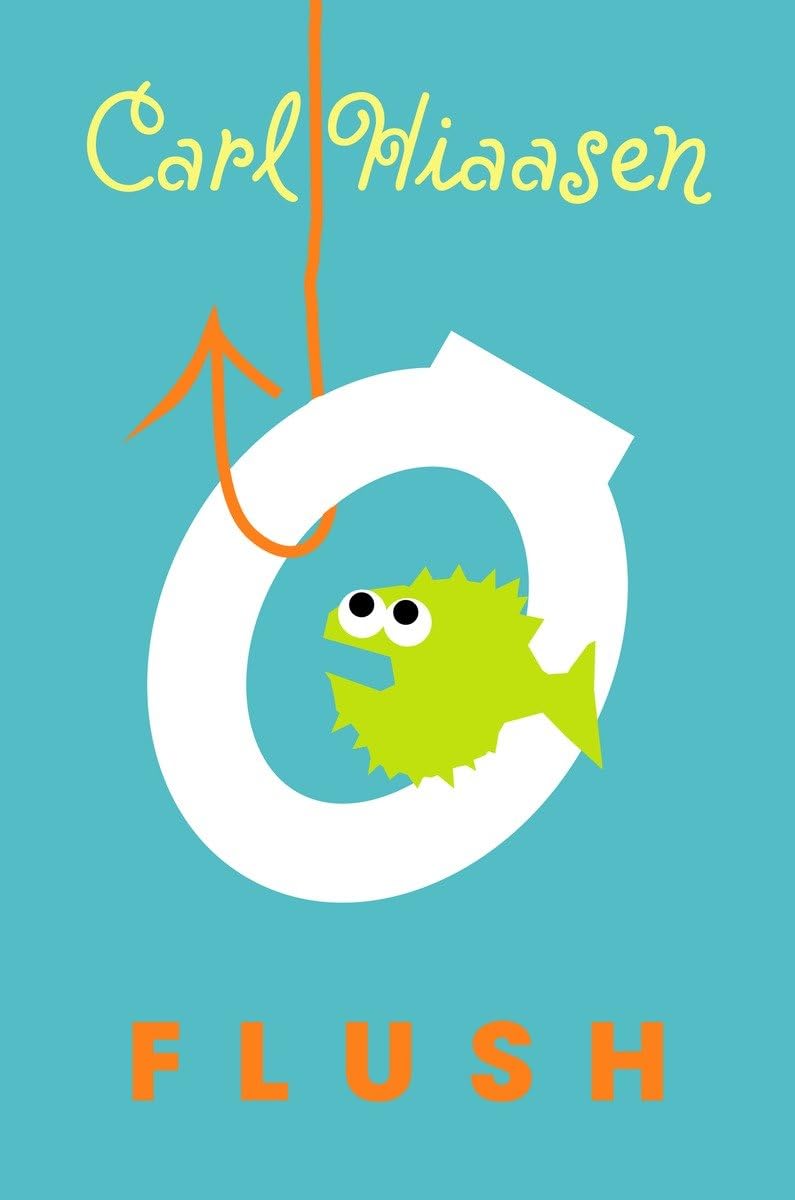
Flush by Carl Hiaasen is a middle-grade environmental adventure about a Florida boy whose father is in jail for sinking a gambling boat he believes is illegally dumping sewage into the waters near their home — and who decides to prove his father right. Fast-moving, funny, and genuinely suspenseful, it delivers its environmental message through plot rather than lecture. This complete guide covers Flush‘s reading level, recommended age, content considerations, characters, themes, and books similar to Flush, designed for parents, teachers, and students.
For Parents
Flush is a plot-driven adventure with real humor and a satisfying mystery structure. Hiaasen’s adult characters are outlandishly drawn without being mean-spirited, and his young protagonists are capable and resourceful without being implausibly so. Best for readers ages 9–13.
For Teachers
A strong independent reading choice for grades 4–7, particularly useful for units on environmental stewardship, Florida ecosystems, and civic responsibility. Pairs naturally with Hoot for a Hiaasen unit, or with Holes for a unit on young people uncovering adult wrongdoing.
Flush at a Glance
Find on Amazon →| Author | Carl Hiaasen |
| Published | 2005 |
| Grade Level | 4–7 (our assessment) |
| Recommended Age | 9–13 |
| Flesch-Kincaid Grade | ~5.1 |
| Word Count | ~60,000 |
| Pages | 263 (Yearling paperback) |
| Chapters | 22 |
| Genre | Realistic fiction / mystery / adventure |
| Setting | The Florida Keys, contemporary |
For official Lexile and AR levels, visit Lexile.com or AR BookFinder. ReadingVine provides independent editorial assessments.
What Reading Level Is Flush?
Flush reads at approximately a 4th–7th grade level by our editorial assessment, with a Flesch-Kincaid grade level of around 5.1. Hiaasen writes with a journalist’s instinct for clear, direct prose — sentences are short, chapters are brisk, and the plot keeps moving. A confident 4th-grade reader can handle the text comfortably, and the book remains engaging through 7th grade.
The humor is accessible to a wide age range, though older readers in the 11–13 range will pick up more of Hiaasen’s satirical edge — the absurdity of adult behavior, the indifference of local authorities, the specific ridiculousness of the villain. For readers who have already enjoyed Hoot, Flush will feel immediately familiar in tone and will likely be read just as quickly. For official Lexile and AR scores, visit Lexile.com or AR BookFinder. ReadingVine’s assessments are independent editorial judgments.
What Age Is Flush Appropriate For?
We recommend Flush for readers ages 9–13. The novel contains no sexual content and no significant violence. That said, there are a few things worth knowing before handing it to a younger reader.
The emotional difficulty in Flush is mostly domestic: Noah’s father’s arrest puts real strain on the family, his parents are effectively separated for much of the book, and the threat to the family’s stability is genuine rather than easily dismissed. A supporting character deals with the aftermath of alcoholism. The Florida Keys adult world Hiaasen depicts — bar fights, heavy drinkers, morally flexible characters — is rendered with his characteristic specificity rather than cleaned up for younger readers. None of this is beyond the recommended age range, but parents of children at the younger end (8–9) who are sensitive to parental conflict or family instability should be aware that Noah’s home situation is strained for much of the book before it resolves.
For most readers 9 and up, the family tension gives the novel more emotional grounding than a straight environmental caper would have, and Hiaasen handles it with warmth. The resolution is satisfying without being false.
What Is Flush About?
Noah Underwood’s father Paine is in jail. He put himself there by ramming his boat into the Coral Queen — a gambling vessel moored in the Florida Keys — because he is certain the Coral Queen has been pumping raw sewage directly into the surrounding waters rather than paying to have it properly disposed of. Nobody believed him, nobody investigated, and so he took matters into his own hands. Noah’s mother is furious. Noah, privately, thinks his father might be right.
The novel follows Noah and his younger sister Abbey as they set out to gather the evidence their father couldn’t — to prove that Dusty Muleman, the Coral Queen’s slippery owner, is doing exactly what Paine Underwood says he is. Their investigation involves surveillance, a reluctant alliance with a woman named Shelly who works on the boat, the unexpected help of their father’s old fishing buddy Luno, and a plan that gets progressively more audacious the deeper they go.
The environmental stakes are real — polluted waters, damaged coral reefs, the specific marine life of the Keys — but they are delivered through the story rather than imposed on it. Dusty Muleman is not a sophisticated villain but a greedy, blusterous one; the local authorities are indifferent in the particular way of institutions that have decided something isn’t their problem; Noah’s father is principled to the point of impracticality. Against all of them stand two resourceful kids who understand that the adults around them are not going to fix this on their own.
Flush Characters
Is Flush Banned?
Flush has not been banned or formally challenged in American schools or libraries and does not appear on any lists of frequently challenged books. It is widely shelved and assigned without controversy. Like Hoot, it has been embraced by educators looking for environmental fiction that engages readers through story rather than message.
Flush Themes and Lessons
Hiaasen’s consistent preoccupation across his middle-grade novels is the relationship between principled individuals and institutions that have decided not to care — and what ordinary people, particularly young people, can do when official channels are indifferent. Flush makes this argument in a more personal register than Hoot because Noah’s stakes are familial as well as environmental: he is simultaneously running a civic investigation and trying to prove his father right. These two motivations are never cleanly separated, and that entanglement gives the novel more emotional depth than its adventure-story surface suggests.
The sewage dumping at the center of the plot is not hypothetical — illegal dumping by vessels in coastal waters was and remains a real and documented problem. Hiaasen’s journalism background gives the environmental detail a specificity and credibility that goes well beyond what a typical middle-grade adventure would provide, and the novel’s argument about what happens when regulation fails is grounded in actual Florida history rather than invented for plot purposes.
Discussion questions for families and classrooms: Was Paine Underwood right to sink the Coral Queen even though it landed him in jail? What makes Noah and Abbey effective investigators when the adults around them aren’t? How does Hiaasen use humor to make a serious environmental argument — does it work? What does the novel suggest about what ordinary people can do when institutions fail to act?
How Many Pages and Chapters in Flush?
The Yearling paperback edition of Flush is 263 pages across 22 chapters. At roughly 60,000 words, it is a mid-length novel for its age range — slightly shorter than Hoot — and most readers in the target range will finish it in about a week of comfortable reading. The chapters are well-paced, the mystery structure keeps the plot pulling forward, and Hiaasen’s humor ensures no stretch of the book feels like a slog.
For classroom use, the novel works well in a two-week unit and pairs naturally with a research component on Florida coastal ecosystems or water pollution. The mystery structure — gathering evidence, building a case, executing a plan — also makes it a useful text for discussing narrative tension and plot construction.
Books Similar to Flush
About Carl Hiaasen
Carl Hiaasen was born in 1953 in Plantation, Florida, and has lived in the state for almost his entire life. He studied journalism at the University of Florida and joined the Miami Herald in 1976, where he has been a columnist and investigative reporter for nearly five decades. His columns — caustic, funny, and relentlessly focused on Florida’s political corruption, environmental destruction, and general civic absurdity — have shaped his fiction as much as any literary influence.
Hiaasen turned to middle-grade fiction with Hoot in 2002, which won a Newbery Honor. Flush followed in 2005, and Scat in 2009. All three draw directly on his career as an environmental journalist and his intimate knowledge of Florida’s ecosystems, politics, and people. He lives in Islamorada, in the Florida Keys — the setting of Flush — which gives the novel’s depiction of Keys water and marine life an authority that is not accidental.
Flush: Frequently Asked Questions
What reading level is Flush?
Flush has a Flesch-Kincaid grade level of approximately 5.1. Our editorial assessment places it at grades 4–7 (ages 9–13). The prose is clear and propulsive, and the mystery structure keeps pages turning. For official Lexile and AR scores, visit Lexile.com or AR BookFinder.
What grade is Flush appropriate for?
We recommend grades 4–7 as the primary range. Strong 4th-grade readers will engage with it comfortably; the satirical edge of Hiaasen’s adult characters lands with more force for readers 11 and up. It is most commonly read in 5th and 6th grade.
How many pages are in Flush?
The Yearling paperback is 263 pages across 22 chapters. Word count is roughly 60,000 words. Most readers in the target age range finish it in about a week of comfortable reading.
What is Flush about?
Twelve-year-old Noah Underwood’s father is in jail for sinking a gambling boat he believes has been illegally dumping sewage into Florida Keys waters. Noah and his sister Abbey set out to gather the evidence that proves their father right and the boat’s owner guilty — a mystery-adventure that delivers its environmental argument through plot rather than lecture.
Is Flush good for a reluctant reader?
Yes — it is one of the more reliable choices for reluctant readers in grades 5–6 who prefer plot-driven books. The mystery structure creates steady forward momentum, the chapters are well-paced, and Hiaasen’s humor keeps the tone light without undercutting the stakes. Readers who enjoyed Hoot will find Flush immediately comfortable.
How is Flush different from Hoot?
Both are Florida environmental adventures with resourceful young protagonists taking on adult-scale problems. Hoot centers on protecting an owl colony from development; Flush centers on proving illegal sewage dumping. Flush is slightly more personal in its emotional stakes — Noah’s family is directly affected — and its mystery structure is somewhat tighter. Most readers who enjoy one enjoy the other; Hoot is typically read first.
Is Flush part of a series?
No. Flush is a standalone novel. Hiaasen’s three middle-grade novels — Hoot, Flush, and Scat — share a Florida setting and a set of concerns but are independent stories with different characters.
What environmental issues does Flush address?
The novel centers on illegal sewage dumping by commercial vessels into coastal waters — a real and documented problem in Florida and elsewhere. More broadly it addresses the health of the Florida Keys marine ecosystem, the economic pressures that lead businesses to cut environmental corners, and the failure of regulatory systems to enforce environmental law when doing so is inconvenient.