
 = Partner Site
Pictures of Hollis Woods Reading Level: A Complete Guide
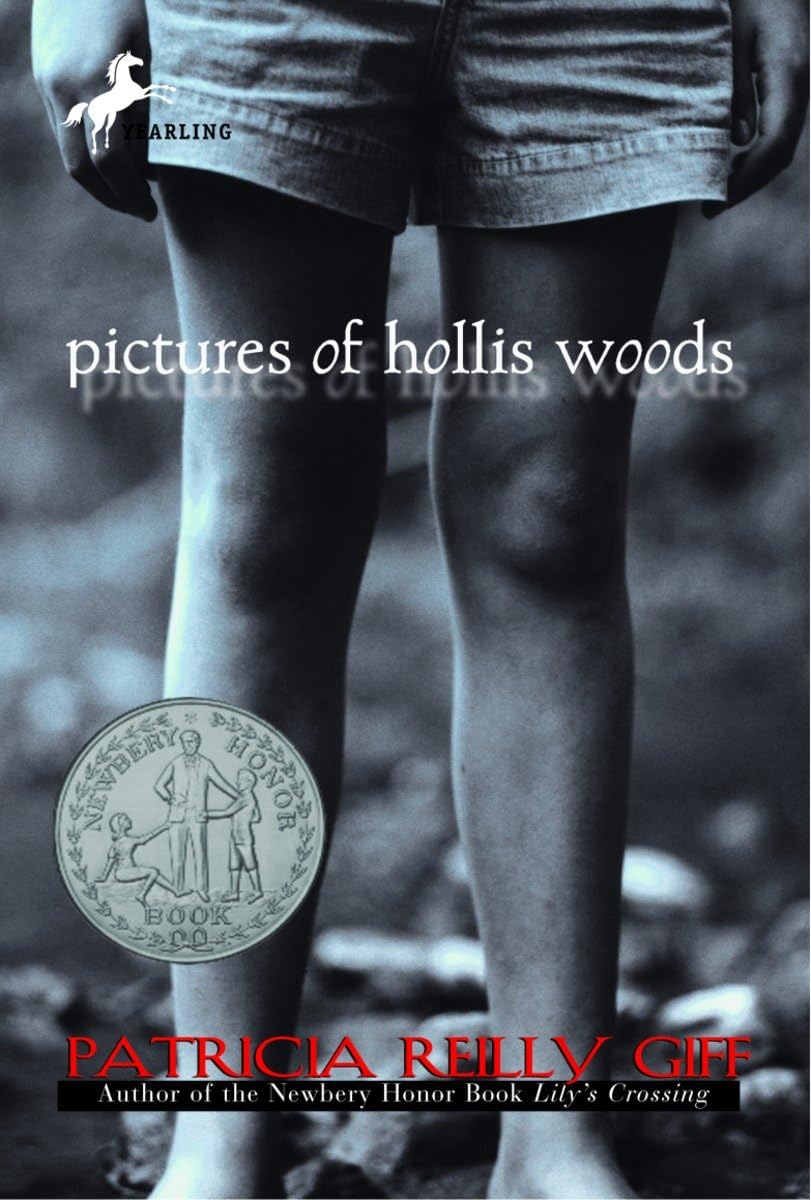
Pictures of Hollis Woods by Patricia Reilly Giff is a luminous, quietly devastating novel about a twelve-year-old girl who has grown up in foster care and carries her most important memories not in words but in pictures — drawings she has made of every place and family she has almost belonged to, and one perfect summer that she cannot stop running from. This complete guide covers Pictures of Hollis Woods’ reading level, recommended age, content considerations, characters, themes, and books similar to Pictures of Hollis Woods, designed for parents, teachers, and students.
For Parents
Pictures of Hollis Woods is a deeply compassionate novel about a child who has spent her life being passed from one foster placement to the next, and what happens when she finally finds a family that feels like her own. The book handles themes of abandonment, grief, and the longing to belong with extraordinary care and emotional intelligence. It is not a dark or hopeless read — Giff’s warmth and Hollis’s resilience carry the story — but parents should be prepared for honest conversations about what it means for a child to feel unwanted. Appropriate for most readers ages 9 and up.
For Teachers
Pictures of Hollis Woods is an outstanding classroom text for grades 4–7, offering rich material for discussions of found family, belonging, trauma and resilience, and how art can serve as a language when words fail. Giff’s dual-timeline structure — alternating between Hollis’s present with Josie and her memories of the Regan family’s mountain — is an excellent teaching tool for discussions of narrative structure, unreliable perspective, and how withheld information creates suspense. The book pairs naturally with discussions of foster care, art as expression, and social-emotional themes of identity and self-worth.
Pictures of Hollis Woods at a Glance
Find on Amazon →| Author | Patricia Reilly Giff |
| Published | 2002 |
| Grade Level | 4–6 (our assessment) |
| Recommended Age | 9–13 |
| Flesch-Kincaid Grade | 4.4 |
| Word Count | ~23,000 |
| Pages | 166 (standard paperback) |
| Chapters | 18 chapters plus picture interludes |
| Genre | Contemporary realistic fiction |
| Setting | New York; a mountain town in upstate New York; present day |
| Awards | Newbery Honor (2003) |
For official Lexile and AR levels, visit Lexile.com or AR BookFinder. ReadingVine provides independent editorial assessments.
What Reading Level Is Pictures of Hollis Woods?
Pictures of Hollis Woods reads at approximately a 4th- to 5th-grade word level by standard readability measures (Flesch-Kincaid grade 4.4), placing it comfortably in the middle-grade range. Our editorial assessment is grades 4–6 for independent reading, with the book most rewarding for readers in grades 5–6. Giff’s prose is spare and lyrical — short chapters, clean sentences, a first-person voice that is immediate and emotionally honest — which makes the book accessible to readers on the younger end of the range while carrying genuine literary depth.
What gives Pictures of Hollis Woods its complexity above the word-level score is Giff’s dual-timeline narrative structure. The story alternates between Hollis’s present — living with Josie, an elderly artist who is beginning to show signs of dementia — and her memories of the summer with the Regan family, delivered as descriptions of the pictures she has drawn. Readers must hold both timelines simultaneously and piece together what happened at the Regans’ mountain that Hollis is still running from. This structural sophistication rewards attentive reading and makes the book more challenging than its surface readability suggests. For official Lexile and AR scores, visit Lexile.com or AR BookFinder.
What Age Is Pictures of Hollis Woods Appropriate For?
We recommend Pictures of Hollis Woods for readers ages 9–13, with the strongest fit at ages 10–12. The book’s accessible prose and compelling protagonist make it approachable for upper elementary readers, while its emotional complexity and narrative structure are equally engaging in middle school. Strong readers as young as 9 can connect with Hollis deeply, particularly children who have experienced displacement, loss, or the feeling of not quite fitting in anywhere.
Pictures of Hollis Woods deals honestly with themes of abandonment, neglect, and the emotional consequences of growing up in foster care. Hollis has been labeled a troublemaker by the system and has internalized a deep belief that she is unwanted and unlovable — a belief the novel works patiently to dismantle. There is a significant accident in the backstory whose details are withheld and gradually revealed, which may be suspenseful or unsettling for some readers. An elderly character shows signs of dementia and declining independence, which may be sensitive for children who have experienced this with a grandparent or family member. There is no profanity, violence, or sexual content. The overall tone is one of quiet hope, but the emotional territory — particularly around a child who believes she does not deserve to be loved — is genuine and handled with full seriousness.
Pictures of Hollis Woods is a particularly meaningful book for children who have experienced instability in their own lives, as well as for children who haven’t but are developing empathy for those who have. Teachers and school counselors frequently recommend it for its honest, non-sensationalized portrayal of what life in the foster system can feel like from the inside.
What Is Pictures of Hollis Woods About?
Twelve-year-old Hollis Woods has been in and out of foster placements her entire life. She is smart, fiercely independent, and deeply talented at drawing — but she has been labeled a troublemaker by the system, and she runs away from every placement she is given. When the novel opens, she has just been placed with Josie Cahill, a retired art teacher who lives alone and recognizes something of herself in Hollis’s fierce, hungry attention to the world. For the first time in memory, Hollis feels almost at home.
But Hollis is carrying a secret. In a box under her bed she keeps a collection of drawings — pictures of every important moment in her life. Among them are pictures from the summer before, when she was placed with the Regan family: a father, a mother, a teenage son named Steven, and a mountain in upstate New York that felt like the first real home she had ever known. Something happened at the Regans’ mountain — something involving an accident and a terrible decision — and Hollis ran away rather than face what she had done. Now, with Josie showing increasing signs of dementia and the social worker threatening to move her to a group home, Hollis must decide whether the Regans are a past she can return to or a wound she cannot reopen.
Patricia Reilly Giff has said that the character of Hollis grew from her years as a reading teacher, during which she encountered many children like Hollis — children with extraordinary gifts and complicated histories who had learned to protect themselves by making themselves difficult to love. The novel is structured around the pictures Hollis draws, with each chapter in the present alternating with a “picture” chapter in which Hollis describes a drawing and the memory it holds, slowly revealing what happened the summer before.
Pictures of Hollis Woods Characters
Pictures of Hollis Woods Themes and Lessons
At the center of Pictures of Hollis Woods is a question that the novel turns over from every angle: what does it take for a child who has been told, implicitly and explicitly, that she is unwanted, to believe that she deserves to be loved? Hollis’s deepest wound is not any single abandonment but the accumulated weight of them — the way she has learned to read the moment a placement is about to end, the way she runs before she can be sent away, the way she has come to understand herself as a problem to be solved rather than a person to be known. Giff renders this inner life with extraordinary compassion and precision, never sentimentalizing Hollis’s situation but never losing sight of her humanity either.
The novel also makes a sustained argument for the power of art as a form of language and memory. Hollis cannot always find words for what she feels, but she can draw it — and her pictures are not just illustrations but a kind of emotional record, a way of keeping the people and places she has loved even after she has had to leave them. This makes the book a natural touchpoint for discussions of how creative expression can give form to experiences that resist ordinary language. Discussion questions worth exploring: Why does Hollis run away from every placement, including ones she wants to stay in? What do the pictures represent for Hollis, and why does she keep them hidden? How does Josie’s dementia change what Hollis is able to give her — and receive from her? What does the novel suggest about what it means to belong somewhere?
How Many Pages and Chapters Are in Pictures of Hollis Woods?
Pictures of Hollis Woods is 166 pages in the standard paperback edition. The book’s structure is distinctive: it alternates between numbered present-day chapters — 18 in total — and “picture” interludes in which Hollis describes one of her drawings and the memory it contains, revealing her past with the Regan family piece by piece. The word count is approximately 23,000 words, making it a brief but emotionally substantial novel. At an average upper-elementary reading pace of around 200 words per minute, most readers in the target age range finish the book in 3–4 hours of total reading time, typically over one to two weeks of 20–30 minute daily reading sessions. The alternating structure means the chapters are short and varied in texture, which gives the book strong momentum and makes it easy to read in focused sessions. It is also well-suited for classroom read-aloud, where the picture interludes can generate focused discussion about what Hollis is and isn’t telling us.
Books Similar to Pictures of Hollis Woods
About Patricia Reilly Giff
Patricia Reilly Giff was born in 1935 in Brooklyn, New York, and worked for many years as an elementary school teacher and reading consultant before turning to writing full time. Her deep experience with children who struggle to read — and with the complicated lives many of them were navigating outside the classroom — shaped her understanding of what young readers need from fiction: honesty, warmth, and protagonists who are genuinely imperfect and genuinely worth caring about. She is the author of more than 100 books for children, ranging from the early-reader Polk Street School series to middle-grade historical fiction and contemporary realism. Her novels Lily’s Crossing (1997) and Pictures of Hollis Woods (2002) both received Newbery Honor recognition. Her Irish-American heritage inspired Nory Ryan’s Song (2000) and its companion Maggie’s Door (2003). Giff founded the Dinosaur’s Paw bookshop in Fairfield, Connecticut, and received the Children’s Literature Legacy Award from the American Library Association in 2019 for her sustained contribution to children’s literature. She has said that Hollis Woods was the character closest to her heart — a child she had met in different forms throughout her years in schools, and one she most wanted readers to understand and love.
Pictures of Hollis Woods: Frequently Asked Questions
What grade level is Pictures of Hollis Woods?
By standard readability measures, Pictures of Hollis Woods reads at approximately a 4th- to 5th-grade word level (Flesch-Kincaid grade 4.4). Our editorial assessment is grades 4–6 for independent reading, with the book most rewarding for readers in grades 5–6. The prose is spare and accessible, but the dual-timeline structure and the emotional complexity of Hollis’s situation give the book genuine depth beyond what the word-level score suggests.
Is Pictures of Hollis Woods a Newbery book?
Yes. Pictures of Hollis Woods received a Newbery Honor in 2003, awarded by the American Library Association to recognize distinguished contributions to American literature for children. It was one of several Honor books that year. The Newbery Honor designation — distinct from the Newbery Medal, which goes to a single book — recognizes books that are considered among the finest children’s novels published in a given year.
Why does Hollis keep running away from her foster placements?
This is one of the novel’s central questions, and Giff answers it slowly and carefully across the book rather than stating it outright. Hollis runs not because she doesn’t want to stay, but because she has learned — through years of placements that ended badly — that leaving on her own terms hurts less than being sent away. She has also internalized the system’s judgment of her as a troublemaker and, on some level, believes that if she stays long enough, any family will eventually discover she isn’t worth keeping. Running is a form of self-protection that has become so automatic she barely recognizes it as a choice anymore.
What is the significance of Hollis’s pictures?
Hollis’s drawings are the novel’s central structural and thematic device. They are the way she keeps the people and places she has loved after she has had to leave them — a private archive of belonging that no placement, no social worker, and no institutional decision can take from her. They are also the way she processes experiences she cannot find words for. Each picture chapter reveals a piece of her past with the Regan family, and the gradual disclosure of what those pictures show creates the novel’s central suspense. Importantly, Hollis’s talent for drawing is also the thing that connects her most deeply to Josie — it is what Josie recognizes in her immediately, and what makes their relationship feel, for the first time, like it might be built on something real.
Is there a movie based on Pictures of Hollis Woods?
Yes. Pictures of Hollis Woods was adapted into a television film by the Hallmark Channel in 2007, starring Sissy Spacek as Josie and AnnaSophia Robb as Hollis. The film is generally faithful to the novel’s emotional arc and is well-regarded as a TV adaptation. It aired as part of Hallmark’s Walden Media presentation and is rated G. Parents should note that, as with most film adaptations, some details and subplots differ from the book.
Who is Josie, and what happens to her in the story?
Josie Cahill is a retired art teacher and sculptor who becomes Hollis’s foster mother — the most sympathetic and understanding placement Hollis has ever had. Josie is warm, artistic, and deeply perceptive, and she sees Hollis’s talent and humanity immediately. However, as the novel progresses it becomes clear that Josie is experiencing dementia: she has good days and bad days, sometimes loses track of where she is in time, and is increasingly unable to manage her own life safely. This creates the novel’s central practical tension — Hollis knows that if she tells the social worker what is happening with Josie, Josie will lose her independence and Hollis will lose the only placement she has ever wanted to stay in. The question of what to do for Josie — and what Josie would want — becomes the moral crux of the story.
What happened at the Regans’ mountain?
The details of what happened at the Regan family’s mountain are withheld throughout most of the novel and revealed gradually through Hollis’s picture chapters — discovering the full truth is part of the reading experience, and sharing it in full here would diminish the book’s carefully built suspense. What can be said: there was an accident involving Steven Regan, Hollis believes she was responsible, and she ran away from the family rather than face the consequences. The novel’s resolution requires Hollis to return to the Regans — and to what happened — in order to move forward.
Is Pictures of Hollis Woods appropriate for a child in foster care?
Many educators, counselors, and social workers recommend Pictures of Hollis Woods specifically for children who have experience with the foster system, because it depicts that experience from the inside with honesty and dignity — without sensationalizing it or reducing Hollis to her circumstances. Hollis is a fully realized person, not a symbol of a social problem, and children who recognize her situation may find the book powerfully validating. That said, some scenes — particularly around abandonment and the fear of being sent away — may resonate very personally for children with similar experiences, and reading the book alongside a trusted adult who can facilitate conversation is worth considering.