
 = Partner Site
Nory Ryan’s Song Reading Level: A Complete Guide
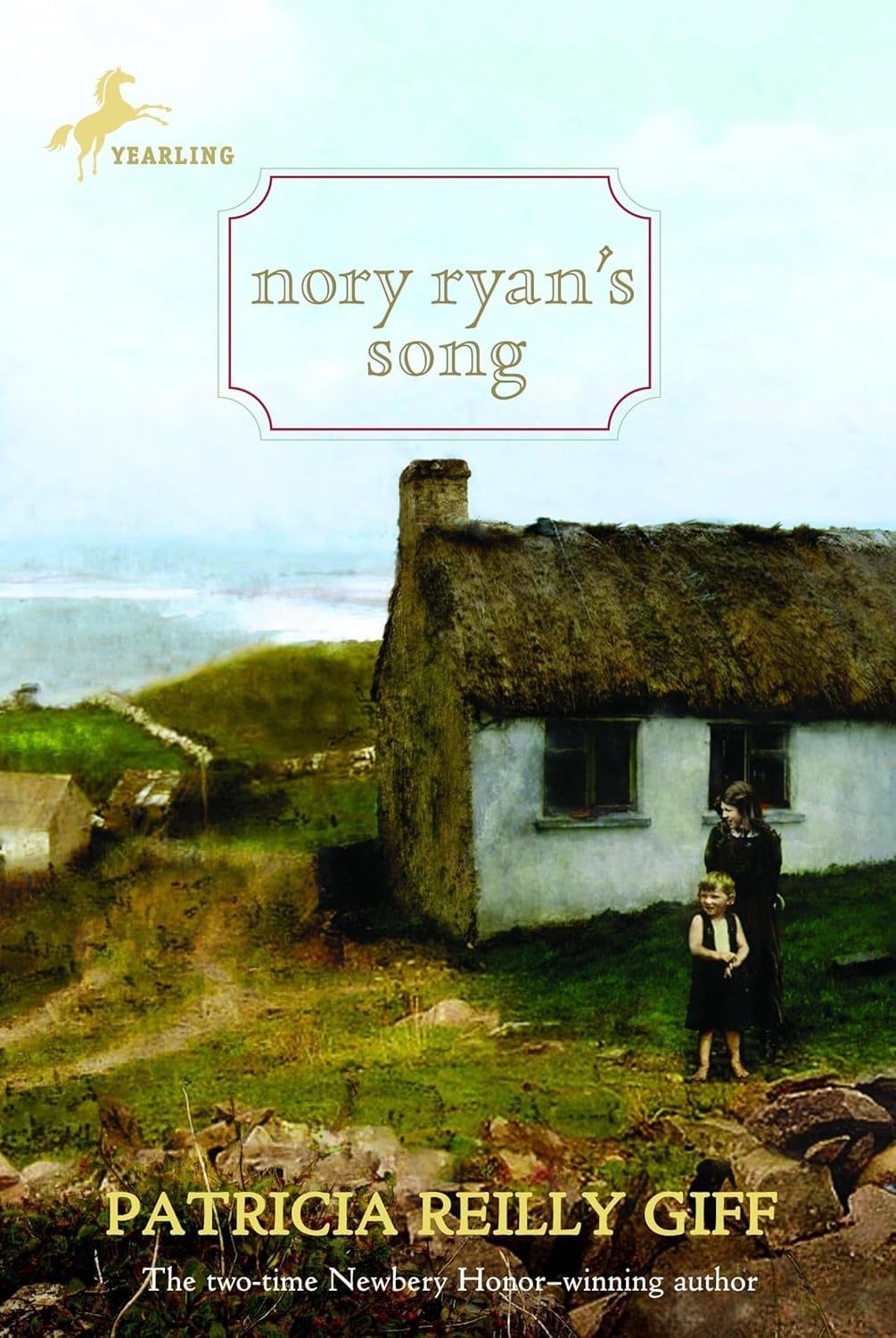
Nory Ryan’s Song by Patricia Reilly Giff is a powerful historical novel about a twelve-year-old Irish girl fighting to keep her family alive during the Great Famine of the 1840s — a story of survival, courage, and the unbreakable love of family told with spare, lyrical prose that lingers long after the last page. This complete guide covers Nory Ryan’s Song’s reading level, recommended age, content considerations, characters, themes, and books similar to Nory Ryan’s Song, designed for parents, teachers, and students.
For Parents
Nory Ryan’s Song is a deeply moving historical novel that does not soften the realities of the Irish Famine — children and adults suffer, people die of starvation, and families are torn apart by poverty and forced emigration. The emotional weight is real and appropriate to the subject. At the same time, Giff’s prose is lyrical and warm, and Nory herself is a resilient, determined protagonist whose spirit carries readers through the darkest passages. Most parents find it appropriate for readers ages 9 and up, though families should be prepared for honest conversations about historical hardship and injustice.
For Teachers
Nory Ryan’s Song is an outstanding classroom text for grades 4–7, particularly for units on immigration, the Irish Famine, social justice, or historical fiction. Giff’s lyrical first-person prose rewards close reading, and Nory’s fierce loyalty to her family and community provides rich material for discussions of resilience, injustice, and what individuals can do in the face of systemic hardship. The book pairs naturally with nonfiction resources on the Great Famine and immigration to America, and works well alongside Giff’s companion novel Maggie’s Door, which continues Nory’s story.
Nory Ryan’s Song at a Glance
Find on Amazon →| Author | Patricia Reilly Giff |
| Published | 2000 |
| Grade Level | 4–6 (our assessment) |
| Recommended Age | 9–13 |
| Flesch-Kincaid Grade | 4.6 |
| Word Count | ~24,000 |
| Pages | 148 (standard paperback) |
| Chapters | 22 |
| Genre | Historical fiction |
| Setting | Maidin Bay, County Mayo, Ireland; 1845–1846 |
| Awards | ALA Notable Children’s Book; New York Public Library Best Books for Reading and Sharing |
For official Lexile and AR levels, visit Lexile.com or AR BookFinder. ReadingVine provides independent editorial assessments.
What Reading Level Is Nory Ryan’s Song?
Nory Ryan’s Song reads at approximately a 4th- to 5th-grade word level by standard readability measures (Flesch-Kincaid grade 4.6), placing it comfortably in the middle-grade range. Our editorial assessment is grades 4–6 for independent reading, with the book most rewarding for readers in grades 5–6. Giff’s prose is deliberately spare and lyrical — short chapters, clean sentences, and a first-person voice that feels immediate and intimate — which makes the book accessible even to readers on the younger end of the range.
What elevates Nory Ryan’s Song above its word-level difficulty is the emotional and historical complexity of its subject matter. The Irish Famine is a devastating historical event, and Giff does not simplify it. Readers who engage fully with the book will be grappling with questions of injustice, survival, grief, and resilience that go well beyond what a 4th-grade readability score might suggest. The book’s brevity — just 148 pages — also means that every scene carries significant weight, and attentive readers will find a great deal to think about in what is left unsaid as well as what is on the page. For official Lexile and AR scores, visit Lexile.com or AR BookFinder.
What Age Is Nory Ryan’s Song Appropriate For?
We recommend Nory Ryan’s Song for readers ages 9–13, with the strongest fit at ages 10–12. The book’s accessible prose and compelling protagonist make it approachable for upper elementary readers, while its historical depth and emotional weight make it equally valuable in middle school. Younger readers who are strong, empathetic readers can engage with it meaningfully, especially with adult discussion alongside.
Nory Ryan’s Song deals honestly with the realities of famine and poverty. Characters go hungry — sometimes desperately so — and the threat of starvation is real and sustained throughout the novel. People die, including children, and family members are separated, possibly permanently. The English landlord system that contributed to the Famine’s devastation is portrayed as unjust and harmful to Irish tenants. There is no profanity or sexual content, but there are scenes of genuine hardship, sickness, and loss that may be upsetting for sensitive younger readers. Families reading this together should be prepared to discuss the historical context of the Irish Famine, including British colonial policies and their role in the disaster.
Despite its difficult subject matter, Nory Ryan’s Song is not a hopeless book. Nory’s resilience, her love for her family and her coastal Irish community, and the unexpected kindnesses she encounters along the way give the story genuine warmth. Giff based the novel partly on her own Irish family heritage, and the love she brings to the subject — the landscape, the language, the community — is felt on every page.
What Is Nory Ryan’s Song About?
It is 1845 in the small fishing village of Maidin Bay on the western coast of Ireland, and twelve-year-old Nory Ryan’s world is already precarious. Her father is away fishing in the waters off Galway, her beloved older sister Celia has already emigrated to America, and Nory is left to care for her younger siblings and her grandmother — Granny — on a small plot of land whose rent is owed to the English landlord Lord Cunningham. When the potato crop fails, blighted overnight by a strange disease, the fragile balance of Nory’s world collapses entirely.
With no potatoes and no money for rent, the Ryan family faces eviction, starvation, and the terrifying prospect of the workhouse. Nory, resourceful and fiercely determined, sets out to find food and keep her family together through the first desperate winter of what will become the Great Famine. She forages along the cliffs, trades what she can, and accepts help from a healer woman named Anna who lives on the outskirts of the village and knows things about surviving on the land that most of the villagers have forgotten. Through it all, Nory clings to the hope that her father will return and that one day she will follow Celia to America.
Patricia Reilly Giff drew on her own Irish-American heritage and extensive historical research to write Nory Ryan’s Song. The book is the first in a two-part story; the companion novel Maggie’s Door (2003) follows Nory and her friend Sean on the harrowing journey across the Atlantic to America. Giff’s portrayal of the Famine — the blight, the evictions, the indifference of British authorities, the desperate emigration — is historically grounded and emotionally true.
Nory Ryan’s Song Characters
Is Nory Ryan’s Song a Banned Book?
Nory Ryan’s Song has not been widely banned or challenged, but it has occasionally been flagged by parents and teachers concerned about its depictions of starvation, death, and the suffering caused by British colonial policy during the Irish Famine. Some educators have noted that the book’s clear moral framing of English landlordism as unjust — historically accurate — may require thoughtful classroom contextualization. The book remains widely used in elementary and middle school classrooms, particularly in units on immigration, the Irish Famine, and historical fiction, and is recognized as an ALA Notable Children’s Book.
Nory Ryan’s Song Themes and Lessons
Nory Ryan’s Song is fundamentally a story about what people do when the world fails them — when the systems that are supposed to sustain life (the land, the community, the government) collapse or are deliberately withheld. Giff is unflinching about the role of British colonial policy in transforming a crop failure into a catastrophe: food is exported from Ireland while people starve, landlords evict families who cannot pay rent during a famine, and the English administration’s response is inadequate at best and indifferent at worst. For young readers, this is a powerful early introduction to the idea that historical disasters are rarely purely natural — that human decisions and power structures shape who suffers and how much.
At the same time, the novel is equally about the things that sustain people in the face of that failure: the stubborn love of family, the knowledge passed down through generations, the unexpected kindness of neighbors and strangers, and the fierce refusal to give up. Nory is not a passive victim of history — she acts, she learns, she finds ways to help the people she loves. Discussion questions worth exploring: What role does the English landlord system play in making the Famine worse? How does Nory’s relationship with Anna change her understanding of how to survive? What does the novel suggest about the meaning of home and why it is so hard to leave? How does Giff use the landscape of coastal Ireland to reflect Nory’s emotional state?
How Many Pages and Chapters Are in Nory Ryan’s Song?
Nory Ryan’s Song is 148 pages in the standard paperback edition, divided into 22 short chapters. The word count is approximately 24,000 words, making it a relatively brief novel that reads quickly despite the weight of its subject. At an average upper-elementary reading pace of around 200 words per minute, most readers in the target age range finish the book in 3–4 hours of total reading time — roughly one to two weeks of 20–30 minute daily reading sessions. The short chapters, most running 6–8 pages, make it easy to find natural stopping points and lend themselves well to classroom read-aloud use, where each chapter can generate focused discussion before moving on. A glossary of Irish words and phrases used in the text is included at the back of some editions and is worth consulting as readers move through the novel.
Books Similar to Nory Ryan’s Song
About Patricia Reilly Giff
Patricia Reilly Giff was born in 1935 in Brooklyn, New York, to an Irish-American family whose roots in County Mayo, Ireland, were a constant presence in her childhood. She worked as a teacher and reading consultant for many years before turning to writing full time, and her deep knowledge of how children learn to read — and what makes a story come alive for a reluctant reader — is evident in every book she has written. Giff is the author of more than 100 books for children, including the beloved Polk Street School series for early readers, the Newbery Honor novels Lily’s Crossing (1997) and Pictures of Hollis Woods (2002), and the Nory Ryan duology — Nory Ryan’s Song (2000) and Maggie’s Door (2003). She has said that Nory Ryan’s Song grew directly from her desire to understand and honor the experience of her own Irish ancestors, who survived the Famine and made the crossing to America. Giff founded the Dinosaur’s Paw bookshop in Fairfield, Connecticut, which became a beloved independent children’s bookstore. She received the Children’s Literature Legacy Award from the American Library Association in 2019 in recognition of her lifetime contribution to children’s literature.
Nory Ryan’s Song: Frequently Asked Questions
What grade level is Nory Ryan’s Song?
By standard readability measures, Nory Ryan’s Song reads at approximately a 4th- to 5th-grade word level (Flesch-Kincaid grade 4.6). Our editorial assessment is grades 4–6 for independent reading, with the book most rewarding for readers in grades 5–6. The prose is spare and accessible, but the emotional and historical complexity of the subject matter gives the book significant depth beyond what the word-level score suggests.
Is Nory Ryan’s Song based on a true story?
Nory Ryan herself is a fictional character, but the historical events at the center of the novel are real. The Great Famine — caused by a potato blight that devastated Ireland’s primary food crop between 1845 and 1852 — resulted in the deaths of approximately one million people and the emigration of another million or more, reducing Ireland’s population by roughly 20 to 25 percent. The English landlord system, the inadequate government response, the evictions, and the desperate emigrations Giff depicts are all historically accurate. Patricia Reilly Giff also drew on her own Irish-American family heritage: her ancestors survived the Famine and emigrated to Brooklyn, New York, which is where Nory’s sister Celia has gone at the start of the novel.
Is there a sequel to Nory Ryan’s Song?
Yes. Maggie’s Door (2003), also by Patricia Reilly Giff, is the companion novel that continues the story. It follows Nory and her friend Sean Red on the harrowing Atlantic crossing from Ireland to America, alternating between their two first-person perspectives. The two books work together as a complete arc — Nory Ryan’s Song covers survival in Ireland during the Famine’s first winter, and Maggie’s Door covers the emigration journey itself. Readers who finish Nory Ryan’s Song will almost certainly want to read what comes next.
What was the Irish Famine?
The Irish Famine — also called the Great Famine or An Gorta Mór (“The Great Hunger” in Irish) — was a period of mass starvation, disease, and emigration in Ireland between approximately 1845 and 1852. It was triggered by a potato blight that destroyed successive potato harvests, and potatoes were the primary food source for a large portion of the Irish population. The disaster was significantly worsened by British colonial policies: food continued to be exported from Ireland during the Famine, landlords evicted tenants who could not pay rent, and the British government’s relief efforts were inadequate and often actively obstructive. The Famine killed approximately one million people and caused another million or more to emigrate, primarily to the United States, Canada, and Australia. It remains one of the defining events in Irish history and a major driver of the Irish diaspora in America.
Is Nory Ryan’s Song appropriate for a 4th grader?
Yes, for most 4th graders — though parents and teachers should be prepared for the book’s honest portrayal of famine, starvation, and loss. The reading level is accessible for upper elementary readers, and Nory is a protagonist that 4th graders respond to strongly. The historical content may be new and confronting for some younger readers, which makes the book an especially good choice for classroom use where a teacher can provide context and lead discussion. For independent reading at home, a brief conversation about the Irish Famine before starting the book helps prepare younger readers for what they will encounter.
Who is Anna in Nory Ryan’s Song?
Anna is a healer woman who lives on the outskirts of the village, somewhat apart from the community and regarded with a mixture of suspicion and respect. She has a deep knowledge of the land — what can be eaten from the cliffs and the seashore, what plants have medicinal properties, how to survive on what the natural world provides when the cultivated crops have failed. She becomes an unexpected mentor to Nory, passing on survival knowledge that proves essential through the Famine winter. Anna represents a kind of pre-agricultural, pre-colonial relationship with the Irish landscape that the village community has largely forgotten, and her role in the novel suggests that the wisdom to survive was there all along, if Nory could find the right teacher.
What Irish words appear in Nory Ryan’s Song?
Patricia Reilly Giff weaves a number of Irish words and phrases into Nory’s narration, reflecting the Irish language (Gaeilge) that would have been spoken in County Mayo in the 1840s. Common words include Da (father), Granny used in the Irish familial sense, and various terms of address and endearment. Some editions of the book include a glossary of Irish terms at the back. The Irish words are always used in contexts that make their meaning clear, so readers unfamiliar with Irish will not find them a barrier, but they add an important layer of cultural authenticity to Nory’s voice.
How does Nory Ryan’s Song end?
Without revealing specific plot details, Nory Ryan’s Song ends on a note of fragile, hard-won hope rather than full resolution. The Famine is not over — it will continue for years — and not everything Nory has fought for can be saved. But she has survived the worst of the first winter, and the possibility of a future, in Ireland or in America, remains alive. The ending is emotionally honest rather than tidily happy, and it sets up the continuation of Nory’s story in Maggie’s Door.