
 = Partner Site
An Ember in the Ashes Reading Level: A Complete Guide
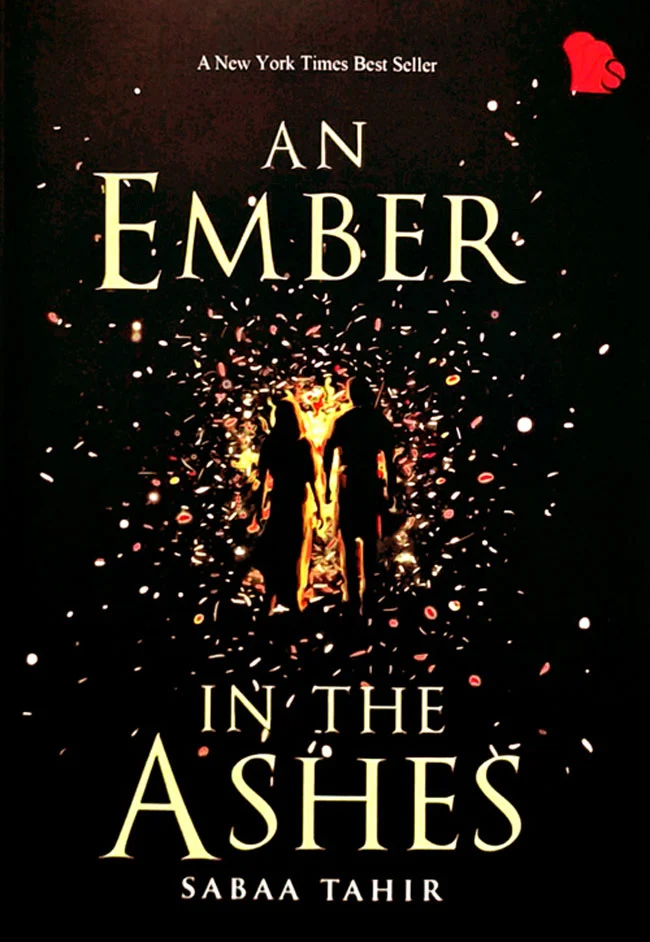
An Ember in the Ashes by Sabaa Tahir is a young adult fantasy novel set in the Martial Empire, a brutal ancient Rome-inspired world in which the Scholar people live as a subjugated underclass, forbidden education, stripped of their culture, and subject to enslavement and execution at the empire’s pleasure. The story follows two protagonists in alternating chapters: Laia, a Scholar girl who agrees to spy inside the empire’s elite military academy to earn the rebels’ help in rescuing her arrested brother; and Elias, the academy’s finest student soldier who has secretly been planning his escape from the very institution that shaped him. Published in 2015 and named one of Time‘s 100 Best Fantasy Books of All Time, it was the first novel in a completed four-book series and one of the titles that helped establish the YA dark fantasy genre. This complete guide covers An Ember in the Ashes‘s reading level, recommended age, content considerations, characters, themes, and books similar to An Ember in the Ashes, designed for parents, teachers, and students.
For Parents
A dark, immersive ancient Rome-inspired fantasy with violence, slavery, torture, and sexual threat as consistent features of the world. More brutal in its content than most YA fantasy — the Martial Empire is genuinely cruel and the novel does not soften it. Appropriate for ages 13 and up despite the publisher’s age 12+ rating; most commonly read in grades 8–10.
For Teachers
An excellent grades 8–10 text for teaching world-building, dual-POV narration, and speculative fiction as a vehicle for exploring oppression. The ancient Roman social structure — Martials as the military ruling class, Scholars as the subjugated intellectual class — is rich with historical connections. Tahir’s real-world inspiration (Kashmiri women whose male relatives were disappeared by the military) is a productive bridge between the fantasy setting and contemporary human rights concerns.
An Ember in the Ashes at a Glance
Find on Amazon →| Author | Sabaa Tahir |
| Published | 2015 (Razorbill / Penguin) |
| Grade Level | 8–10 (our assessment) |
| Recommended Age | 13+ |
| ATOS Reading Level | 5.0 |
| Lexile | HL680L |
| Word Count | 124,337 |
| Pages | 480 (Razorbill paperback) |
| Series | An Ember in the Ashes, Book 1 (series complete, 4 books) |
| Genre | Young adult fantasy / dark fantasy |
| Setting | The Martial Empire (ancient Rome-inspired); fictional world |
For official Lexile and AR levels, visit Lexile.com or AR BookFinder. ReadingVine provides independent editorial assessments.
What Reading Level Is An Ember in the Ashes?
An Ember in the Ashes has an ATOS reading level of 5.0 and a Lexile of HL680L. The “HL” designation in the Lexile score stands for “High/Low” — indicating that the book is written at a lower measured reading level but designed for older readers. This is the Lexile framework’s own acknowledgment of the gap between formula scores and appropriate audience: the prose is accessible and action-driven (hence the lower metric) but the content is clearly for secondary-school readers. The publisher’s own Grade 7+ rating is on the lower end of what the content warrants; our editorial assessment places it at grades 8–10.
The novel’s actual reading challenge — consistent across the YA fantasy titles in this catalog — is less about prose complexity than about scale, sustained engagement, and content maturity. At 124,337 words and 480 pages, it is a commitment comparable to Children of Blood and Bone. The dual-POV structure (alternating between Laia’s and Elias’s first-person narrations) requires tracking two simultaneous plot threads. The world-building — the social hierarchy of Scholars and Martials, the academic trial system, the supernatural Augurs — rewards and repays close attention without requiring prior knowledge of ancient Rome to follow. Most classroom readers complete it in three to four weeks; independent readers who engage fully often finish faster. For official Lexile and AR scores, visit Lexile.com or AR BookFinder. ReadingVine’s assessments are independent editorial judgments.
What Age Is An Ember in the Ashes Appropriate For?
We recommend An Ember in the Ashes for readers ages 13 and up, despite the publisher’s age 12+ rating. The novel’s world is one of genuine brutality: slavery is the social foundation of the empire, and slaves are subject to beatings, torture, and execution for minor infractions or no infraction at all. Sexual threat is a recurring element — particularly the threat to Laia from the Commandant and from male authority figures at the academy. The violence is not gratuitous, but it is specific and sustained in a way that younger readers at the lower end of the publisher’s range are not well-positioned to process.
The Martial Empire’s treatment of Scholar slaves is depicted with considerable specificity: whipping, branding, torture, and execution are not background detail but immediate conditions of the characters’ lives. Laia is in persistent danger of sexual assault throughout the novel — particularly from Commandant Keris Veturia, who uses sexual threat as a control mechanism, and from male soldiers at Blackcliff Academy. An attempted rape occurs in the novel; it is interrupted, but it is depicted directly rather than off-page. Elias’s storyline includes a brutal trial that involves combat to the death between Blackcliff students. Characters die including sympathetic secondary characters. Parents of readers at the lower end of the age recommendation should be aware that this is darker in its sustained treatment of violence and sexual threat than most YA fantasy published for the same market.
What Is An Ember in the Ashes About?
The Martial Empire is a military state built on Roman-style social hierarchy: Martials are the ruling warrior class; Scholars are the subjugated intellectual class, stripped of their history and culture and reduced to slavery or near-slavery. Laia lives in the Scholar slums of Serra with her grandparents and her older brother Darin. Their careful, quiet life — surviving by not attracting attention — shatters when soldiers raid their home, kill her grandparents, and arrest Darin for treason. Laia escapes but cannot rescue him. Desperate and knowing no other option, she approaches the Scholar rebels — a resistance movement she has always been afraid of — and offers to spy inside Blackcliff Military Academy in exchange for their help breaking Darin out of a military prison.
Blackcliff is where the empire trains its deadliest soldiers, the Masks — soldiers who wear faces of silver that fuse to their skin and become literal armor. Elias Veturius is the finest student at Blackcliff, trained since childhood to be a perfect weapon of the state, and the only student there who hates what he is becoming. He has been secretly planning to desert on graduation day. Before that day arrives, the ancient Augurs — supernatural figures who govern the empire’s spiritual order — announce that Blackcliff will host the Trials: a series of violent tests to determine the next Emperor. Elias is chosen as one of four candidates. He cannot refuse. His graduation-day escape becomes impossible.
Laia enters Blackcliff as a slave to the Commandant, Elias’s terrifying mother. She gathers intelligence for the rebels while navigating a world designed to destroy her. Elias, competing in the Trials, begins to understand the price of the empire he serves. Their paths intersect and separate as both are ground against the same machine from different sides. The novel ends with a cliffhanger that reframes the larger conflict and sets up the series’ next three books.
An Ember in the Ashes Characters
Is An Ember in the Ashes Banned?
An Ember in the Ashes has not appeared on the ALA’s most challenged books lists and does not have a significant formal challenge history. Its dark content — slavery, sexual threat, violence — has occasionally been noted in the context of broader curriculum reviews, but it has not generated the sustained challenge activity of the contemporary realistic fiction titles in this catalog. The novel’s fantasy setting appears to provide some insulation from the “anti-police message” or “Critical Race Theory” objections that have been applied to realistic fiction about racial oppression, despite the fact that the empire’s treatment of Scholars is a clear allegory for racial and colonial subjugation.
An Ember in the Ashes Themes and Lessons
The novel’s Roman setting is not decorative — Tahir chose ancient Rome because its social structure was the most precise historical analogue she could find for the system she wanted to depict: a military meritocracy built on slave labor, organized around ethnic subjugation, and sustained by a combination of force, ideology, and the active participation of the subjugated in their own oppression. Scholars are not simply victims; some have internalized the empire’s values, some collaborate for survival, some resist at enormous cost. The texture of the Scholar community’s response to empire is the novel’s most historically grounded element.
Tahir has said the novel began with a newspaper article she read about Kashmiri women whose male relatives were detained by the Indian military and never returned — women who waited for years, not knowing whether to mourn or hope. She asked herself what she would do in that situation. Laia’s predicament is the fantasy translation of that question: what does a person with no power, no connections, and no obvious options do when the person they love has been taken? The answer is not that they become a hero; it is that they do something, and the something costs them, and they do it anyway.
Elias’s storyline provides the novel’s most direct interrogation of complicity. He has benefited from the empire’s structure his entire life; his comfort, his training, and his advantages are all built on the labor and suffering of the Scholars he despises the empire for subjugating. His desire to escape is real and morally serious, but escape is not the same as resistance, and the novel is clear-eyed about this distinction. His arc across the series is, in part, a question of whether a person who has been trained to be an instrument of oppression can become something else — and what that transformation actually requires.
Discussion questions for classrooms and families: What does the novel argue about the difference between escape and resistance — is Elias’s desire to desert an act of moral courage? How does Laia’s fear function throughout the novel — where does it protect her and where does it trap her? What does the Scholar community’s varied response to empire tell us about how systems of oppression sustain themselves? How does the ancient Roman setting both clarify and limit the novel’s political argument — what does the historical analogy gain, and what does it obscure? What does Helene’s loyalty to the empire say about how ideology shapes even people who are capable of recognizing its costs?
How Many Pages and Chapters in An Ember in the Ashes?
The Razorbill paperback is 480 pages; word count is 124,337. The novel is structured in alternating chapters between Laia’s and Elias’s first-person narrations. Individual chapters are short — most run five to ten pages — which gives the novel the same propulsive quality as Children of Blood and Bone despite its length. Most classroom readers complete it in three to four weeks; independent readers who are drawn into the world often finish considerably faster. The book ends on a cliffhanger and is the first in a completed four-book series.
Books Similar to An Ember in the Ashes
About Sabaa Tahir
Sabaa Tahir was born in England and grew up in the Mojave Desert in California, where her family ran an eighteen-room motel. She graduated from UCLA and worked as a newspaper editor — first at a small California paper, then at The Washington Post — while writing the novel over a period of approximately six years. The idea crystallized while she was working at The Washington Post, where she read an article about Kashmiri women whose male relatives had been detained by the Indian military and never returned. She asked herself what she would do if she were one of those women, and the answer became Laia’s story.
Film rights to the series were optioned by Paramount Pictures in a seven-figure deal before the book was even published — an unusual sign of commercial confidence in a debut author. The novel debuted at #2 on the YA New York Times bestseller list in 2015. The series continued with A Torch Against the Night (2016), A Reaper at the Gates (2018), and A Sky Beyond the Storm (2020). Tahir’s subsequent standalone novel, All My Rage (2022), won the National Book Award for Young People’s Literature, the Michael L. Printz Award, and the Boston Globe-Horn Book Award for Fiction and Poetry — a complete sweep of the major YA literary prizes in a single year. She lives in the San Francisco Bay Area.
An Ember in the Ashes: Frequently Asked Questions
What reading level is An Ember in the Ashes?
An Ember in the Ashes has an ATOS reading level of 5.0 and a Lexile of HL680L. The “HL” (High/Low) designation acknowledges that the book is written at a lower measured reading level but designed for older readers — the Lexile framework’s own recognition of the formula-score gap. Our editorial assessment places it at grades 8–10, ages 13 and up. For official Lexile and AR scores, visit Lexile.com or AR BookFinder.
What grade is An Ember in the Ashes appropriate for?
We recommend grades 8–10, ages 13 and up. The novel contains slavery with specific depictions of beatings and torture, persistent sexual threat to the protagonist, an attempted rape, and combat-to-death sequences. The publisher rates it age 12+, Grade 7+; the content warrants our more conservative recommendation.
How many pages are in An Ember in the Ashes?
The Razorbill paperback is 480 pages; word count is 124,337. Most classrooms complete it in three to four weeks. Short alternating chapters between two POV characters give the novel a propulsive pace despite its length.
What is An Ember in the Ashes about?
In the ancient Rome-inspired Martial Empire, Scholar girl Laia agrees to spy inside the empire’s elite military academy to earn the rebels’ help rescuing her arrested brother. Inside, she encounters Elias — the academy’s best soldier who secretly despises the empire he serves. Alternating chapters follow both characters as they navigate a brutal system from opposite sides, with the fate of the empire shifting between them.
What is the real-world inspiration for An Ember in the Ashes?
Tahir began developing the novel after reading a newspaper article about Kashmiri women whose male relatives had been detained by the Indian military and never returned. She asked herself what she would do in that situation, and Laia’s story grew from that question. The Martial Empire’s subjugation of Scholars draws on ancient Roman social structure — the use of an enslaved intellectual class by a military ruling class — as a historical model for understanding how colonial-style oppression works.
How many books are in the An Ember in the Ashes series?
Four books — the series is complete: An Ember in the Ashes (2015), A Torch Against the Night (2016), A Reaper at the Gates (2018), and A Sky Beyond the Storm (2020). A prequel graphic novel trilogy has also been published. The series has sold over three million copies and been translated into more than thirty-five languages.
Is there an An Ember in the Ashes movie?
Film rights were optioned by Paramount Pictures in a seven-figure deal before the book’s publication, with producer Mark Johnson (Breaking Bad, The Chronicles of Narnia) attached. As of 2026, no film has been released and no confirmed production timeline has been publicly announced.
What is the difference between An Ember in the Ashes and Children of Blood and Bone?
Both are dual-POV YA fantasies about protagonists from opposing sides of an oppressive hierarchy who are drawn together, drawing on non-European cultural traditions. Children of Blood and Bone draws on Yoruba mythology in a West African-inspired world and is an explicit allegory for police violence against Black Americans. An Ember in the Ashes draws on ancient Roman social structure in a more generalized imperial world, with its real-world origin in Kashmiri disappearances. Both were cited by each author as an influence on the other. The Ember series is slightly darker and more violent in sustained content.