
 = Partner Site
The Hate U Give Reading Level: A Complete Guide
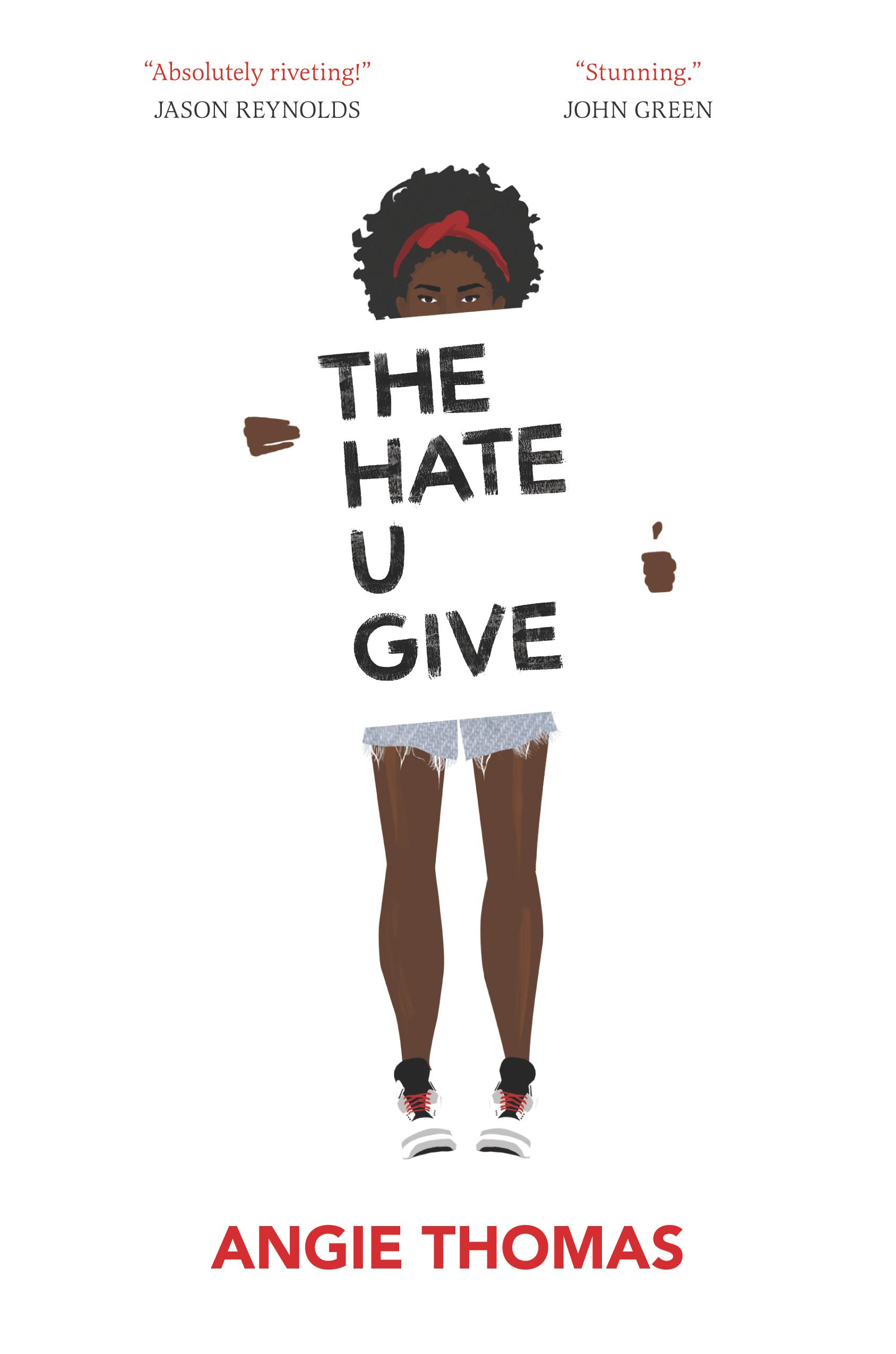
The Hate U Give by Angie Thomas is a novel about Starr Carter, a sixteen-year-old Black girl who moves between two worlds — the Garden Heights neighborhood where she lives and the predominantly white prep school she attends — and who watches her childhood friend Khalil shot and killed by a police officer during a traffic stop. Khalil was unarmed. What Starr does with what she saw — whether she speaks, to whom, at what cost — is the novel’s central question. Published in 2017 and inspired by the Black Lives Matter movement, it debuted at #1 on the New York Times young adult bestseller list and stayed there for fifty weeks. It won the Coretta Scott King Honor, the Printz Honor, and the William C. Morris Award, among others. It has also appeared on the ALA’s most challenged books list every year since its publication. This complete guide covers The Hate U Give‘s reading level, recommended age, content considerations, characters, themes, and books similar to The Hate U Give, designed for parents, teachers, and students.
For Parents
A first-person YA novel about the immediate and extended aftermath of a police shooting of an unarmed Black teenager, told by the witness. Contains profanity, drug use, gang violence, racial slurs (used in context), and frank depictions of racism and police violence. Appropriate for ages 13 and up; most commonly assigned in grades 9–11.
For Teachers
An outstanding grades 9–11 text for teaching code-switching, voice, systemic racism, and the relationship between individual experience and social structures. Thomas writes Starr’s voice in vernacular Black English that is the novel’s most significant formal achievement — it is not “incorrect” English but a specific register with its own grammar, expressiveness, and social meaning. The challenge history — specifically the “anti-police” framing — is worth addressing directly as part of the unit.
The Hate U Give at a Glance
Find on Amazon →| Author | Angie Thomas |
| Published | 2017 (Balzer + Bray / HarperCollins) |
| Grade Level | 9–11 (our assessment) |
| Recommended Age | 13+ |
| ATOS Reading Level | 3.9 |
| Lexile | 590L |
| Word Count | 95,981 |
| Pages | 464 (Balzer + Bray hardcover); 480 (paperback with antiracism guide) |
| Chapters | 26 |
| Genre | Young adult / contemporary fiction |
| Setting | Garden Heights (fictional city); present day |
| Awards | Coretta Scott King Honor (2018); Printz Honor (2018); William C. Morris Award (2018) |
For official Lexile and AR levels, visit Lexile.com or AR BookFinder. ReadingVine provides independent editorial assessments.
What Reading Level Is The Hate U Give?
The Hate U Give has an ATOS reading level of 3.9 and a Lexile of 590L — scores that would suggest a 4th-grade text and are dramatically at odds with the novel’s actual content and the grades 9–12 interest level that Booksource, TeachingBooks, and the publisher all assign it. This is the most extreme formula-score gap in this catalog for a novel assigned at grades 9–11, and it deserves a full explanation.
The gap exists because Thomas writes in Starr’s authentic voice — vernacular Black English, the specific register of a sixteen-year-old girl from a specific community — and that voice uses shorter sentences, informal syntax, and vocabulary that is more conversational than literary. The Lexile and ATOS algorithms read this as low complexity. What they are actually measuring is not the novel’s intellectual or emotional demands but the phonetic and syntactic features of a specific English dialect. Vernacular Black English is not grammatically simplified English; it is a full language variety with its own rules, its own expressiveness, and its own literature. Scoring it low on complexity metrics designed around standard written American English is a measurement failure, not an accurate description of difficulty.
The novel’s actual demands — understanding systemic racism, code-switching, the social and legal mechanics of police shootings, gang dynamics, and the specific pressures on a Black teenager navigating predominantly white spaces — are not captured by any formula score. A fourth-grader could decode the sentences; a fourth-grader cannot bring what the novel requires to make sense of them. At 95,981 words and 464 pages across 26 chapters, most classroom readers complete it in three to four weeks. For official Lexile and AR scores, visit Lexile.com or AR BookFinder. ReadingVine’s assessments are independent editorial judgments.
What Age Is The Hate U Give Appropriate For?
We recommend The Hate U Give for readers ages 13 and up. The novel contains profanity throughout (Starr’s voice is authentic, not sanitized), drug use, gang violence including a shooting at a party in the first chapter, racial slurs used in context and by characters of various races, and the shooting of an unarmed Black teenager by a police officer — which is depicted in the opening chapters with the same directness and horror that Starr experiences it with.
Khalil’s shooting occurs in Chapter 2 and is depicted in detail — Starr is in the car, she sees it happen, she describes it with complete clarity. This is not softened or handled at a distance; it is the novel’s central event and is treated with the weight it deserves. The novel also depicts a drive-by shooting at a party (Chapter 1), gang intimidation of Starr’s family, and protests and riots in response to the grand jury’s decision not to indict the officer. There are also references to drug dealing (Khalil was dealing for the local gang lord to pay his family’s bills) and to a character’s drug addiction. The profanity is consistent and idiomatic — this is how Starr talks — and includes racial slurs used by characters of various races, each use carrying its own specific social weight that the novel is attentive to. The sexual content is mild: some kissing and references to a sexual relationship. Parents who are concerned about any of this content should read the opening chapters themselves before assigning.
What Is The Hate U Give About?
Starr Carter grew up in Garden Heights, a predominantly Black neighborhood with a strong community, a drug lord named King who runs the local gang, and a poverty that her parents have worked hard to give their children options beyond. Her father Maverick was once a King Lord — he has the tattoo and the history — and left the gang after a stint in prison, operating a grocery store in the neighborhood while raising Starr and her brothers Seven and Sekani. Starr attends Williamson Prep, a mostly white school thirty minutes away, where she maintains a careful version of herself: “Williamson Starr” doesn’t use slang, doesn’t get angry, doesn’t say or do anything that would make her classmates think she’s a “typical Black girl.” The management of this dual identity is the novel’s opening condition.
At a party in Garden Heights, Starr runs into Khalil, her childhood best friend. They leave together to avoid a developing fight. A police officer — identified in the novel only as “One-Fifteen” — pulls them over. Khalil gets out of the car. One-Fifteen shoots him. Starr watches from the passenger seat. Khalil dies at the scene. The investigation and its aftermath consume the rest of the novel: Starr’s family trying to protect her identity as the witness, the media portraying Khalil as a drug dealer and thug, a grand jury failing to indict One-Fifteen, the community erupting in protests, and King threatening Starr and her family because Khalil’s dealing history could implicate him.
Starr’s journey through the novel is a journey toward using her voice. She speaks to police detectives (once, cautiously, at her family’s insistence). She speaks to a civil rights attorney. She gives a television interview with her face hidden. She eventually speaks openly, at the protest, in front of cameras and her school friends and everyone. Each step costs her something — her relationship with her boyfriend Chris, her friendship with Hailey, her safety, her sense of control over the story of what happened to Khalil — and each step is also a reclamation of the version of herself she has been suppressing. The novel ends with Starr still in Garden Heights, still at Williamson Prep, still navigating both worlds — but no longer willing to be silent in either one.
The Hate U Give Characters
Is The Hate U Give Banned?
The Hate U Give appeared on the ALA’s most challenged books list in 2017, 2018, 2020, and 2021. Stated reasons include profanity, violence, drug use, and the claim that it promotes “an anti-police message” and “indoctrination of a social agenda.” In late 2017, the Katy Independent School District in Texas removed the book from all school library shelves after a single parent complaint, in violation of the district’s own review policies. The superintendent cited “pervasive vulgarity and racially-insensitive language” while explicitly claiming the removal was not based on “substantive content or viewpoint.” A student named Ny’Shira circulated a petition that gathered over 3,700 signatures; the superintendent held firm; the book was eventually returned to high school libraries available to students with parental consent. In 2022, the Edgerton, Minnesota school board voted 5–0 to remove it from the freshman curriculum, citing profanity and — notably — “its omission of the police officer’s viewpoint.”
The “anti-police” framing deserves direct examination. Thomas has consistently pointed out that the novel contains multiple police characters, including Uncle Carlos, who is a detective and one of the most beloved figures in the book. Carlos is based on members of Thomas’s own family in law enforcement, and his scenes explicitly grapple with the conflict of being a Black police officer inside an institution that is also the agent of racial violence. The novel is not anti-police in the sense of arguing that individual officers are uniformly malicious. It is critical of the systems, policies, and cultures that produce outcomes like Khalil’s death — a distinction that the “anti-police” label collapses rather than illuminates.
The Edgerton school board’s stated requirement for “the police officer’s viewpoint” is perhaps the most revealing challenge reason in this catalog. No challenge to The Crucible has required the inclusion of the Puritan court’s viewpoint. No challenge to Things Fall Apart has required the District Commissioner’s perspective. The demand that a novel about a police shooting represent the police officer’s viewpoint is not a literary standard applied consistently across the curriculum; it is a political standard applied specifically to a novel about racial violence. Students in North Allegheny, Pennsylvania, who organized in defense of the book in 2021, understood this: one student wrote in the school newspaper that “the complaints were officially about drug use and language, but I think that it is the underlying discomfort with the ideas of police brutality and racism discussed in the book.”
The Hate U Give Themes and Lessons
The novel’s title is explained by Maverick early in the book: Tupac Shakur’s acronym THUG LIFE stands for “The Hate U Give Little Infants F***s Everybody.” Tupac’s argument was that the hatred society directs at children — through poverty, neglect, criminalization, and the absence of opportunity — is returned by those children to society as they grow. This is not a justification for violence; it is a structural argument about cause and effect. Maverick teaches it to his children as a way of helping them understand where they live and why, and as a way of naming the forces acting on them so they can navigate those forces rather than simply be consumed by them.
Code-switching — the practice of adjusting one’s language, behavior, and presentation to fit different social contexts — is Starr’s most practical survival tool and the novel’s most instructive portrait of what life in two worlds costs. “Williamson Starr” speaks differently, sits differently, laughs differently, and does not get angry in ways that might confirm her classmates’ assumptions. This is not dishonesty; it is self-protection under conditions where the authentic self is not safe. The novel treats code-switching as a skill, a burden, and a source of profound exhaustion — and it asks the reader to understand that the exhaustion is not Starr’s failure but the failure of the environments that require it of her.
The media’s narrative about Khalil — that he was a drug dealer and a gang member who brought his fate on himself — is the novel’s most direct argument about whose story gets told and how. Starr watches the same person she loved be publicly transformed into a symbol of everything that is wrong with “those neighborhoods,” and the transformation is accomplished not through lies but through selective emphasis: Khalil did deal drugs; what the media omits is that he dealt to pay his drug-addicted mother’s bills and that the gang lord who controlled him is the same person who now threatens Starr for speaking up. The novel asks the reader to hold the full picture — Khalil as a person with a full history, not a thug — and to notice what is lost when the full picture is not available.
Discussion questions for classrooms and families: What does Maverick’s THUG LIFE explanation argue about the relationship between poverty, racism, and violence — and do you agree with it? How does Starr’s code-switching change across the novel — what does she give up, and what does she gain? What does Hailey’s response to Khalil’s death argue about the limits of friendship that does not cross the line into solidarity? What does Uncle Carlos represent in the novel’s argument about policing — and does his presence make the novel “balanced”? What does Starr mean when she says “Khalil lived. I can’t remember that, but I’ll make sure the rest of the world does.”
How Many Pages and Chapters in The Hate U Give?
The original Balzer + Bray hardcover is 464 pages; the paperback edition with foreword and antiracism guide is 480 pages. The novel is structured across 26 chapters with no formal section breaks. Word count is 95,981 — making it the longest YA novel in this catalog. Most classroom readers complete it in three to four weeks; the chapters are substantial (most run 15–20 pages) and the pace is propulsive enough that many readers finish it in a single weekend outside class. The novel’s sustained momentum — events continue escalating throughout — makes it one of the easier long YA novels to assign, in terms of keeping readers engaged.
Books Similar to The Hate U Give
About Angie Thomas
Angie Thomas was born and raised in Jackson, Mississippi. She grew up in a neighborhood similar to Garden Heights and attended a predominantly white high school — the same dual-world experience she gives Starr. She began writing the short story that became The Hate U Give in college, after the 2009 fatal shooting of Oscar Grant by a transit officer in Oakland — an event that shook her and that she recognized as part of a pattern she had been living with her whole life. She set the story aside, then returned to it after the killing of Trayvon Martin in 2012.
She earned an MFA in creative writing from Belhaven University while working on the novel. The book sold at auction in 2015 to Balzer + Bray, in a deal that was described at the time as unusual for a debut YA author. After publication in February 2017, it spent fifty weeks at #1 on the New York Times young adult bestseller list. Thomas has said that she writes for the kids who grew up like her — kids from neighborhoods like Garden Heights who almost never see themselves in the books assigned in school — and that a central purpose of the novel is to insist on the full humanity of young Black men like Khalil in a media landscape that routinely denies it.
Her subsequent novels include On the Come Up (2019), Concrete Rose (2021) — a prequel to The Hate U Give following Maverick Carter’s story — and Nic Blake and the Remarkables (2023). The 2018 film adaptation of The Hate U Give, directed by George Tillman Jr. and starring Amandla Stenberg as Starr, was widely praised. Thomas lives in Jackson, Mississippi.
The Hate U Give: Frequently Asked Questions
What reading level is The Hate U Give?
The Hate U Give has an ATOS of 3.9 and a Lexile of 590L — scores that reflect the conversational register of Starr’s authentic voice, not the novel’s actual intellectual and emotional demands. This is the most extreme formula-score gap for a grades 9–11 novel in this catalog. The scores measure the phonetic features of vernacular Black English rather than the novel’s complexity. Booksource’s interest level is 9–12; the publisher rates it ages 14+, Grade 9+. Our editorial assessment places it at grades 9–11, ages 13 and up. For official Lexile and AR scores, visit Lexile.com or AR BookFinder.
What grade is The Hate U Give appropriate for?
We recommend grades 9–11, ages 13 and up. The novel contains consistent profanity, drug use, gang violence, a police shooting depicted in detail, and racial slurs used in context. The low formula scores (ATOS 3.9, Lexile 590L) reflect Starr’s authentic vernacular voice, not content appropriate for elementary school.
How many pages are in The Hate U Give?
The original hardcover is 464 pages across 26 chapters; the updated paperback is 480 pages including a foreword and antiracism guide. Word count is 95,981. Most classroom readers complete it in three to four weeks; many independent readers finish it in a single weekend.
What is The Hate U Give about?
Starr Carter watches her childhood friend Khalil shot and killed by a police officer during a traffic stop. Khalil was unarmed. The novel follows Starr’s struggle to decide whether to speak publicly about what she saw — facing pressure from her community’s no-snitching culture, threats from a drug lord, her family’s safety concerns, and the media’s dehumanizing portrait of Khalil — as she moves from silence toward finding her voice.
What does the title The Hate U Give mean?
The title comes from Tupac Shakur’s acronym THUG LIFE: “The Hate U Give Little Infants F**** Everybody.” Maverick Carter explains it to Starr early in the novel: the hatred society directs at children through poverty, criminalization, and the absence of opportunity returns to that society as violence when those children grow up. It is a structural argument about cause and effect, not an endorsement of violence — and it is the novel’s central frame for understanding why Khalil’s community is the way it is.
Why is The Hate U Give banned?
It has been challenged for profanity, drug use, violence, and — most significantly — the claim that it promotes an “anti-police message.” The Katy ISD superintendent in Texas removed it from libraries after one parent complaint, citing “pervasive vulgarity” while explicitly denying it was about content or viewpoint. The Edgerton, Minnesota school board voted 5–0 to remove it from the freshman curriculum citing, among other things, “its omission of the police officer’s viewpoint.” Thomas has consistently noted that the novel includes multiple police characters, including Uncle Carlos, a detective and one of the most beloved figures in the book.
Is The Hate U Give anti-police?
The novel is critical of policing systems that produce outcomes like Khalil’s shooting. It is not a portrait of all police officers as malicious: Uncle Carlos, a detective and Starr’s uncle, is one of the novel’s most positively drawn characters, and his scenes explicitly address the conflict of being a Black police officer inside an institution that also perpetrates racial violence. Thomas has said Carlos is based on members of her own family who are in law enforcement. Distinguishing between criticism of a system and hostility toward every individual in that system is one of the things the novel asks readers to practice.
Is there a The Hate U Give movie?
Yes — a 2018 film directed by George Tillman Jr., starring Amandla Stenberg as Starr, Russell Hornsby as Maverick, and Regina Hall as Lisa. It was widely praised as a faithful and powerful adaptation. Rated PG-13. It grossed over $35 million domestically and was named one of the best films of 2018 by numerous critics.