
 = Partner Site
Children of Blood and Bone Reading Level: A Complete Guide
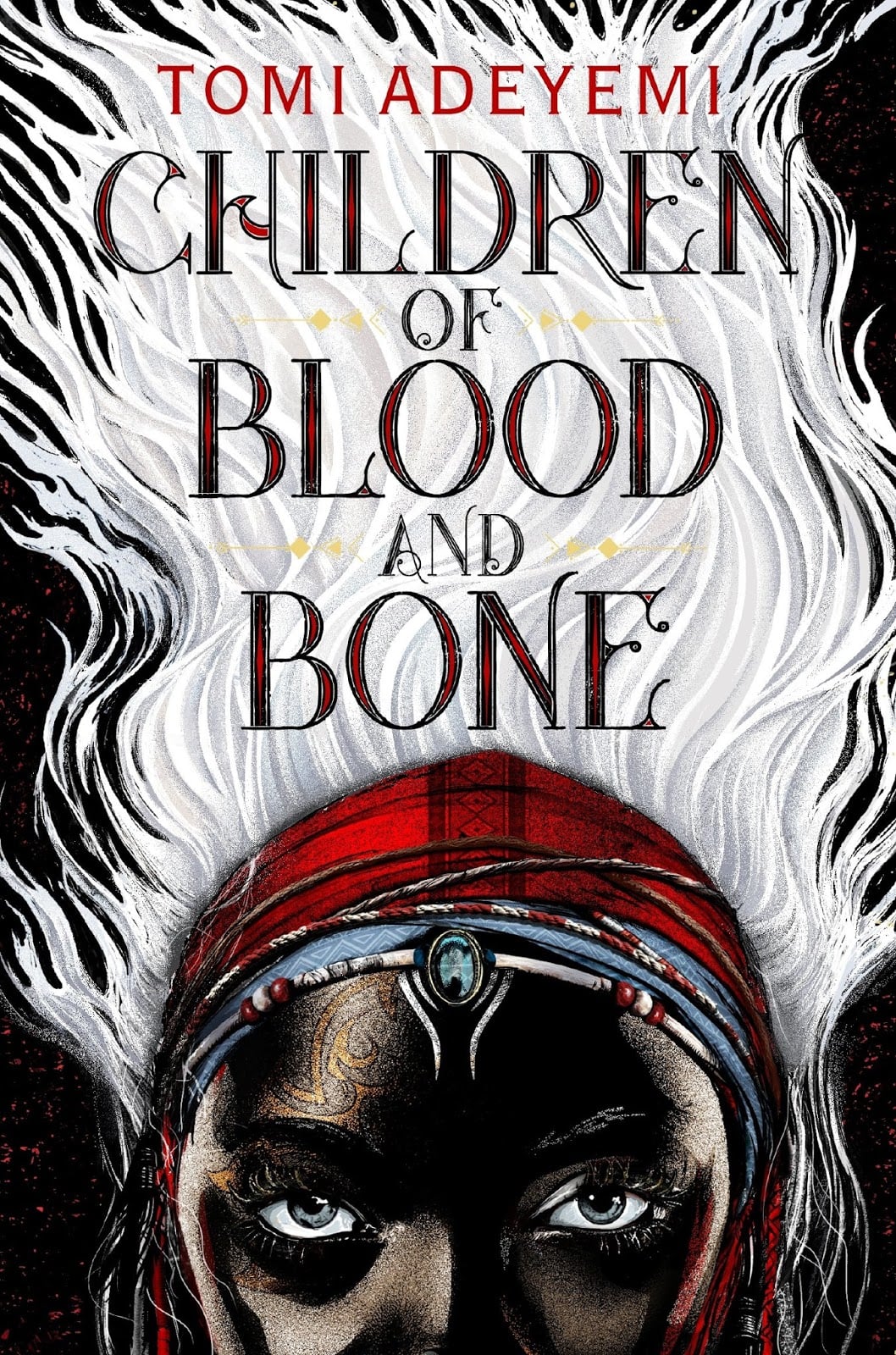
Children of Blood and Bone by Tomi Adeyemi is a young adult fantasy novel set in the West African-inspired kingdom of Orïsha, where magic once flowed through a caste of practitioners called maji until a ruthless king ordered them all killed — and where seventeen-year-old Zélie Adebola, daughter of a murdered Reaper maji, discovers a chance to bring magic back. The first book in the Legacy of Orïsha trilogy, it was published in 2018, debuted at #1 on the New York Times bestseller list, and remained on the list for over 120 weeks. Adeyemi drew on Yoruba mythology, West African culture, and her own response to the Black Lives Matter movement and police shootings of Black Americans to build a fantasy world in which racial oppression, resistance, and the cost of power are the central concerns. This complete guide covers Children of Blood and Bone‘s reading level, recommended age, content considerations, characters, themes, and books similar to Children of Blood and Bone, designed for parents, teachers, and students.
For Parents
A high-stakes West African-inspired fantasy with explicit parallels to racial oppression and police violence — accessible in its action-driven prose but substantial in its content: violence, death of parents and children, torture, and a scene of sexual assault. Appropriate for ages 13 and up; most commonly read in grades 8–10.
For Teachers
An excellent grades 8–10 text for discussing speculative fiction as social commentary — Adeyemi’s Orïsha is explicitly built as an allegorical response to racial violence in America. The multi-POV structure (three narrators with opposing loyalties) is productive for teaching perspective and how the same events look different from different vantage points. The Yoruba cultural and mythological foundations reward contextual research and discussion of cultural representation in fantasy.
Children of Blood and Bone at a Glance
Find on Amazon →| Author | Tomi Adeyemi |
| Published | 2018 (Henry Holt BYR) |
| Grade Level | 8–10 (our assessment) |
| Recommended Age | 13+ |
| ATOS Reading Level | 4.8 |
| Lexile | 670L |
| Word Count | 135,102 |
| Pages | 544 (Henry Holt hardcover/paperback) |
| Series | Legacy of Orïsha, Book 1 |
| Genre | Young adult fantasy |
| Setting | Kingdom of Orïsha (West African-inspired); fictional world |
For official Lexile and AR levels, visit Lexile.com or AR BookFinder. ReadingVine provides independent editorial assessments.
What Reading Level Is Children of Blood and Bone?
Children of Blood and Bone has an ATOS reading level of 4.8 and a Lexile of 670L. These scores are not a reliable guide to the novel’s appropriate audience and reflect the same gap seen elsewhere in this catalog with YA novels written in accessible, action-oriented prose: the algorithms measure sentence complexity and vocabulary without capturing the content, the length, or the emotional demands. A 670L Lexile would suggest 5th-to-6th grade reading level; the publisher’s interest level is grades 9–12 and the content clearly requires secondary-school maturity.
The actual reading challenge in Children of Blood and Bone is primarily the novel’s scale and complexity. At 135,102 words and 544 pages, it is the longest YA novel in this catalog — nearly three times the length of Looking for Alaska. The three-POV structure (Zélie, Amari, and Inan each narrate alternating sections) requires readers to track multiple simultaneous storylines and to understand that characters they are rooting for are in genuine opposition to characters they also come to understand. The Yoruba-derived vocabulary, character names, and cultural context reward engagement with the source material but are not prerequisites for following the story. At 544 pages, most classroom readers take four to six weeks; independent readers often finish it faster because the pacing is consistently propulsive. For official Lexile and AR scores, visit Lexile.com or AR BookFinder. ReadingVine’s assessments are independent editorial judgments.
What Age Is Children of Blood and Bone Appropriate For?
We recommend Children of Blood and Bone for readers ages 13 and up. The novel is a fantasy, and its violence is the purposeful violence of a world in which the oppressed are fighting for survival — but it is substantial and specific. Children are murdered. A major character is tortured at length. A teenage girl is sexually assaulted. The emotional stakes are high throughout and the deaths are not sanitized. The novel is age-appropriate for strong middle school readers but is most productively read by students in grades 8–10 who have the context to engage with its political dimensions.
The kingdom of Orïsha’s suppression of the maji is depicted with specificity: maji are killed, their children are taxed into debt bondage, and their communities are kept in deliberately maintained poverty. Violence against maji — including children — appears throughout the novel and is not peripheral but central to the argument. Zélie is tortured in a dungeon sequence. Amari is sexually assaulted by a soldier in one scene. Characters die, including a child character whose death is one of the novel’s most emotionally difficult moments. The romantic tension between Zélie and Inan — enemies who develop feelings for each other — is depicted with some intensity but no explicit sexual content. Parents of readers at the lower end of the recommended age range should be prepared to discuss the torture and assault scenes in particular.
What Is Children of Blood and Bone About?
Ten years ago, King Saran of Orïsha ordered the death of every maji in the kingdom — the practitioners of magic — in a single night now called the Raid. Zélie Adebola was three when she watched soldiers kill her mother. Now seventeen, she lives in the fishing village of Ilorin with her older brother Tzain and her father Baba, surviving under the crushing tax system the crown uses to keep divîners — those with the potential for magic but who lost their powers with the maji — in a state of permanent poverty and debt. The maji are gone. Magic is gone. The divîners are marked by their white hair, and in Orïsha that mark is a death sentence as surely as any blade.
Everything changes when Zélie and Tzain encounter Amari, the king’s daughter, who has stolen a sacred scroll from the palace — a scroll that, according to prophecy, can restore magic to Orïsha. Amari is fleeing her father and the murder of her best friend Binta, a divîner who touched the scroll and whose brief reawakening of magic confirmed both its power and her death sentence. The three teens are immediately pursued by the Crown Prince Inan — Amari’s brother, trained since childhood to hate magic and divîners, sent to retrieve the scroll and his sister. What none of them expect is that the mission to use the scroll, restore magic, and potentially save the divîner people is the same mission that will require Zélie to become something she is not sure she wants to be.
The novel alternates between three points of view: Zélie (the protagonist, a Reaper who can communicate with and control the dead), Amari (the princess who has crossed her father to do what is right), and Inan (the prince sent to stop them, who discovers his own unexpected magic and begins to question everything he was taught). The tension between Zélie’s fury at what the crown has done and Inan’s belief that magic must be stopped to protect order — and their unwanted feelings for each other across that division — is the novel’s central romantic and political axis. The book ends on a cliffhanger that sets up the sequel, Children of Virtue and Vengeance.
Children of Blood and Bone Characters
Is Children of Blood and Bone Banned?
Children of Blood and Bone has not appeared on the ALA’s most challenged books lists and does not have a significant formal challenge history. It has been included in district-level reviews alongside other titles as part of the broader recent wave of book challenges, but it has not generated the sustained challenge activity of The Hate U Give or The Perks of Being a Wallflower. Its content — violence, torture, a sexual assault — has been noted by some reviewers as mature, and the publisher’s own Scholastic listing includes a note that it “contains language or content that may be considered inappropriate for younger readers.”
The novel’s political dimensions — its explicit paralleling of maji persecution with racial oppression and police violence against Black Americans — have occasionally been noted in challenge contexts that use the “anti-police” or “Critical Race Theory” framing applied to other novels in this catalog. These concerns have not produced documented formal challenges at any significant scale specific to this title.
Children of Blood and Bone Themes and Lessons
Adeyemi has been direct about the real-world origins of the novel’s fantasy structure. She began writing it after watching news coverage of police shootings of Black Americans — Tamir Rice, Jordan Edwards, Aiyana Stanley-Jones — and feeling the helplessness of someone whose grief has no outlet. The author’s note at the end of the novel names these children explicitly, linking Orïsha’s fictional genocide of maji children to real-world violence against Black children. The fantasy setting is not escapism from this reality but a way of approaching it obliquely — giving readers who might resist a realistic treatment the emotional access that comes from fantasy’s distance.
The maji caste in Orïsha functions as an allegory for racial minority populations under state oppression: they are identified by a physical marker (white hair), taxed into poverty, denied education and advancement, and subject to extrajudicial violence. The king’s justification for the Raid — that magic is dangerous and that the maji were going to destroy the kingdom — is structurally identical to the justifications used for real-world racial violence: the characterization of the targeted group as inherently threatening. Adeyemi does not make this allegory subtle, and she does not ask readers to decode it. The author’s note does the work of connection explicitly.
The three-POV structure is the novel’s most formally significant choice. Giving Inan his own narration — letting the reader inside the perspective of the person carrying out the oppression, who believes what he has been taught, who discovers his own capacity for the thing he has been persecuting — is the novel’s most challenging moral move. Inan is not exculpated, but he is understood. His arc asks the reader to hold the truth that people who do terrible things are often people who believe they are right, and that understanding how someone arrives at those beliefs is not the same as excusing them.
Discussion questions for classrooms and families: How does the fantasy setting change the way you engage with the novel’s argument about racial oppression — does the distance make it easier or harder to think about? What does Inan’s perspective add to the novel — and do you think Adeyemi wants us to sympathize with him? How does Zélie’s grief for her mother shape her choices — and where does it help her and where does it trap her? What does the author’s note at the end of the novel ask of the reader? How does the maji genocide parallel real-world racial violence — and are there limits to that analogy?
How Many Pages and Chapters in Children of Blood and Bone?
The Henry Holt hardcover and paperback editions are 544 pages. Word count is 135,102 — the longest YA novel in this catalog. The novel is structured in short chapters (most run three to eight pages) that alternate between Zélie’s, Amari’s, and Inan’s perspectives; the total chapter count is approximately 60. The short chapter structure makes the 544 pages move faster than the page count suggests — each chapter typically ends with a moment of tension that propels the reader into the next. Most classroom readers complete it in four to six weeks; independent readers who engage fully often finish it in a week or two outside class. The book ends on a cliffhanger and is the first in a completed trilogy, so readers who become invested will want the sequel.
Books Similar to Children of Blood and Bone
About Tomi Adeyemi
Tomi Adeyemi was born in 1993 to Nigerian parents and grew up in Maryland. She graduated from Harvard University with an honors degree in English literature and worked as a creative writing coach while writing Children of Blood and Bone over the course of eighteen months and approximately forty-five drafts. The novel’s origins were dual: a trip to Brazil where she encountered beautiful depictions of African deities in a gift shop (“it really made me think about all the beautiful images we never see featuring Black people”), and the grief and rage she felt at police shootings of Black Americans. She has said she wanted to write a story so good even racists would want to read it — her response to the backlash against the Black characters cast in The Hunger Games film.
The novel sold at auction in a deal that was reported as one of the biggest YA publishing contracts ever, including a preemptive sale of film rights. It debuted at #1 on the New York Times bestseller list in March 2018, when Adeyemi was twenty-four years old. The sequel, Children of Virtue and Vengeance, also debuted at #1 in 2019; the trilogy concluded with Children of Anguish and Anarchy in 2024. A film adaptation starring Viola Davis, Cynthia Erivo, Idris Elba, and Regina King, directed by Gina Prince-Bythewood (The Woman King), is scheduled for release in January 2027. Adeyemi has won the Hugo and Nebula Awards and was named to Time magazine’s 100 Most Influential People list.
Children of Blood and Bone: Frequently Asked Questions
What reading level is Children of Blood and Bone?
Children of Blood and Bone has an ATOS reading level of 4.8 and a Lexile of 670L. These scores reflect the accessible, action-oriented prose and do not capture the novel’s actual demands — its length (544 pages), three-POV structure, or content maturity. Booksource’s interest level is 9–12. Our editorial assessment places it at grades 8–10, ages 13 and up. For official Lexile and AR scores, visit Lexile.com or AR BookFinder.
What grade is Children of Blood and Bone appropriate for?
We recommend grades 8–10, ages 13 and up. The novel contains substantial violence (including the murder of children), torture, and a sexual assault. The low ATOS and Lexile scores reflect the accessible prose style, not the content maturity. Strong middle school readers can handle it; the political dimensions are most productively engaged in high school.
How many pages are in Children of Blood and Bone?
544 pages; approximately 135,102 words — the longest YA novel in this catalog. The short chapter structure (roughly 60 chapters, most three to eight pages) makes the length feel faster than it is. Most classrooms take four to six weeks; many independent readers finish in a week or two.
What is Children of Blood and Bone about?
In the West African-inspired kingdom of Orïsha, a ruthless king murdered all magic practitioners a decade ago. Seventeen-year-old Zélie, daughter of a murdered maji, discovers a chance to restore magic through a sacred scroll — and is immediately pursued by the Crown Prince sent to stop her. Three narrators — Zélie, Princess Amari (the king’s daughter who defected), and the Crown Prince Inan — tell the story of a quest, a resistance, and the political and personal costs of both.
Is Children of Blood and Bone based on African mythology?
Yes — Adeyemi drew primarily on Yoruba mythology and culture from West Africa, including the Yoruba deity system (the Orïsha, from which the kingdom takes its name), Yoruba language for spell names and character names, and elements of Yoruba religious practice. She has acknowledged that her adaptation takes creative liberties with this source material and that scholars of Yoruba religion have noted some inaccuracies in how the source traditions are represented. The novel is a fantasy inspired by these traditions rather than a documentary representation of them.
What is the real-world inspiration behind the story?
Adeyemi has said she wrote the novel in response to police shootings of Black Americans — specifically Tamir Rice, Jordan Edwards, and Aiyana Stanley-Jones, among others. The novel’s author’s note names these children and asks readers who grieved for fictional characters to extend that grief to real ones. The maji persecution in Orïsha is an explicit allegory for racial violence against Black people, including state violence. Adeyemi began writing the story after feeling helpless in the face of news coverage of these deaths and wanting to create a story in which the targeted community fights back.
Is there a Children of Blood and Bone movie?
A film adaptation is in production as of 2025, directed by Gina Prince-Bythewood (The Woman King), with a cast including Viola Davis, Cynthia Erivo, Idris Elba, and Regina King. It is scheduled for release in IMAX and theaters on January 15, 2027. No film has been released yet.
How many books are in the Children of Blood and Bone series?
Three — the Legacy of Orïsha trilogy. Book 1 is Children of Blood and Bone (2018); Book 2 is Children of Virtue and Vengeance (2019); Book 3 is Children of Anguish and Anarchy (2024). All three debuted at #1 on the New York Times bestseller list. The trilogy is complete.