
 = Partner Site
Between the World and Me Reading Level: A Complete Guide
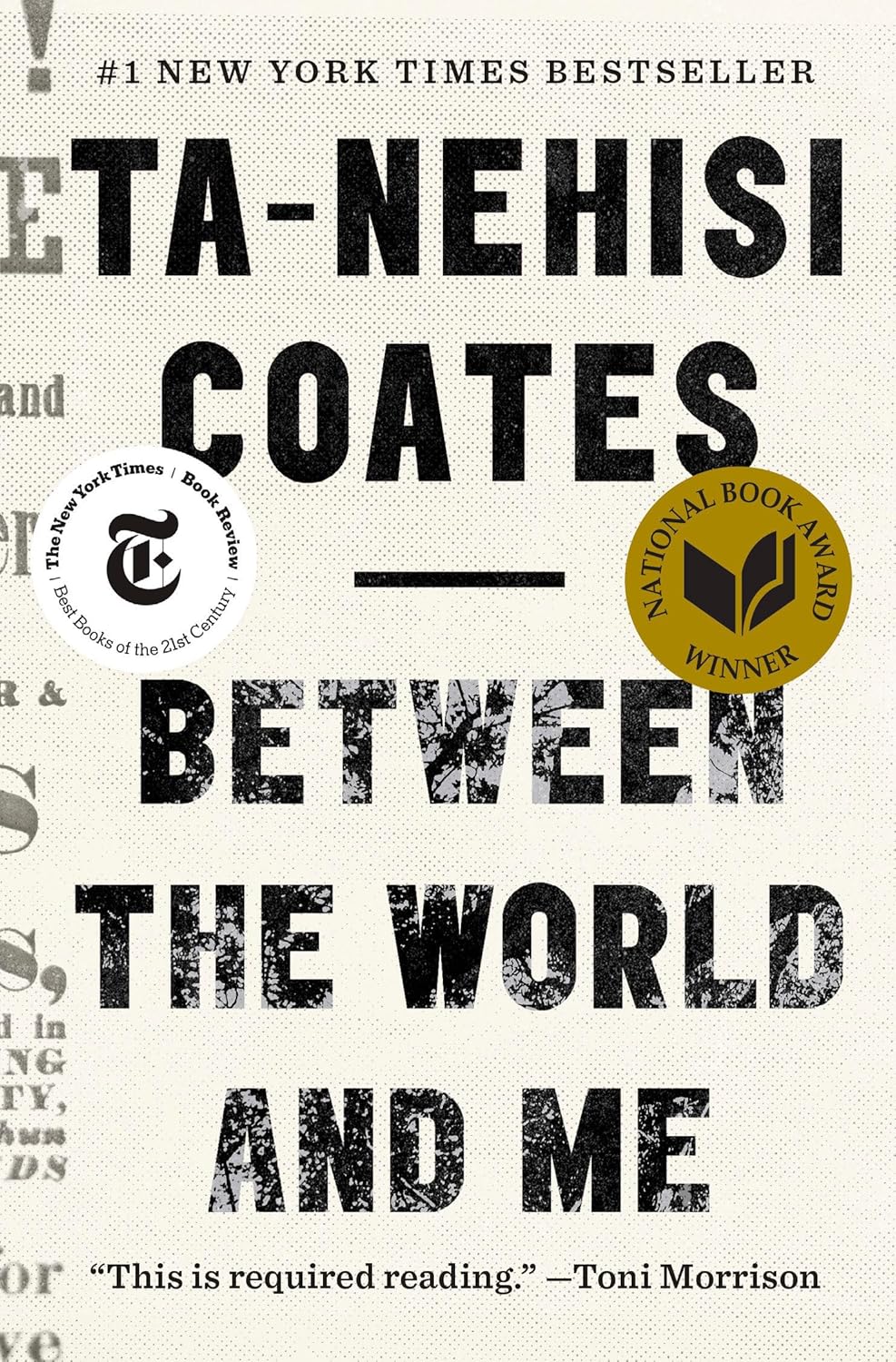
Between the World and Me by Ta-Nehisi Coates is a book-length letter from Coates to his fifteen-year-old son Samori, written in the months after a grand jury declined to indict the police officer who killed Michael Brown in Ferguson, Missouri — and after Coates watched his son weep at the news. The letter is Coates’s attempt to tell his son the truth about what it means to inhabit a Black body in America: the history of violence that has been directed at that body, the Dream that sustains the people who have directed that violence, and the way of life Coates has found inside that knowledge. Published in July 2015, it won the National Book Award for Nonfiction in November of the same year and was a finalist for the Pulitzer Prize. Toni Morrison described Coates as the successor to James Baldwin; the book is explicitly modeled on Baldwin’s 1963 The Fire Next Time. It is short, dense, and one of the most discussed American nonfiction texts of the past decade. This complete guide covers Between the World and Me‘s reading level, recommended age, content considerations, key figures, themes, and books similar to Between the World and Me, designed for parents, teachers, and students.
For Parents
A 176-page letter from a Black father to his teenage son about the history of racial violence in America, the killing of his college friend Prince Jones by a police officer, and the framework Coates uses to understand and survive what he knows. Dense, philosophical, and written for adults — not YA. No sexual content; mature language; sustained engagement with violence, police brutality, and systemic racism. Appropriate for ages 15 and up; most commonly assigned in grades 10–12 and AP/IB courses.
For Teachers
A defining text of contemporary American political and literary nonfiction — productively paired with the Douglass Narrative to trace continuity and change in how Black Americans write about bodily vulnerability to state violence across 170 years. The Baldwin connection is essential context; assigning both together is one of the most productive pairings in an American literature or history course. The ban history under anti-CRT laws is itself important teaching material.
Between the World and Me at a Glance
Find on Amazon →| Author | Ta-Nehisi Coates |
| Published | 2015 (Spiegel & Grau / Random House) |
| Grade Level | 10–12 (our assessment) |
| Recommended Age | 15+ |
| ATOS Reading Level | 7.6 |
| Lexile | 1090L |
| Word Count | ~38,000 |
| Pages | 176 (Spiegel & Grau hardcover) |
| Structure | Epistolary; 3 parts; no chapters |
| Genre | Essay / memoir / letter |
| Setting | Baltimore; Howard University; New York; France; 1970s–2015 |
| Awards | National Book Award for Nonfiction (2015); Pulitzer Prize finalist (2016) |
For official Lexile and AR levels, visit Lexile.com or AR BookFinder. ReadingVine provides independent editorial assessments.
What Reading Level Is Between the World and Me?
Between the World and Me has an ATOS reading level of 7.6 and a Lexile of 1090L. These scores accurately reflect the text’s demands: Coates writes in the tradition of the American political essay — dense, allusive, structurally complex prose that builds arguments through accumulation rather than linear logic. The sentences are not formally difficult in the way that 19th-century rhetorical prose is difficult; they are difficult because they are doing something philosophically demanding and expecting the reader to follow. The publisher grades it for 9–12 + AP/IB; our editorial assessment places it at grades 10–12, ages 15 and up, reflecting that its argumentative density and the maturity required to engage with its claims about American history and racial violence are more appropriately the province of upper high school and college than standard grade 9.
The reading challenge is not primarily linguistic but argumentative and contextual. Coates’s central framework — the “black body” as the site of American history’s violence, “the Dream” as the mythology that sustains that violence — is not presented with much explanatory apparatus; it is built through the accumulation of episodes and arguments. Readers without some prior knowledge of American history from Reconstruction through the civil rights movement through the contemporary moment will miss significant layers of reference. At approximately 38,000 words and 176 pages, most readers complete it in one or two sittings; it is short in words but dense in demands. For official Lexile and AR scores, visit Lexile.com or AR BookFinder. ReadingVine’s assessments are independent editorial judgments.
What Age Is Between the World and Me Appropriate For?
We recommend Between the World and Me for readers ages 15 and up. The book contains mature language; it depicts the violence of police brutality, the killings of Trayvon Martin and Michael Brown and Prince Jones (Coates’s college friend, killed by a police officer), and the full history of American violence against Black people from slavery through the present. None of this is gratuitous; all of it is the argument. The book is written for adults and assigned in secondary school, not written for secondary school students — the same category as The Handmaid’s Tale, A Thousand Splendid Suns, and other adult literary and political works in this catalog.
The book’s most demanding content is not its violence but its philosophical resignation. Coates does not offer hope in the way that most books assigned in school do; he is explicit about his atheism, his rejection of the narrative of racial progress, and his belief that white supremacy is a durable structural force rather than a problem being solved. This is not a comfortable book for most readers, and it is not meant to be. Teachers should be prepared to process both the content and the emotional and political responses it generates in students of all backgrounds.
What Is Between the World and Me About?
On November 24, 2014, the grand jury in St. Louis County declined to indict Darren Wilson, the police officer who killed Michael Brown in Ferguson, Missouri. Coates watched his fifteen-year-old son Samori weep at the news and could find nothing adequate to say. The book that resulted is his attempt to find the words.
The letter is organized in three parts. The first part introduces Coates’s central framework — the “black body” as the fundamental unit of American history’s violence — and traces his childhood in Baltimore during the crack epidemic of the 1980s, when the streets were the first institution he had to navigate and their rules of survival were not the rules of the school or of the mainstream culture that surrounded him. He describes the fear that governed his early life: the awareness that his body was vulnerable to violence from multiple directions — from the streets, from the police, from the systemic forces that controlled the neighborhood’s conditions. He traces his intellectual awakening at Howard University, which he calls “the Mecca” — the first place where he found a community of Black scholars and thinkers who were asking the questions he needed to ask.
The second part is organized around Prince Jones — a fellow Howard student, a man Coates describes as having survived the American obstacle course of Black achievement only to be killed by a police officer who followed him from Washington, D.C., across state lines into Virginia and shot him in front of his own house. Coates visits Prince Jones’s mother, Mabel Jones, a radiologist who had worked so hard and achieved so much. He reflects on what Prince Jones’s death means about the relationship between Black achievement and physical safety — that no level of achievement, no accumulation of credentials or respectability, is sufficient to protect a Black body from state violence. This is the book’s most devastating passage and its most direct statement of its central argument.
The third part moves outward — to Paris, where Coates visited and experienced for the first time a world in which his body was not the target of the specific American apparatus of racial surveillance; to Civil War battlefields, where he contemplates the bodies of enslaved people whose labor built what is now being fought over; to the larger questions of the “Dream” and what it requires to sustain itself. The Dream — the mythology of American exceptionalism, the belief in progress, the comfort of the suburbs — is sustained, Coates argues, by the plundering of Black bodies. The people who live in the Dream are not individually malicious; they have simply chosen not to know what their comfort costs.
Between the World and Me: Key Figures
Is Between the World and Me Banned?
Between the World and Me has been challenged and removed from curricula and reading lists in multiple states under anti-“Critical Race Theory” and anti-divisive-content legislation. In Texas, a legislator’s 2021 list of books to be investigated for CRT content included it. In Virginia, it was among books targeted for removal from school curricula. In 2021, Virginia Military Institute’s alumni pressure led to its removal from a summer reading list — a case that received significant attention because VMI is a public military college. In Florida, it has been flagged under the same review processes that produced the Escambia County removals of Anne Frank, Toni Morrison, and other titles.
The challenge pattern is the same as that described in the Douglass Narrative guide: the book is not being challenged for sexual content or offensive language but for its direct engagement with the history of American racial violence and its argument about structural white supremacy. The legal frameworks used to challenge it — statutes prohibiting content that might make students “uncomfortable” on the basis of race — are themselves part of the argument Coates makes in the book: that the “Dream” requires not knowing what sustains it, and that the mechanisms for maintaining that not-knowing are institutional rather than merely personal.
Coates has responded to the bans with the same cold precision he brings to the book: he has noted that the banning of books about race and racism by Black authors is itself the dynamic he is describing, and that the comfort of the Dream requires exactly this kind of institutional management of what is knowable. “The same story,” he has said, “told differently.”
Between the World and Me Themes and Lessons
Coates’s central concept — the “black body” — is not a metaphor but a material claim. The history of American slavery, Jim Crow, mass incarceration, and police violence is, in his argument, a history of what has been done to specific physical bodies: the body of the enslaved person whose labor built the wealth, the body of the lynching victim, the body of Prince Jones shot by a police officer in his own driveway. Coates insists on the body rather than the soul because the soul can be consoled by narratives of progress and justice; the body keeps the record of what has actually happened, regardless of what narrative surrounds it.
The “Dream” — Coates’s term for the mythology of American exceptionalism and inevitable progress — is the book’s most politically charged concept and the one most likely to generate productive classroom disagreement. Coates argues that the Dream is sustained by the plundering of Black bodies — that the suburbs, the comfort, the belief in a just America are made possible by a structure that extracts from Black Americans in ways that are invisible to the people who benefit. The Dreamers are not, in his account, primarily malicious individuals; they are people who have chosen not to know what their comfort costs. This distinction — between individual racism and structural racism — is the book’s most important analytical contribution and its most contested claim.
Coates diverges from Baldwin most significantly in his rejection of hope. Baldwin, writing in 1963, maintained some residual belief that America could be redeemed; Coates, writing in 2015, does not. He is an atheist who does not believe in the arc of the moral universe bending toward justice; he believes in the struggle for its own sake, as an assertion of humanity in the face of a structure that denies it. This position is both deeply honest and genuinely hard to assign in a school context that typically asks students to find the light at the end of historical tunnels. His argument is that demanding hope from a book about racial violence is itself a feature of the Dream.
Discussion questions for classrooms and families: What does Coates mean by “the black body” — and why does he insist on the body rather than the soul or the spirit? What is “the Dream,” and who are the Dreamers? How does Prince Jones’s death challenge the argument that individual achievement is sufficient protection against racial violence? How does Coates’s position differ from Baldwin’s — and which do you find more persuasive? What does the book ask of its non-Black readers specifically?
How Long Is Between the World and Me?
The Spiegel & Grau hardcover is 176 pages. The book is divided into three parts with no chapter titles or numbers. Word count is approximately 38,000 — making it the shortest prose work in this catalog alongside the Douglass Narrative. Most readers complete it in one or two sittings; the density of the argument means it typically requires more re-reading and processing than its length suggests. Classroom assignments typically run two to three weeks to allow for discussion and historical context preparation. The short length makes it particularly suited for use alongside other texts: paired with the Douglass Narrative, Baldwin’s The Fire Next Time, or documentary and journalistic sources from the Ferguson and Black Lives Matter period.
Books Similar to Between the World and Me
About Ta-Nehisi Coates
Ta-Nehisi Coates was born in 1975 in Baltimore, Maryland, to Paul Coates — a former local captain of the Black Panther Party and founder of Black Classic Press — and Cheryl Waters. He grew up during the crack epidemic in West Baltimore and attended Howard University, where his father worked as a research librarian. He left Howard without completing his degree and began working as a journalist. He joined The Atlantic in 2008, where his long-form essays on race, American history, and politics made him one of the most widely read political writers in the country. His 2014 essay “The Case for Reparations,” which appeared in The Atlantic, was among the most discussed magazine articles of the decade.
Between the World and Me was his second book, following his 2008 memoir The Beautiful Struggle. Its publication in July 2015 was immediately followed by the National Book Award for Nonfiction in November — a rapid recognition of a book that arrived at a moment of sustained national reckoning with police violence following the deaths of Trayvon Martin, Michael Brown, Eric Garner, and others. Coates received the MacArthur Foundation “Genius Grant” in 2015. He subsequently published a novel, The Water Dancer (2019), and a collection of essays, The Message (2023). He has written the Black Panther comic series for Marvel since 2016. He is currently the Sterling Brown Endowed Chair in the English department at Howard University — returning, in a different capacity, to the place he left.
Between the World and Me: Frequently Asked Questions
What reading level is Between the World and Me?
Between the World and Me has an ATOS of 7.6 and a Lexile of 1090L — accurately reflecting dense, allusive political essay prose. The challenge is argumentative and contextual rather than linguistic. Publisher rates it grades 9–12 + AP/IB. Our editorial assessment places it at grades 10–12, ages 15 and up. For official Lexile and AR scores, visit Lexile.com or AR BookFinder.
What grade is Between the World and Me appropriate for?
We recommend grades 10–12, ages 15 and up. Adult literary and political nonfiction assigned in secondary school — the same category as The Handmaid’s Tale and Educated. Contains mature language, sustained engagement with police brutality and racial violence, and a philosophical argument about structural racism that is demanding in both content and form.
How many pages are in Between the World and Me?
176 pages in three parts with no chapter divisions. Word count approximately 38,000. Most readers complete it in one or two sittings; classroom assignments typically run two to three weeks to allow for discussion and historical context preparation.
What is Between the World and Me about?
A book-length letter from Ta-Nehisi Coates to his fifteen-year-old son Samori, written after a grand jury declined to indict the police officer who killed Michael Brown in Ferguson. Coates traces the history of American violence against Black bodies from slavery through the present, tells the story of his own intellectual awakening at Howard University, describes the killing of his college friend Prince Jones by a police officer, and offers his son the framework he has found for living inside what he knows.
What does “the Dream” mean in Between the World and Me?
Coates uses “the Dream” to describe the mythology of American exceptionalism — the belief in inevitable progress, the comfort of suburban life, the conviction that the country is fundamentally just and getting more so. He argues that the Dream is sustained by the plundering of Black bodies — that the material conditions it produces have been built on extraction from Black Americans. The Dreamers, in his account, are not primarily malicious; they have simply chosen not to know what their comfort costs. The Dream requires not knowing.
Why is Between the World and Me banned?
It has been challenged and removed from curricula in multiple states under anti-CRT legislation — targeted for its direct engagement with the history of American racial violence and its argument about structural white supremacy. It was removed from Virginia Military Institute’s summer reading list in 2021 under alumni pressure. It has been flagged in Florida under the same review processes that targeted Anne Frank, Toni Morrison, and Frederick Douglass. The challenge pattern — targeting books about race by Black authors for making students “uncomfortable” — is itself part of Coates’s argument about the Dream.
How is Between the World and Me related to James Baldwin?
The book is explicitly modeled on Baldwin’s 1963 The Fire Next Time — also an epistolary book, also addressed to a young family member, also a meditation on Black life in America. Coates positions himself in Baldwin’s tradition and simultaneously departs from it: Baldwin maintained some residual hope that America could be redeemed; Coates does not. Toni Morrison described Coates as the intellectual successor to Baldwin. Reading both books together is reading across sixty years of Black American political writing and tracing what has changed and what has not.
Who was Prince Jones?
A fellow Howard University student and friend of Coates — a young Black man from a military family who had, by every conventional measure, done everything right. He was engaged, had a daughter, came from an achieving family (his mother was a radiologist). He was killed by a plainclothes Prince George’s County police officer who followed him from Washington, D.C., across state lines into Virginia and shot him at his fiancée’s home in 2000. Prince Jones’s killing is the emotional and argumentative center of the book’s second section, and Coates’s visit to his mother is the book’s most devastating passage.