
 = Partner Site
Black Beauty Reading Level: A Complete Guide
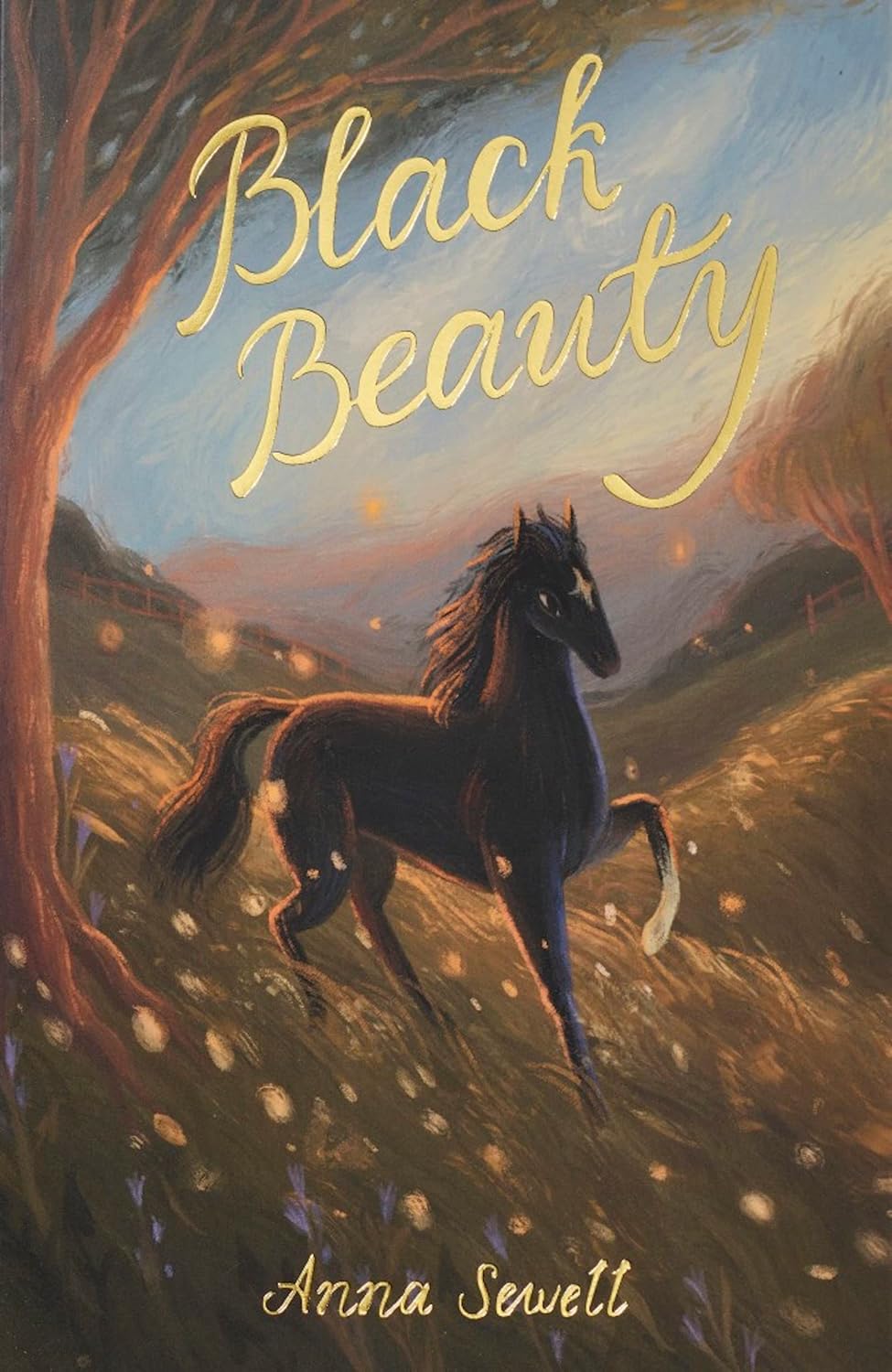
Black Beauty by Anna Sewell tells the life story of a horse—from a happy foal on an English country estate to the hardships of overwork and cruelty, and ultimately to a peaceful retirement—in a book that transformed how people thought about animal welfare. This guide provides parents and teachers with reading level information, age recommendations, content insights, and discussion questions for this enduring classic about kindness, dignity, and speaking up for those who cannot speak for themselves.
For Parents
Find the right reading level for your child, understand the book’s portrayal of animal cruelty and hardship, and get conversation starters to help your child explore themes of compassion, social justice, and the importance of treating all living beings with dignity.
For Teachers
Access grade-level guidance, reading metrics, character analysis support, and thematic discussion questions. This classic offers rich opportunities for exploring Victorian England, animal welfare history, and the use of animal narrators to convey social commentary.
Black Beauty at a Glance
Find on Amazon →| Author | Anna Sewell |
| Published | 1877 |
| Grade Level | 4–6 (our assessment) |
| Recommended Age | 9–12 |
| Flesch-Kincaid Grade | 6.3 |
| Word Count | ~67,000 |
| Pages | ~255 (standard paperback) |
| Chapters | 49 |
| Genre | Classic fiction / animal narrative |
| Setting | England, Victorian era (mid-to-late 1800s) |
| Awards | Classic (one of the best-selling books in the English language) |
For official Lexile and AR levels, visit Lexile.com or AR BookFinder. ReadingVine provides independent editorial assessments.
What Reading Level Is Black Beauty?
Black Beauty is appropriate for grades 4–6, with a Flesch-Kincaid grade level of 6.3. The vocabulary reflects Victorian-era English and includes some period terms and horse-related language that may require explanation, but the narrative is clear and the first-person voice is direct and engaging. Sewell wrote the book specifically to be accessible to working-class readers—particularly those who worked with horses—so while the language is elevated by modern standards, it was always meant to be widely readable.
Anna Sewell’s writing style is warm, observant, and morally clear. Black Beauty narrates his own story from birth to old age in a steady, reflective voice—never melodramatic but always emotionally honest. The short chapters (49 of them) make the book easy to read in installments, and the episodic structure means each chapter is essentially a self-contained vignette. This makes it excellent for read-aloud or classroom use. The horse-care vocabulary (stable, harness, bearing rein, gig) adds historical texture and may interest young readers who love horses.
The story resonates most deeply with readers ages 9–12 who can appreciate the social commentary woven through the animal narrative, understand the injustice of cruelty, and connect emotionally with Black Beauty’s experience of good and bad owners. Strong fourth graders can read it independently; the emotional content is appropriately complex for fifth and sixth graders.
What Age Is Black Beauty Appropriate For?
Black Beauty is most appropriate for readers ages 9–12. The book portrays animal cruelty honestly—horses are overworked, beaten, and some die—but always in service of the book’s moral argument against such treatment. Sewell wrote the book explicitly to improve conditions for working horses, and the difficult content is purposeful rather than gratuitous.
Animal cruelty and overwork: Black Beauty passes through several cruel or negligent owners who overwork and mistreat him. Some scenes of harsh treatment can be difficult for sensitive readers or animal lovers.
Death of animals: Horse characters die in the book, including Ginger, Black Beauty’s dear friend, whose death is one of the most affecting passages in the novel.
The bearing rein: Sewell devotes significant attention to the “bearing rein” (a device that forced horses to hold their heads unnaturally high), which causes horses real pain and suffering. This is presented as a social injustice worth fighting.
Human hardship: Some human characters experience poverty, illness, and loss, reflecting Victorian social realities.
What’s NOT in the book: No inappropriate content for the age group. The book ends happily—Black Beauty is rescued and finds a loving final home. The overall message is deeply moral and hopeful: cruelty is wrong, kindness matters, and people have the power to improve the world by treating animals and each other with dignity. Ginger’s death is genuinely sad but handled with grace.
What Is Black Beauty About?
Black Beauty is an autobiographical narrative told by a horse—a device Sewell borrowed from earlier animal-narrator books but used with unprecedented psychological depth. Beauty is born on a pleasant English farm, raised by a kind mother named Duchess, and trained gently by a good master. His early years establish the contrast that runs through the entire book: what horse life can be when humans treat animals with care and intelligence.
Beauty’s first post is at Birtwick Park, where he serves Squire Gordon and is cared for by John Manly, one of the great grooms in literature—expert, kind, and uncompromising about proper horse care. Here Beauty makes his closest friendship with Ginger, a chestnut mare whose difficult temper has been created by rough handling in her youth. Their friendship, running through the whole book, is one of its emotional cores. Beauty also befriends Merrylegs, a cheerful little pony. At Birtwick, Beauty is happy. He saves lives (pulling his mistress home through a flood despite terror) and is genuinely valued.
When Squire Gordon’s wife becomes ill and the family must move south, Beauty and Ginger are sold. They pass through Earlshall, a grand estate where fashion demands horses wear the bearing rein—a device that forces their heads up unnaturally and causes constant pain and muscle damage. Lady Anne insists on it for appearances. Ginger, already damaged by cruel treatment, is broken further by it. Beauty endures. Both horses eventually leave Earlshall worse than they arrived.
Beauty’s life deteriorates in stages. He passes through owners who range from well-meaning but ignorant to genuinely cruel. He becomes a cab horse in London, working brutal hours on hard streets. He is injured when a drunken groom leaves him in a stall without proper care. He falls when forced to work with cracked hooves. Each owner either improves or worsens his condition, and Sewell uses this structure to deliver her moral argument: the difference between a horse’s suffering and a horse’s contentment lies almost entirely in the quality and character of the humans responsible for it.
Ginger’s fate is worse than Beauty’s. Overworked and broken, she is reduced to pulling a cab until she collapses. Beauty sees her one last time, dead in a cart, being hauled away. Her death is quiet, brief, and devastating—one of the most moving passages in Victorian literature. Beauty mourns her and hopes she has found peace.
Beauty’s lowest point comes as a cab horse for a rough but not unkind owner, when a series of accidents and illnesses nearly end him. He is sold cheaply, nearly worked to death hauling heavy loads up steep hills, and appears headed for the slaughterhouse.
The rescue comes through the compassion of kind people. Three women notice Beauty’s poor condition and arrange for him to be purchased and removed from his harsh circumstances. He is taken to a peaceful countryside home, where he is given proper food, rest, and gentle care. There, he is looked after by Joe Green, the former stable boy from Birtwick Park, now grown and working as a groom. Joe recognizes Beauty and ensures he is treated with kindness. The book ends with Beauty safe and loved, promised he will never be sold again, and finally able to live out his days in comfort and peace.
Black Beauty Characters
Black Beauty Themes and Lessons
The central argument of Black Beauty—radical for its time—is that animals are feeling beings with inner lives who deserve to be treated with consideration and dignity. Sewell uses the first-person horse narrator to make this argument viscerally: readers experience what it feels like to have a bearing rein forced on you, to be overworked in the cold, to grieve the death of a friend. By making readers feel these things from inside a horse’s perspective, she made the case for animal welfare far more powerfully than any essay could. The book contributed directly to real-world change: it was distributed to cab drivers and grooms, helped lead to improved horse welfare legislation in Britain, and is often credited as a catalyst for the humane treatment movement.
The book also teaches that individual choices matter—that every person who cares for an animal makes choices that either improve or worsen that animal’s life. Ignorance is not innocence, Sewell argues: Joe Green nearly kills Beauty through ignorance just as surely as cruel owners harm horses through malice. The book asks readers to take responsibility for the living creatures in their care, to learn what they need, and to treat them with the same consideration they would want for themselves.
Discussion questions for families:
- Why does Ginger become difficult and hard to handle? What does this teach about how past treatment shapes behavior?
- What is the bearing rein, and why does Sewell consider it so important to argue against?
- How do Black Beauty’s different owners reflect different attitudes toward animals and responsibility?
- Why do you think Sewell chose to write this book from a horse’s point of view rather than from a human’s?
How Many Pages and Chapters in Black Beauty?
Black Beauty is approximately 255 pages in standard paperback editions and is divided into 49 short chapters. The word count is about 67,000 words. The short chapters—many are only 3–5 pages—make the book very approachable and provide excellent stopping points for read-alouds or classroom assignments.
For independent readers ages 9–12, the book typically takes 5–7 hours to read. The episodic structure and short chapters make it easy to read in sessions. As a read-aloud, it takes approximately 4–5 hours. The book pairs beautifully with discussions about Victorian England, horse-drawn transportation, the history of animal welfare, and Anna Sewell’s remarkable story—she wrote the entire book while bedridden, dictating it to her mother, and died just five months after it was published.
Books Similar to Black Beauty
About Anna Sewell
Anna Sewell (1820–1878) was born in Norfolk, England, into a Quaker family. At fourteen she suffered a disabling ankle injury that left her unable to walk without pain for the rest of her life; she depended on horses and horse-drawn carriages for mobility, which gave her an intimate understanding of horses and deep concern for their treatment. She wrote Black Beauty—her only novel—between 1871 and 1877, dictating it to her mother while bedridden. She sold the copyright for £20, and the book was published in November 1877. She lived only five more months, dying in April 1878, just long enough to know the book was a success. Black Beauty became one of the best-selling books in the English language. It was used as a campaigning tool by animal welfare organizations, particularly the RSPCA and the American Humane Education Society, and is directly credited with helping to improve conditions for working horses in Britain and America. Sewell’s Quaker values—particularly the belief in the dignity of all living creatures and the obligation to speak up for those who cannot speak for themselves—infuse every page of the book. Black Beauty remains the definitive horse novel and one of the great works of Victorian children’s literature.
Black Beauty: Frequently Asked Questions
Does Black Beauty have a happy ending?
Yes, Black Beauty ends happily. After years of hardship, cruel owners, overwork, and declining health, Beauty is rescued by three kind ladies who recognize his quality beneath his poor condition. They turn out to be connected to his original family and owners. Beauty is given a clean stable, proper food, rest, and care. He slowly recovers his health and spirit. The final chapters show him in a peaceful paddock with kind owners who promise he will never be sold again. He recognizes the smell of the clover fields where he was foaled and feels he has come home. The ending is genuinely warm and satisfying—a reward for readers who have worried about Beauty through his many ordeals. The final image of Beauty at rest, valued and loved, is one of the most beloved endings in classic children’s literature.
What happens to Ginger in Black Beauty?
Ginger’s story is one of the saddest in Black Beauty. She is a chestnut mare whose difficult temperament and tendency to bite were created by rough, ignorant treatment in her early years—she was never properly trained, only beaten and forced. At Birtwick Park, with kind owners and good handling, she begins to improve and becomes Beauty’s closest friend. But after they are separated and sold, Ginger falls into worse and worse hands. She is overworked, mistreated, and her health deteriorates. Beauty sees her one last time when a cart passes him carrying a dead horse—he recognizes Ginger’s body and mourns her deeply. Her death is quiet and brief in the text but devastating for readers. Sewell uses Ginger’s fate as her clearest argument against animal cruelty: Ginger was not a bad horse—she was a horse made difficult by bad treatment, and she died because humans failed her.
What is the bearing rein in Black Beauty?
The bearing rein (also called the checkrein) is a device used in Victorian England that forced horses to hold their heads unnaturally high—considered fashionable and elegant-looking at the time. In reality, it caused horses constant muscle pain, restricted their breathing, made pulling loads far more difficult, and contributed to injury. Sewell devotes several chapters to arguing passionately against the bearing rein, showing the physical suffering it causes Beauty and Ginger. She deliberately wrote these sections to be read aloud to coachmen and grooms, hoping to persuade those who used the device to abandon it. The campaign worked: Black Beauty helped turn public opinion against the bearing rein, and it fell largely out of use in Britain within years of the book’s publication. The bearing rein sections are a good example of how Sewell embedded specific animal welfare advocacy directly into her narrative.
Is Black Beauty appropriate for 4th grade?
Black Beauty is appropriate for most fourth graders, particularly as a read-aloud or for strong independent readers. The reading level (FK 6.3) is accessible to strong fourth graders, and the short chapters make it manageable. Content-wise, the book includes animal cruelty and the death of animal characters, particularly Ginger, which can be difficult for sensitive readers or animal lovers. Parents and teachers should prepare children for the fact that not all of the horses’ stories end happily. The book’s moral clarity—cruelty is wrong, kindness matters—makes it valuable for this age group. Fourth and fifth graders who love horses especially tend to connect deeply with Black Beauty, and the book often sparks lasting interest in animal welfare.
Why did Anna Sewell write Black Beauty?
Anna Sewell wrote Black Beauty explicitly to improve conditions for working horses in Victorian Britain. She wanted to promote kindness and empathy toward horses among those who worked with them—particularly cab drivers, grooms, and stable hands—and to argue against specific cruel practices like the bearing rein. She wrote in her diary that her purpose was “to induce kindness, sympathy, and an understanding treatment of horses.” By writing from a horse’s perspective, she hoped readers would feel empathy they might not feel for an animal told about from the outside. The book was not primarily intended for children—Sewell hoped it would be read by working-class adults who dealt with horses daily—but it became beloved by children and adults alike. Its success as an animal welfare tool was immediate and measurable: animal welfare organizations distributed thousands of copies, the bearing rein fell out of fashion, and conditions for working horses genuinely improved.
What grade level is Black Beauty?
Black Beauty is appropriate for grades 4–6 (ages 9–12). The Flesch-Kincaid level of 6.3 reflects Victorian-era English that is more formal than contemporary middle-grade fiction but was deliberately written to be accessible. The short chapters and episodic structure make it manageable for fourth graders. The emotional content—animal cruelty, the death of Ginger—requires some maturity to process, but the moral clarity of the book and its ultimately hopeful ending make it appropriate for this age range. It is widely read in elementary and middle school and is a particular favorite among children who love horses. Fifth and sixth graders appreciate the social commentary and historical context more fully than younger readers.
Is Black Beauty based on a true story?
Black Beauty is fiction, not based on a specific true story. Anna Sewell invented Beauty, Ginger, and the other characters. However, the conditions described—the bearing rein, overworked cab horses, the range from kindly to cruel owners—are all historically accurate reflections of how working horses were treated in Victorian England. Sewell’s intimate knowledge of horses (she depended on them for mobility her entire adult life) means the horse-care details are meticulously accurate. The social conditions for working-class Londoners depicted in the cab-driving sections also reflect real Victorian life. While no specific events are based on true incidents, the book reads as documentary in its historical detail and was received as such by its first readers, who recognized their own world in its pages.
Does Black Beauty have a sequel?
No, Black Beauty has no official sequel. Anna Sewell died just five months after the book was published, and Black Beauty was her only novel. The book’s ending is complete and satisfying—Beauty at peace in a loving home—and doesn’t invite continuation. However, the book’s enormous popularity has inspired many unofficial sequels, retellings, and companion books by other authors over the years, as well as numerous film and television adaptations. Readers who love Black Beauty often go on to other horse books: Misty of Chincoteague by Marguerite Henry is a natural next step for younger readers, while older readers might enjoy National Velvet by Enid Bagnold or the works of Dick Francis. The Call of the Wild, with its similar close-to-the-animal perspective and themes of human cruelty and kindness, is another natural companion read.