
 = Partner Site
Misty of Chincoteague Reading Level: A Complete Guide
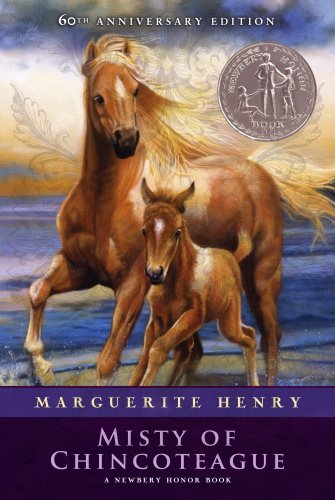
This complete guide to Misty of Chincoteague by Marguerite Henry covers everything parents, teachers, and students need to know — from reading level and recommended age to a full character list, key themes, and similar books. Whether you’re a dedicated horse lover picking this up on your own or a teacher assigning it alongside a unit on Virginia history and animal stories, you’ll find clear, honest information here to help you get the most out of this enduring Newbery Honor classic.
For Parents
Misty of Chincoteague is one of the gentlest and most beloved animal stories in children’s literature. It is appropriate for a wide age range and makes an excellent family read-aloud. The story is based on real people and a real pony, which adds a wonderful layer of authenticity for curious readers who want to learn more after finishing the book.
For Teachers
A Newbery Honor winner first published in 1947, Misty of Chincoteague pairs well with units on Virginia geography, regional culture, and human-animal relationships. Its vivid descriptive writing and use of Tidewater regional dialect make it a strong mentor text for figurative language and setting. The book’s basis in real events opens up natural nonfiction extension opportunities.
Misty of Chincoteague at a Glance
Find on Amazon →| Author | Marguerite Henry |
| Illustrated by | Wesley Dennis |
| Published | 1947 |
| Grade Level | 3–5 (our assessment) |
| Recommended Age | 8–11 |
| Flesch-Kincaid Grade | 5.1 |
| Word Count | ~37,000 |
| Pages | 176 (standard paperback) |
| Chapters | 18 |
| Genre | Historical fiction / Animal story |
| Setting | Chincoteague and Assateague Islands, Virginia, 1940s |
| Awards | Newbery Honor (1948) |
For official Lexile and AR levels, visit Lexile.com or AR BookFinder. ReadingVine provides independent editorial assessments.
What Reading Level Is Misty of Chincoteague?
Based on our editorial assessment, Misty of Chincoteague is best suited for readers in grades 3–5. The book carries a Lexile score of 750L and an Accelerated Reader level of 5.3, which places its word-level difficulty in the upper elementary range. Our Flesch-Kincaid calculation puts it at approximately grade 5.1. However, the reading experience skews more accessible than those numbers suggest for most readers in this age group.
What makes the book feel manageable is its strong narrative momentum and emotional clarity — readers always know what the children want and why it matters. The language is vivid and descriptive rather than complex, and Henry’s use of Tidewater Virginia dialect adds color rather than confusion. The chapters are relatively short and end with natural stopping points, which makes it an ideal choice for independent readers building stamina. Where the book challenges readers is in its pacing: the slower, atmospheric descriptions of the island landscape and pony life may lose some readers accustomed to action-driven chapter books. The reading experience is most rewarding for children who genuinely love animals or nature writing.
For official Lexile and AR scores, visit Lexile.com or AR BookFinder. ReadingVine’s assessments are independent editorial evaluations.
What Age Is Misty of Chincoteague Appropriate For?
We recommend Misty of Chincoteague for readers ages 8–11. It is among the more accessible Newbery Honor titles, with no mature themes, no significant violence, and a warm, optimistic tone throughout. Younger readers ages 5–8 will enjoy it as a read-aloud, and the book holds up well for that purpose given its chapter length and the natural pacing of the pony-penning events.
The book contains two mild uses of the word “damn” (in chapters 14 and 16), which is the only language of note. There is no violence, no death of a major character, and no frightening content beyond a brief opening scene depicting a historical shipwreck. The book is otherwise entirely clean and appropriate for young readers across a wide age range.
Notably, Misty of Chincoteague is one of the few classic children’s novels that holds appeal across a genuinely wide span — from early chapter book readers to adults reading it aloud. It is also an excellent choice for reluctant readers who are passionate about horses or animals, as the subject matter tends to override any hesitation about reading length or difficulty.
What Is Misty of Chincoteague About?
The novel opens with a brief historical prologue: centuries ago, a Spanish galleon carrying Moorish ponies to Peru was caught in a storm off the Virginia coast and wrecked near Assateague Island. The ponies swam ashore and survived, eventually becoming a self-sustaining herd of wild ponies that have lived on the island ever since. This legendary origin gives the book its mythic texture and grounds the real-world tradition of the annual Pony Penning Day, when the men of Chincoteague Island round up the wild ponies and swim them across the channel to be auctioned.
The main story follows siblings Paul and Maureen Beebe, who live with their grandparents on Chincoteague. From the moment they glimpse the legendary wild mare known as the Phantom — a horse so swift and clever that she has evaded capture for two years running — they are determined to make her their own. They spend months doing odd jobs and saving every penny toward the $100 they’ll need to bid for her at the auction. When Pony Penning Day finally arrives, Paul participates in the roundup for the first time and makes a discovery that changes everything: the Phantom has a newborn foal, a small silver-gray filly who will come to be named Misty.
What follows is a tender story of the children learning to earn the trust of both horses — one born wild and always half-wild at heart, the other gentle and curious from the start. Marguerite Henry based the novel on real siblings and a real pony. The actual Misty lived on Chincoteague Island and became so famous that she inspired a thriving tourist industry, a series of sequels, and a 1961 film. Her taxidermied form is still on display at the Museum of Chincoteague Island today.
Misty of Chincoteague Characters
Is Misty of Chincoteague Banned?
Misty of Chincoteague has no history of being banned or challenged, and it does not appear on any American Library Association challenged books list. It is one of the most universally embraced titles in children’s literature, free of the thematic or content controversies that have prompted challenges to other books at similar grade levels. The two mild uses of “damn” noted in the content section are the only language of any note, and these have not generated significant concern among parents or educators. The book is widely assigned and held in school and public library collections without restriction.
Misty of Chincoteague Themes and Lessons
At its heart, Misty of Chincoteague is a book about earning trust — from animals and from the adults who doubt you. Paul and Maureen’s months of patient work and saving reflect Henry’s consistent belief that meaningful things require effort and time. The children don’t simply wish for the Phantom and receive her; they plan, labor, and wait. That structure communicates something important to young readers about what it takes to achieve a real goal.
The novel also handles the tension between wildness and domesticity with surprising depth for its age level. The Phantom is never fully tamed, and by the end of the story her choice to return to Assateague is treated not as a failure but as a fitting outcome — she was always meant for the open island. Misty, by contrast, thrives among humans and represents the joy of a connection freely given. Discussion questions worth exploring: What is the difference between owning an animal and caring for one? Why do Paul and Maureen eventually let the Phantom go? What makes the relationship between the children and Misty different from their relationship with the Phantom?
How Many Pages and Chapters in Misty of Chincoteague?
The standard paperback edition of Misty of Chincoteague runs approximately 176 pages and is divided into 18 chapters across two parts. The book contains roughly 37,000 words, making it one of the shorter titles commonly assigned at the upper elementary level. For a reader ages 8–11 reading at 20–25 pages per hour, the book can be completed in about 7–9 hours of reading time. At a classroom read-aloud pace of one or two chapters per session, it typically spans three to four weeks. The short chapter length — most chapters run 8–12 pages — makes it well-suited for nightly homework reading assignments with natural stopping points.
Books Similar to Misty of Chincoteague
About Marguerite Henry
Marguerite Henry (1902–1997) was born in Milwaukee, Wisconsin, and developed her passion for reading and writing during a childhood bout of rheumatic fever that kept her indoors for several years. By age eleven she had sold her first story to a magazine. Over her long career she wrote nearly sixty books, most of them about animals — and above all, horses. Henry worked closely with illustrator Wesley Dennis on sixteen books, including Misty of Chincoteague, which was published in 1947 after an editor suggested she look into the story of the wild Chincoteague ponies. She visited the island, met the real Paul and Maureen Beebe, and purchased the actual Misty as a weanling, eventually raising the pony at her home in Wayne, Illinois before returning her to Chincoteague. Henry’s subsequent novel, King of the Wind, won the Newbery Medal in 1949 — making her one of the few authors to hold both a Newbery Medal and a Newbery Honor. She continued writing until shortly before her death in 1997 at the age of 95. Her books remain in print, and the annual Pony Penning Day on Chincoteague Island — now a major tourist event — owes much of its fame to the world she created in this novel.
Misty of Chincoteague: Frequently Asked Questions
What reading level is Misty of Chincoteague?
Misty of Chincoteague is best suited for grades 3–5, based on our editorial assessment. The Accelerated Reader level is 5.3 and the Lexile score is 750L. The book reads more accessibly than those numbers suggest for most children in this range, thanks to its short chapters, strong pacing, and emotionally clear storyline. It is an especially good fit for independent readers ages 8–10 and makes an excellent family read-aloud for younger children.
What is the Lexile level of Misty of Chincoteague?
Misty of Chincoteague has a Lexile level of 750L. For the most current official score, visit Lexile.com directly.
What AR level is Misty of Chincoteague?
The Accelerated Reader level for Misty of Chincoteague is 5.3, with an AR point value of 4.0. For the most current data, check AR BookFinder.
Is Misty of Chincoteague based on a true story?
Yes — and to a remarkable degree. The real Paul and Maureen Beebe were actual siblings who lived on Chincoteague Island with their grandparents. The real Misty was a palomino pinto foal born in 1946; Marguerite Henry purchased her after visiting the island for research. Misty spent her early years at Henry’s home in Illinois before returning to the Beebe Ranch in Chincoteague in 1957. She had three foals, died in 1972 at the age of 26, and was taxidermied — she can still be seen today at the Museum of Chincoteague Island. The annual Pony Penning Day is also real and has taken place every July for well over a century.
Does anything sad happen in Misty of Chincoteague?
No characters die, and the book avoids truly difficult emotional content. The most bittersweet moment comes near the end, when the wild mare the Phantom chooses to return to Assateague Island. This is treated gently and with understanding rather than as a tragic loss — Henry frames it as the right outcome for a creature whose spirit was never truly tamed. Overall, the book has a warm and hopeful emotional tone throughout.
Is there a movie version of Misty of Chincoteague?
Yes. A film adaptation simply titled Misty was released in 1961. It was filmed on location on Chincoteague and Assateague Islands and starred the real Misty herself. The film is widely available and offers a wonderful companion to the book for young readers who want to see the island setting brought to life.
Are there sequels to Misty of Chincoteague?
Yes. Marguerite Henry wrote three direct sequels: Sea Star: Orphan of Chincoteague (1949), Stormy, Misty’s Foal (1963), and Misty’s Twilight (1992). Each continues the story of the Beebe family and the horses of Chincoteague. Stormy in particular is beloved for its account of the devastating Ash Wednesday Storm of 1962 and the real-life role Misty played in raising funds to help the island recover.
How long does it take to read Misty of Chincoteague?
At a reading pace of 20–25 pages per hour, most readers ages 8–11 will complete Misty of Chincoteague in approximately 7–9 hours. At a classroom or family read-aloud pace of one or two chapters per session, the book typically takes three to four weeks to finish.