
 = Partner Site
Brian’s Winter Reading Level: A Complete Guide
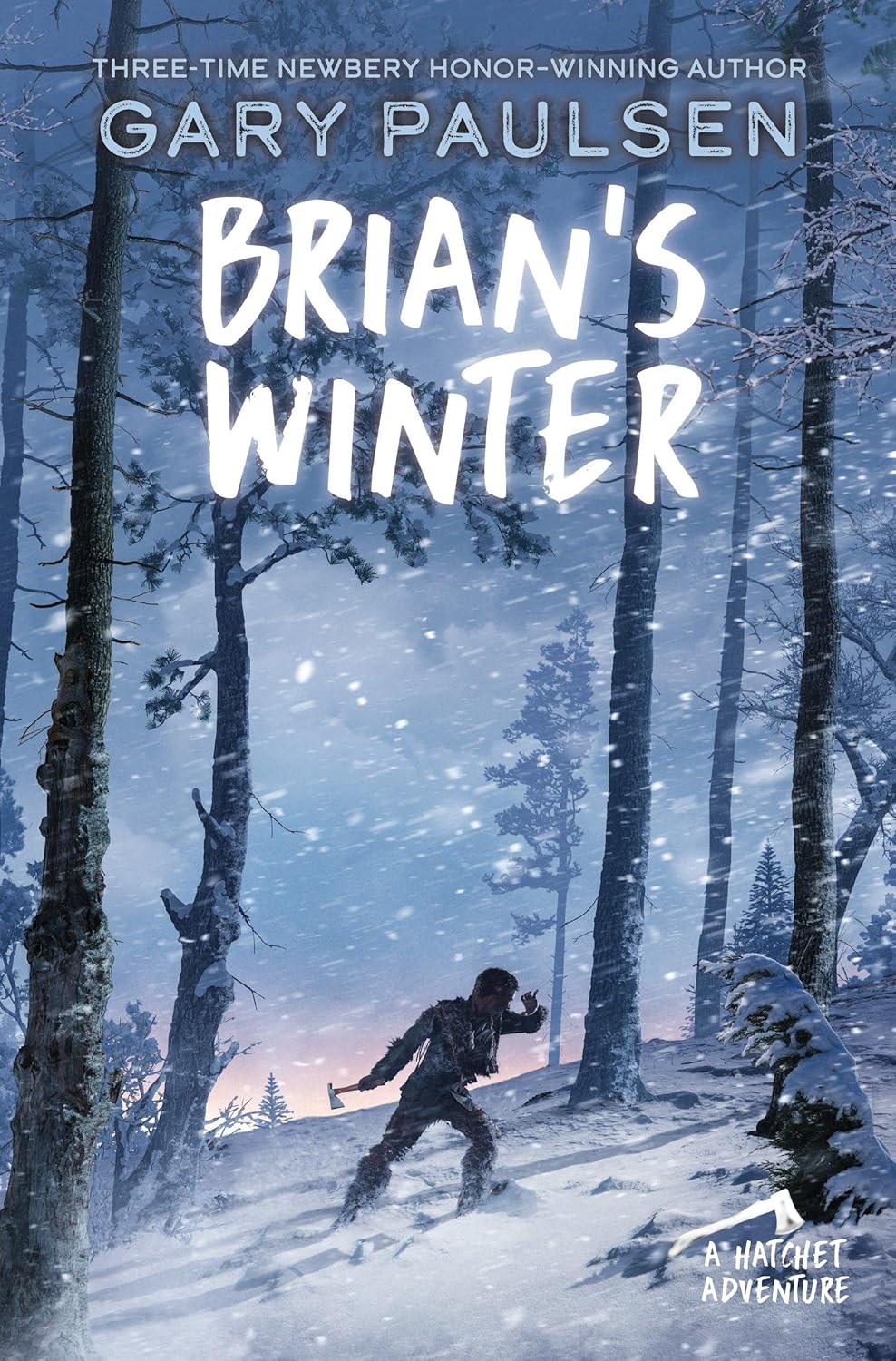
Brian’s Winter by Gary Paulsen is the most compelling and most purely satisfying of the Brian’s Saga sequels — an alternate-timeline novel that poses a single, devastating question: what would have happened if Brian Robeson had not been rescued at the end of Hatchet? What if the radio transmitter had not worked, the rescue plane had not come, and Brian had been left alone in the Canadian wilderness as summer turned to fall and fall turned to the brutal boreal winter? The answer, rendered with the same physical specificity and sensory immediacy that made Hatchet a classic, is one of the most rigorous and most gripping survival narratives available in middle grade fiction. Where Hatchet is the story of a city boy learning the minimum needed to survive, Brian’s Winter is the story of what survival actually demands when the stakes become absolute. Published in 1996, it is widely taught alongside Hatchet as a companion text and stands entirely on its own as a novel of extraordinary physical immediacy and craft. This complete guide covers the reading level, age appropriateness, themes, characters, and everything parents and teachers need to know about this essential companion novel.
For Parents
Brian’s Winter is a direct continuation of Hatchet‘s world and premise, best suited for readers ages 10-13 who have read Hatchet first — though it is entirely comprehensible without it. It is darker and more physically intense than the original novel, reflecting the higher stakes of winter survival, and it introduces Brian’s first sustained human contact in the form of the Cree family whose path crosses his. Parents who appreciated Hatchet‘s combination of adventure and craft will find Brian’s Winter an equally rewarding and somewhat more demanding companion.
For Teachers
Widely taught alongside Hatchet in grades 4-7, Brian’s Winter is an exceptional text for exploring how the same protagonist and setting can generate an entirely different story when the governing condition changes. The novel is also notable for the care with which it handles Brian’s encounter with Cree culture — Paulsen researched the Cree people and their wilderness knowledge with genuine respect, and the novel’s treatment of Indigenous knowledge as expertise worth learning from is one of its most important and most teachable qualities. The alternate timeline structure itself is a rich discussion topic for students thinking about narrative and choice.
Brian’s Winter at a Glance
Find on Amazon →| Author | Gary Paulsen |
| Published | 1996 |
| Grade Level | 4-6 (our assessment) |
| Recommended Age | 10-13 |
| Flesch-Kincaid Grade | 5.5 |
| Word Count | ~24,000 |
| Pages | 133 (standard paperback) |
| Chapters | 18 |
| Genre | Survival fiction / adventure / alternate timeline |
| Setting | The Canadian boreal wilderness, fall through winter |
| Awards | Awards: None widely recorded |
For official Lexile and AR levels, visit Lexile.com or AR BookFinder. ReadingVine provides independent editorial assessments.
What Reading Level Is Brian’s Winter?
Brian’s Winter reads at approximately a 4th-6th grade level by our editorial assessment, with a Flesch-Kincaid grade level of around 5.5 — nearly identical to Hatchet‘s, which is appropriate since Paulsen uses the same spare, physically immediate prose style across both novels. Brian’s voice is the same voice readers know from the original: direct, concrete, focused on the immediate problem, and building its emotional weight through accumulated physical detail rather than interior reflection. The novel is compact and fast-moving, and its 133 pages make it one of the shorter books in this grade range.
What makes Brian’s Winter somewhat more demanding than Hatchet is the escalating severity of what Brian faces. Hatchet is a story of learning the minimum required to survive; Brian’s Winter is a story of mastery pushed to its absolute limit by conditions that have no margin for error. The cold is not uncomfortable — it is lethal, reliably and specifically lethal, and Paulsen describes its effects on the human body, on the landscape, and on every aspect of Brian’s survival with an accuracy that makes the reader understand, at the level of the body, what fifty below zero means. Readers who engage fully with the physical reality the novel creates will find it more demanding than its word-level score suggests.
The book is most commonly recommended for grades 4-6, often as a companion to Hatchet. For official Lexile and Accelerated Reader scores, visit Lexile.com or AR BookFinder.
What Age Is Brian’s Winter Appropriate For?
We recommend Brian’s Winter for readers ages 10-13. The novel is slightly more intense than Hatchet — the survival stakes are higher, the danger is more sustained, and the animals Brian encounters are more threatening — but its content is entirely appropriate for the recommended age range.
The novel’s primary difficulty is the sustained physical intensity of winter survival — detailed descriptions of extreme cold, hypothermia risk, and the physical demands of staying alive when temperatures drop to fifty below zero. Brian hunts and kills animals for food, and the kills are described with the matter-of-factness Paulsen applies to all practical survival content: neither sanitized nor gratuitously detailed, simply honest about what survival requires. A significant sequence involves a wolf pack whose presence is threatening but whose behavior Paulsen renders with biological accuracy rather than melodrama. Brian is attacked by a moose, which is handled directly. His first encounter with the Cree family involves navigating a language barrier and the specific vulnerability of a boy who has been alone for months meeting strangers — this is handled with warmth and without tension. There is no violence beyond survival and the natural world, no sexual content, and no strong language. The novel’s challenges are physical and practical throughout, and everything difficult in it is in service of a rigorous and honest portrait of what winter survival in the boreal forest actually requires.
Parents who read Hatchet with their children and want to continue the story will find Brian’s Winter the most natural and most rewarding next step. The alternate-timeline premise is engaging rather than confusing, and the novel’s introduction of the Cree family provides the human warmth that Hatchet‘s solitude deliberately withheld.
What Is Brian’s Winter About?
The novel begins where Hatchet would have ended if the radio transmitter had failed: Brian alone in the wilderness, the rescue that ended the original novel not coming, summer giving way to fall. Brian has become a capable summer survivor — he can make fire, build shelter, find food, read the landscape. But as the days shorten and the temperature begins its long drop, he realizes with growing urgency that summer survival and winter survival are not the same problem. The skills he has are necessary but not sufficient. He needs more, and he needs it fast.
The novel’s first movement is Brian’s systematic preparation for winter — the most demanding and most satisfying extended problem-solving sequence in the entire series. He must build a winter shelter that can hold heat against temperatures he has never experienced, create or acquire clothing adequate to extreme cold, stockpile enough food to survive months when hunting will be difficult and foraging impossible, and develop the specific techniques — snowshoes, fire management in extreme cold, the reading of winter animal behavior — that winter survival requires. Paulsen renders each of these problems with the physical specificity of direct experience, and Brian’s solutions are neither miraculous nor easy: they involve failure, revision, and the specific satisfaction of a practical intelligence working at the edge of its capacity.
The novel’s middle section is winter itself — the silence and the cold and the specific, daily work of staying alive when the margin for error has effectively disappeared. Brian learns what fifty below zero does to exposed skin, to fire, to the animals he depends on for food. He has close encounters with a wolf pack that tests his understanding of predator behavior and his own nerve. A moose attacks him in circumstances that leave him briefly incapacitated, and the recovery from that encounter is one of the novel’s most demanding sequences.
The novel’s third movement — and its most significant departure from Hatchet‘s solitude — is Brian’s encounter with a Cree family traveling through the wilderness on their own seasonal rounds. David Smallhorn, his wife Susan, their daughter Betty, and their extended family move through the land with a knowledge and competence that makes Brian’s hard-won survival skills look like a beginning. The family takes Brian in with warmth and without condescension, shares food and knowledge, and eventually leads him to the trading post where rescue becomes possible. Brian’s experience with the Cree family is the novel’s emotional center — the point where survival stops being a solitary problem and becomes a human one — and Paulsen handles the cultural encounter with a respect and specificity that reflects genuine research into Cree life and wilderness practice.
Brian’s Winter Characters
Is Brian’s Winter Banned?
Brian’s Winter has not been challenged or banned and does not appear on any lists of challenged books. Like Hatchet, it is among the most consistently recommended and most uncontroversially appropriate novels in its grade range. It is widely available in school and public libraries and is broadly embraced by educators, librarians, and parents as an exemplary survival novel for middle grade readers.
Brian’s Winter Themes and Lessons
The central theme of Brian’s Winter — and what distinguishes it most clearly from Hatchet — is the difference between minimum viable survival and genuine mastery. Hatchet is about learning just enough to stay alive. Brian’s Winter is about discovering that just enough is not enough when the conditions become absolute, and about the sustained, unglamorous work of raising one’s competence to meet conditions that have no margin for error. Winter in the boreal forest does not tolerate the mistakes that summer survival allowed Brian to learn from. The novel’s deepest argument is about the relationship between preparation and survival: that foresight — the ability to anticipate what you will need before you need it — is as important as any specific skill, and that the failure to prepare is not a recoverable error when the temperature drops to fifty below.
Indigenous knowledge and the limits of self-taught expertise are the novel’s second great themes, developed through Brian’s encounter with the Cree family. Brian has worked extraordinarily hard to learn what he knows, and what he knows is real — it has kept him alive through a boreal winter, which is no small thing. But the Cree family’s relationship to the same landscape is of a different order entirely: it is intergenerational, accumulated over centuries, refined through countless winters, and carried in the body rather than worked out through trial and error. Brian’s humility in the face of that knowledge — his recognition that his hard-won competence is still only a beginning — is one of the novel’s most important moments, and Paulsen’s treatment of Cree expertise as wisdom rather than exoticism is one of its most significant qualities.
Solitude and human connection are the novel’s third great themes, rendered through the contrast between the novel’s long middle section — Brian alone in the winter wilderness — and the warmth and disorientation of his encounter with the Cree family. Brian has adapted to solitude in ways he does not fully realize until he is in company again: the presence of other people is both a relief and an adjustment, and the novel’s honest rendering of that adjustment — the strangeness of being seen, the difficulty of communication across a language barrier, the specific vulnerability of a boy who has been alone for months — is one of its most affecting passages.
Discussion starters for classrooms: How is Brian different at the beginning of Brian’s Winter from the Brian at the beginning of Hatchet? What does winter survival require that summer survival did not? How does Brian’s encounter with the Cree family change his understanding of his own knowledge? What does the alternate timeline structure ask readers to think about that a conventional sequel would not? What does the novel say about the difference between learned knowledge and inherited knowledge?
How Many Pages and Chapters Are in Brian’s Winter?
The standard paperback edition of Brian’s Winter is 133 pages, divided into 18 chapters averaging around seven pages each. The word count is approximately 24,000 words — the same as Hatchet but in a considerably more compact package, making it the shortest novel in the Brian’s Saga series and one of the most compact in its grade range. The brevity is a function of Paulsen’s characteristic economy: there is no padding, no scene that does not advance either the survival plot or Brian’s development, and the novel moves with the urgency of a story in which every page has consequences.
For readers in the target age range of 10-13, expect a reading time of roughly 3-4 hours for engaged readers. As a classroom text it works best in a two-week unit, ideally following a Hatchet unit so that the alternate timeline premise has its full context and the contrast between summer and winter survival can be developed as a discussion thread. Teachers who assign both novels often structure their units around comparative questions: what does Brian know at the start of Brian’s Winter that he did not know at the start of Hatchet? What does winter require that summer did not? How does Brian’s experience with the Cree family change the novel’s argument about survival and knowledge? The novel includes an author’s note in which Paulsen addresses the alternate timeline directly, explaining the choice to imagine the winter Brian would have faced — this note is a valuable teaching tool for discussions about authorial intention and narrative possibility.
Books Similar to Brian’s Winter
About Gary Paulsen
Gary Paulsen (1939-2021) was one of the most prolific and most beloved authors of middle grade and young adult fiction in American literary history, the author of more than two hundred books and three-time Newbery Honor recipient — for Hatchet (1988), Dogsong (1986), and The Winter Room (1990). Brian’s Winter, published in 1996, was his direct response to the single most common question readers asked after Hatchet: what would have happened if Brian had not been rescued? Paulsen has spoken about the question as one he asked himself, and about Brian’s Winter as his attempt to answer it honestly — to imagine what a Canadian winter would actually have required of a boy with Brian’s skills, and to do so with the same physical accuracy and respect for the wilderness that defined the original novel. His research into Cree culture and practice for the novel’s final section reflects the same commitment to authenticity that characterizes his wilderness survival writing: Paulsen did not invent the Cree family’s knowledge or their way of moving through the land, he researched it. He died in October 2021, leaving behind the Brian’s Saga series and one of the richest catalogs of wilderness fiction for young people in the American tradition.
Brian’s Winter: Frequently Asked Questions
What reading level is Brian’s Winter?
Brian’s Winter has a Flesch-Kincaid grade level of approximately 5.5 — nearly identical to Hatchet‘s, which is appropriate since Paulsen uses the same spare, physically immediate prose across both novels. The novel is compact at 133 pages and moves with the urgency of a high-stakes survival narrative. What makes it somewhat more demanding than the score suggests is the escalating severity of the physical conditions Brian faces — the cold is lethal and specific, and Paulsen describes its effects on the body and landscape with an accuracy that requires engaged reading. For official Lexile and AR scores, visit Lexile.com or AR BookFinder.
Do I need to read Hatchet before Brian’s Winter?
Brian’s Winter is most rewarding for readers who know Hatchet first — the alternate timeline premise has its full weight only if you know the ending it is departing from, and the contrast between what Brian knows at the start of Brian’s Winter and what he knew at the start of Hatchet is one of the richest discussions the two novels together generate. That said, the novel is entirely comprehensible as a standalone: Paulsen provides enough context about Brian’s situation and backstory that readers who have not read Hatchet will not be lost. Most teachers assign both, with Hatchet first.
Is Brian’s Winter a sequel or an alternate timeline?
Brian’s Winter is an alternate timeline rather than a conventional sequel — it begins at the point where Hatchet‘s radio transmitter failed to bring rescue and imagines what would have followed. It is not a sequel in the sense of picking up after Hatchet‘s ending; it is a different version of what happened next, a “what if” that Paulsen pursued because so many readers asked what winter would have meant for Brian. The Brian’s Saga series also includes The River (1991), which is a direct sequel to Hatchet‘s canonical ending, and Brian’s Return (1999) and Brian’s Hunt (2003), which continue the main timeline. Brian’s Winter occupies its own narrative branch.
How cold does it get in Brian’s Winter?
The temperatures Brian faces in the novel’s winter sections drop to approximately fifty degrees below zero Fahrenheit — a cold that is not merely uncomfortable but immediately and specifically dangerous, in which exposed skin freezes in minutes, fires require constant management to stay lit, and the energy cost of staying warm is itself a survival challenge. Paulsen describes the cold’s effects with the accuracy of direct experience: what it does to the body, to the landscape, to the animals Brian depends on for food, and to every aspect of the survival infrastructure he has built. The novel is one of the most physically specific portrayals of extreme cold available in middle grade fiction, and readers who engage with its temperature descriptions will understand, at a level beyond the intellectual, what boreal winter survival actually means.
Who are the Cree people in Brian’s Winter?
The Cree are one of the largest Indigenous peoples in North America, with communities across the Canadian boreal forest and subarctic regions — the same landscape Brian is surviving in. In the novel, Brian encounters a Cree family traveling through the wilderness on their seasonal rounds, and the encounter is one of the most important in the Brian’s Saga series: the family’s knowledge of and relationship to the land Brian has been struggling to survive in is of a different order entirely from Brian’s hard-won self-taught expertise. Paulsen researched Cree culture and practice carefully for the novel, and his treatment of the Cree family’s knowledge as genuine expertise rather than exotic background detail is one of the novel’s most significant qualities. Their presence also provides the first sustained human warmth in a novel that has been defined by solitude.
Does Brian get rescued in Brian’s Winter?
Yes — the Cree family’s seasonal travel eventually leads Brian to a trading post where contact with the outside world and eventual rescue become possible. The rescue, as in Hatchet, is not the novel’s climax but its resolution — what the novel has been building toward is not the rescue itself but the Brian who arrives at the point of rescue, changed by everything winter has required of him. The path to rescue in Brian’s Winter runs through human connection rather than technological accident, which is one of the ways the novel’s resolution is richer and more earned than the original’s.
What grade is Brian’s Winter typically assigned in?
Brian’s Winter is most commonly assigned in grades 4, 5, and 6, almost always as a companion to Hatchet. The two novels are frequently taught in sequence as a unit on wilderness survival, with the contrast between summer and winter survival as the unit’s central analytical thread. Teachers who teach both novels often use the alternate timeline structure as a discussion topic in its own right — asking students why Paulsen made this choice, what it allows the novel to explore that a conventional sequel could not, and what other alternate timelines they can imagine. It pairs naturally with My Side of the Mountain for a broader wilderness fiction unit, and with Julie of the Wolves for a unit on survival in extreme northern environments and the treatment of Indigenous knowledge.