
 = Partner Site
Catching Fire Reading Level: A Complete Guide
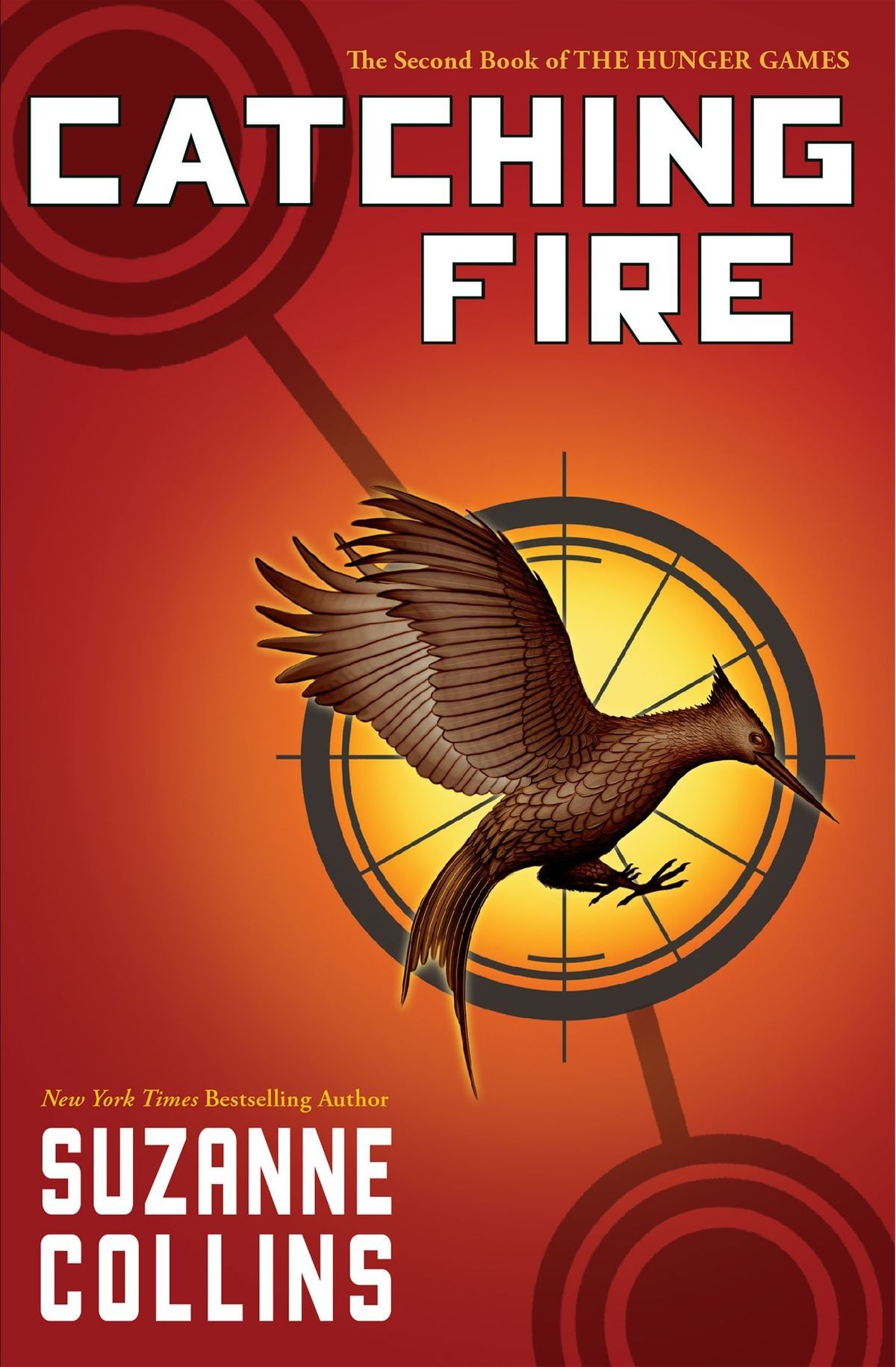
Catching Fire by Suzanne Collins is the second book in the Hunger Games trilogy, in which Katniss Everdeen — having survived the 74th Hunger Games by forcing the Capitol’s hand — returns home to District 12 to find that her act of defiance has become a symbol of rebellion across all twelve districts, and that the Capitol intends to make her pay for it. Published in 2009, it is widely considered the strongest book in the trilogy: the first acts as setup, the third as consequence, and Catching Fire is where the series’ deepest argument about power, spectacle, and the machinery of propaganda takes full shape. It ends with one of the most effective cliffhangers in contemporary YA fiction. This complete guide covers Catching Fire‘s reading level, recommended age, content considerations, characters, themes, and books similar to Catching Fire, designed for parents, teachers, and students.
For Parents
The second and most plot-propulsive book in the trilogy — darker than The Hunger Games but less devastating than Mockingjay. Contains violence (arena combat, public whipping, political executions), the death of an elderly tribute, and the return of the Games’ fundamental horror. Appropriate for ages 11 and up; most commonly read in grades 6–8.
For Teachers
The trilogy’s most teachable individual book — the Quarter Quell twist reconfigures the Games’ political meaning in ways that reward close analysis, and the introduction of victors from other districts expands the series’ social world considerably. The argument about how symbols are manufactured and co-opted by competing political interests is more visible here than in either the first or third book, making it the best entry point for classroom analysis of the trilogy’s media critique.
Catching Fire at a Glance
Find on Amazon →| Author | Suzanne Collins |
| Published | 2009 (Scholastic Press) |
| Grade Level | 6–8 (our assessment) |
| Recommended Age | 11+ |
| ATOS Reading Level | 5.3 |
| Lexile | 820L |
| Word Count | 101,564 |
| Pages | 391 (Scholastic hardcover); 400 (paperback) |
| Chapters | 27 (9 chapters per part; 3 parts) |
| Series | The Hunger Games, Book 2 (trilogy complete) |
| Genre | Young adult dystopian fiction |
| Setting | Panem (post-apocalyptic North America); Districts and the Capitol |
For official Lexile and AR levels, visit Lexile.com or AR BookFinder. ReadingVine provides independent editorial assessments.
What Reading Level Is Catching Fire?
Catching Fire has an ATOS reading level of 5.3 and a Lexile of 820L — slightly above The Hunger Games (810L) and consistent with Mockingjay (800L), reflecting the prose uniformity Collins maintains across the trilogy. The formula scores accurately describe the writing style: present-tense first-person narration, clean sentence structure, and propulsive pacing that reads faster than the word count suggests. The reading challenge is the same across all three books — not linguistic complexity but the emotional and political weight of the material, which escalates from book to book.
Catching Fire is the middle book of the trilogy, and like most strong middle books it assumes familiarity with the world established in the first volume while pushing the story into significantly more complex territory. Readers who have not read The Hunger Games first will miss the full impact of the Quarter Quell twist, which depends entirely on the reader already understanding what the Games mean and what surviving them costs. At 101,564 words and 391 pages across 27 chapters, most readers who have finished the first book complete it within days; classroom assignments typically run two to three weeks. For official Lexile and AR scores, visit Lexile.com or AR BookFinder. ReadingVine’s assessments are independent editorial judgments.
The Hunger Games Series: Where Catching Fire Fits
Catching Fire is the second book in the completed Hunger Games trilogy. It must be read after The Hunger Games and before Mockingjay. For a full series overview including grade levels, page counts, and the content escalation across all three books, see our complete Mockingjay guide, which includes the series table. A prequel novel, The Ballad of Songbirds and Snakes (2020), follows a young Coriolanus Snow and can be read independently but is best read after the trilogy.
Catching Fire is consistently cited by fans and critics as the strongest book in the trilogy: where The Hunger Games establishes the world and Mockingjay grapples with the war’s cost, this second installment is where Collins’s argument about propaganda, symbol-making, and the uses of spectacle comes into sharpest focus. The Quarter Quell twist is the series’ most formally elegant structural move, and the ending is one of the most effective in the trilogy.
What Age Is Catching Fire Appropriate For?
We recommend Catching Fire for readers ages 11 and up — one year above our recommendation for The Hunger Games, reflecting the modest content escalation. The novel’s violence includes arena combat, the public whipping of Gale in District 12, political executions witnessed by Katniss during the Victory Tour, and the arena sequence in the second half. Mags — an elderly victor who volunteers so that Finnick can compete — sacrifices herself in the arena, a death handled with simple, direct grief. The romantic subplot is more prominent than in the first book but remains at the level of emotional tension rather than explicit content. Parents who have already permitted The Hunger Games should find Catching Fire a comfortable next step.
What Is Catching Fire About?
Katniss and Peeta have won. They are alive, their families are safe, and they have moved into the Victors’ Village in District 12. They should be relieved. Instead, Katniss is living with the knowledge that President Snow visited her personally before the Victory Tour and made the stakes entirely clear: the berries at the end of the Games — her act of defiance, the moment she forced the Capitol to let both tributes live — read across the districts as an act of rebellion. She must convince the watching world, and Snow, that it was only love. If she fails, people will die. People are already dying.
The Victory Tour takes Katniss and Peeta through all twelve districts, ending at the Capitol. The districts are not persuaded. In District 11 — Rue’s district — the crowd silently performs the gesture of respect that Katniss gave Rue’s body in the arena, and a man is executed on the spot for it. In every district, the unrest is visible. The Capitol’s response is escalating cruelty: new Peacekeepers, curfews, public floggings, the kind of enforcement that signals a regime that has stopped trusting its own social control.
Then comes the announcement of the 75th Hunger Games — the third Quarter Quell. Every twenty-five years, the Games include a special twist established at the time of the first rebellion. The announcement: this year’s tributes will be reaped from the pool of living victors. Katniss is District 12’s only living female victor. She is going back in.
The second half of the novel is the arena — a clock-shaped jungle in which each wedge contains a different environmental horror that cycles on the hour. Katniss enters with a different set of allies: Finnick Odair, the impossibly charming victor from District 4 whose charm conceals damage she does not yet understand; Mags, his elderly mentor; Beetee and Wiress, the technical brilliance from District 3; Johanna Mason, the savage and hollowed-out victor from District 7. They have a plan. The novel ends not with the Games’ conclusion but with their destruction: Katniss fires a wire-connected arrow into the arena’s force field, blows out the power, and wakes up in a hovercraft. Haymitch is there. So is Plutarch Heavensbee, the Head Gamemaker who designed the arena. And Gale is there to tell her: District 12 is gone. The Capitol bombed it. Her family is safe. But home is not.
Catching Fire Characters
Is Catching Fire Banned?
Catching Fire has not generated a significant independent challenge record — challenges to the Hunger Games series have focused primarily on The Hunger Games (Book 1), which bears the series’ formal challenge history. As a middle book in a trilogy, Catching Fire is rarely the specific title named in challenges; parents who have already permitted the first book typically continue. The series as a whole appeared on the ALA’s most challenged list in 2010 and 2011 and ranks among the most challenged series of the 2010–2019 decade, primarily for violence, “anti-family themes,” and content deemed unsuitable for the age group. For a full discussion of the Hunger Games series challenge history, see our Mockingjay guide.
Catching Fire Themes and Lessons
Catching Fire is where Collins’s argument about the weaponization of symbols becomes fully visible. In the first book, Katniss’s defiance is spontaneous and personal: she picks up the berries for Peeta, not for the districts. In the second book she watches what that act means to other people — watches it become a rallying point, a gesture, a cause — while also watching the Capitol attempt to neutralize it, reframe it, and eventually destroy it by returning her to the arena. The conflict between what a symbol means to the people who adopt it and what it means to the power that is trying to contain it is the novel’s central argument, and it maps directly onto real-world debates about political imagery and the capture of protest symbols by institutional forces.
The Quarter Quell is Collins’s most formally elegant structural device across the trilogy. By sending the victors back into the arena, the Capitol reveals the truth about what victors actually are: not champions but property. Their celebrity, their Victory Villages, their careers as mentors — all of it was never freedom. It was a longer leash. The moment the Capitol decides it needs them dead, all of that is revoked. This is the argument that Haymitch has been living for years and that Katniss is only beginning to understand.
The victors introduced in this book — Finnick, Mags, Beetee, Wiress, Johanna, and others glimpsed during the tribute parade — collectively expand the series’ portrait of what the Games cost the people who survive them. Each victor is damaged in specific ways: Finnick has been prostituted by the Capitol; Wiress has had some essential functioning disrupted; Johanna has been stripped of everyone she loved as punishment for resisting. They are the human archive of Panem’s cruelty — walking advertisements for a system that calls itself a spectacle of strength and is actually a machine for producing broken people.
Discussion questions for classrooms and families: Why does the Quarter Quell twist matter more than a standard Games variation — what does it reveal about the Capitol’s relationship to its own victors? What does Katniss mean when she says she never wanted to be anyone’s symbol — and why does it happen to her anyway? What does Finnick’s character reveal about how the Capitol treats those it celebrates? What does the mockingjay represent by the end of the novel, and how has its meaning changed from the first book?
How Many Pages and Chapters in Catching Fire?
The Scholastic hardcover is 391 pages; the paperback is 400 pages. Like Mockingjay, the novel is structured in exactly 27 chapters across three named parts — “Part 1: The Spark,” “Part 2: The Quell,” and “Part 3: The Enemy” — with nine chapters per part. Collins uses this three-act structure across all three trilogy books as a formal parallel to the trilogy’s own three-part arc. Word count is 101,564. Most readers who have finished the first book complete this one within days; classroom assignments typically run two to three weeks.
The novel’s pacing is notable: the first third (the Victory Tour and the Quarter Quell buildup) moves at a political-thriller pace; the middle third (preparation for and arrival at the Capitol) is the trilogy’s most stylistically varied section; and the final third (the arena) is as propulsive as anything in the first book. The ending stops the reader cold rather than resolving anything — the correct structural choice for a middle book that exists to generate momentum into the final volume.
Books Similar to Catching Fire
About Suzanne Collins
Suzanne Collins was born in 1962 in Hartford, Connecticut, the daughter of a U.S. Air Force officer who served in Vietnam and who made a point of teaching his children about the realities of war. She studied dramatic writing at New York University’s Tisch School of the Arts and worked for years writing for children’s television before turning to fiction. Catching Fire was published in 2009, a year after The Hunger Games became an unexpected bestseller; the trilogy concluded with Mockingjay in 2010.
For a full biography, see our Mockingjay guide. The 2013 film adaptation of Catching Fire, directed by Francis Lawrence and starring Jennifer Lawrence, Josh Hutcherson, and Liam Hemsworth — with Sam Claflin as Finnick and Jena Malone as Johanna — is widely considered the strongest of the four Hunger Games films. It is rated PG-13 and appropriate for the same age range as the novel.
Catching Fire: Frequently Asked Questions
What reading level is Catching Fire?
Catching Fire has an ATOS of 5.3 and a Lexile of 820L — consistent with the other books in the trilogy, accurately reflecting the accessible present-tense prose. The challenge is content weight and narrative complexity rather than linguistic difficulty. Our editorial assessment places it at grades 6–8, ages 11 and up. For official Lexile and AR scores, visit Lexile.com or AR BookFinder.
What grade is Catching Fire appropriate for?
We recommend grades 6–8, ages 11 and up. Darker than The Hunger Games but lighter than Mockingjay — the middle point of the trilogy’s content escalation. Contains arena violence, public whipping, political executions, and a character’s quiet self-sacrifice. Parents who have permitted Book 1 should find this a comfortable next step.
How many pages are in Catching Fire?
391 pages (hardcover) or 400 pages (paperback). 27 chapters in three parts of nine chapters each. Word count 101,564. Most readers complete it within days of finishing Book 1; classrooms typically take two to three weeks.
What is Catching Fire about?
Katniss discovers her defiance has sparked rebellion across the districts. When the 75th Hunger Games is announced as a Quarter Quell requiring tributes drawn from living victors, she is forced back into the arena alongside previous winners from all twelve districts. The novel ends with the arena’s destruction and Katniss’s extraction by a rebel alliance — as District 12 is bombed behind them.
What is a Quarter Quell?
Every twenty-five years the Hunger Games includes a special twist as a reminder of the Capitol’s total power. The 75th Games — Third Quarter Quell — requires that tributes be drawn from the pool of living victors. As District 12’s only living female victor, Katniss must return to the arena.
Who is Finnick Odair?
The victor from District 4 — widely considered the most celebrated victor alive, charming and apparently shallow in ways that turn out to be careful armor. Finnick won the Games at fourteen and has since been used by the Capitol in ways the novel discloses gradually. In Catching Fire he is first a threat and then an essential ally; his relationship with Annie Cresta is one of the trilogy’s most quietly devastating relationships.
Is Catching Fire better than The Hunger Games?
Many readers and critics consider it the strongest book in the trilogy. The New York Times wrote that Collins had “written a sequel that improves upon the first book.” The Quarter Quell twist is regarded as the series’ best structural move, the victors expand its emotional range, and the ending is more immediately devastating than either of the other books’ conclusions.
Is there a Catching Fire movie?
Yes — The Hunger Games: Catching Fire (2013), directed by Francis Lawrence, starring Jennifer Lawrence, Josh Hutcherson, and Liam Hemsworth, with Sam Claflin as Finnick and Jena Malone as Johanna Mason. Rated PG-13. Widely considered the best of the four Hunger Games films, grossing over $865 million worldwide.