
 = Partner Site
Mockingjay Reading Level: A Complete Guide
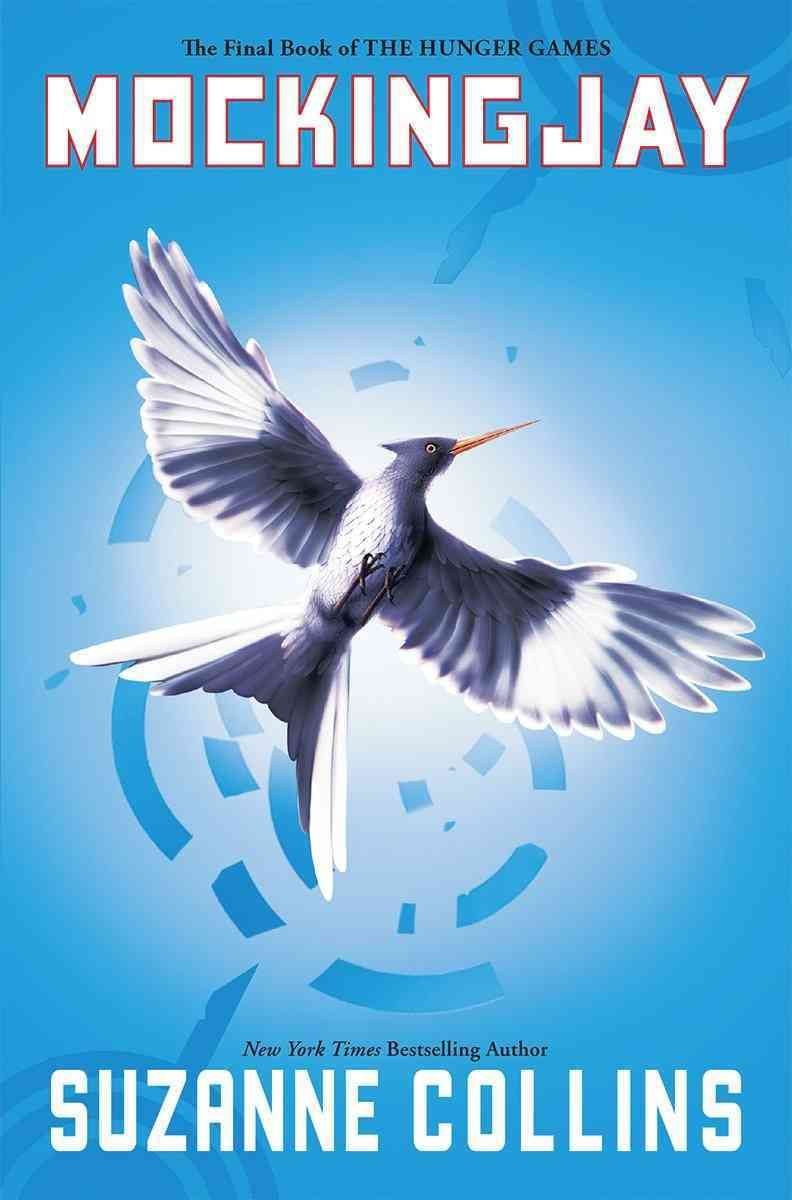
Mockingjay by Suzanne Collins is the third and final book of the Hunger Games trilogy, in which Katniss Everdeen — the reluctant symbol of a revolution she did not choose — must decide how much of herself she is willing to surrender to a cause whose leaders may be no better than the tyrant they are trying to replace. Published in 2010, it concludes the story begun in The Hunger Games (2008) and Catching Fire (2009), and is the darkest and most morally complex installment of the three: less a story of survival than a story of what survival costs, and what a person is left with when the fighting is over. This complete guide covers Mockingjay‘s reading level, recommended age, content considerations, characters, themes, and books similar to Mockingjay — including a full series overview for parents deciding whether the trilogy is right for their child, designed for parents, teachers, and students.
For Parents
Mockingjay is the most mature and most violent book in the trilogy — a war novel in YA form, with graphic combat, civilian casualties, trauma, suicidal ideation, and a death near the end that hits harder than almost anything else in the series. The content escalates meaningfully from Book 1. Parents who read the first book with a fifth or sixth grader should know that Mockingjay is a different kind of book. Appropriate for ages 12 and up; most commonly assigned in grades 7–9.
For Teachers
The richest teaching text in the trilogy — Collins’s three-act structure (nine chapters per part, mirroring the trilogy’s own three-book arc) rewards discussion of narrative architecture, and Mockingjay‘s central argument about propaganda, political manipulation, and whether the ends justify the means gives it sustained relevance beyond its genre. Pairs productively with Collins’s stated inspirations: Greek mythology, Roman gladiatorial spectacle, and the televised Gulf War footage she watched as a child.
Mockingjay at a Glance
Find on Amazon →| Author | Suzanne Collins |
| Published | 2010 (Scholastic Press) |
| Grade Level | 7–9 (our assessment) |
| Recommended Age | 12+ |
| ATOS Reading Level | 5.3 |
| Lexile | 800L |
| Word Count | 100,269 |
| Pages | 390 (Scholastic hardcover) |
| Chapters | 27 (9 chapters per part; 3 parts) |
| Series | The Hunger Games, Book 3 (trilogy complete) |
| Genre | Young adult dystopian fiction |
| Setting | Panem (post-apocalyptic North America); District 13, the Capitol |
For official Lexile and AR levels, visit Lexile.com or AR BookFinder. ReadingVine provides independent editorial assessments.
What Reading Level Is Mockingjay?
Mockingjay has an ATOS reading level of 5.3 and a Lexile of 800L — identical to the scores for The Hunger Games and Catching Fire. The prose is consistent across the trilogy: Collins writes in tight, present-tense first person that is propulsive, clear, and emotionally immediate. The formula scores reflect the prose accurately. Where the trilogy escalates is not in linguistic complexity but in content weight and moral complexity.
TeachingBooks grades the series 5–12, which is a wide range that reflects the books’ genuine accessibility to strong middle school readers while acknowledging that the content — particularly in Mockingjay — is more appropriate for high school. Our editorial assessment for Mockingjay specifically is grades 7–9, ages 12 and up. The first book in the series is appropriate for grades 5–7; the second for grades 6–8; the third for grades 7–9. Parents who began the series with a younger reader should treat each book as a separate content decision rather than assuming consistency across the trilogy. At 100,269 words and 390 pages across 27 chapters, most classroom readers complete Mockingjay in two to three weeks; independent readers who are invested typically finish faster. For official Lexile and AR scores, visit Lexile.com or AR BookFinder. ReadingVine’s assessments are independent editorial judgments.
The Hunger Games Series Overview
The Hunger Games is a completed trilogy. All three books follow Katniss Everdeen in first-person present tense; they must be read in order. The content escalates significantly across the series — each book is darker, more violent, and more morally complex than the last.
| Book | Year | Pages | Lexile | ATOS | Our Grade | Age |
| The Hunger Games | 2008 | 384 | 810L | 5.3 | 5–7 | 10+ |
| Catching Fire | 2009 | 391 | 820L | 5.3 | 6–8 | 11+ |
| Mockingjay | 2010 | 390 | 800L | 5.3 | 7–9 | 12+ |
A prequel novel, The Ballad of Songbirds and Snakes (2020), follows a young Coriolanus Snow sixty-four years before the events of the trilogy. It can be read before or after the trilogy; reading it after preserves the dramatic irony of knowing what Snow becomes. It is longer (517 pages) and more deliberately literary in register than the trilogy, with a protagonist the reader is meant to find compelling and troubling simultaneously. Our assessment: grades 8–10, ages 13+.
What Age Is Mockingjay Appropriate For?
We recommend Mockingjay for readers ages 12 and up. This is the most content-serious book in the trilogy: it is a war novel, and it depicts war with the specificity and moral weight that the genre demands. The violence is purposeful — Collins has said she wrote the series to make readers think seriously about the costs of war, not to glamorize it — but it is substantial, and the emotional losses in the final section are devastating.
The death of Prim Everdeen — Katniss’s younger sister, the person whose rescue from the Hunger Games set the entire trilogy in motion — occurs near the novel’s end. It is abrupt, unforeshadowed in the moment, and widely reported as one of the most emotionally difficult moments in YA fiction. Collins made this choice deliberately to argue that in real war, the people you are fighting to protect are not protected by your love for them. Parents should be prepared for this, and should be aware that many readers — including adult readers — find it deeply affecting. The novel also depicts Peeta’s Capitol-induced psychological torture and “hijacking” (conditioning that replaces his memories of Katniss with fear and hatred), Katniss’s suicidal ideation in the novel’s final section, and the use of morphling (the series’ fictional opioid) by several characters as a response to trauma. Combat sequences involve civilian casualties and children. The novel ends with a fifteen-year epilogue in which Katniss describes the long-term psychological aftermath of everything she has survived.
What Is Mockingjay About?
Katniss Everdeen is seventeen years old and standing in the ashes of District 12, which the Capitol firebombed after her escape from the arena at the end of Catching Fire. She is alive. Most of the people she grew up with are not. She has been taken to District 13 — the underground rebel headquarters that the Capitol has been telling everyone for decades does not exist — where President Alma Coin runs the rebellion with an efficiency that looks, to Katniss’s increasingly acute political eye, uncomfortably like the Capitol’s own methods.
The rebels need a symbol. They want Katniss to be the Mockingjay — the face of the revolution, a propaganda figure whose image will inspire the districts to rise. Katniss is resistant: she knows she is being used, she does not trust Coin, and she is consumed with guilt over Peeta, who was captured by the Capitol at the end of Catching Fire and is now appearing in Capitol broadcasts denying the rebellion and calling for a ceasefire. She agrees to be the Mockingjay in exchange for immunity for Peeta and the other captured tributes, and for the right to kill Snow herself when the time comes.
The novel’s three parts trace the arc of the war: the rebellion’s propaganda campaign and the Capitol’s counter-campaign; Peeta’s rescue and the discovery that the Capitol has “hijacked” his memories of Katniss, replacing them with conditioned fear and hatred; and the final assault on the Capitol itself, in which Katniss leads a small team through a city that has been turned into a death trap of the same kind used in the Hunger Games arena. The assault on the Capitol ends with one of the most morally complex choices in contemporary YA fiction: Katniss, given the opportunity to kill Snow, kills someone else instead. The reason is the novel’s most devastating revelation about what the rebellion has become.
The epilogue, set fifteen years later, shows Katniss and Peeta living quietly in the ruins of District 12, with two children Katniss agreed to have after years of refusing. The Hunger Games are over. The trauma is not. Katniss describes a kind of slow, difficult survival — naming good things alongside the memories of everything lost — that Collins frames not as a happy ending but as the most that can honestly be offered to a person who has survived what Katniss has survived.
Mockingjay Characters
Is Mockingjay Banned?
The Hunger Games series — including Mockingjay — appeared on the ALA’s most challenged books list in 2010, 2011, and across the 2010–2019 decade list, ranking among the top ten most challenged books of that decade. The series as a whole was the third most challenged in America between 2010 and 2019. Reasons cited for challenges across the trilogy include violence, anti-family themes, anti-ethnic content, occult or satanic themes, and being “unsuited to age group.” The violence and anti-family objections are the most commonly documented.
The “anti-family” challenge is worth examining directly: the Hunger Games series depicts a state that forces families to send their children to die on television as a tool of political control. The argument that this constitutes “anti-family” content conflates the novel’s critique of a system that destroys families with an endorsement of that destruction — the same logical maneuver that would characterize The Crucible as anti-justice or Things Fall Apart as anti-community. Collins has said the series was written to help young people think seriously about war and its costs; the challenges to it are, in most documented cases, challenges to that purpose.
The “occult or satanic” objection has been documented in challenges to the series and is the most difficult to account for in terms of the novel’s actual content. The Hunger Games contains no occult or satanic elements; this objection appears to reflect concern about the series’ dystopian premise or its depiction of televised death rather than any specific content.
Mockingjay Themes and Lessons
Collins has been explicit about the sources of the Hunger Games trilogy: Greek mythology (Theseus and the Minotaur, the Athenian tribute to Crete), Roman gladiatorial spectacle, and the experience of watching Gulf War footage on television as a child — specifically the experience of flipping between coverage of real casualties and entertainment programming, and the difficulty of telling them apart. The trilogy is about the weaponization of spectacle: the Capitol uses the Hunger Games as a tool of political terror that is simultaneously entertainment, and the distinction between watching for information and watching for pleasure is one the trilogy consistently refuses to let readers maintain comfortably.
Mockingjay‘s most sustained argument concerns propaganda — and it is a more sophisticated argument than the one usually attributed to it. The novel does not argue that the Capitol’s propaganda is bad and the rebellion’s is good; it argues that propaganda as a tool distorts whoever uses it. Katniss is made into a symbol against her will by the Capitol, and then made into a symbol against her will by District 13. The propos the rebellion produces are effective precisely because they contain genuine emotion — Katniss’s grief for Rue, her rage at the Capitol, her love for Peeta — and the rebels’ willingness to extract and broadcast that genuine emotion without Katniss’s full consent is the thing that makes them, in structure if not in moral character, not entirely different from what they are fighting against.
The “Real or not real?” thread — Peeta’s attempt, after his hijacking, to sort genuine memories from implanted ones — is the novel’s most formally elegant statement of its central concern. Memory can be altered. Emotions can be manufactured. Allegiances can be redirected. The experience of having your own feelings weaponized against you is something Katniss and Peeta share across the trilogy, and Mockingjay pushes that experience to its logical conclusion: a war in which you cannot trust your own perception of events is a war in which the boundaries between self and tool have dissolved entirely.
Discussion questions for classrooms and families: What is the difference between the Capitol’s use of Katniss as a symbol and District 13’s use of her — and does the difference matter? What does Peeta’s “Real or not real?” question argue about the relationship between memory, propaganda, and identity? Why does Katniss kill Coin instead of Snow — and what does her choice reveal about what she has learned? What does Collins mean by ending the trilogy with an epilogue that insists on the permanence of trauma rather than offering a clean resolution? How does the novel use the structure of the Hunger Games — children as weapons in a televised spectacle — to argue about real-world entertainment and violence?
How Many Pages and Chapters in Mockingjay?
The Scholastic hardcover is 390 pages. The novel is structured in exactly 27 chapters across three named parts — “The Ashes,” “The Assault,” and “The Assassin” — with nine chapters per part. Collins has said this three-act structure comes from her playwriting background and was used across the Underland Chronicles series as well; it is also mirrored in the trilogy as a whole, where each of the three books corresponds to a stage of Katniss’s journey. Word count is 100,269. Most classroom readers complete it in two to three weeks; independent readers who are engaged typically finish in three to five days.
The nine-chapter-per-part structure rewards discussion: each part has a distinct emotional register (survival and positioning in Part 1; escalating war in Part 2; the Capitol assault and its costs in Part 3), and the equal division creates a formal symmetry that the novel’s content deliberately violates — each part escalates rather than balancing the previous, so the structure’s evenness is in productive tension with the story’s forward momentum.
Books Similar to Mockingjay
About Suzanne Collins
Suzanne Collins was born in 1962 in Hartford, Connecticut, the daughter of a U.S. Air Force officer who served in Vietnam and who, Collins has said, made a point of teaching his children about war — its causes, its costs, and the difference between what it looks like on television and what it actually is. She studied theater and telecommunications at Indiana University and dramatic writing at New York University’s Tisch School of the Arts, and worked for years as a children’s television writer — including on the Nickelodeon series Clarissa Explains It All — before turning to fiction.
The idea for the Hunger Games came to her one evening while channel-surfing between coverage of the Iraq War and a reality television competition show: the ease with which the two kinds of images blurred in her mind. She drew on the myth of Theseus and the Minotaur — the annual tribute of Athenian children to Crete, sent to feed a monster as the price of peace — and on the gladiatorial spectacles of ancient Rome, in which public violence served as both entertainment and political control. Collins has said that she wrote the series for young readers specifically because she believes teenagers are capable of engaging seriously with these questions, and that protecting young people from complexity is not protection but deprivation.
The Hunger Games became the bestselling YA series of its decade. A prequel, The Ballad of Songbirds and Snakes, was published in 2020 and adapted into a film in 2023. The original trilogy’s four-film adaptation (the first two books were each adapted as single films; Mockingjay was split into two parts) starred Jennifer Lawrence as Katniss and grossed over $2.9 billion worldwide. Collins lives in Connecticut.
Mockingjay: Frequently Asked Questions
What reading level is Mockingjay?
Mockingjay has an ATOS of 5.3 and a Lexile of 800L — consistent with the other books in the trilogy. The prose is accessible and fast-paced; the escalation from The Hunger Games is in content weight and moral complexity rather than linguistic difficulty. Our editorial assessment places it at grades 7–9, ages 12 and up. For official Lexile and AR scores, visit Lexile.com or AR BookFinder.
What grade is Mockingjay appropriate for?
We recommend grades 7–9, ages 12 and up. Mockingjay is meaningfully darker than The Hunger Games — a war novel with graphic combat, civilian casualties, the death of a major beloved character, Peeta’s psychological torture and recovery, and Katniss’s suicidal ideation. Parents who began the series with a fifth or sixth grader should treat this book as a separate content decision.
How many pages are in Mockingjay?
The Scholastic hardcover is 390 pages across 27 chapters in three parts (nine chapters each). Word count is 100,269. Most classroom readers complete it in two to three weeks; independent readers typically finish in three to five days.
What is Mockingjay about?
Katniss Everdeen agrees to serve as the Mockingjay — the symbol of the rebellion against the Capitol — while navigating her distrust of District 13’s President Coin, Peeta’s Capitol-induced psychological destruction, and a war that is rapidly becoming as brutal as what it is fighting against. The novel ends with Katniss making a political choice that redefines the revolution, and with a fifteen-year epilogue showing the cost of everything she has survived.
Does Prim die in Mockingjay?
Yes — Prim dies near the novel’s end in a bombing during the Capitol assault. Her death is sudden and not telegraphed in the immediate pages before it. Collins made this choice deliberately to argue that in real war, love does not protect the people you are fighting for. It is widely considered one of the most emotionally devastating moments in YA fiction. Parents of readers who formed a strong attachment to Prim across the trilogy should be prepared for this.
Why does Katniss kill Coin instead of Snow?
In the novel’s final confrontation, Coin proposes using Capitol children in one final Hunger Games — a proposal that reveals she intends to replace the Capitol’s system with her own version of the same. Katniss, who has been watching Coin’s methods across the novel and has just learned what Coin’s military strategy cost Prim, recognizes that killing Snow while leaving Coin alive would only replace one tyrant with another. Her choice to kill Coin instead is the novel’s clearest expression of its central political argument: revolution that uses the oppressor’s methods is not liberation.
What does “Real or not real?” mean in Mockingjay?
After his Capitol-induced “hijacking,” Peeta cannot distinguish between his genuine memories of Katniss and implanted memories designed to make him see her as a threat. He asks “Real or not real?” as a way of using the people around him to sort what he actually experienced from what the Capitol put in his head. The phrase is the novel’s most compressed statement of its central theme: that memory can be altered, emotions can be manufactured, and a person’s sense of their own history is exactly what propaganda targets first.
Is there a Mockingjay movie?
Mockingjay was adapted as two films: The Hunger Games: Mockingjay Part 1 (2014) and The Hunger Games: Mockingjay Part 2 (2015), both starring Jennifer Lawrence as Katniss. Both are rated PG-13 and are appropriate for the same age range as the novel. Part 2 in particular is among the most faithful and tonally accurate adaptations of a YA novel in the franchise era.