
 = Partner Site
Danny the Champion of the World Reading Level: A Complete Guide
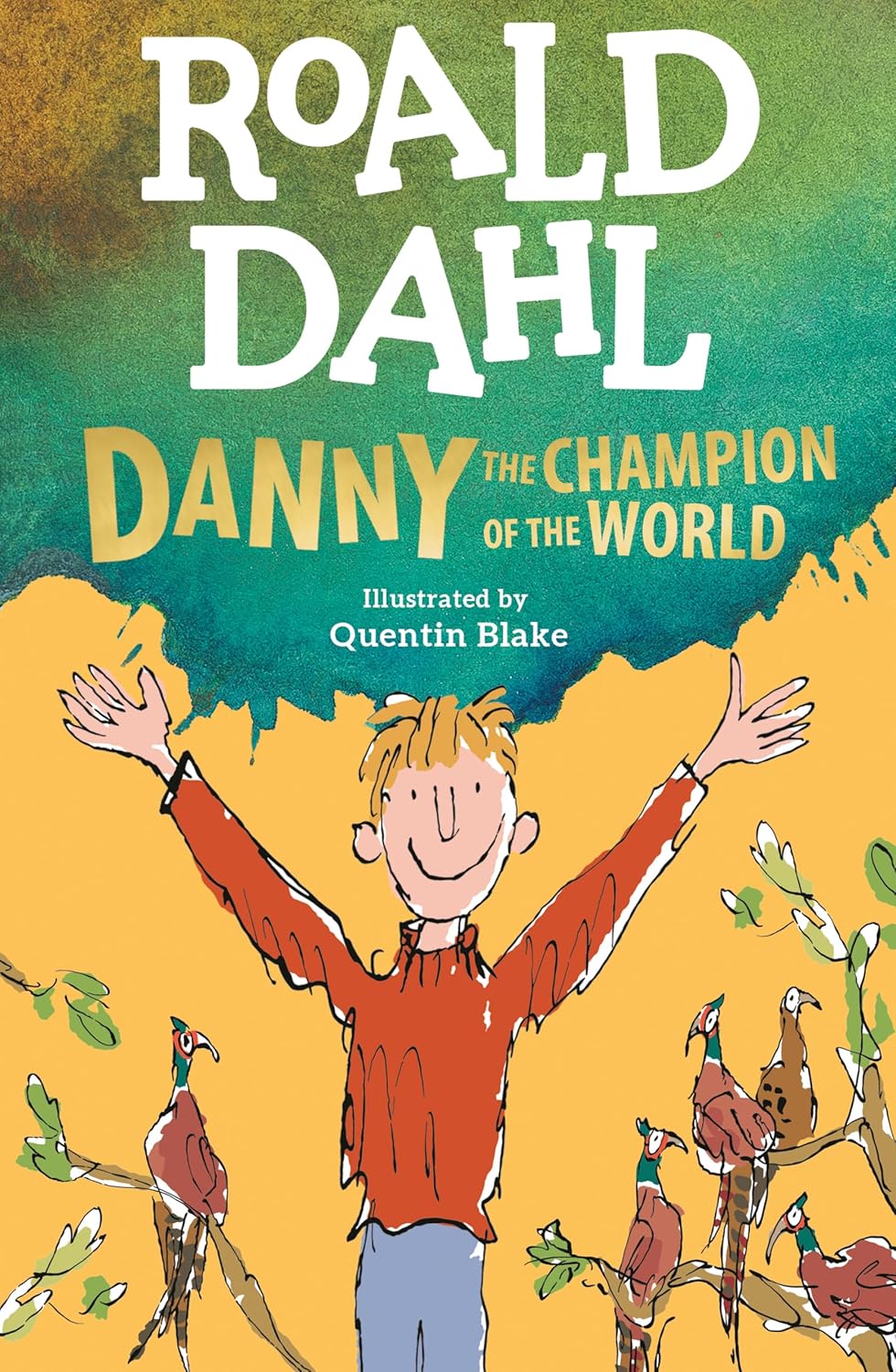
Danny the Champion of the World by Roald Dahl is a warm, funny, and surprisingly tender adventure about a nine-year-old boy who lives alone with his father in a gypsy caravan behind their filling station — and who discovers that his beloved, seemingly perfect father has a magnificent secret. This complete guide covers Danny the Champion of the World’s reading level, recommended age, content considerations, characters, themes, and books similar to Danny the Champion of the World, designed for parents, teachers, and students.
For Parents
Danny the Champion of the World is widely considered one of Dahl’s most personal and emotionally rich novels — less anarchic than Charlie and the Chocolate Factory or James and the Giant Peach, and more deeply felt. The father-son relationship at its center is one of the most genuinely loving in children’s literature, and the book’s celebration of a child’s unconditional faith in a parent they truly admire is affecting for adults and children alike. The poaching plot involves law-bending that Dahl treats with great relish, which parents should know about in advance. Appropriate for most readers ages 8 and up.
For Teachers
Danny the Champion of the World works well in grades 3–6 as a classroom read-aloud or independent reading text. The father-son dynamic offers rich material for discussions of family, trust, and the complexity of admiring someone who is imperfect. The class conflict between Danny’s father and the villainous Mr. Victor Hazell opens natural discussions of fairness, power, and who the law is designed to protect. Dahl’s storytelling craft — his economy, his pacing, his management of tone — makes the book an excellent model text for writing instruction.
Danny the Champion of the World at a Glance
Find on Amazon →| Author | Roald Dahl |
| Published | 1975 |
| Grade Level | 3–5 (our assessment) |
| Recommended Age | 8–12 |
| Flesch-Kincaid Grade | 5.4 |
| Word Count | ~35,000 |
| Pages | 196 (standard paperback) |
| Chapters | 23 |
| Genre | Adventure / realistic fiction / humor |
| Setting | Rural England; 1970s |
| Awards | — |
For official Lexile and AR levels, visit Lexile.com or AR BookFinder. ReadingVine provides independent editorial assessments.
What Reading Level Is Danny the Champion of the World?
Danny the Champion of the World reads at approximately a 5th-grade word level by standard readability measures (Flesch-Kincaid grade 5.4), placing it in the middle-grade range. Our editorial assessment is grades 3–5 for independent reading, with the book most rewarding for readers in grades 4–5. Dahl’s prose is characteristically clear and kinetic — short paragraphs, punchy sentences, an instinct for comic timing — which makes the book accessible to younger readers even as the emotional depth rewards those who are older.
What distinguishes Danny the Champion of the World from Dahl’s more fantastical novels is its relative realism. There is no giant peach, no chocolate factory, no magic — only a boy, his father, a plan involving pheasants, and a truly unpleasant villain. This grounding in the real world means the book’s emotional content lands with more weight than Dahl’s more surreal work, and readers who engage with it fully will find a story that is genuinely funny but also genuinely moving. For official Lexile and AR scores, visit Lexile.com or AR BookFinder.
What Age Is Danny the Champion of the World Appropriate For?
We recommend Danny the Champion of the World for readers ages 8–12, with the strongest fit at ages 9–11. The adventure is exciting, Danny is an immediately likable narrator, and the father-son relationship gives the book a warmth that draws in readers who might be less engaged by pure plot. It works especially well as a family read-aloud where the comedy of the pheasant-poaching scheme and Dahl’s asides to the reader can be fully appreciated together.
Danny the Champion of the World involves poaching — the illegal taking of game birds from a private estate — which Dahl presents unambiguously as a heroic and admirable activity. The book is explicit that Danny’s father is a poacher and that Danny becomes one too, and Dahl frames this entirely as a Robin Hood-style act of defiance against an unjust, arrogant landowner. Parents should be aware that the book enthusiastically celebrates breaking this particular law and may want to discuss the distinction between civil disobedience and lawbreaking with younger readers. The pheasants are drugged rather than harmed in any graphic way. There is no profanity, no violence beyond a brief car accident involving Danny’s father, and no sexual content. The villain Mr. Victor Hazell is depicted with Dahl’s characteristic relish for terrible adults.
Dahl dedicated the book to his own children, and it is one of the few Dahl novels in which the child protagonist is not escaping from terrible adults but instead has a parent he genuinely adores. This reversal of Dahl’s usual formula is part of what gives the book its distinctive emotional register — and why it resonates differently from his other work, often more deeply, with adult readers looking back.
What Is Danny the Champion of the World About?
Nine-year-old Danny lives with his father in a small gypsy caravan behind a filling station in the English countryside. His mother died when he was a baby, and Danny has grown up with just his father for company — a man he considers the most wonderful father in the world. His father is a gifted mechanic, a natural storyteller, and a man who has made their small life feel endlessly interesting and full. One night Danny wakes to find his father gone, and discovers a secret that changes everything he thought he knew: his father is a poacher. Not a professional criminal, but a man with a deep, almost mystical skill for outsmarting pheasants that he learned from his own father, and that he has been practicing on the grounds of a neighboring estate owned by the loathsome Mr. Victor Hazell.
Danny is not shocked by this revelation — he is fascinated. And when his father is caught in a mantrap on Hazell’s estate and injures his ankle badly, Danny is the one who must go out in the night to bring him home. The experience bonds them more deeply than ever, and Danny’s admiration for his father’s poaching skill — his patience, his cunning, his intimate knowledge of pheasant behavior — grows into something that gives the book its title. Together, Danny and his father hatch the most ambitious poaching scheme ever attempted: a plan to drug every single one of Mr. Hazell’s pheasants the night before his grand annual shooting party, leaving the richest man in the county with an empty wood and a face full of egg.
Dahl drew on his own childhood love of the English countryside and on real poaching lore — the sections on pheasant behavior and the various methods poachers use are written with genuine enthusiasm and a level of naturalistic detail unusual in his fiction. He has said the book came from a short story he wrote earlier in his career, expanded and deepened into a novel-length celebration of a father and son who are genuinely happy together. The result is the warmest, most personal thing Dahl wrote for children.
Danny the Champion of the World Characters
Is Danny the Champion of the World a Banned Book?
Danny the Champion of the World has faced occasional challenges in schools and libraries, primarily related to its enthusiastic depiction of poaching — an illegal activity that the book presents as heroic — and Dahl’s general irreverence toward adult authority figures. Some challenges have cited the book’s treatment of law-breaking as a concern for younger readers. These challenges have not resulted in widespread removal from school curricula, and the book remains widely assigned and recommended. Dahl’s books more broadly have faced challenges over the years, and Danny the Champion of the World’s relatively realistic and gentle tone makes it among the least controversial of his catalog.
Danny the Champion of the World Themes and Lessons
At its heart Danny the Champion of the World is a love story between a father and a son — a celebration of the particular happiness that comes from having a parent who is also a genuinely interesting person. Dahl structures the entire novel around Danny’s admiring perspective on his father, and the book’s emotional power comes from the fact that the admiration is largely justified. Danny’s father is not perfect — he breaks the law, he keeps secrets, he is occasionally reckless — but he is loving, creative, present, and genuinely wonderful to be around. Dahl’s portrait of this relationship is tender in a way his other children’s books rarely are, and it gives Danny the Champion of the World a warmth that lingers.
The book is also, quite deliberately, a story about class. Mr. Victor Hazell is not simply an unpleasant man — he is a specific kind of unpleasant man: one who has bought his way into the English countryside gentry and who uses his wealth to bully people he considers beneath him. Danny’s father’s poaching is not random lawbreaking but a specifically targeted act of defiance against a man who has used the law to protect his own privileges at the expense of everyone around him. Dahl treats this as entirely justified, and the novel’s resolution — which involves the entire community finding its own quiet way to thwart Hazell — is satisfying precisely because it operates outside the official channels that have always favored him. Discussion questions worth exploring: Is Danny’s father a good man even though he breaks the law? What does the book suggest about who the law protects and why? How does Danny’s admiration for his father change — or not change — when he learns about the poaching? What makes Danny and his father’s life together rich despite being materially modest?
How Many Pages and Chapters Are in Danny the Champion of the World?
Danny the Champion of the World is 196 pages in the standard paperback edition, divided into 23 chapters. The word count is approximately 35,000 words — a short, briskly paced novel. At an average upper-elementary reading pace of around 200 words per minute, most readers in the target age range finish the book in roughly 3 hours of total reading time, typically one week or less of 20–30 minute daily reading sessions. The chapters are short and punchy, most running 7–10 pages, and the book’s pacing is one of Dahl’s great craft achievements — it opens at a leisurely pace that establishes the father-son world with loving detail, then accelerates sharply once the poaching scheme begins. Most editions feature illustrations by Jill Bennett (UK editions) or Quentin Blake (later editions) throughout.
Books Similar to Danny the Champion of the World
About Roald Dahl
Roald Dahl was born in 1916 in Llandaff, Wales, to Norwegian parents, and grew up in England. He served as a Royal Air Force fighter pilot in World War II — an experience that shaped his lifelong distrust of authority and his sympathy for the underdog — before becoming one of the most celebrated short story writers of the 20th century and, later, one of the most beloved children’s authors of all time. His children’s books include James and the Giant Peach (1961), Charlie and the Chocolate Factory (1964), Fantastic Mr. Fox (1970), Danny the Champion of the World (1975), The BFG (1982), The Witches (1983), and Matilda (1988), among others. He has said that Danny the Champion of the World was his favorite of all his children’s books — the one most directly drawn from his own experience and feelings, and the one whose father-son relationship most closely reflected what he hoped to be as a father to his own children. Dahl died in 1990. His books have sold more than 300 million copies worldwide, making him one of the bestselling children’s authors of all time. The Roald Dahl Museum and Story Centre in Great Missenden, Buckinghamshire — the English village where Dahl lived and wrote for most of his life — is open to visitors.
Danny the Champion of the World: Frequently Asked Questions
What grade level is Danny the Champion of the World?
By standard readability measures, Danny the Champion of the World reads at approximately a 5th-grade word level (Flesch-Kincaid grade 5.4). Our editorial assessment is grades 3–5 for independent reading, with the book most rewarding for readers in grades 4–5. Dahl’s clear, punchy prose makes it accessible to younger readers, while the emotional depth of the father-son relationship gives older readers in the range considerably more to engage with.
How does Danny the Champion of the World compare to Dahl’s other books?
Danny the Champion of the World is widely considered Dahl’s most personal children’s novel and the one most different in tone from the rest of his catalog. Where James and the Giant Peach, Charlie and the Chocolate Factory, and Matilda are characterized by surreal fantasy, grotesque villains, and anarchic energy, Danny the Champion of the World is relatively realistic, quieter in register, and deeply warm. It is the only Dahl children’s novel in which the protagonist has a parent he genuinely loves and who genuinely loves him back. Dahl himself said it was his favorite of his children’s books. Readers who find some of Dahl’s other work too wild or dark often love Danny the Champion of the World, and vice versa — readers who love the anarchic energy of his other books sometimes find this one slower, though most come around to its warmth.
Is there a movie version of Danny the Champion of the World?
Yes. Danny the Champion of the World was adapted into a television film in 1989, starring Jeremy Irons as Danny’s father and Samuel Irons — Jeremy Irons’s real son — as Danny. The casting of a real father and son was widely noted at the time as a fitting choice for a book so centrally about that relationship. The film is generally faithful to the novel and is rated G. It was produced by the BBC and is available on various streaming and home video platforms.
Is the poaching in Danny the Champion of the World a problem for younger readers?
This is the question parents most commonly ask about the book, and it deserves a direct answer: Dahl treats poaching as unambiguously heroic and admirable throughout, and makes no attempt to balance this with any acknowledgment that it is technically illegal. The book’s moral framework is clear — Hazell is a bully who uses the law to protect his privileges, and Danny’s father’s poaching is a form of justified defiance. Most parents find this is a productive rather than problematic reading experience: it naturally generates conversations about the difference between unjust laws and just ones, about who benefits from legal protections and who doesn’t, and about what it means to act according to one’s conscience rather than the letter of the rules.
Why is this Dahl’s favorite of his own children’s books?
Dahl said in interviews that Danny the Champion of the World was his favorite because it was the most personal — the book he felt most directly drew on his own emotional life rather than his imagination. The father in the story is, by his own account, a portrait of the father he wished he had been to his own children: present, inventive, genuinely interested in his child’s inner life, and capable of treating a child as a real and worthy companion. He also had a genuine lifelong love of the English countryside and of poaching lore, and the book gave him the opportunity to write about both with full enthusiasm.
Does Danny the Champion of the World have a sequel?
No — Danny the Champion of the World is a standalone novel with no direct sequel. It ends at a natural and satisfying conclusion point, and Dahl did not return to Danny or his father in any subsequent work. Readers who want more Dahl after finishing this book have a substantial catalog to explore, and readers who particularly responded to the father-son warmth of this book may find Charlie and the Chocolate Factory (which has a similarly loving family at its center) the most natural next read.
What is pheasant poaching, and do I need to explain it to my child before reading?
Pheasants are game birds — large, brightly colored birds raised on private estates in the English countryside specifically to be shot by paying guests during the hunting season. Poaching means taking those birds without the landowner’s permission, which is illegal. In the English rural context of the book, pheasant shooting was a sport associated with wealth and social status, and poaching was a long tradition of the rural poor taking game from estates owned by the very rich. Dahl doesn’t assume much prior knowledge of this world and explains what readers need to know through the story itself, so no special preparation is needed — though a brief conversation about the British class system and why Danny’s father views Hazell with such contempt can enrich the reading experience for older children.
Is Danny the Champion of the World appropriate for an 8-year-old?
Yes, for most 8-year-olds. The reading level is accessible, the content is appropriate, and the adventure of the pheasant scheme is exactly the kind of story that 8-year-olds find irresistible. The book’s emotional depth — particularly around the father-son relationship and the loss of Danny’s mother — is handled gently enough that younger readers who are not yet ready to engage with it fully can simply enjoy the adventure, while older readers in the range will find more to feel. Parents who want to discuss the poaching-as-heroism angle should be prepared to do so, but most 8-year-olds find it entirely natural that a boy and his father would want to outwit a pompous villain.