
 = Partner Site
Dicey’s Song Reading Level: A Complete Guide
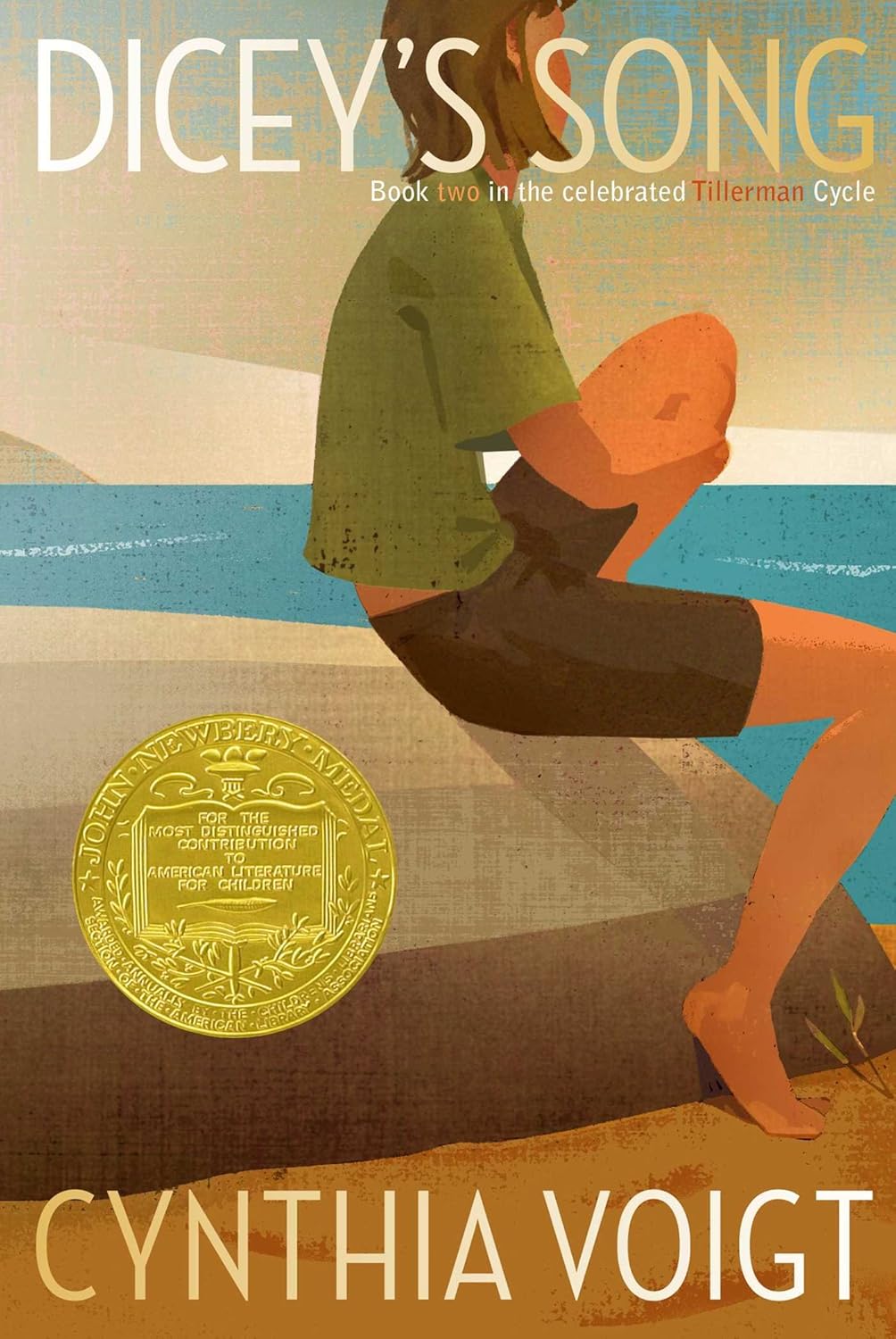
Dicey’s Song by Cynthia Voigt is the Newbery Medal–winning sequel to Homecoming, following thirteen-year-old Dicey Tillerman as she and her siblings settle into their new life with their grandmother in Maryland. This complete guide covers the reading level, age appropriateness, themes, characters, and everything parents and teachers need to know about this quietly powerful novel.
For Parents
Dicey’s Song is an emotionally rich story about a girl learning to let go of control and trust the people around her. It deals honestly with family hardship, an absent mother, and loss — but handles these themes with care and literary depth. Best suited for readers ages 10–13 who are ready for a slower-paced, character-driven story.
For Teachers
A Newbery Medal winner frequently assigned in grades 5–7, Dicey’s Song is ideal for teaching character development, point of view, and how internal conflict drives a narrative. The Tillerman family’s situation opens rich discussions about resilience, identity, and what it means to belong. Works well paired with Homecoming or as a standalone unit.
Dicey’s Song at a Glance
Find on Amazon →| Author | Cynthia Voigt |
| Published | 1982 |
| Grade Level | 5–7 (our assessment) |
| Recommended Age | 10–13 |
| Flesch-Kincaid Grade | 5.1 |
| Word Count | ~70,000 |
| Pages | 211 (standard paperback) |
| Chapters | 14 |
| Genre | Realistic fiction / family drama |
| Setting | Crisfield, Maryland (Chesapeake Bay area), early 1980s |
| Awards | Newbery Medal (1983) |
For official Lexile and AR levels, visit Lexile.com or AR BookFinder. ReadingVine provides independent editorial assessments.
What Reading Level Is Dicey’s Song?
Dicey’s Song reads at approximately a 5th–7th grade level by our editorial assessment, with a Flesch-Kincaid grade level of around 5.1. The sentence structure is accessible, and Voigt’s prose is clear and direct — but the book’s emotional and thematic complexity places it firmly in the upper-elementary to middle school range.
What makes this book more challenging than its word-level score suggests is its interior focus. Much of the story lives inside Dicey’s head — her anxieties, her reluctance to be vulnerable, her gradual shifts in thinking. Readers who are used to plot-driven books may find the pacing slow. The book rewards patient, reflective readers who can engage with a character’s internal journey. A child reading at a 4th-grade level could decode the text, but a 5th or 6th grader will get far more from it.
For official Lexile and Accelerated Reader scores, visit Lexile.com or AR BookFinder.
What Age Is Dicey’s Song Appropriate For?
We recommend Dicey’s Song for readers ages 10–13. The story is emotionally serious but not graphic — it deals with themes of parental abandonment, mental illness, and death in ways that are honest but age-appropriate. It’s a book about hard things handled with restraint and grace.
The Tillerman children were abandoned by their mother, who is eventually revealed to be institutionalized due to mental illness. A secondary character dies toward the end of the book. These are handled with sensitivity but may be heavy topics for more sensitive younger readers. There is no violence, no sexual content, and no strong language.
There is nothing objectionable from a language or content standpoint. The difficulty is entirely emotional — this is a story about a child carrying too much, and that weight is rendered honestly. Most 10–13 year olds, especially those who enjoy literary fiction, will find it moving rather than overwhelming.
What Is Dicey’s Song About?
Dicey’s Song picks up where Homecoming left off. Thirteen-year-old Dicey Tillerman and her three younger siblings — James, Maybeth, and Sammy — have arrived at the Maryland farm of their grandmother, Abigail Tillerman, a tough and private woman they barely know. After spending most of Homecoming holding her family together through sheer force of will, Dicey now has to do something harder: let go.
The novel follows the Tillerman children as they settle into school, make friends, and slowly begin to trust their grandmother. Dicey, used to being the one in charge, struggles with the shift. She doesn’t know how to ask for help, how to accept love, or how to stop bracing for the next disaster. Meanwhile, the family’s absent mother — hospitalized and unreachable — remains a quiet presence throughout the story, shaping how each child understands themselves and their past.
At its heart, Dicey’s Song is about the difference between surviving and belonging. Dicey has mastered the first; the second is what she has to learn. Cynthia Voigt drew on the landscape of Maryland’s Eastern Shore, where the novel is set, and the book’s sense of place — water, wood, seasons — runs through the story as a kind of emotional counterpoint to Dicey’s inner life.
Dicey’s Song Characters
Is Dicey’s Song Banned?
Dicey’s Song has not been widely banned or challenged, and it does not appear on the American Library Association’s lists of most frequently challenged books. It is considered an exemplary work of middle grade literary fiction and has remained a staple of school reading lists since winning the Newbery Medal in 1983. Its themes — family hardship, mental illness, loss — are handled with sensitivity, and the book contains no content that has drawn significant objection. It is currently assigned in many school districts across the United States.
Dicey’s Song Themes and Lessons
The central theme of Dicey’s Song is the tension between self-reliance and connection. Dicey spent the entirety of Homecoming keeping her siblings alive through sheer willpower — and that survival mode has become her whole identity. The novel asks: what happens when you no longer have to hold everything together? What happens when help is actually available and you still can’t accept it? Dicey’s struggle to receive love and trust — from her grandmother, from her new friend Mina, from her teachers — is the emotional engine of the book.
Running beneath this is a meditation on grief and what families carry. The children’s mother is present as an absence — a wound they’ve each processed differently. Voigt doesn’t resolve this cleanly. The grief stays, but the Tillermans learn to make room for it without letting it define everything. For young readers, this is a model of emotional honesty: not every hard thing gets fixed, but you can still find footing.
Discussion starters for families: Why do you think Dicey finds it so hard to ask for help, even when she needs it? How does Gram show she cares without saying so directly? What does the boat Dicey is fixing up represent to her? How does each sibling deal with not having their mother around?
How Many Pages and Chapters Are in Dicey’s Song?
The standard paperback edition of Dicey’s Song is 211 pages, divided into 14 chapters. The word count is approximately 70,000 words, making it a full-length middle grade novel on the longer side for its era.
For readers in the target age range of 10–13, expect a reading time of roughly 5–8 hours, or 4–7 days of steady reading at around 30 minutes per session. The pacing is deliberate — this is not a fast-moving plot novel — so readers who prefer action-driven books may need more time. As a read-aloud, plan for approximately 9–12 hours, making it a solid choice for a classroom read-aloud spread over several weeks.
Books Similar to Dicey’s Song
About Cynthia Voigt
Cynthia Voigt (born 1942) is an American author best known for the Tillerman Cycle, a series of eight interconnected novels that began with Homecoming (1981) and continued with Dicey’s Song (1982), which won the Newbery Medal. Voigt taught English at a private school in Maryland for many years before becoming a full-time writer, and her deep familiarity with adolescent readers shows in the authenticity and psychological precision of her characters. She set many of her Tillerman books in Maryland’s Eastern Shore, a landscape she knew intimately. Voigt received the Margaret A. Edwards Award in 1995 for her contribution to young adult literature. Her work is widely praised for taking young readers seriously — for refusing to simplify grief, identity, or family complexity in the way that lesser books do.
Dicey’s Song: Frequently Asked Questions
Do I need to read Homecoming before Dicey’s Song?
Technically no, but it’s strongly recommended. Dicey’s Song begins where Homecoming ends, and many of the emotional stakes — who the Tillerman children are, what they’ve been through, why they’re at Gram’s farm — are established in the first book. Readers who start with Dicey’s Song can follow the plot, but they’ll miss a lot of the context that makes Dicey’s internal journey so meaningful. If you have the option, read Homecoming first.
What is the Flesch-Kincaid reading level of Dicey’s Song?
The Flesch-Kincaid grade level of Dicey’s Song is approximately 5.1. This means the text itself is accessible to strong 4th-grade readers and above, but the emotional and thematic content of the novel is best suited for grades 5–7 (ages 10–13). For official Lexile and Accelerated Reader scores, visit Lexile.com or AR BookFinder.
What grade is Dicey’s Song typically assigned in?
Dicey’s Song is most commonly assigned in grades 5, 6, and 7. It appears on many school and district reading lists as a whole-class novel or independent reading selection at those grade levels. Its Newbery Medal status and rich thematic content make it a popular choice for literature units focused on character development and family.
Is Dicey’s Song part of a series?
Yes. Dicey’s Song is the second book in Cynthia Voigt’s Tillerman Cycle, a series of eight novels centered on the Tillerman family. The series begins with Homecoming and continues with books that follow different family members across time. Dicey’s Song and Homecoming are the most widely read and assigned, and together they form a natural two-book unit.
Does Dicey’s Song have a sad ending?
The ending of Dicey’s Song is bittersweet. A character the children have come to care about dies, and the children’s mother remains institutionalized and unreachable — these are real, unresolved losses. But the ending is also hopeful: the Tillerman children have found a home, Dicey has begun to open up, and the family has started to heal. Voigt doesn’t wrap things up neatly, but she leaves the reader with a sense that the Tillermans are going to be okay.
What is the main conflict in Dicey’s Song?
The main conflict is internal: Dicey’s struggle to let go of the hyper-independent, controlling persona she developed out of necessity and to allow herself to be part of a family rather than the one running it. On the outside, the novel presents smaller conflicts — adjusting to a new school, worrying about her siblings’ struggles, processing news about her mother — but all of these orbit the central question of whether Dicey can learn to trust and be vulnerable.
Why did Dicey’s Song win the Newbery Medal?
The Newbery Medal is awarded for distinguished contribution to American literature for children, and Dicey’s Song won in 1983 for the depth and authenticity of its characterization. Voigt’s ability to render Dicey’s inner life with precision — the contradictions, the stubbornness, the slow opening — was widely praised. The novel treats its young protagonist with the same seriousness and complexity that literary fiction gives to adult characters, which is exactly what the Newbery recognizes.
Is Dicey’s Song appropriate for sensitive readers?
Parents of sensitive readers should be aware that the book deals with parental abandonment, a parent’s mental illness, and the death of a secondary character. These themes are handled with care and without graphic detail, but they are real and present throughout the story. For emotionally sensitive children under 10, it may be worth waiting a year or two. For most readers 10 and up, the emotional weight of the book is part of what makes it valuable — it validates hard feelings without overwhelming the reader.