
 = Partner Site
Esperanza Rising Reading Level: A Complete Guide
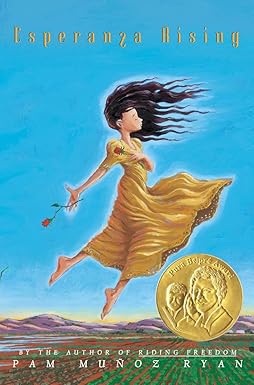
Esperanza Rising by Pam Muñoz Ryan tells the powerful story of a wealthy Mexican girl who loses everything and must start over as a migrant farm worker in California during the Great Depression. This guide provides parents and teachers with reading level information, age recommendations, content insights, and discussion questions for this award-winning historical novel about resilience, family, and finding strength in hardship.
For Parents
Find the right reading level for your child, understand the book’s themes around loss and resilience, and get conversation starters to help your child explore questions about privilege, poverty, immigration, and what it means to rise above adversity.
For Teachers
Access grade-level guidance, reading metrics, character analysis support, and thematic discussion questions perfect for classroom use. This award-winning book offers rich opportunities for exploring the Great Depression, Mexican-American history, labor rights, and personal transformation.
Esperanza Rising at a Glance
Find on Amazon →| Author | Pam Muñoz Ryan |
| Published | 2000 |
| Grade Level | 4–6 (our assessment) |
| Recommended Age | 9–12 |
| Flesch-Kincaid Grade | 5.3 |
| Word Count | ~65,000 |
| Pages | 262 (standard hardcover) |
| Chapters | 13 (named after fruits and vegetables) |
| Genre | Historical fiction / immigration story |
| Setting | Mexico and California, 1924–1935 |
| Awards | Pura Belpré Award, ALA Notable Book |
For official Lexile and AR levels, visit Lexile.com or AR BookFinder. ReadingVine provides independent editorial assessments.
What Reading Level Is Esperanza Rising?
Esperanza Rising is appropriate for grades 4–6, with a Flesch-Kincaid grade level of 5.3. The vocabulary includes some Spanish words and agricultural terms related to farming and the harvest, but context and the book’s glossary make meanings clear. The sentence structure is straightforward, making the mechanics accessible to fourth graders, while the historical context and emotional complexity resonate most deeply with fifth and sixth graders.
Ryan writes with lyrical beauty, using the metaphor of seasons and crops to structure the story. Each chapter is named after a fruit or vegetable (Las Uvas/Grapes, Las Papayas, Las Cebollas/Onions), marking Esperanza’s journey through the agricultural year and symbolizing her emotional growth. The prose is vivid and sensory, immersing readers in both the lush abundance of Esperanza’s Mexican ranch and the harsh reality of California labor camps.
While strong fourth graders can handle the reading mechanics, the book resonates most deeply with readers ages 9–12 who can understand the dramatic reversal of fortune, appreciate the historical context of the Great Depression and Mexican immigration, and grasp the themes of class privilege, social justice, and personal transformation. It’s an excellent choice for readers ready for historical fiction that addresses social inequality and labor rights.
What Age Is Esperanza Rising Appropriate For?
Esperanza Rising is most appropriate for readers ages 9–12. The story deals with serious themes including death, violence, poverty, and discrimination. While Ryan handles these topics with restraint appropriate for middle-grade readers, the realities are present and require readers mature enough to understand hardship, injustice, and loss without being overwhelmed.
Death and murder: Esperanza’s father is killed by bandits early in the story. This death is not graphically described but is a traumatic turning point that drives the entire plot.
Poverty and hardship: Esperanza goes from wealth to extreme poverty, living in a one-room cabin, working in the fields, and struggling to afford basic necessities. The depiction of migrant worker conditions is honest and sometimes harsh.
Discrimination and prejudice: Esperanza and her family face racism and discrimination in California. They’re called slurs, treated as inferior, and denied basic rights and dignity.
Violence and threats: Esperanza’s uncle tries to force her mother to marry him through intimidation. The family flees Mexico to escape him. Later, there’s labor unrest and violence at the camps.
Illness: A family member contracts Valley Fever, a serious lung disease. The illness and worry are central to the final portion of the book.
Class and privilege: The book honestly examines Esperanza’s initial prejudice against poor people and how she must confront her own classism.
What’s NOT in the book: No graphic violence, no sexual content, no profanity. The difficult content serves the historical and emotional story. The tone, while serious, is ultimately hopeful, emphasizing resilience, growth, and the power of family and community.
What Is Esperanza Rising About?
Thirteen-year-old Esperanza Ortega lives a privileged life on El Rancho de las Rosas, her family’s sprawling ranch in Aguascalientes, Mexico. It’s 1924, and Esperanza has never known hardship. She wears beautiful dresses, has servants to care for her every need, and is cherished by her beloved father, Sixto. Her life is perfect, and she expects it will always be this way. On the eve of her thirteenth birthday, her father promises her that when she turns fifteen, she’ll have a grand quinceañera celebration and take over managing the ranch alongside him.
But tragedy strikes before Esperanza’s birthday. Her father is murdered by bandits while riding the ranch’s boundaries. With Sixto dead, his stepbrothers—Esperanza’s uncles Tío Luis and Tío Marco—inherit the land. Tío Luis, who has always coveted both the ranch and Esperanza’s beautiful mother Ramona, proposes marriage to Ramona. When she refuses, he burns down the ranch house and threatens to send Esperanza to boarding school unless Ramona agrees to marry him.
Desperate to escape, Ramona makes a dangerous plan. She, Esperanza, and Abuelita (Esperanza’s grandmother) will flee to California with their servants Alfonso, Hortensia, and their son Miguel. Alfonso’s brother already works in California and can help them find jobs. But Abuelita breaks her ankle and cannot travel immediately—she’ll join them later. Esperanza, Ramona, and Miguel’s family cross the border illegally, leaving behind wealth, status, and everything familiar.
They arrive at a farm labor camp in California during the Great Depression. Esperanza is shocked by the tiny cabin they’ll share—one room for all of them, with paper-thin walls and a dirt floor. There’s no electricity, no indoor plumbing, communal bathrooms. Esperanza, who has never done chores in her life, must now work in the fields, wash diapers, sweep floors, and care for babies. She’s humiliated by how far she’s fallen.
Making things worse, Esperanza struggles to adapt. She looks down on the other Mexican workers, still clinging to her identity as a wealthy landowner’s daughter. She’s particularly cruel to Marta, a girl who’s been a migrant worker her whole life and is organizing workers to strike for better pay and conditions. Esperanza doesn’t understand why Marta complains—she should be grateful to have work at all.
Slowly, painfully, Esperanza begins to change. She learns to sweep, to wash clothes, to work alongside others. Miguel teaches her that the hardest work is what gives you the strongest hands. She begins to see the other workers not as servants but as equals facing the same struggles. When immigration officials raid the camp and deport Mexican workers (even some with legal papers), Esperanza witnesses the injustice firsthand.
The family saves money to bring Abuelita from Mexico, but just as they’re about to send for her, a dust storm triggers an outbreak of Valley Fever. Ramona contracts the disease and becomes gravely ill, requiring hospitalization. All their savings go to medical bills. Esperanza is devastated—without money, Abuelita cannot come, and they might lose Ramona.
In desperation, Esperanza does what she once thought impossible: she goes into the sheds to work packing asparagus alongside the strikers, including Marta. When immigration officials raid the packing sheds, Esperanza hides Marta in a crate, protecting her from deportation. This act of solidarity marks Esperanza’s complete transformation—she’s no longer the privileged girl who looked down on workers; she’s one of them, fighting for survival and dignity.
Miguel mysteriously disappears for several days. When he returns, he has a surprise: he’s brought Abuelita from Mexico using the money saved for their future. Esperanza is reunited with her grandmother just as Ramona begins to recover. The book ends with Esperanza, her mother, and Abuelita together in California. They’ve lost the ranch, lost their wealth, and lost their old life. But they’ve gained something more valuable: strength, dignity, and the understanding that true riches aren’t measured in land or money but in the resilience of the human spirit and the bonds of family and community.
The title Esperanza Rising refers to Esperanza’s growth from a spoiled child to a strong young woman. Like the phoenix Abuelita crochets, Esperanza has risen from the ashes of her old life, transformed and stronger than before.
Esperanza Rising Characters
Esperanza Rising Themes and Lessons
At its heart, Esperanza Rising is about transformation through adversity. Esperanza begins as a spoiled, sheltered girl who knows nothing of hardship or struggle. She loses everything—her father, her home, her wealth, her social status—and must rebuild herself from scratch. The book teaches that true strength comes not from privilege but from resilience, that we discover who we really are when everything is stripped away, and that rising above hardship requires humility, hard work, and connection to others. Esperanza literally “rises” from the ashes of her old life, like the phoenix Abuelita crochets.
The book also confronts class privilege and social justice head-on. Esperanza must learn that people are not defined by their economic status, that the workers she once looked down on are just as worthy and often more dignified than the wealthy, and that fighting for fair treatment and better conditions isn’t ingratitude but justice. Through Marta and the labor strikes, the book shows young readers that standing up against unfair systems is necessary and brave, even when it’s risky. This makes Esperanza Rising particularly powerful for discussing inequality, immigration, and workers’ rights.
Discussion questions for families:
- How does Esperanza change from the beginning to the end of the book? What causes these changes?
- Why does Esperanza look down on Marta and the other workers at first? How does she learn to see them differently?
- What does the title “Esperanza Rising” mean? In what ways does Esperanza “rise”?
- Abuelita says “Do not be afraid to start over.” What does she mean? Is starting over a sign of failure or strength?
How Many Pages and Chapters in Esperanza Rising?
Esperanza Rising has 262 pages in the standard hardcover edition and is divided into 13 chapters, each named after a fruit or vegetable that marks the agricultural calendar (Las Uvas/Grapes, Las Papayas, Las Guayabas/Guavas, Los Melones/Melons, Las Cebollas/Onions, Las Almendras/Almonds, Las Ciruelas/Plums, Las Papas/Potatoes, Los Aguacates/Avocados, Las Espárragos/Asparagus, Los Duraznos/Peaches, Las Uvas/Grapes). The word count is approximately 65,000 words.
For independent readers in the target age range (9–12), the book typically takes 6–8 hours to complete, or about two weeks of reading 30 minutes per day. The engaging story and accessible prose keep most readers moving steadily through the book, though the emotional weight of Esperanza’s losses and struggles may cause some readers to slow down and process.
As a read-aloud, Esperanza Rising takes approximately 5–6 hours total. The book works beautifully as a family or classroom read-aloud because the historical context and social justice themes naturally prompt important discussions about immigration, poverty, labor rights, and privilege. The chapter structure, with each chapter marking a new season or crop, provides natural stopping points and helps readers track Esperanza’s year of transformation.
Books Similar to Esperanza Rising
If your child enjoyed Esperanza Rising, here are six similar books that explore themes of displacement, resilience, and overcoming hardship:
About Pam Muñoz Ryan
Pam Muñoz Ryan (born 1951) is an award-winning Mexican-American author known for her richly textured historical fiction. Born in Bakersfield, California, Ryan grew up in the San Joaquin Valley where much of Esperanza Rising takes place. The book was inspired by the true story of Ryan’s grandmother, Esperanza Ortega, who really did flee from Mexico to California during the 1930s after her father’s death. While Ryan fictionalized many details and combined several family stories into one narrative, the emotional core—a wealthy girl becoming a farm worker and learning resilience—comes from her grandmother’s real experience. Ryan researched extensively, interviewing relatives and studying the history of Mexican immigration and farm labor during the Depression. She wanted to honor not just her grandmother’s story but the experiences of thousands of Mexican families who came to California seeking better lives and faced discrimination, poverty, and exploitation. Esperanza Rising, published in 2000, won the prestigious Pura Belpré Award for its authentic portrayal of Latino culture and became Ryan’s most celebrated work. She has written more than forty books for children and young adults, including Echo (a Newbery Honor book), Becoming Naomi León, and The Dreamer. Ryan is known for her meticulous research, lyrical writing, and ability to weave historical facts into compelling, emotionally resonant narratives. She continues to write and speak about literacy, immigration, and the importance of diverse stories in children’s literature. Esperanza Rising remains her most popular book, taught in thousands of schools across America and introducing young readers to an important chapter of Mexican-American history through a story of courage, family, and transformation.
Esperanza Rising: Frequently Asked Questions
Is Esperanza Rising based on a true story?
Yes, Esperanza Rising is based on the true story of Pam Muñoz Ryan’s grandmother, who was also named Esperanza Ortega. Ryan’s grandmother really did live a privileged life on a Mexican ranch, lost her father, and fled to California with her mother during the 1930s to escape her uncles and start over as farm workers. While Ryan fictionalized many specific details and combined multiple family stories into one narrative, the basic arc—from wealth to poverty, from Mexico to California, from privilege to understanding—comes from her grandmother’s real experience. The historical context of Mexican immigration, labor camps, and the Great Depression is also accurate, based on extensive research.
What happens to Esperanza’s father?
Esperanza’s father, Sixto Ortega, is murdered by bandits early in the book. On the eve of Esperanza’s thirteenth birthday, he goes out to ride the ranch’s boundaries to check on the workers. Bandits attack and kill him, likely motivated by the political and social unrest in Mexico during that period. His death is not graphically described—Esperanza learns about it when his body is brought home. This tragedy sets the entire plot in motion: with Sixto dead, his stepbrothers inherit the ranch, and Esperanza’s uncle Tío Luis tries to force Ramona to marry him, leading to the family’s escape to California.
Why does Esperanza’s family have to leave Mexico?
After Esperanza’s father dies, his stepbrothers (Esperanza’s uncles) inherit the land according to Mexican law. Tío Luis proposes marriage to Ramona, partly because he’s always been attracted to her and partly because it would give him complete control of the family’s property and status. When Ramona refuses, Tío Luis burns down their home and threatens to send Esperanza to boarding school unless Ramona agrees to marry him. To escape his threats and control, Ramona plans their secret escape to California with their former servants Alfonso, Hortensia, and Miguel where they begin working as migrant farm laborers.
What does the title Esperanza Rising mean?
The title has multiple layers of meaning. Literally, “Esperanza” means “hope” in Spanish, so the title can mean “hope rising.” More specifically, it refers to Esperanza’s personal transformation—she “rises” from the ashes of her old life like a phoenix (which Abuelita crochets throughout the book). Esperanza rises from spoiled child to capable young woman, from someone who looked down on workers to someone who stands in solidarity with them, from someone defined by wealth to someone defined by strength of character. The title captures both her fall (from privilege to poverty) and her true rise (from weakness to strength, from prejudice to compassion).
Does Esperanza end up with Miguel?
The book doesn’t give a definitive romantic resolution between Esperanza and Miguel. They were childhood friends in Mexico, but class differences kept them apart—Esperanza was the landowner’s daughter and Miguel was a servant’s son. In California, they’re equals for the first time, and there are hints of romantic feelings developing. However, the book ends with Esperanza’s personal growth and family reunion, not with a romantic conclusion. Ryan leaves it open-ended, suggesting that their relationship is evolving but focusing the ending on Esperanza’s transformation and reunion with Abuelita rather than on romance.
What is Valley Fever in Esperanza Rising?
Valley Fever (coccidioidomycosis) is a real lung infection caused by breathing in fungal spores from the soil in certain regions, including California’s San Joaquin Valley where the story takes place. In the book, a dust storm stirs up the fungal spores, and Ramona contracts the disease. She becomes seriously ill with fever, cough, and difficulty breathing, requiring hospitalization. The illness is expensive to treat, depleting the family’s savings meant for bringing Abuelita from Mexico. Valley Fever was and remains a real concern for farm workers in certain areas of California and the Southwest, making this an authentic historical detail.
What grade level is Esperanza Rising appropriate for?
Esperanza Rising is appropriate for grades 4–6 (ages 9–12). The reading level is accessible to fourth graders with a Flesch-Kincaid grade of 5.3, though the vocabulary includes Spanish words and agricultural terms. The content—including death, poverty, discrimination, and labor struggles—requires emotional maturity. It’s most commonly taught in fifth and sixth grade classrooms where teachers can provide historical context about the Great Depression, Mexican immigration, and labor rights. The book works well for discussing social justice, privilege, and resilience with upper elementary and middle school students.
What is the main message of Esperanza Rising?
The main message is that true strength and dignity come not from wealth or privilege but from resilience, hard work, and compassion for others. Esperanza learns that losing everything material doesn’t mean losing what matters most—family, dignity, and the ability to rise again. The book teaches that we often don’t know our own strength until we’re tested by adversity, that privilege can blind us to others’ humanity, and that real wealth is measured in character and community rather than possessions. It also emphasizes that standing in solidarity with others and fighting for justice requires putting aside pride and prejudice. Ultimately, it’s about transformation: Esperanza rises not by reclaiming her old life but by becoming someone stronger, kinder, and more fully human.