
 = Partner Site
Fablehaven Reading Level: A Complete Guide
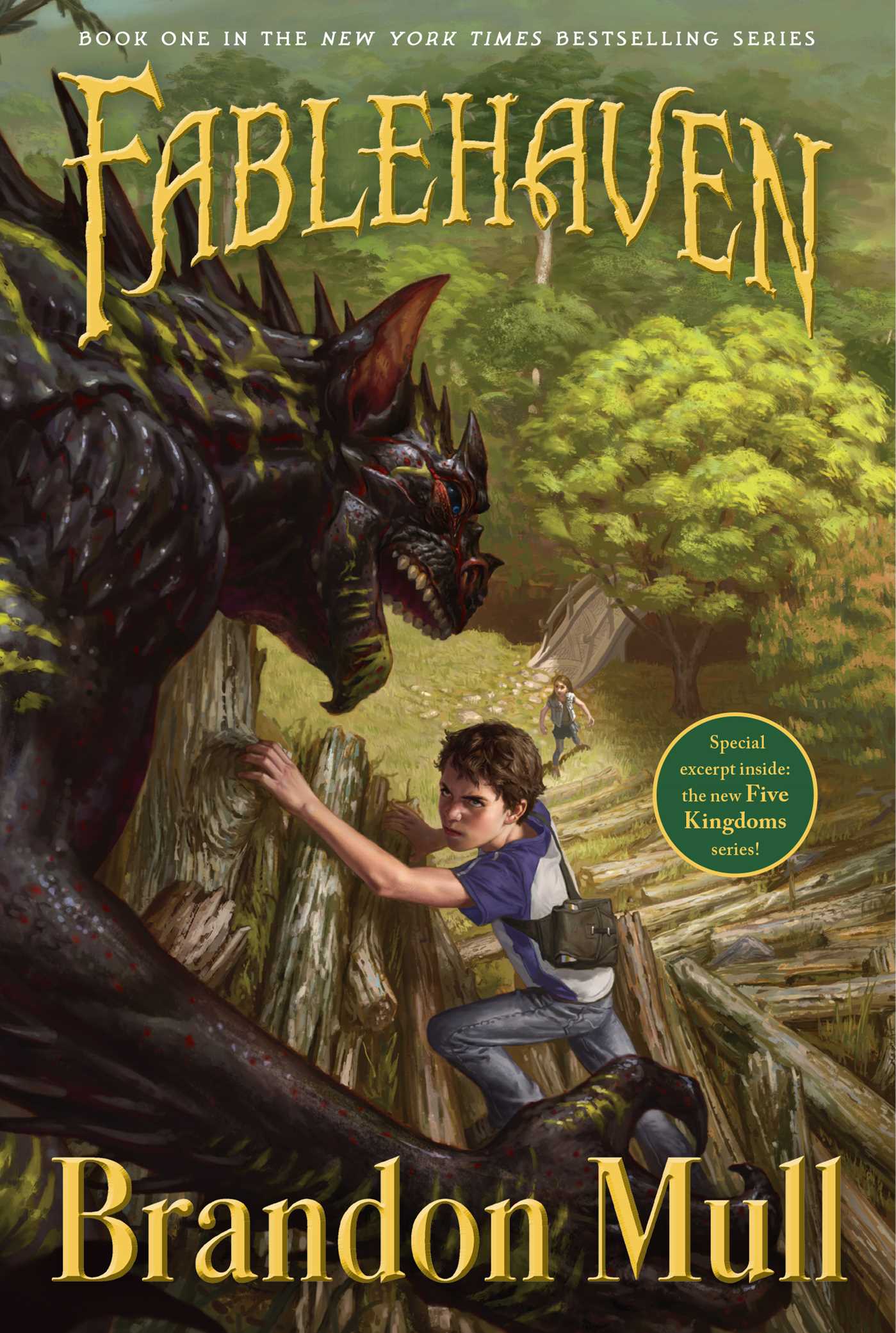
Fablehaven by Brandon Mull is a richly imagined fantasy adventure about a brother and sister who discover that their grandparents’ sprawling New England estate is secretly one of the world’s last magical preserves — a sanctuary for fairies, satyrs, demons, and hundreds of other mythological creatures — and that an ancient evil is stirring within its boundaries. This complete guide covers Fablehaven’s reading level, recommended age, content considerations, characters, themes, and books similar to Fablehaven, designed for parents, teachers, and students.
For Parents
Fablehaven is a consistently popular middle-grade fantasy that earns its devoted readership through inventive world-building, likable protagonists, and a careful escalation of stakes that pulls readers through the series. It is darker and more genuinely threatening than some middle-grade fantasy — the magical world of Fablehaven contains real evil, and the consequences of mistakes are real — but never crosses into content that is inappropriate for the target age range. Most parents find it appropriate for readers ages 9 and up, with the strongest fit at ages 10–13. It is a strong choice for fans of Harry Potter, Percy Jackson, and other immersive fantasy series.
For Teachers
Fablehaven works well in grades 4–7 as an independent reading selection, particularly for readers who enjoy longer, more complex fantasy world-building. The book’s themes — curiosity and its consequences, following rules versus questioning them, the importance of knowledge and preparation, and sibling cooperation — support classroom discussion. The mythology of the preserve draws on a wide range of world folklore traditions, which can support cross-curricular connections to social studies and mythology units. The series has been particularly popular as a summer reading recommendation for advanced middle-grade readers.
Fablehaven at a Glance
Find on Amazon →| Author | Brandon Mull |
| Published | 2006 |
| Grade Level | 4–6 (our assessment) |
| Recommended Age | 9–13 |
| Flesch-Kincaid Grade | 5.7 |
| Word Count | ~82,000 |
| Pages | 348 (standard paperback) |
| Chapters | 22 |
| Genre | Fantasy / adventure |
| Setting | Fablehaven, a magical preserve in rural Connecticut; contemporary |
| Awards | Whitney Award for Best Youth Novel (2007) |
For official Lexile and AR levels, visit Lexile.com or AR BookFinder. ReadingVine provides independent editorial assessments.
What Reading Level Is Fablehaven?
Fablehaven reads at approximately a 5th- to 6th-grade word level by standard readability measures (Flesch-Kincaid grade 5.7), placing it in the upper middle-grade range. Our editorial assessment is grades 4–6 for independent reading, with the book most rewarding for readers in grades 5–6. Mull’s prose is clear and purposeful — he builds his world methodically, introducing the rules and inhabitants of the magical preserve in a way that feels organic rather than expository — but the writing is never flashy or difficult at the sentence level.
The complexity of Fablehaven comes primarily from its world-building density and its tonal range. The book shifts between genuinely funny moments — Kendra and Seth’s sibling bickering, the antics of the fairies and satyrs — and scenes of real menace and darkness, a tonal flexibility that requires readers to stay engaged and recalibrate their expectations as the story moves. Readers who enjoy a fantasy that earns its scares while maintaining a sense of wonder and humor will find Fablehaven deeply satisfying. The book also rewards patient, attentive reading — details introduced early become significant later, and Mull trusts his readers to keep track of the rules he establishes for the magical world. For official Lexile and AR scores, visit Lexile.com or AR BookFinder.
What Age Is Fablehaven Appropriate For?
We recommend Fablehaven for readers ages 9–13, with the strongest fit at ages 10–12. The adventure premise, the sibling dynamic, and the inventive fantasy world make it broadly appealing across the upper elementary and middle school range. Strong readers as young as 9 can engage with it fully, and the series has devoted fans through early high school. It is particularly well suited for readers who have finished the Harry Potter series or Percy Jackson series and are looking for something similarly immersive and serialized.
Fablehaven contains genuine fantasy menace — the magical world of the preserve includes real evil, dangerous creatures, and genuine threats to the protagonists that escalate significantly as the book progresses. One scene involving the transformation of a character is disturbing by design, and the latter portions of the book involve peril that is more intense than the first half suggests. A significant sequence involves a character being trapped and imperiled by dark magical forces, and a major character is incapacitated in a way that creates real emotional weight. There is no profanity or sexual content. The violence is fantasy-scale — magical rather than graphic — but parents of sensitive readers should be aware that Fablehaven takes its darkness seriously. The book also incorporates a wide range of mythological creatures including demons, which some parents may wish to know about in advance; these are treated as fantastical story elements rather than with any religious intent.
Fablehaven has a particular following among readers who found Harry Potter or Percy Jackson too tame as they got older but are not yet ready for full-length young adult fantasy. The series deliberately escalates in intensity across its five books, with the first book functioning as an accessible entry point before the later volumes become considerably more complex and threatening.
What Is Fablehaven About?
Kendra and Seth Sorenson are sent to spend the summer with their grandparents at Fablehaven, a sprawling old estate in rural Connecticut. Their grandparents are pleasant but mysterious — Grandpa Sorenson sets specific rules about what the children may and may not do on the property, and the estate’s housekeeper, Dale, is similarly tight-lipped. Kendra, cautious and rule-following, is content to obey. Seth, mischievous and relentlessly curious, is not. When Seth breaks one of the rules and drinks the milk left out in the yard, he discovers the truth that Grandpa has been hiding: the estate is not just a farm but one of the last magical preserves in the world, a protected sanctuary where fairies, satyrs, naids, and hundreds of other magical creatures live according to a delicate set of agreements. The milk allows him to see the creatures as they truly are — and suddenly Fablehaven looks nothing like it did before.
Kendra and Seth’s discovery of Fablehaven’s true nature is only the beginning. Their grandfather has been the caretaker of the preserve for decades, maintaining the treaties and boundaries that keep its dangerous inhabitants in check. But something is going wrong at Fablehaven — a powerful witch imprisoned on the property is gathering strength, the protective boundaries are weakening, and an ancient evil that was locked away long ago may be stirring. When their grandparents are put out of action, Kendra and Seth must rely on what they have learned about the preserve — and on each other — to prevent a catastrophe.
Brandon Mull conceived Fablehaven as a love letter to the mythology and folklore traditions he grew up with — the book draws on fairy lore, Greek mythology, Native American folklore, and various other traditions in building the preserve’s diverse population. He wrote the first book over a period of several years, self-publishing an early version before it was picked up by a major publisher. The series became a significant commercial success, and Mull has since built an interconnected fantasy universe that includes Fablehaven, the sequel series Dragonwatch, and several standalone novels and series.
Fablehaven Characters
Fablehaven Themes and Lessons
Fablehaven is at heart a meditation on curiosity and its consequences — and on the relationship between rules and wisdom. Seth’s rule-breaking sets the plot in motion, and the book never fully endorses or condemns his impulsiveness: his curiosity opens the magical world to the children, and the same quality that gets them into trouble repeatedly turns out to be necessary for getting them out of it. Kendra’s caution is equally valuable and equally limited. Mull’s most interesting structural choice is to require both siblings — with their fundamentally opposite approaches to the world — to contribute something essential, neither one sufficient alone.
The magical preserve itself is a powerful extended metaphor for the idea that the world contains wonders and dangers that ordinary life keeps hidden, and that knowledge — earned, not just inherited — is what allows someone to move through that world safely. The rules Grandpa Sorenson sets are not arbitrary: each one reflects a hard-won understanding of how the magical world works and what happens when its agreements are violated. This gives the book’s adventure plot a satisfying internal logic, and it gives readers a model for thinking about rules not as impositions but as accumulated wisdom. Discussion questions worth exploring: When is Seth’s curiosity an asset and when is it a liability — and how is that different from Kendra’s caution? What do the rules of the preserve represent, and why does breaking them have consequences? What does Fablehaven suggest about the relationship between knowledge and safety? How does the siblings’ relationship change across the story?
How Many Pages and Chapters Are in Fablehaven?
Fablehaven is 348 pages in the standard paperback edition, divided into 22 chapters. The word count is approximately 82,000 words — a full-length middle-grade novel at the longer end of the range. At an average middle-grade reading pace of around 250 words per minute, most readers in the target age range will finish the book in roughly 8–10 hours of total reading time, typically two to three weeks of 30–45 minute daily reading sessions. The chapters are moderately long, most running 14–18 pages, and the book’s pacing has a distinctive quality: the first half is relatively unhurried as Mull builds the world and establishes its rules, and the second half accelerates sharply as the stakes rise. Readers who find the opening chapters slower should be encouraged to continue through the midpoint, where the book shifts gear significantly. Most editions include illustrations by Brandon Dorman throughout, which add visual texture to the world-building and help readers visualize the preserve’s diverse inhabitants.
Books Similar to Fablehaven
About Brandon Mull
Brandon Mull was born in 1974 in Salt Lake City, Utah, and grew up with a deep love of fantasy literature, mythology, and folklore. He worked in a variety of jobs — including writing for a humor website and teaching — before publishing Fablehaven in 2006. The book was initially self-published after several years of work, before being acquired by Shadow Mountain Publishing and later distributed more widely. It became a New York Times bestseller and launched the five-book Fablehaven series, which concluded with Keys to the Demon Prison in 2010. Mull has since built an interconnected fantasy universe: the Dragonwatch series (2017–2021) is a direct sequel series to Fablehaven, following Kendra and Seth in new adventures; the Beyonders trilogy (2011–2013) and the Five Kingdoms series (2014–2017) are separate fantasy series in different worlds; and the Candy Shop War series offers lighter middle-grade fare. Mull has said that Fablehaven grew from his lifelong fascination with the idea that the world might contain hidden magic — that the ordinary landscape of fields, forests, and old estates might be concealing something extraordinary just beyond ordinary sight.
Fablehaven: Frequently Asked Questions
What grade level is Fablehaven?
By standard readability measures, Fablehaven reads at approximately a 5th- to 6th-grade word level (Flesch-Kincaid grade 5.7). Our editorial assessment is grades 4–6 for independent reading, with the book most rewarding for readers in grades 5–6. The prose is clear and purposeful, but the book’s length, its tonal range from funny to genuinely dark, and the density of its world-building make it best suited for readers who are ready for something more complex than a simple adventure story.
Is Fablehaven part of a series?
Yes. Fablehaven is the first of five books in the original Fablehaven series by Brandon Mull. The sequels are Rise of the Evening Star (2007), Grip of the Shadow Plague (2008), Secrets of the Dragon Sanctuary (2009), and Keys to the Demon Prison (2010). A direct sequel series called Dragonwatch (five books, 2017–2021) continues Kendra and Seth’s story. The first Fablehaven book works as a satisfying introduction with a complete arc, but readers who love it will find the sequels escalate the stakes and world-building considerably.
What kinds of creatures are in Fablehaven?
Fablehaven is a magical preserve that draws on an extraordinarily wide range of folklore and mythological traditions. The preserve’s inhabitants include fairies (drawn from European fairy lore, but rendered in unexpected and not always friendly ways), satyrs (from Greek mythology), naiads (water spirits), imps, brownies, golems, a giant, a witch, and various other creatures from world mythology. One of the book’s pleasures is the way Mull subverts expectations about familiar creatures — the fairies of Fablehaven, for instance, are vain, mischievous, and capable of genuine cruelty, quite different from the benevolent helpers of most children’s fiction.
Is Fablehaven too scary for younger readers?
Fablehaven is darker and more genuinely threatening than many middle-grade fantasy novels, and parents of sensitive younger readers should be aware of this. The first half of the book is relatively accessible — funny, wonder-filled, and adventurous — but the second half escalates significantly, with scenes involving a powerful witch, magical imprisonment, and genuine peril for major characters. Most readers ages 10 and up handle it comfortably and find the tension exciting rather than upsetting. For readers ages 9 and younger who are sensitive to scary content, parental preview of the later chapters is recommended.
How does Fablehaven compare to Harry Potter and Percy Jackson?
Fablehaven occupies comfortable territory between Harry Potter and Percy Jackson and is frequently recommended to fans of both. Like Harry Potter, it features a carefully maintained magical institution with its own rules, hierarchy, and hidden history, and it builds its world through gradual revelation rather than exposition. Like Percy Jackson, it draws on a wide range of mythological traditions and maintains a humor-forward tone even as the stakes rise. Fablehaven tends to be darker in atmosphere than Percy Jackson and more focused on sibling dynamics than Harry Potter. Readers who have finished both those series and are looking for something similarly immersive consistently rank Fablehaven among their top discoveries.
What is the magical preserve in Fablehaven — is it like a zoo?
The preserve functions somewhat like a wildlife sanctuary or national park for magical creatures — a protected space where creatures that have been pushed out of the ordinary world can live according to their own nature, governed by a set of treaties and agreements maintained by the caretaker. It is emphatically not a zoo: the creatures are not captive, they are not on display, and some of them are extremely dangerous. The preserve’s rules exist to maintain a fragile balance between humans and magical inhabitants, and breaking those rules — as Seth quickly discovers — has real and serious consequences.
Is Fablehaven appropriate for kids who are interested in mythology?
Yes — Fablehaven is an excellent choice for mythology-loving readers. The preserve draws on Greek mythology (satyrs, naiads), European fairy lore, and various other world traditions, and the book treats its mythological sources with genuine affection and considerable detail. Readers who have enjoyed books like Percy Jackson (Greek mythology) or who have explored mythology in school will find familiar figures rendered in fresh, unexpected ways. The series also encourages readers to seek out the source myths, making it a natural gateway to deeper mythology reading.
Is Fablehaven connected to Brandon Mull’s other series?
Yes — Fablehaven is the foundation of a growing interconnected fantasy universe that Brandon Mull has built over the past two decades. The most direct connection is Dragonwatch (2017–2021), a five-book sequel series that continues Kendra and Seth’s story in a new set of adventures involving dragon sanctuaries. The Beyonders trilogy and the Five Kingdoms series are set in completely separate worlds with no narrative connection to Fablehaven, but Mull has hinted at broader connections between his various fantasy universes that he continues to develop. Readers who finish Fablehaven and its sequels have a substantial amount of additional Mull content to explore.