
 = Partner Site
Nevermoor: The Trials of Morrigan Crow Reading Level: A Complete Guide
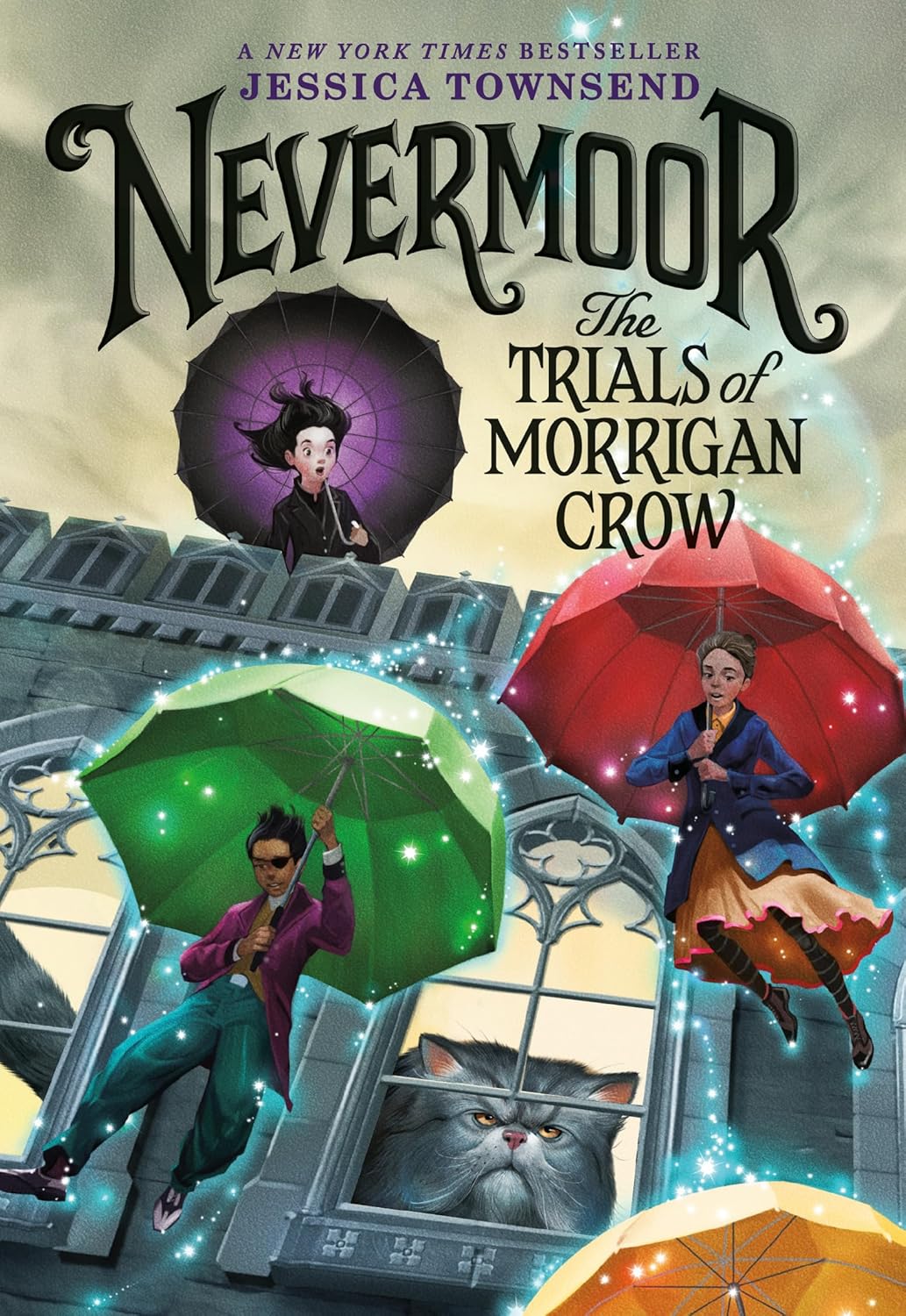
Nevermoor: The Trials of Morrigan Crow by Jessica Townsend is a dazzlingly inventive fantasy novel about a girl who has been cursed from birth, destined to die on her eleventh birthday — until a mysterious stranger whisks her away to a magical city where she must compete to earn a place in the most prestigious secret society in the world. This complete guide covers Nevermoor’s reading level, recommended age, content considerations, characters, themes, and books similar to Nevermoor: The Trials of Morrigan Crow, designed for parents, teachers, and students.
For Parents
Nevermoor is a big-hearted, wildly imaginative fantasy that sits comfortably in the tradition of Harry Potter and its successors — a story about an overlooked child discovering she is extraordinary, set in a richly detailed magical world full of wonder, humor, and genuine warmth. Content concerns are minimal: there is fantasy peril, some menace from a shadowy supernatural threat, and the premise involves a child who is expected to die, which is handled with more whimsy than darkness. Most parents find it appropriate for readers ages 9 and up, and it is a consistent favorite with the 9–12 age group in particular.
For Teachers
Nevermoor is an excellent classroom text for grades 4–7, offering strong material for discussions of identity, self-worth, belonging, and what it means to be seen and valued for who you are rather than what you can prove. The novel’s richly detailed invented world — with its own calendar, mythology, political structures, and annual events — rewards close reading and supports discussions of world-building as a craft. It works well in literature circles and pairs naturally with other portal fantasy texts for discussions of genre conventions and how authors use the “chosen one” framework in ways that subvert or complicate it.
Nevermoor: The Trials of Morrigan Crow at a Glance
Find on Amazon →| Author | Jessica Townsend |
| Published | 2017 |
| Grade Level | 4–6 (our assessment) |
| Recommended Age | 9–13 |
| Flesch-Kincaid Grade | 5.6 |
| Word Count | ~82,000 |
| Pages | 373 (standard hardcover) |
| Chapters | 38 |
| Genre | Fantasy / adventure |
| Setting | The Free State (a fantastical realm); Nevermoor, a magical city; contemporary-ish alternate world |
| Awards | Aurealis Award for Best Children’s Fiction (2017) |
For official Lexile and AR levels, visit Lexile.com or AR BookFinder. ReadingVine provides independent editorial assessments.
What Reading Level Is Nevermoor: The Trials of Morrigan Crow?
Nevermoor reads at approximately a 5th- to 6th-grade word level by standard readability measures (Flesch-Kincaid grade 5.6), placing it in the upper middle-grade range. Our editorial assessment is grades 4–6 for independent reading, with the book most rewarding for readers in grades 5–6. Townsend’s prose is vivid and propulsive — she writes with a theatrical, confident voice that moves quickly through scenes without sacrificing the richness of the world she is building — and the book’s momentum makes it feel faster than its 373 pages would suggest.
What gives Nevermoor its reading complexity is primarily the density of its invented world. Townsend creates an entire secondary world with its own calendar system, political geography, supernatural history, annual celebrations, and vast taxonomy of magical creatures and abilities. Readers who are comfortable holding a lot of new information and enjoy the pleasure of a richly detailed fantasy world will find this deeply satisfying; readers who prefer leaner world-building may occasionally find the inventive details accumulate faster than they can absorb. The emotional throughline — Morrigan’s longing to belong, to be seen as something other than a curse — is clear and consistent throughout, which anchors readers even when the world’s details are flying at them. For official Lexile and AR scores, visit Lexile.com or AR BookFinder.
What Age Is Nevermoor Appropriate For?
We recommend Nevermoor for readers ages 9–13, with the strongest fit at ages 10–12. The wonder-filled world, the competition structure of the Trials, and the irresistible central friendship between Morrigan and Jupiter make it deeply appealing across the upper elementary and middle school range. Readers who devoured the Harry Potter series and are looking for something to fill that specific ache — a richly imagined magical world, a protagonist who discovers she is more than she was told, a found-family dynamic at the heart of the story — consistently respond to Nevermoor with enormous enthusiasm.
Nevermoor opens with Morrigan facing her own death — she is a “cursed child” expected to die on her eleventh birthday, and the book begins with her family and community essentially writing her off. This premise is handled with more dark humor and whimsy than genuine horror, but the emotional weight of a child who has spent her entire life being told she is a burden and a curse is real and may resonate deeply with sensitive readers. There is fantasy peril throughout the Trials and in scenes involving a shadowy supernatural threat called the Wundersmith. Several scenes in the latter portion of the book escalate in intensity. There is no profanity, sexual content, or graphic violence. The overall tone is warm, funny, and ultimately joyful, with the darkness serving to make Morrigan’s moments of belonging and triumph feel genuinely earned.
The book has strong crossover appeal — adults who read it alongside children or pick it up independently frequently find themselves absorbed in the world and characters. The Wundrous Society competition structure is endlessly inventive, and Townsend seeds enough mystery about Morrigan’s true nature and the shadowy history of Nevermoor to sustain reader investment across the series.
What Is Nevermoor: The Trials of Morrigan Crow About?
Morrigan Crow has been cursed since birth. In the Republic of Wintersea, cursed children are blamed for every misfortune that befalls their community — crop failures, accidents, illness, bad weather — and are expected to die when they turn eleven on Eventide, the last night of the year. Morrigan has grown up ignored by her father, pitied by her stepmother, and shunned by the community, counting down the days to her own death with a dull sort of resignation. Then, on the night of Eventide, a stranger arrives to save her.
Jupiter North — flamboyant, enormous, red-bearded, and utterly impossible to ignore — spirits Morrigan across the border into the Free State and into the city of Nevermoor: a magical, extraordinary place that operates outside the laws of ordinary time, home to wonders, impossibilities, and a dizzying variety of supernatural beings. Jupiter has entered Morrigan as his candidate in the Wundrous Society Trials — a fiercely competitive selection process in which young candidates must demonstrate a remarkable talent to win one of the few coveted spots in the most prestigious secret organization in Nevermoor. There is just one problem: Morrigan has no idea what her talent is, and if she cannot prove she belongs in the Wundrous Society, she will be expelled back to Wintersea — and to the death waiting for her there.
Jessica Townsend spent more than a decade developing the world of Nevermoor before she published the first novel, and the depth and internal consistency of the world reflects that long gestation. The series — called the Wundersmith series — currently runs to four books, with Townsend continuing to expand the mythology and characters she introduced in the first volume. Townsend has spoken about her own experience of feeling overlooked and underestimated as a child, and the character of Morrigan — a girl who has been told all her life that she is a curse rather than a gift — is clearly personal in ways that give the novel its emotional authenticity.
Nevermoor Characters
Nevermoor Themes and Lessons
Nevermoor is, at its core, a story about what happens when someone finally sees you clearly — not as a problem, not as a curse, not as a label someone else assigned you before you had any say in the matter, but as a person with genuine worth and potential. Morrigan’s entire existence before Nevermoor has been shaped by other people’s certainty that she is bad, dangerous, and disposable. The novel’s central emotional arc is her slow, reluctant, beautiful discovery that they were wrong — and that the qualities that made her different in Wintersea may be precisely what she needs to belong in Nevermoor. This is the “chosen one” narrative at its most humane, because Townsend is careful to show that what makes Morrigan special is not simply her power but her character: her honesty, her care for others, her refusal to give up even when giving up would be the easier choice.
The novel also makes a quietly pointed argument about scapegoating — the way communities under stress find a convenient target to blame for their misfortunes, and how easily that process destroys the people it fixes on. Morrigan’s treatment in Wintersea is not cartoonishly cruel; it is recognizable, systematic, and depressingly plausible, which makes her escape to Nevermoor feel genuinely liberating rather than merely plot-convenient. Discussion questions worth exploring: Why does Jupiter believe in Morrigan when no one else does, and what does that suggest about how we recognize potential? How does the Wundrous Society’s selection process resemble systems of competition and gatekeeping in the real world? What does the Hotel Deucalion represent for Morrigan, and why is it significant that it changes to suit whoever needs it most? How does Morrigan’s friendship with Hawthorne differ from any relationship she had in Wintersea?
How Many Pages and Chapters Are in Nevermoor?
Nevermoor: The Trials of Morrigan Crow is 373 pages in the standard hardcover edition, divided into 38 chapters across four parts. The word count is approximately 82,000 words, making it a full-length middle-grade novel at the longer end of the range — comparable in length to the earlier Harry Potter volumes. At an average middle-grade reading pace of around 250 words per minute, most readers in the target age range will finish the book in 9–12 hours of total reading time — typically two to three weeks of 30–45 minute daily reading sessions, though readers who get fully pulled in frequently finish it faster than that. The chapters are varied in length but consistently propulsive, and the novel’s four-part structure — covering Morrigan’s life in Wintersea, her arrival in Nevermoor, the four Trials, and their resolution — gives the book a satisfying sense of shape and momentum. An illustrated map of Nevermoor appears in some editions and is worth consulting as Morrigan navigates the city.
Books Similar to Nevermoor: The Trials of Morrigan Crow
About Jessica Townsend
Jessica Townsend is an Australian author who grew up in Queensland and worked for many years in various jobs — including as a nanny and a waitress — while quietly building the world of Nevermoor in her spare time. She spent more than a decade developing the mythology, geography, and characters of the Free State before submitting the manuscript, which sold in a major international auction in 2016 and was published simultaneously in multiple countries in 2017. Nevermoor debuted to extraordinary critical and commercial reception, winning the Aurealis Award for Best Children’s Fiction in Australia and becoming an international bestseller that drew immediate comparison to Harry Potter. Townsend has spoken warmly about her own experience as a child of feeling overlooked and out of place, and she has described Morrigan Crow as a character who embodies questions she has always asked herself about worth, belonging, and whether the things that make you different might also be the things that make you remarkable. The Wundersmith series currently runs to four volumes: Nevermoor: The Trials of Morrigan Crow (2017), Wundersmith: The Calling of Morrigan Crow (2018), Hollowpox: The Hunt for Morrigan Crow (2020), and Silverborn: The Mystery of Morrigan Crow (2023). A television adaptation has been announced but had not yet been released as of this writing.
Nevermoor: The Trials of Morrigan Crow: Frequently Asked Questions
What grade level is Nevermoor: The Trials of Morrigan Crow?
By standard readability measures, Nevermoor reads at approximately a 5th- to 6th-grade word level (Flesch-Kincaid grade 5.6). Our editorial assessment is grades 4–6 for independent reading, with the book most rewarding for readers in grades 5–6. The richly detailed invented world adds complexity beyond the word-level score, making it best suited to readers who enjoy immersive world-building and are comfortable holding a lot of new information. The emotional throughline is clear and consistent, anchoring readers through the density of the world’s details.
Is Nevermoor similar to Harry Potter?
Yes — more so than almost any other middle-grade fantasy series published since Harry Potter ended. Both books center on a child who has been mistreated and overlooked, discovers a hidden magical world, enters a competitive institutional setting, forms a found family with an unconventional mentor, and must prove she belongs through a series of trials. Both feature richly detailed magical world-building, a blend of wonder and genuine darkness, and a mystery about the protagonist’s true nature that deepens across the series. Readers and critics frequently describe Nevermoor as the closest thing to Harry Potter that has been published since the original series, and readers who love one almost universally love the other.
Is Nevermoor part of a series?
Yes. Nevermoor: The Trials of Morrigan Crow is the first book in the Wundersmith series by Jessica Townsend. The sequels are Wundersmith: The Calling of Morrigan Crow (2018), Hollowpox: The Hunt for Morrigan Crow (2020), and Silverborn: The Mystery of Morrigan Crow (2023). The series continues to expand Morrigan’s story, the mythology of Nevermoor, and the mystery of what it means to be a Wundersmith. The first book works as a satisfying standalone with a complete narrative arc, but readers who finish it will almost certainly want to continue.
What is a Wundersmith?
A Wundersmith is an exceptionally rare and powerful type of magical practitioner in Townsend’s world — someone capable of performing Wunder, the most fundamental and powerful form of magic in the Free State. The last known Wundersmith, Ezra Squall, was responsible for a catastrophic event in Nevermoor’s history called the Courage Square Massacre, and as a result the word “Wundersmith” has become associated with terror and destruction. Morrigan’s connection to this lineage — and what it means for her identity, her potential, and her safety — is a central mystery that the series develops across all four books.
What is the Wundrous Society?
The Wundrous Society is the most prestigious secret organization in Nevermoor — a society of individuals with extraordinary abilities who are chosen through a rigorous and highly competitive selection process called the Trials. Membership is enormously coveted and extremely limited. The Society operates across Units, each with its own culture and specialization, and its members gain access to resources, training, and community unavailable to outsiders. For Morrigan, gaining entry to the Wundrous Society is not just a goal — it is the only thing standing between her and being sent back to Wintersea to face the death that was always waiting for her.
What are the four Trials in Nevermoor?
The Wundrous Society Trials are a series of four competitive selection events designed to test candidates in different ways. Without giving away the specific content of each Trial — discovering what each one involves is part of the pleasure of reading — the four Trials test candidates’ abilities, character, judgment, and potential across increasingly demanding situations. Morrigan faces each Trial knowing that she has no identified talent to demonstrate, which creates the novel’s central source of suspense: how can she possibly compete against candidates who know exactly what they are and what they can do?
Is there a Nevermoor TV show or movie?
A television adaptation of Nevermoor has been announced and is in development, but had not been released as of this writing. Given the series’ international popularity and the frequent comparisons to Harry Potter, a screen adaptation has been widely anticipated. Check current entertainment news sources for the latest updates on the project’s status and release timeline.
Is Nevermoor appropriate for a 4th grader?
Yes, for confident 4th-grade readers who enjoy longer fantasy novels and are comfortable with rich world-building. The word level is appropriate for upper elementary, the content is suitable for ages 9 and up, and the emotional core — a girl discovering she is more than she was told — is accessible and resonant for this age group. The book’s length (373 pages) and the density of its invented world are the main considerations for younger readers; those who are still building stamina with longer books may find it a stretch, but the propulsive pacing helps considerably.